The healthiest-looking person on a roster can have the breathing of a man twenty years older and forty pounds heavier — because, for the duration of his career, he often is that man on paper. Sleep apnea does not care that you can squat 600 pounds. It cares about the diameter of your airway at 3 a.m., and the thing that makes an offensive lineman effective at his job is precisely the thing that makes his airway collapse when he lies down.
That is the claim. The rest of this is me earning the right to have made it.
The verdict, in one sentence
Adopting a lineman's eating-and-training load for six weeks degraded my measured sleep more than any single variable I have ever tested on myself — not through fat, but through neck mass, late heavy meals, and a nervous system that never fully clocked out — which is the clearest personal evidence I've found that the apnea risk in big athletes is structural, not a character flaw.
What I actually did
I am 5'11", started at 178 pounds, and I am not an athlete. A retired offensive lineman I'll call M. — twelve years of college and pro ball, listed at 6'5" and 320 in his playing days, now around 280 — agreed to let me copy the parts of his old regimen that a non-professional can survive: the calorie target scaled to my frame, the lifting volume scaled to my strength, the meal timing, and the supplement-free bulk approach he used in camp.
I could not, and did not, try to reach his size. That matters and I'll come back to it. What I could replicate was the shape of the load: roughly a 900-calorie daily surplus, the bulk of it protein and starch, with the largest meal landing inside two hours of bed because that's when his schedule allowed it. Heavy compound lifts four days a week. Conditioning twice.
The measurement stack:
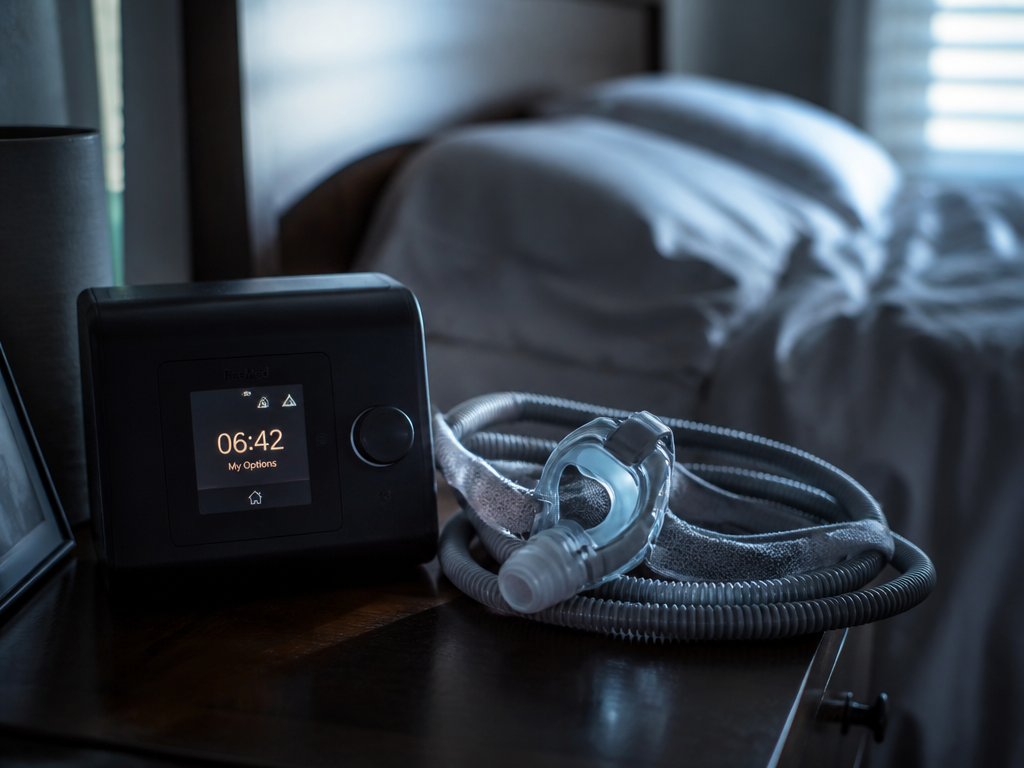
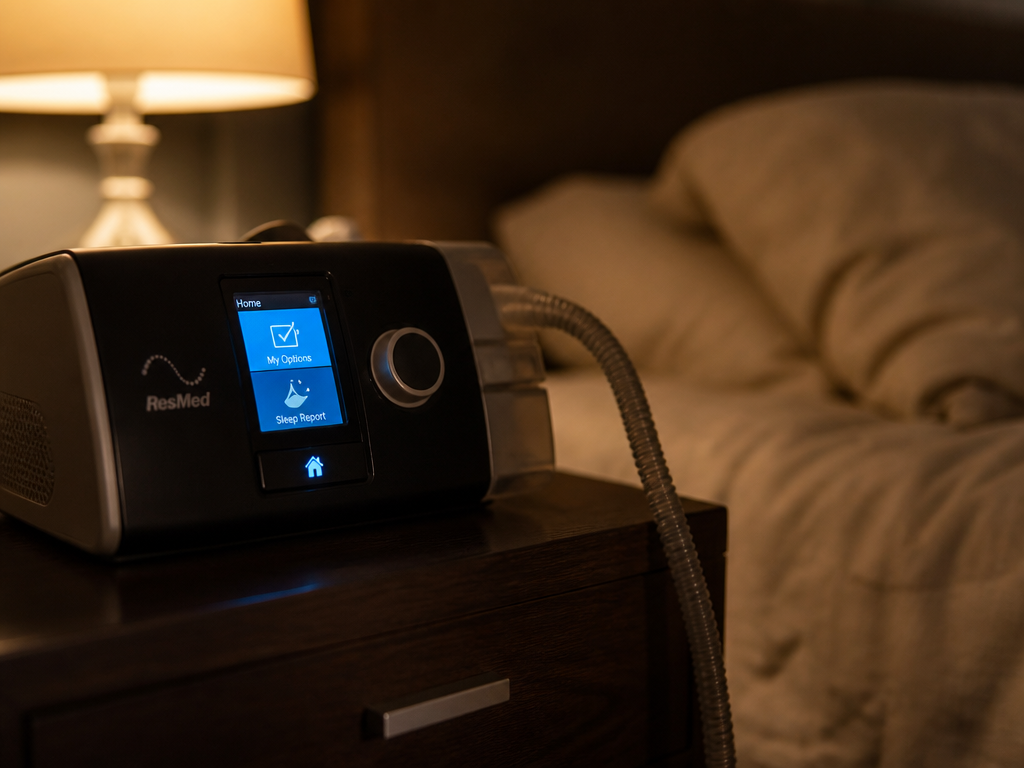
- A validated home sleep apnea test (a Type III device — nasal pressure, pulse oximetry, respiratory effort belts, body position) run for one night in week 0 and one night in week 6.
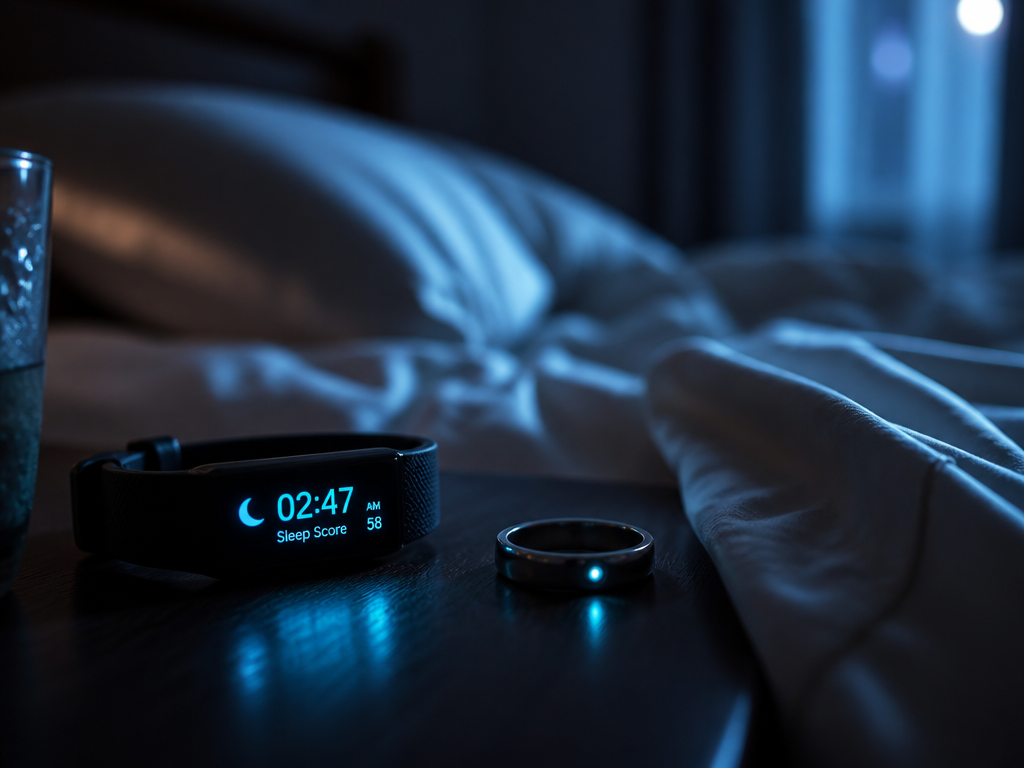
- A wrist tracker every night for sleep onset latency and resting heart rate, which I trust for trends and not absolute truth.
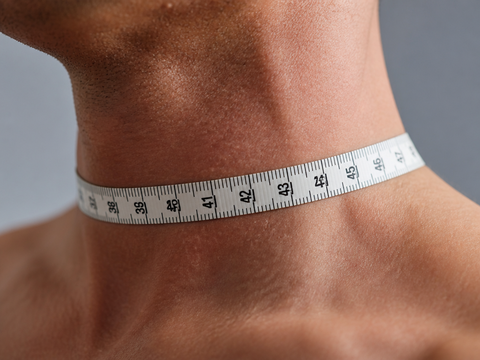
- A tape measure on my neck, taken cold each Monday morning.
- A $25 finger pulse oximeter logging overnight SpO₂ on six scattered nights, as a sanity check on the home test.
Three weeks of my normal life formed the baseline. Then I had two weeks of ramp-up I'm excluding from the headline numbers because the diet change alone wrecked my stomach and confounded everything. Then the clean comparison: baseline weeks versus the final two weeks of the protocol, when my body had adjusted to the food.
Why mass at the neck beats body fat on the chart
The reflex assumption is that apnea is a fat problem, so a fit 320-pound athlete with a visible six-pack must be exempt. The airway disagrees with that reasoning.
Obstructive apnea is a plumbing event. During sleep the muscles that hold the upper airway open relax, and if the surrounding tissue is heavy or crowded enough, the airway narrows or shuts. Your brain notices the falling oxygen, jolts you toward waking to restore muscle tone, you gasp, and you sink back down — sometimes dozens of times an hour, most of which you never remember.
The single anthropometric measure most tightly linked to that event is neck circumference, not body mass index and not waist size. A thick neck means more tissue pressing on the airway from outside, regardless of whether that tissue is muscle or fat. Linemen are selected, then trained, for total mass — and a meaningful fraction of that mass sits in the neck and upper torso. A 19-inch neck of lean muscle still occupies space the airway has to share.
This is why BMI screening fails athletes in both directions. It flags the muscular as obese, and clinicians wave it off because the player "carries it well." Both moves miss the airway. The published work on retired professional football players has repeatedly found apnea prevalence well above the general-population rate, and disproportionately so among the largest position groups. I'm not going to pretend I ran an epidemiological study. I ran an experiment on one nervous person with a tape measure. But the mechanism is not in serious dispute, and I wanted to feel it.
The comparison
Here is my baseline against my protocol weeks, with the published lineman picture for context. The professional figures are ranges drawn from screening studies of retired and active linemen; treat them as the neighborhood, not the address.
| Measure | My baseline | My lineman-protocol wks | Reported in linemen |
|---|---|---|---|
| Neck circumference | 15.0 in | 15.6 in | 18–20 in common |
| Apnea-hypopnea index (AHI) | 2.1 /hr | 9.4 /hr | often 15–30+ /hr |
| Lowest overnight SpO₂ | 93% | 87% | frequently <85% |
| Sleep onset latency | 14 min | 31 min | varies |
| Resting heart rate | 54 bpm | 63 bpm | varies |
A few notes on reading this table. My baseline AHI of 2.1 is normal — under 5 is the clinical cutoff for "no apnea." My protocol AHI of 9.4 lands in the mild range; I crossed from no diagnosis to a real one inside six weeks, on a body that gained six-tenths of an inch of neck and about nine pounds. That is the part I keep returning to. I did not become an apnea patient because I got unfit. I became one because I got bigger and ate late, doing exactly what the job requires.
What the numbers actually said
The home sleep test is the only measurement here that carries clinical weight, and it's the one that moved most.
Baseline night. AHI 2.1. The events I did have were almost all hypopneas — partial narrowings — concentrated in the back-sleeping portions of the night. Lowest oxygen 93%, which is unremarkable. The device flagged me as a side sleeper for most of the night, which probably flattered the result.
Week-6 night. AHI 9.4, a more than fourfold increase. The character of the events changed, not just the count: I logged true obstructive apneas, full ten-second-plus stoppages, where the baseline night had almost none. The oxygen floor dropped to 87%. The device also caught me spending more of the night on my back, which is itself a finding — when I was heavier and ate late, I shifted positions less and slept more supine, possibly because moving felt like more work.
The cheap finger oximeter, for what it's worth, agreed on direction. Baseline overnight traces were flat lines hovering 95–97%. The protocol-week traces developed the sawtooth pattern — repeated dips and recoveries — that's the visual signature of obstructive events. I would not diagnose anyone off a $25 device, and the absolute numbers ran a couple of points optimistic versus the home test. But you can see the difference on the graph, and that's hard to un-see.
The wrist data is softer evidence and I'll treat it that way. Sleep onset latency more than doubled, from 14 to 31 minutes. I attribute most of that to the late heavy meal and the elevated resting heart rate, which climbed nine beats per minute — a body doing digestion and recovery work when it should be idling. The tracker also reported worse "deep sleep," but I don't trust consumer staging enough to put a number on it. I noticed it the honest way: I felt worse. Foggy at 10 a.m. in a manner I associate with a bad flight.
The thing the spreadsheet didn't capture
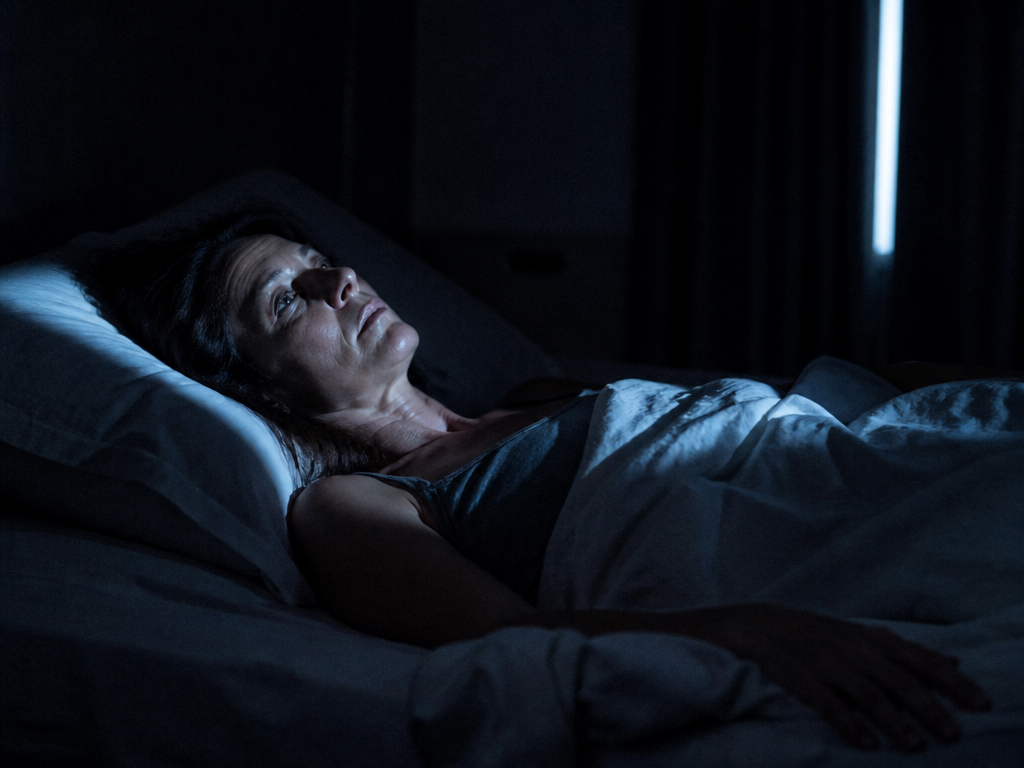
By week five my wife told me I'd started snoring. I had never snored. She described the specific, alarming pattern — a building rasp, then silence, then a sharp intake — that is the bedside version of an apnea event. I'd been measuring my airway with belts and clips, and the most reliable instrument in the house turned out to be a person lying next to me who couldn't sleep.
What I could not test
This is a sample of one, and the one is wrong in important ways.
I never approached lineman size. My neck gained 0.6 inches; the gap between my 15.6 and M.'s playing-era 19-plus is enormous, and airway risk is not linear — the last inches likely matter far more than the first. So my fourfold AHI jump probably understates what the same protocol does to someone carrying three times the added mass. I can't prove that. I can only say my curve was bending the wrong way fast and I stopped before finding the cliff.
I had no polysomnography lab. A home Type III test misses brain-wave data, so it cannot score arousals that don't show up as airflow events, and it tends to underestimate AHI compared to a full overnight in a lab. My real protocol-week AHI may have been higher than 9.4. The direction of that error makes my claim more conservative, not less, which I'm comfortable with.
I controlled diet and training. I did not control my life — work stress, alcohol on two weekends, one head cold in week four that I excluded the test night around but couldn't fully erase. Any of these nudges apnea numbers. I'd call the six-tenths-of-an-inch and the late meals the dominant levers, but I can't partition the variance cleanly.
And I am not, structurally, a lineman. I have a different jaw, a different baseline airway, a different genetic hand. Two people can gain the same neck inch and only one collapses. The athlete population isn't just "big people" — it's big people who were selected for a body type, then professionally enlarged, often with a craniofacial structure that was part of why they got big in the first place. I sampled one slice of that and only briefly.
Who this matters for, and who it doesn't
This matters if you are a current or former heavy-position athlete. Linemen, throwers, heavyweight combat athletes, certain rowers and rugby forwards — anyone whose sport rewards mass at the upper body. The retirement years are the dangerous window, because the size lingers after the daily conditioning that partly protected you stops. If you played big and you snore now, that combination earns a real sleep study, not a shrug.
It matters if you screen athletes and you're using BMI. BMI will tell you a lean 19-inch neck is "obese" and a deconditioned slim build is "fine," and it will be airway-wrong in both cases. Neck circumference is a cheap, fast, better first filter. Ask the bed partner about gasping. Those two steps cost nothing.
It matters if you're bulking on purpose — strength athletes, anyone in a deliberate mass-gain phase. The mechanism I tripped isn't exotic. A surplus, a thicker neck, and meals shoved against bedtime degraded my breathing measurably in weeks. If you're adding size, watch the airway like you watch the lifts.
It does not particularly matter if you're a lean endurance athlete with a slim neck and no snoring history. Marathoners and cyclists aren't the at-risk group here; the body type that wins those sports is close to the body type that protects the airway. Apnea is possible for anyone, but you are not the headline case.
And it doesn't apply to the fit-equals-immune belief at all — which is the belief I most wanted to break. Fitness is not airway protection. I was fit, by any reasonable definition, in both my baseline and my protocol weeks. Only one of those versions of me had measurable apnea, and the difference was mass and meal timing, not cardio.
The line worth screenshotting
If you played a heavy position and you've stopped training but kept the size, your fitness history is not protecting your airway — and a snore your partner notices is a sleep study you owe yourself, not a personality quirk.
There is no product at the end of this. The intervention for what I induced was embarrassingly simple: I stopped the protocol, lost the nine pounds and the neck inch over the following month, moved my last meal earlier, and my home test came back to an AHI of 2.4 — baseline, essentially. That reversibility is the optimistic half of the story. Induced fast, it resolved fast. The pessimistic half is that for a career athlete, the size isn't a six-week experiment they can quit. It's the job, sustained for a decade, often followed by years of carrying it before anyone runs a test.
What this didn't answer
Plenty.
It didn't tell me whether the apnea I induced would have caused lasting damage if I'd sustained it — the cardiovascular toll of years of nightly oxygen dips is the real stakes for retired players, and a six-week reversal says nothing about a fifteen-year exposure. It didn't separate how much of the athlete population's risk is the trained mass versus the selected craniofacial structure they started with; I'd want to see that teased apart, because the prevention story is completely different depending on the answer. And it didn't touch central sleep apnea, the rarer kind that isn't about plumbing at all, which some studies of large athletes also flag.
If you want to look further, the place to look is the screening literature on retired professional football players specifically — not active rosters, where conditioning masks the problem, but the men five and ten years out, which is where the real numbers live. And if you're one of them, the better next step isn't more reading. It's a neck measurement, a question for whoever shares your bed, and a referral. The instrument I'd trust most in this whole experiment didn't cost a thing. It was a person who couldn't sleep through the sound I was making.