Fifty percent.
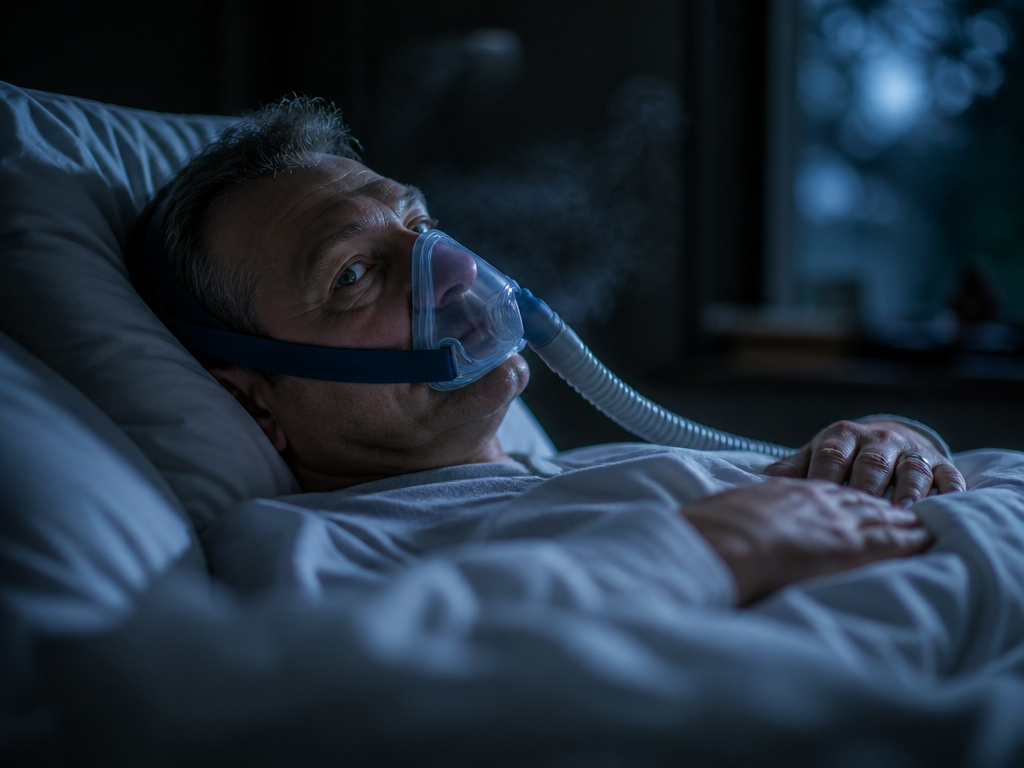
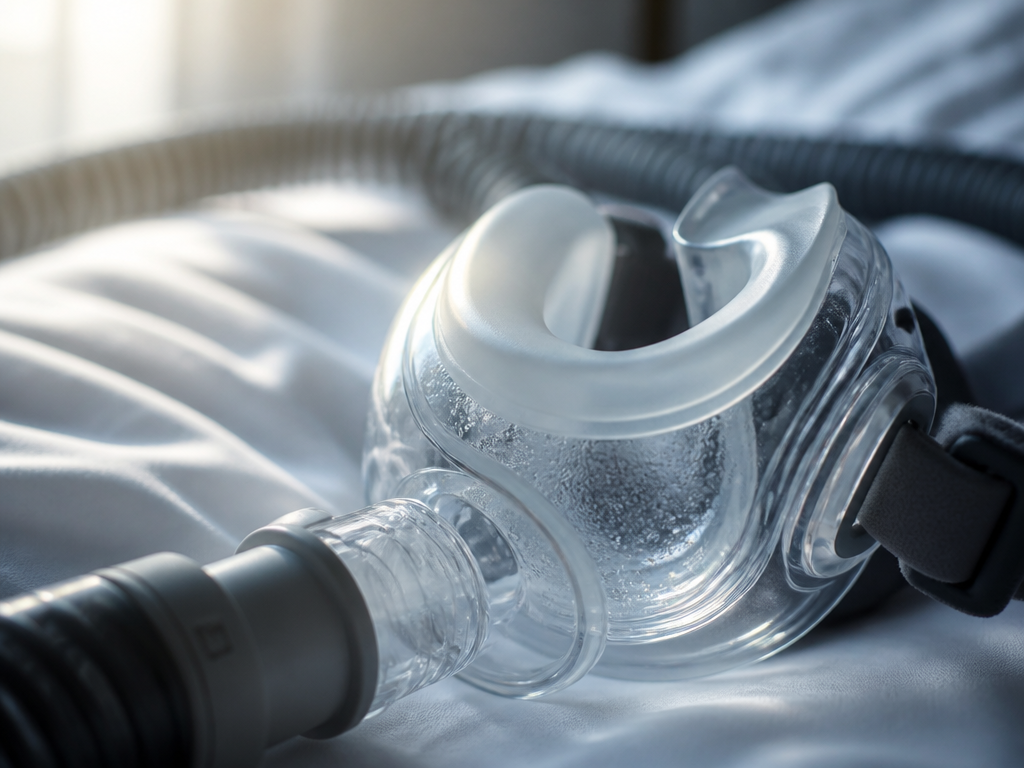
That is what the Department of Veterans Affairs currently pays for obstructive sleep apnea when a clinician prescribes a CPAP machine and the veteran can tie the condition to service. Not fifty percent of any measured thing — not oxygen desaturation, not lung function, not hours of work lost. Fifty percent because a machine was prescribed. In money, that is a bit over $1,100 a month for a veteran with no dependents, roughly $13,500 a year, adjusted for inflation and paid for life. It is also one of the sharpest live fractures in veterans policy.
VA has proposed cutting that number to zero for veterans whose treatment works. Veterans service organizations call the idea a betrayal of people who earned the rating. Budget analysts call it an overdue correction to a schedule that stopped tracking reality. Both descriptions are defensible, which is what makes the argument worth following rather than picking a side in.
Where the fifty came from
The number has a birthday. VA's rating criteria for sleep apnea syndromes live at Diagnostic Code 6847, part of a wholesale revision of the respiratory rating schedule that took effect in October 1996. Before that, apnea was rated by analogy — adjudicators borrowed criteria from other conditions, inconsistently. The 1996 revision built four tiers: zero percent for a documented but asymptomatic sleep-disordered breathing pattern; 30 percent for persistent daytime hypersomnolence; 50 percent for requiring a breathing assistance device; 100 percent for chronic respiratory failure, cor pulmonale, or tracheostomy.
Read the 50 percent tier again. It is not a finding about the veteran. It is a finding about a prescription.
What the 1996 rulemaking did not contain — and this is the load-bearing point — was a study establishing that a person using CPAP loses half their earning capacity. The rating schedule is supposed to represent average impairment in earning capacity across a population. For most codes, that estimate rests on something: clinical staging, functional testing, a literature. For DC 6847's middle tier, it rested largely on a reasonable-sounding judgment about how burdensome the treatment was in 1996, when machines were the size of a bread box, loud enough to wake a spouse, and effectively impossible to travel with.
That judgment then hardened. Thirty years of adjudications, appeals, law-firm marketing, and Board decisions turned a rulemaking estimate into something veterans and their representatives now discuss as a fact about the disease. The belief is much sturdier than the thing it grew from.
What changed under the machine
Two things moved at once, in opposite directions.
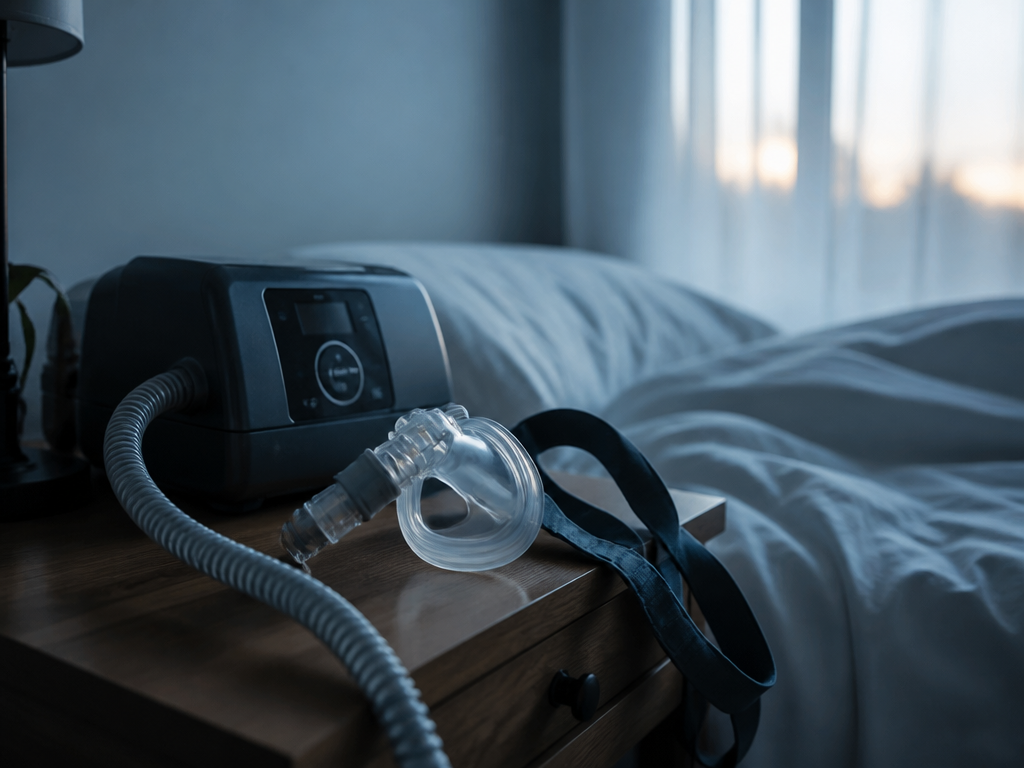
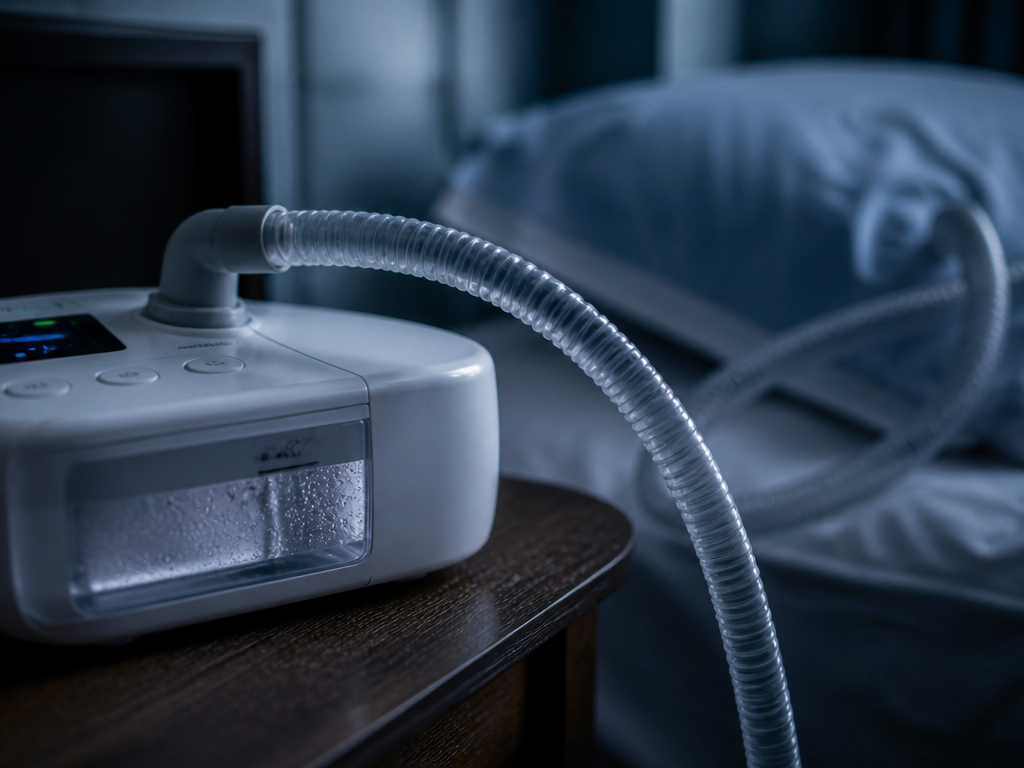
The hardware shrank. Modern devices are auto-titrating, roughly the size of a paperback, and — importantly for policy — they report compliance data. VA can now see, night by night, how many hours a veteran actually wears the mask. The burden the 50 percent tier was pricing is not the burden that exists.
Meanwhile, the claims grew. Recent VA annual benefits reporting puts the number of veterans compensated for sleep apnea at roughly 1.3 million, up from a rounding error in the late 1990s. Some of that is real: apnea is strongly associated with obesity, age, and PTSD, and the veteran population has more of all three than it did. Some of it is diagnostic — home sleep testing made the condition far easier to document. And some of it is procedural, driven by a mature ecosystem of nexus letters and claims consultants.
Here is where the fiscal case gets complicated by the medical one. The premise of the proposed cut is that effective treatment restores function. The evidence for that is more mixed than the premise suggests. McEvoy et al. (2016), in the New England Journal of Medicine, randomized 2,717 patients with moderate-to-severe apnea and existing cardiovascular disease to CPAP or usual care and found no reduction in cardiovascular events — with mean adherence of about 3.3 hours a night. Weaver and Grunstein (2008), reviewing adherence in Proceedings of the American Thoracic Society, reported non-adherence rates spanning 29 to 83 percent depending on definition. Treatment often works. It also often isn't used enough to work, and the line between "won't" and "can't" is exactly the line a rating decision has to draw.
What the proposal actually does
VA published a proposed revision of the respiratory body system in the Federal Register in early 2022. As published, it would stop rating apnea on whether a device was prescribed and start rating it on whether treatment succeeds.
| Situation | Current basis (DC 6847) | Basis as proposed |
|---|---|---|
| Treatment prescribed, symptoms resolved | 50% — device required | 0% — treatment effective |
| Treatment used, symptoms partly persist | 50% | Low, single-digit tier |
| Treatment ineffective or untolerable for reasons outside the veteran's control | 50% | 50% |
| End-organ damage (cor pulmonale, respiratory failure) | 100% | 100% |

Two mechanics matter more than the percentages. First, the change applies prospectively — veterans already rated keep their ratings. Second, because the revision produces large scored savings, versions of it keep reappearing as an offset inside unrelated legislative packages, which is why it surfaces in bills that otherwise expand benefits. That pairing is the source of most of the heat.
Does caffeine affect a VA sleep apnea rating?
Not directly. No criterion in the rating schedule mentions caffeine, and no examiner is instructed to ask about it. Indirectly, though, it plausibly does — because the tier below 50 percent turns on "persistent daytime hypersomnolence," and daytime sleepiness is the single most caffeine-sensitive measurement in sleep medicine. The instrument usually used is the Epworth Sleepiness Scale, published by Murray Johns in 1991 in Sleep: eight everyday situations, each scored zero to three for how likely you are to doze.
How that plays out, in order
Start in the airway. Soft tissue collapses, breathing stops, oxygen falls, and the brain issues a brief arousal to reopen the throat. This can happen dozens of times an hour. The veteran does not remember any of it. What the arousals do is fragment sleep so that its restorative chemistry runs incompletely.
One piece of that chemistry is adenosine. It accumulates in the basal forebrain during wakefulness as a byproduct of cellular energy use — Porkka-Heiskanen et al. (1997), in Science, tracked this directly in cats across prolonged waking — and it is cleared during consolidated sleep. Fragmented sleep clears less of it. So the veteran wakes already carrying load, adenosine binding A1 and A2A receptors and damping the arousal circuits those receptors gate.
Then the coffee. Caffeine reaches meaningful plasma levels in 30 to 45 minutes and occupies those same receptors without activating them — competitive antagonism, not stimulation. The adenosine is still there. The signal is muted. Median half-life in a healthy adult is about five hours, with a real spread of roughly two to eight depending on genetics, smoking, hormonal contraceptives, and liver enzyme induction. So 400 mg at 8 a.m. is still about 200 mg at 1 p.m. and about 100 mg at six.
Now put that veteran in a compensation-and-pension exam at three in the afternoon. He doesn't doze in the waiting room. He answers Johns's eight questions from inside a pharmacologically defended day and scores below the excessive-sleepiness threshold.* Nothing about his airway has changed. The measurement changed.
How much this actually shifts ratings in aggregate is unknown. No study I'm aware of has measured caffeine intake as a confounder in C&P sleep exams. File this as plausible and unquantified — a mechanism with no field data behind it, which is a different animal from the well-established pharmacology it rests on.
The disagreement, honestly stated
The veterans service organizations — DAV, the VFW, the American Legion — argue that a schedule which pays for a diagnosis creates a promise, and that reopening a settled tier to fund something else establishes that any rating is negotiable when the budget tightens. They also point out that under the proposed structure, the government's evidence of effectiveness is the machine's own compliance report, while the veteran's claim that he can't tolerate the mask is judged against that same report.
The fiscal position is not cynical either. The schedule is statutorily meant to approximate lost earning capacity. A tier that pays $13,500 a year for successfully treating a condition, in perpetuity, is not approximating anything measurable — and every dollar of it is a dollar not spent on veterans whose impairment is unambiguous.
Neither camp is arguing in bad faith. They are arguing about what a rating schedule is for.
An honest rule of thumb
If you have a C&P exam scheduled for apnea, don't change your caffeine intake for it — not up, not down. Instead, write one paragraph describing a normal day, including how much coffee it takes to get through, and hand it to the examiner. An Epworth score taken at 3 p.m. on 400 mg is a real number about a defended day. Your paragraph is the only record of the undefended one.
Fifty percent was never a measurement. It was an estimate about how hard a 1996 machine was to live with, and it has been carried for three decades by everyone who assumed a number that precise must have come from somewhere. The argument now underway isn't really about whether to cut it. It's about what happens when a policy outlives the evidence that produced it — and whether the people who organized their lives around the number should have to pay for that. * Johns's scale runs 0–24; a score of 11 or higher is the conventional marker for excessive daytime sleepiness. It is entirely self-reported, which is both why it's used everywhere and why it's fragile.