A veteran whose obstructive sleep apnea requires a CPAP machine is rated by the VA at 50% disability — flat, automatic, no argument about severity once the machine is prescribed. That number is the reason this claim is worth getting right, and the reason so many veterans get it wrong on the first try.
Here is the verdict up front: sleep apnea in veterans is one of the most winnable claims in the system, but only if you arrive with a sleep study and a documented link to your service — and most people show up with neither.
I went through this myself last year. I'll tell you what the data says, what I watched other people do, and what I actually did, including the parts I'd change. My sample is one claim, a handful of veterans in my old unit, and a long correspondence with a VA-accredited claims navigator. Treat the numbers as load-bearing and my experience as one data point.
What most people do
The pattern is consistent enough that the navigator I spoke with could recite it. A veteran notices the symptoms — loud snoring, waking up gasping, a spouse who's started sleeping in the other room, daytime fog that coffee no longer touches. They file a claim describing those symptoms. Honestly, thoroughly, in good faith.
And it gets denied.
Not because the VA doubts the snoring. Because a claim for obstructive sleep apnea (OSA) needs two things a symptom narrative can't provide:
- A diagnosis from a sleep study. Self-reported tiredness is not a diagnosis. The VA wants an apnea-hypopnea index (AHI) — the number of times per hour your breathing partially or fully stops. An AHI of 5–15 is mild, 15–30 moderate, over 30 severe.
- A nexus — a documented connection between the apnea and your military service, or to another condition the VA already recognizes as service-connected.
The second one is where most claims die. A veteran diagnosed with OSA in 2023, fifteen years after discharge, files a direct claim and the rater asks the obvious question: what does this have to do with the Army? Without an answer in the file, the claim closes. The veteran assumes the system rejected them. In fact, the system never received the one document that would have worked.
There's a second failure mode worth naming: filing for the symptoms while never pursuing the sleep study at all, because the wait for an in-lab polysomnogram felt impossible. That instinct is understandable and it's also the thing that guarantees a denial.
What the evidence suggests
The epidemiology is not subtle. Veterans carry a markedly elevated rate of OSA compared to civilians of the same age, and the conditions that drive that gap are the same conditions the VA already compensates.
The mechanism runs through three doors:
PTSD. Post-traumatic stress disorder fragments sleep architecture and is strongly associated with sleep-disordered breathing. Studies of veterans with PTSD have found OSA rates well above 50% in some cohorts. This matters legally as much as medically: if your PTSD is already service-connected, your sleep apnea can be claimed as secondary to it — you no longer have to prove the apnea itself started in service, only that the PTSD aggravates or causes it.
TBI. Traumatic brain injury disrupts the brainstem circuits that govern breathing during sleep, and is linked to both obstructive and central apnea. Blast exposure counts even without a single dramatic concussion in the record.
Service-era weight gain and sinus damage. Many veterans entered service lean and left carrying weight added under medical supervision, or with chronic rhinitis and sinus injury documented in their service treatment records. Both narrow the airway. Both are nexus material if they're in the file.
The practical bar, then, is two documents and one of three theories:
| Approach | What you submit | Likely outcome |
|---|---|---|
| Symptoms only | A narrative of snoring and fatigue | Denied — no diagnosis on file |
| Diagnosis only | Sleep study showing OSA | Denied or stalled — no nexus to service |
| Diagnosis + nexus | Sleep study and a link to PTSD/TBI/STR evidence | Granted, commonly at 50% |
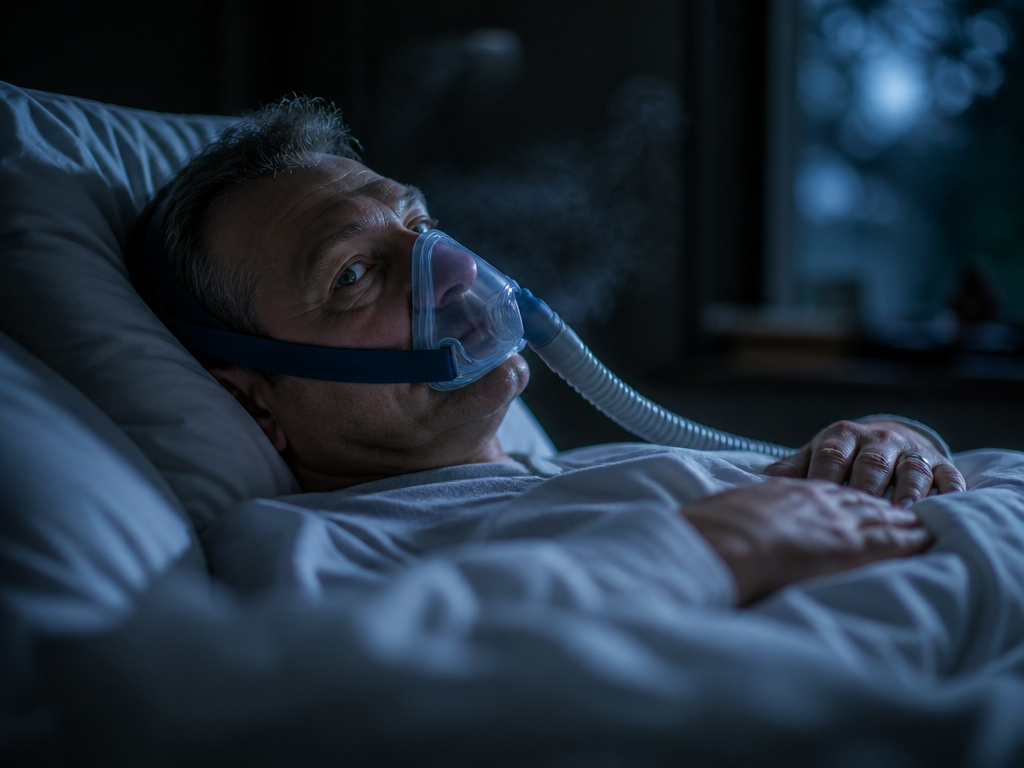
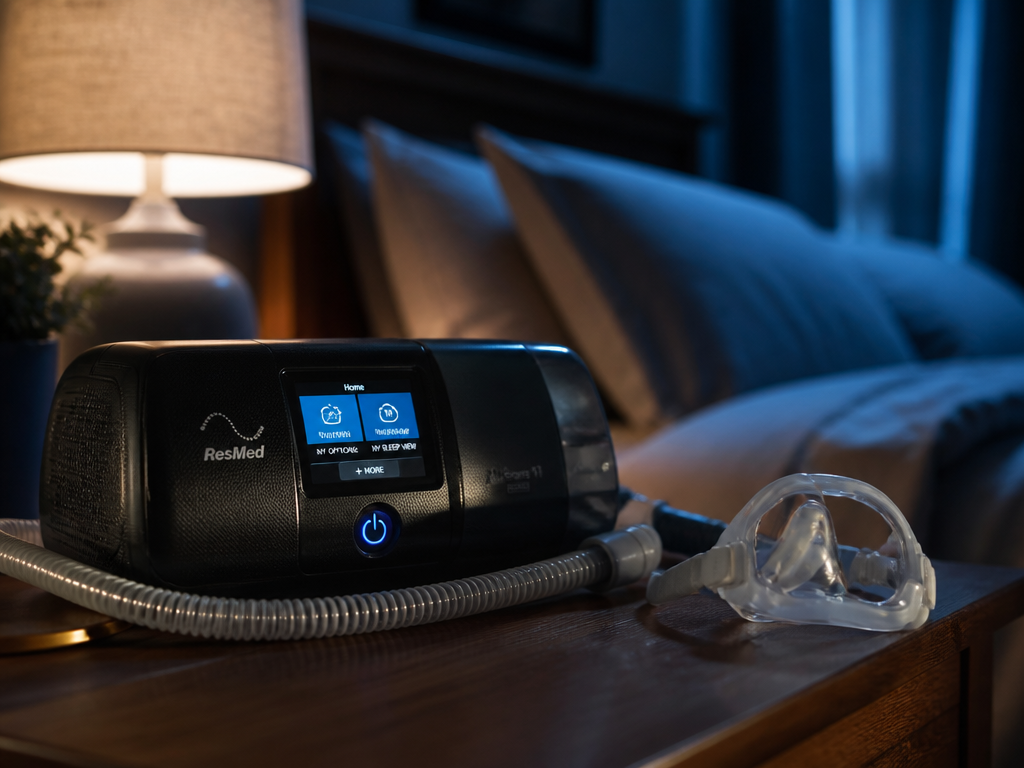
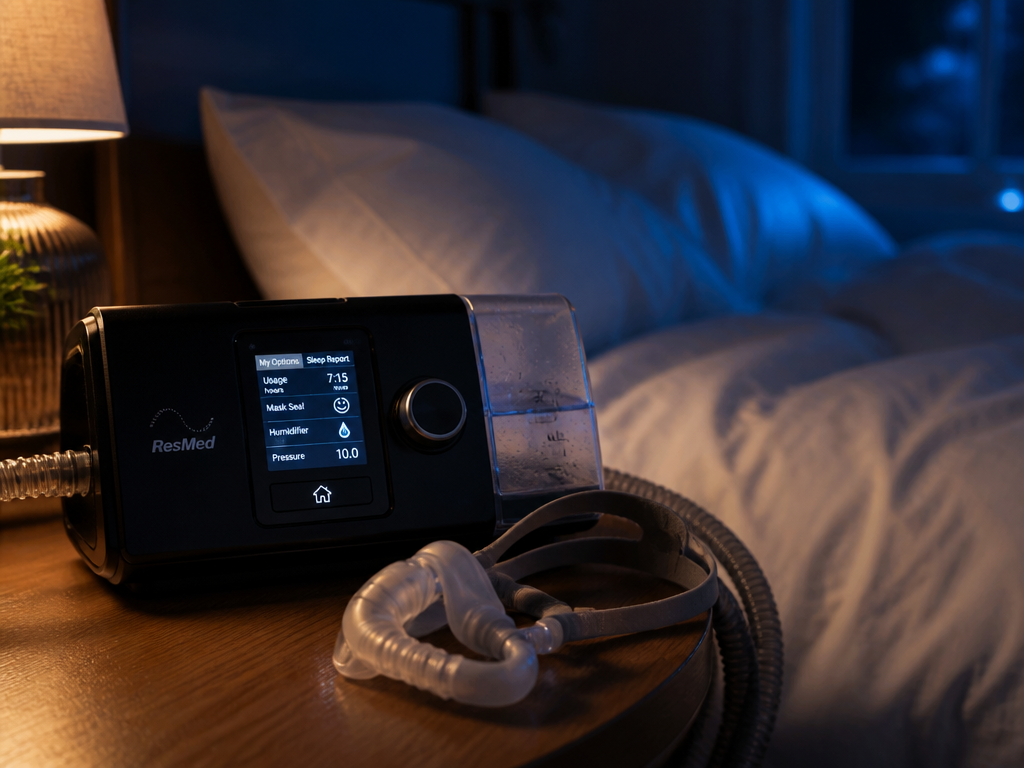
The 50% rating attaches specifically when the prescribed treatment is a CPAP machine — continuous positive airway pressure. Not 30%, not "we'll see." If the study yields an AHI in the treatment range and the doctor prescribes the machine, the schedule says 50%.
What I actually did
I skipped the in-lab study. The wait at my facility was months, and I didn't have months of patience left after a year of waking up tired. I did a VA-ordered home sleep test instead — a chest band, a finger oximeter, a nasal cannula, one night in my own bed.
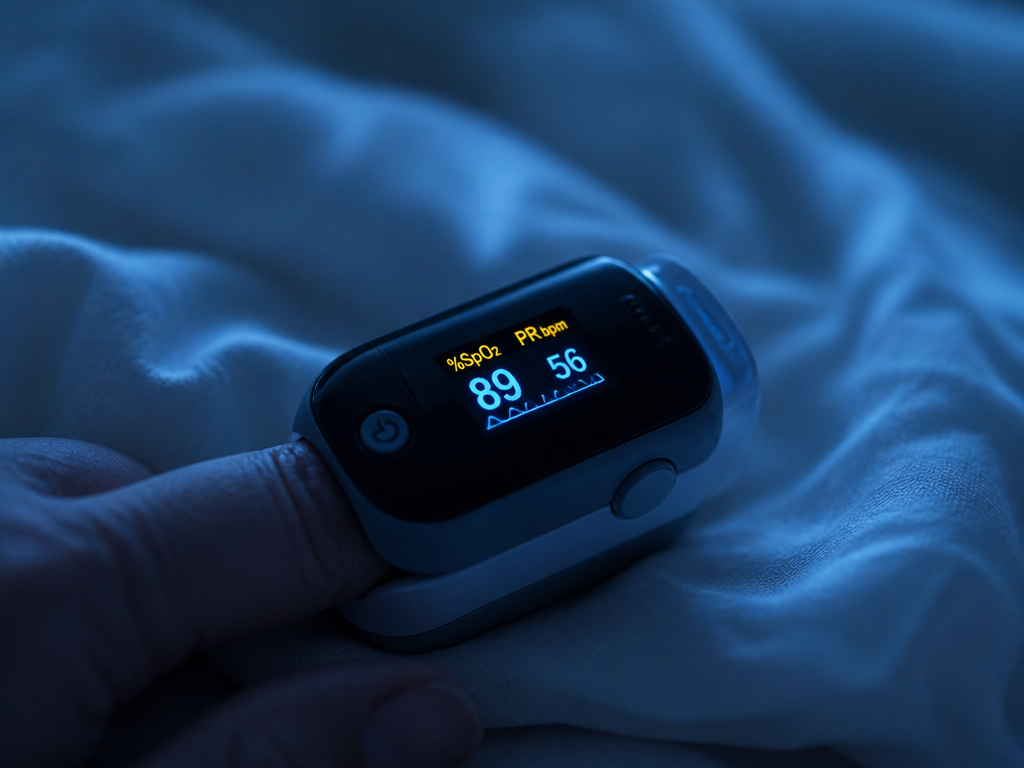
My results came back at an AHI of 22 — moderate. Oxygen saturation dropping into the high 80s during the worst stretches. The sleep physician prescribed CPAP at a starting pressure of 9 cm H₂O.
For the nexus, I didn't rely on a theory I had to argue. My PTSD was already service-connected at 50%, so I filed the apnea as secondary to it and submitted a one-page letter from a sleep medicine physician stating, in the language the VA actually reads, that my OSA was "at least as likely as not" caused or aggravated by the PTSD. That phrase — at least as likely as not — is the legal threshold. It's a 50% probability standard, not proof beyond doubt, and writing it explicitly is the difference between a letter that helps and one that the rater ignores.
Timeline: home test ordered in the spring, results in about three weeks, nexus letter another month after I asked for it, decision roughly four months after I filed. Granted at 50%.
What I'd change: I'd have asked for the nexus letter before filing, not after, and I'd have made sure my service treatment records — which documented sinus problems I'd forgotten about — were attached to the claim rather than left for the rater to find. The system doesn't reward you for having good evidence somewhere. It rewards you for putting it in the file.
What I can't tell you: whether the home test under-counted my AHI relative to a full lab study. Home tests tend to read lower because they can't measure sleep stages, so a borderline case might be scored mild at home and moderate in the lab. If your home result lands just under 15 and you still feel wrecked, push for the in-lab study.
Who this is for, and who it isn't
This is for you if you've served, you snore loudly or wake gasping, you're exhausted in a way sleep doesn't fix, and you have any service-connected condition already on file — especially PTSD or TBI. The secondary-connection path is the most direct route available.
This is also for you if you're the spouse or adult child watching someone refuse to deal with it. You may be the one who noticed the breathing stop in the night. That observation, written down and dated, is admissible.
This is not for you if you're hoping to claim on tiredness alone. Without a diagnosis, there is no claim — there's a story, and the VA does not pay on stories.
The honest caveat the brochures omit: wait times vary wildly by facility, nexus letters can be hard to extract from a busy clinic, and denials happen even to strong claims. None of that means the door is closed. It means you bring the documents, and you appeal if you have to.
That 50% rating I opened with isn't a reward for being sick. It's the VA's own admission of how disruptive untreated apnea is — a number that sits there waiting for the two pieces of paper most veterans never knew to assemble. Bring the study. Bring the nexus. The 50% is not the hard part. Knowing what to walk in with is.