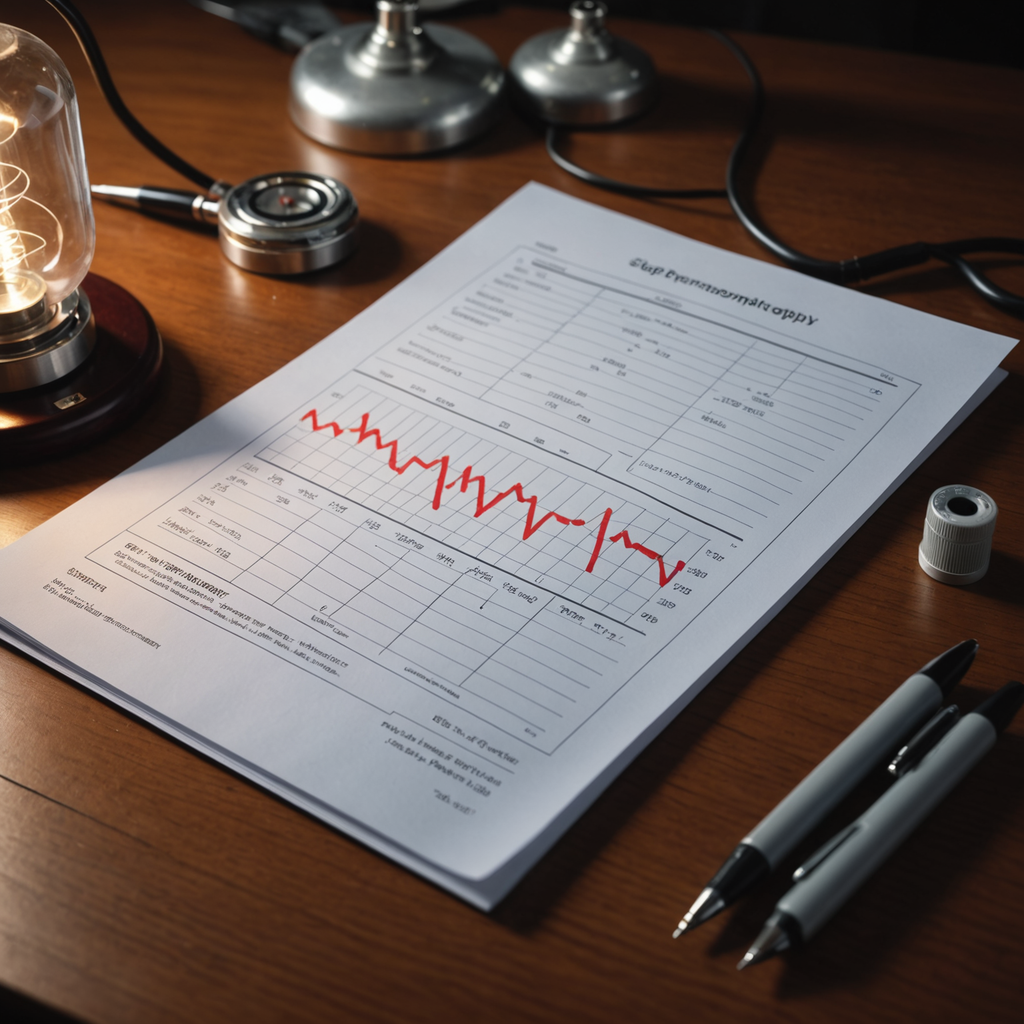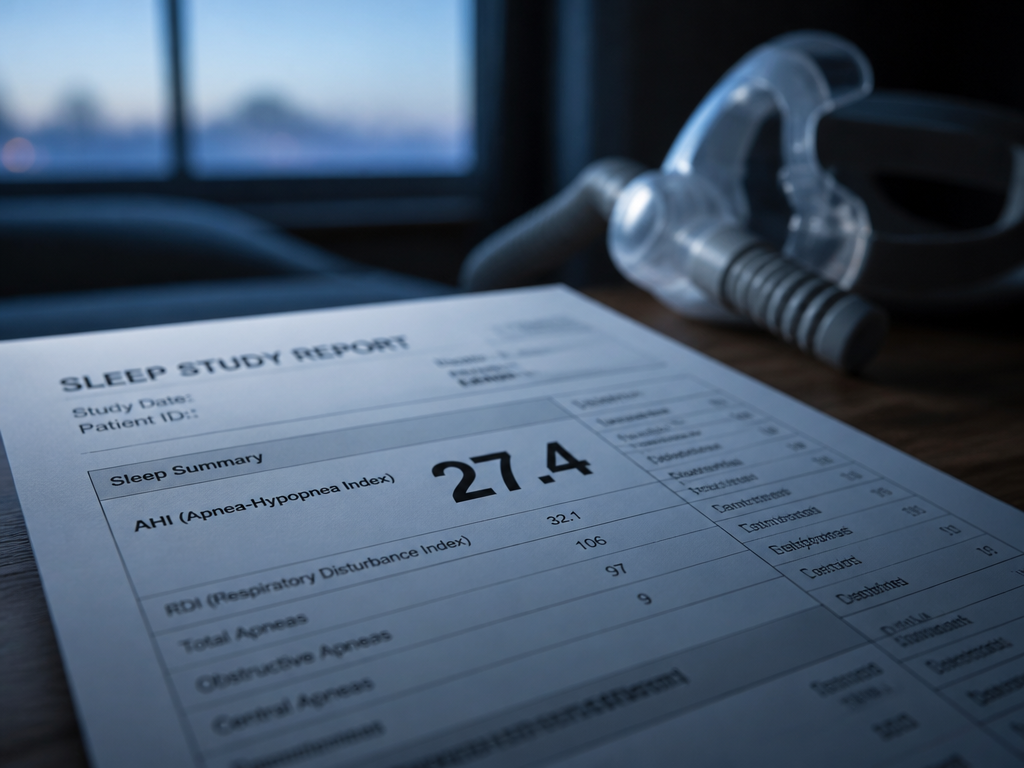
Most people with sleep apnea leave the clinic holding a single number. Mine was 29. Yours might be 14, or 52, or somewhere past 80. It's called the AHI — the apnea-hypopnea index — and it is the number on which nearly every sleep apnea treatment decision in the United States currently turns. It decides whether you get a CPAP machine, whether insurance pays, and whether your doctor calls your condition mild, moderate, or severe.
It's a useful number. It is also a stranger one than it looks.
What "29 events per hour" actually counts
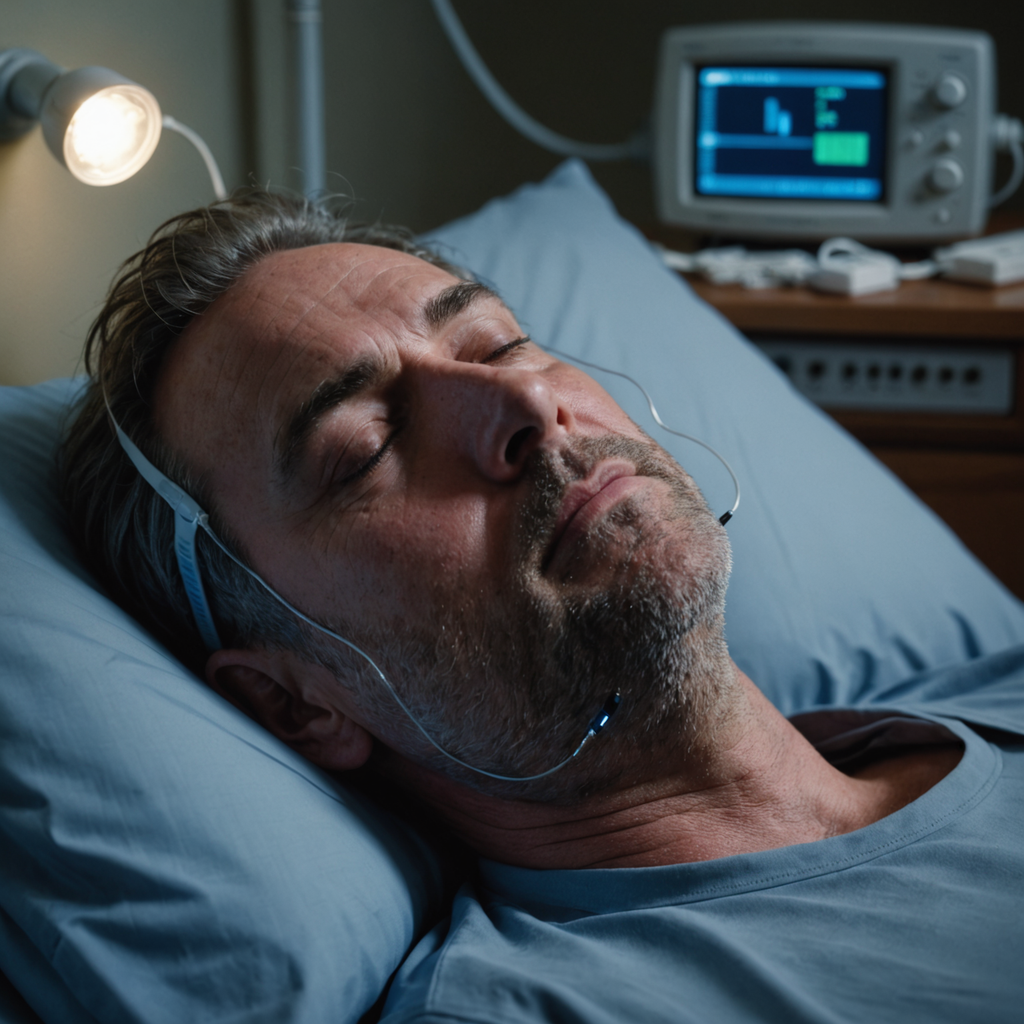
An AHI of 29 means that, on average, your breathing collapsed or sharply narrowed 29 times for every hour you slept during the study. "Collapsed" — an apnea — means airflow dropped at least 90 percent for ten seconds or more. "Narrowed" — a hypopnea — is partial: a reduction in airflow paired with either an oxygen drop or a brief arousal from sleep. Add the apneas to the hypopneas, divide by hours of sleep, and you have your index.
The thresholds are tidy. Five to 15 is mild, 15 to 30 is moderate, above 30 is severe. These cutoffs come from the American Academy of Sleep Medicine's scoring manual, and they have governed diagnosis for decades. A 29, then, sits right at the upper edge of moderate — one bad night of scoring away from severe.
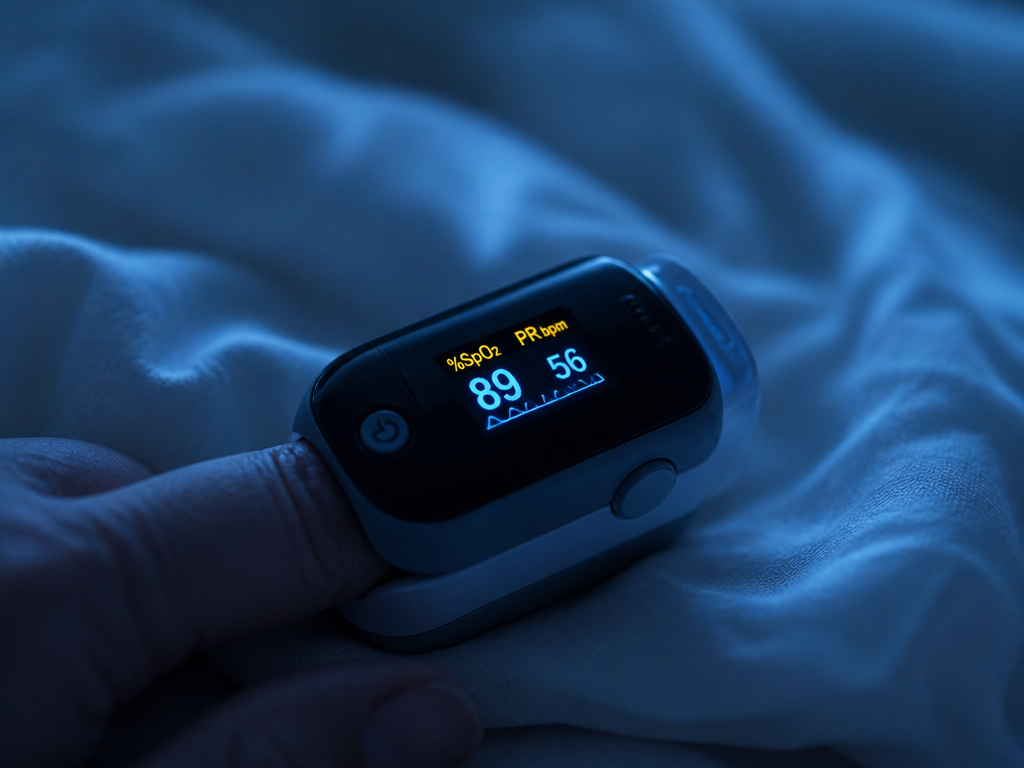
Here is the thing worth sitting with: that number describes how often something happens, not how bad it is when it does. Two people can both score 29. One stops breathing for eleven seconds at a stretch and barely desaturates. The other stops for 40 seconds and watches their blood oxygen fall into the low 80s each time. Same AHI. Very different nights, and increasingly, evidence suggests, very different risks.
Why the index is being quietly questioned
For years the AHI was treated as the master variable — the thing CPAP was supposed to drive toward zero. But a strand of research has been pulling at it.
The clearest pull came from the SAVE trial (McEvoy et al., 2016, New England Journal of Medicine), which enrolled 2,717 people with moderate-to-severe obstructive sleep apnea and existing cardiovascular disease, and randomized them to CPAP plus usual care or usual care alone. CPAP cut snoring, daytime sleepiness, and improved quality of life and mood. What it did not do, over a median 3.7 years, was reduce the rate of heart attacks, strokes, or cardiovascular death. The headline some people took away — "CPAP doesn't help your heart" — was too blunt. The likelier explanation is that participants used the machine an average of just 3.3 hours a night, well below what most clinicians consider a therapeutic dose.
But SAVE did something useful by accident. It made researchers ask whether counting events was the right way to measure the disease at all. Work led by groups at Brigham and Women's Hospital has since argued that "hypoxic burden" — the total amount of oxygen your body loses across the night, area-under-the-curve rather than a simple tally — predicts cardiovascular mortality better than AHI does. The number on your report counts the events. It does not weigh them.
This is plausible-but-still-settling science, not gospel. The AHI remains the clinical standard for good reasons: it's reproducible, it's cheap to score, and decades of outcome data are built on it. But if you've ever wondered why two patients with identical scores feel so differently, the index's blind spots are part of the answer.
So is there a cure?
Here is the question almost everyone newly diagnosed actually types into a search bar: is sleep apnea curable, or am I on a machine forever?

The honest answer is that for most adults with obstructive sleep apnea, treatment controls the condition rather than erasing it — but "forever" is not the only outcome, and "control" is genuinely good. The collapse happens because the soft tissues of your throat relax during sleep and your airway loses its scaffolding. That anatomy doesn't usually fix itself. What treatment does is hold the airway open, night after night, so the events stop happening while the treatment is in use. Stop the treatment, and in most cases the apnea returns. That's not failure. That's how managing a structural problem works, the same way glasses correct vision without reshaping the eye.
There are real exceptions. Significant weight loss can substantially lower AHI and, in some people, push it below the diagnostic threshold — a 2009 study by Tuomilehto and colleagues in obese patients with mild OSA found that an intensive lifestyle program resolved the apnea in a meaningful fraction of participants over a year. For carefully selected patients, surgery to remove anatomical obstruction, or a jaw-advancement procedure, can be close to curative. And in children, removing enlarged tonsils and adenoids often does resolve the condition outright. So "no cure" is too strong. "Usually managed, sometimes resolved" is the truer sentence.
How the airway actually fails, in order
It helps to picture the sequence as it happens. You fall asleep, and the muscles holding your throat open — the genioglossus chief among them — lose tone. The airway narrows. As you keep trying to inhale against the obstruction, pressure builds, the walls draw inward, and airflow stops. Oxygen in your blood begins to fall. Carbon dioxide rises.
Your brainstem notices. It triggers a brief arousal — usually too short to remember — that snaps muscle tone back, reopens the airway, and lets you gasp. Oxygen recovers. You drift back down. And the cycle begins again, sometimes dozens of times an hour. You are not waking up in any way you'd recognize, but you are also never getting the long, undisturbed descent into deep and REM sleep that the rest of your body is counting on. That's the fatigue, the morning headache, the partner's reports of silence-then-gasp.
What the treatments do, and what to expect
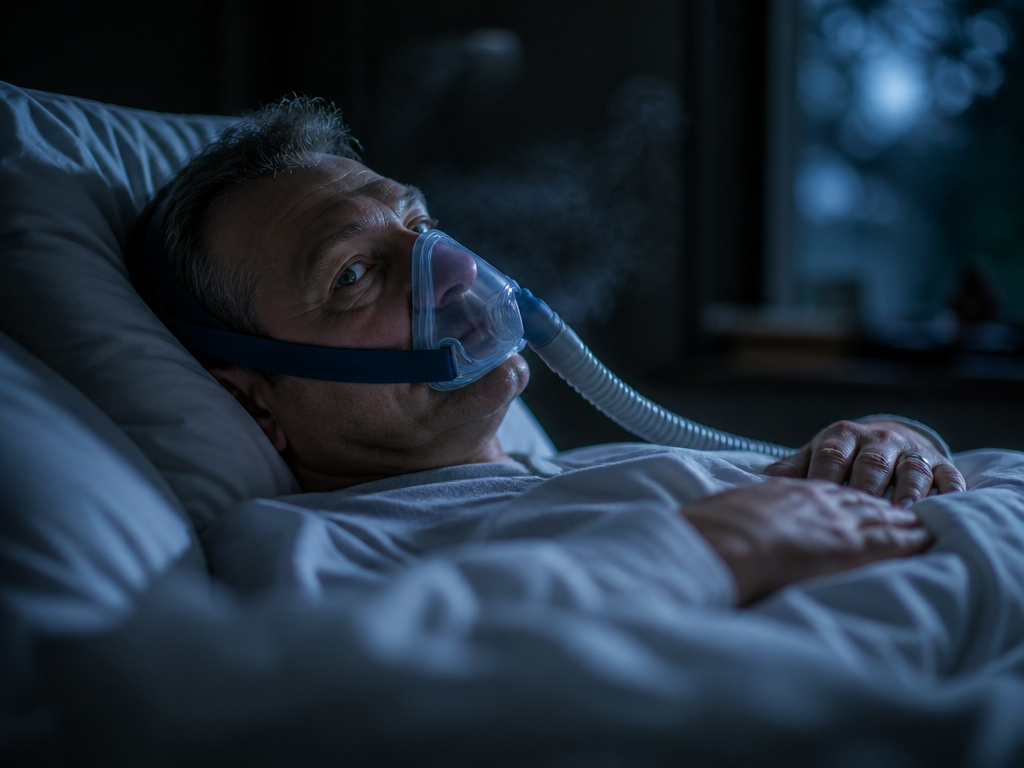
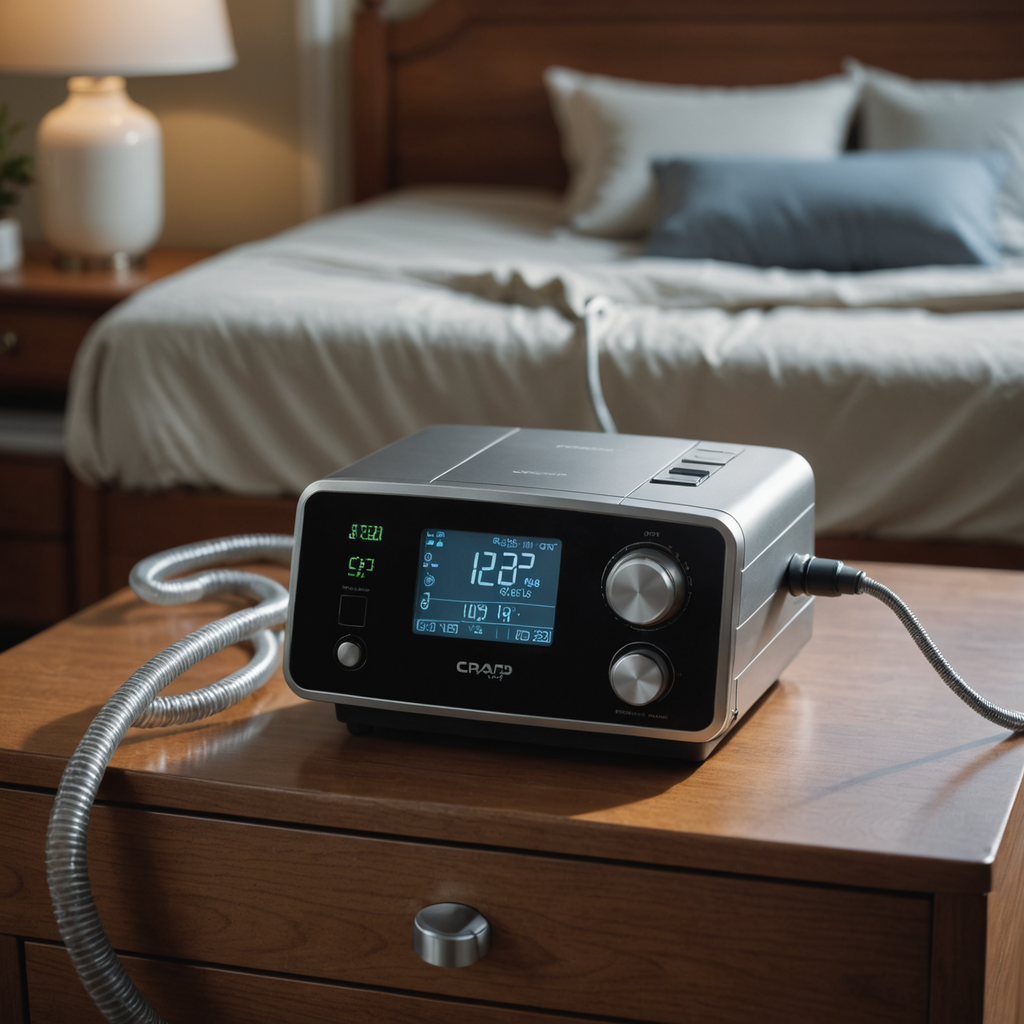
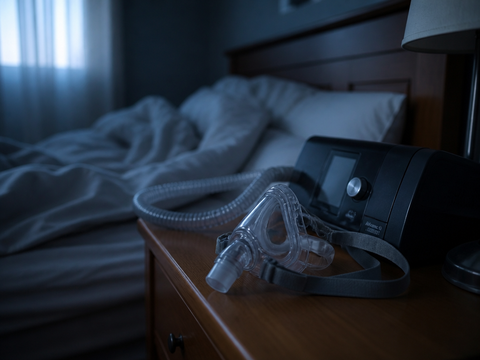
CPAP — continuous positive airway pressure — works by pneumatic splinting: a steady column of pressurized air props the airway open so it can't collapse. When used consistently, it is the most reliable way to drive the AHI down, often into the normal range within the first night. The catch is in that word consistently. Adherence is the whole game, and it's where most benefit is won or lost.
For mild-to-moderate cases, or for people who can't tolerate a mask, a custom oral appliance that holds the lower jaw forward is a legitimate alternative — generally less effective at the severe end, but far better than an unused CPAP. Positional therapy helps the subset whose apnea is worst on their back. Weight management lowers the burden for many. And an implanted hypoglossal nerve stimulator, which gently activates the tongue muscle with each breath, is an option for a specific group who've failed CPAP.
| Treatment | Best suited for | What it does |
|---|---|---|
| CPAP | Moderate to severe OSA | Splints the airway open with air pressure |
| Oral appliance | Mild to moderate, or CPAP-intolerant | Holds the jaw forward to widen the airway |
| Weight loss | Overweight patients, milder cases | Reduces tissue load on the airway |
| Nerve stimulator | Selected CPAP failures | Activates the tongue muscle each breath |
None of these is permanent in the sense people hope for. All of them can give you back the thing the disease takes: continuous, oxygenated, restorative sleep.
An honest rule of thumb
Don't fixate on getting your AHI to zero — chase the number of nights you actually use your treatment, because a machine worn six hours a night beats a perfect prescription gathering dust.