Every newly diagnosed patient hears the same sentence, usually from a sleep tech, sometimes from a forum stranger at 2 a.m.: Just push through the first two weeks, and CPAP gets easier. It's offered as reassurance. It's also the most common thing people quietly stop believing around night nine, when the mask leaks into their eye for the fourth time and they're staring at the ceiling calculating how to fake compliance for the insurance download.
I was diagnosed with moderate obstructive sleep apnea — an AHI of 23 events per hour on a home test — and I wore the machine for 90 consecutive nights, logging the numbers it gave me back. So I can tell you where that advice holds and where it falls apart.
The short version: the advice is directionally true and badly calibrated. CPAP does get easier, the therapy works better than almost anything in sleep medicine, and the dangerous side effects belong to the untreated condition, not the mask — but "two weeks" is a marketing number, and mask fit, not grit, decides whether you make it.
What I actually ran
- Diagnosis: home sleep test, AHI 23 (moderate). Oxygen nadir 84%.
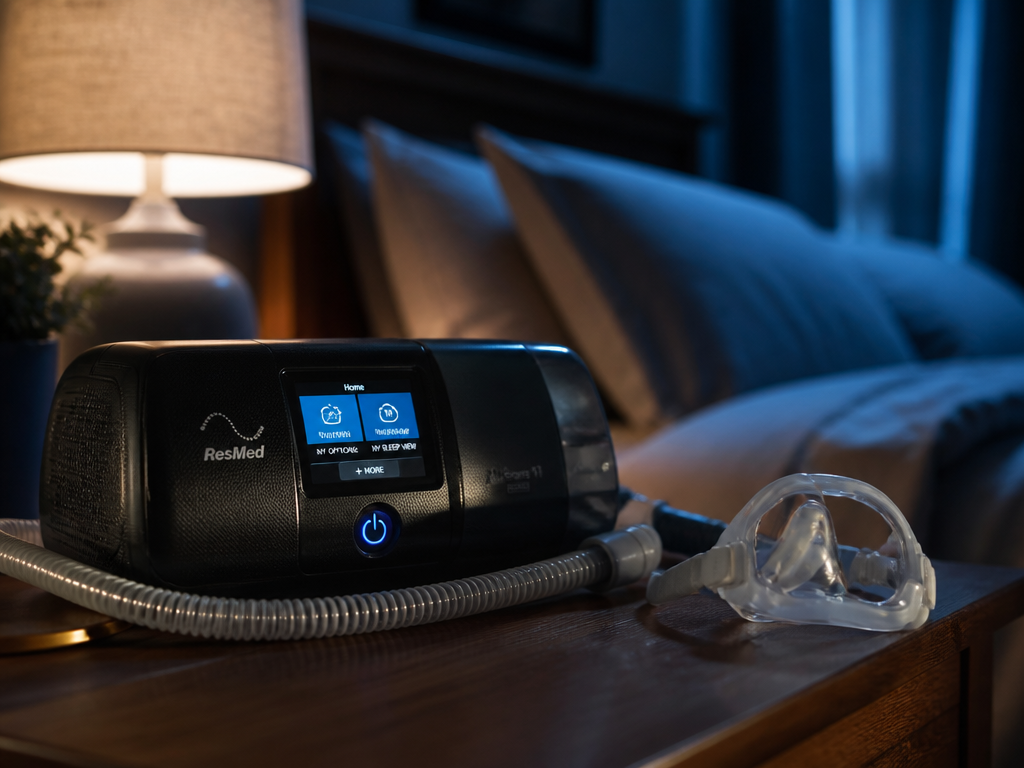
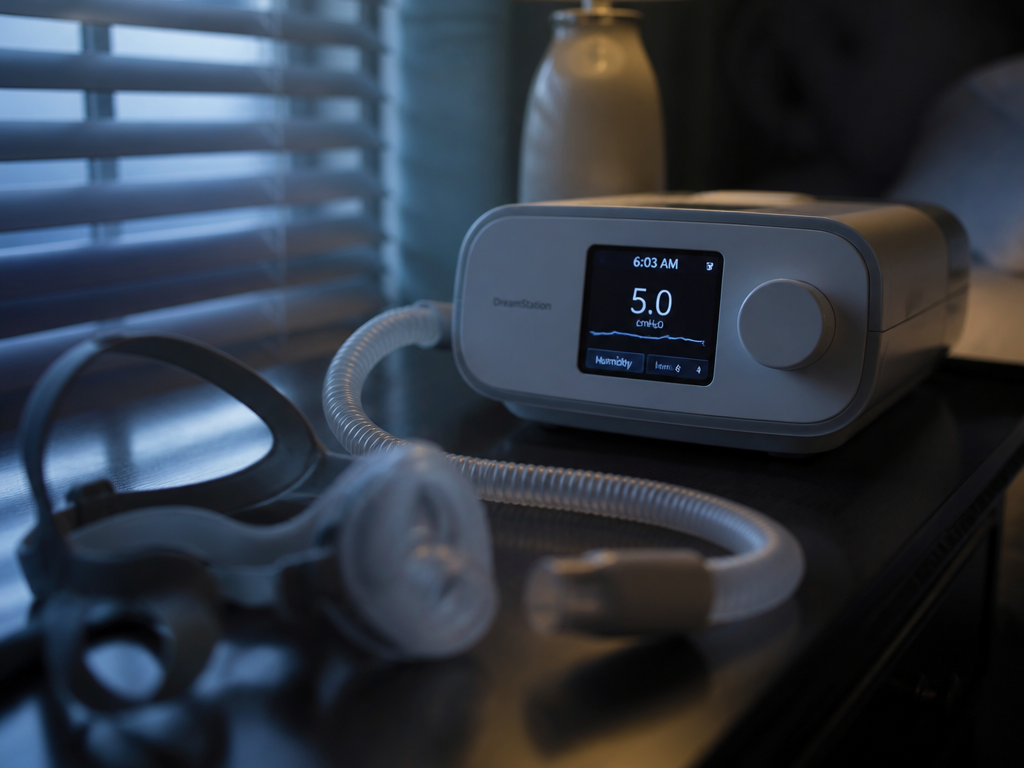
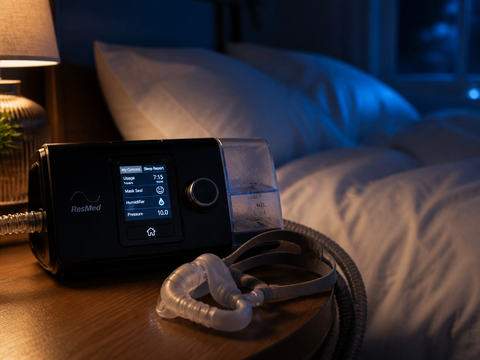
- Machine: ResMed AirSense 11 AutoSet, auto-titrating between 5 and 15 cm H₂O.
- Masks tested: a full-face cushion for the first 30 nights, then a nasal pillow mask for the remaining 60.
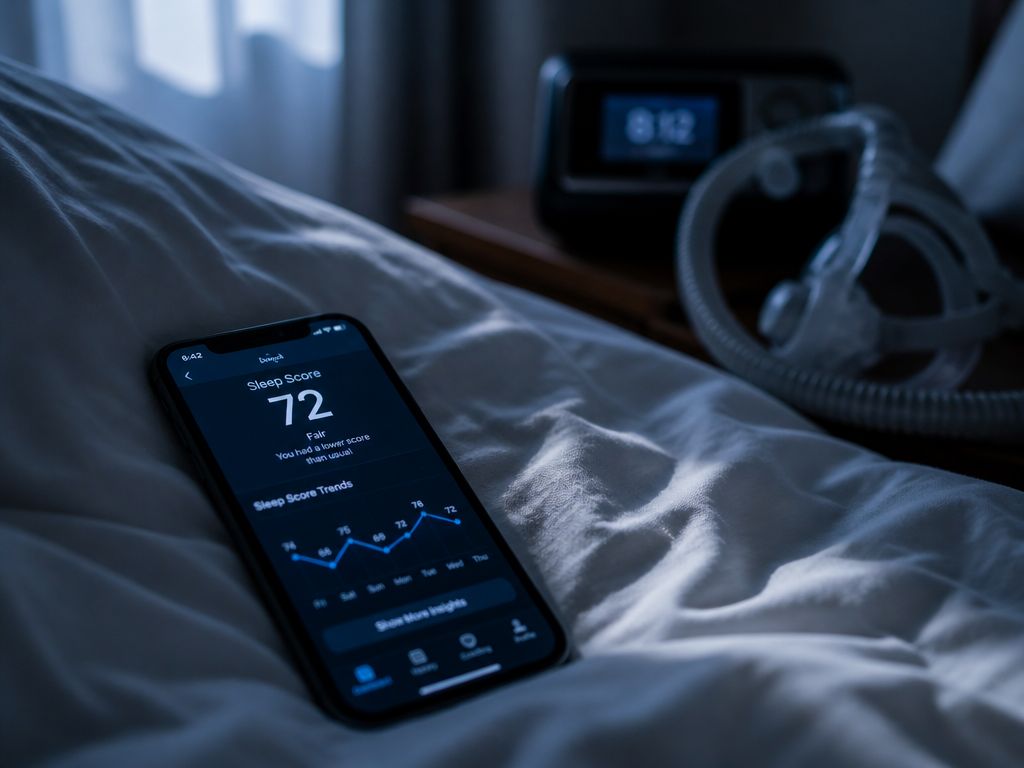
- What I logged nightly: the machine's reported residual AHI, mask leak rate (L/min), hours of use, and a 1–10 morning grogginess score I wrote down before coffee, because coffee is a liar.
I am one person with one face and one palate for discomfort. Treat this as a careful case study, not a trial. But the machine's own telemetry is hard data, and the difference it recorded was not subtle.
Where the advice is roughly right
The adaptation curve is real, and it's steeper than I expected. My machine's residual AHI dropped from 23 (untreated) to 4.1 on the first night I got a decent seal — already inside the "well-controlled" band of under 5. The therapy doesn't ramp up its effectiveness over weeks; the air pressure splints your airway open the first night it actually stays on your face. What ramps up is tolerance, not benefit.
The classic early side effects mostly faded on schedule:
- Dry mouth and throat — bad for the first week with the full-face mask, gone once I switched the humidifier from level 3 to level 5.
- Aerophagia (swallowing air, which is exactly as undignified as it sounds) — present nights 2 through 6, then never again after the auto-pressure settled lower.
- The claustrophobic "I can't breathe out against this" panic — real on night one, mild by night four, absent by night ten.
And the risk comparison is genuinely lopsided. Untreated moderate-to-severe apnea is associated with hypertension, atrial fibrillation, daytime impairment, and a measurably higher cardiovascular event rate over years. CPAP's documented downsides are skin marks, dryness, and the occasional sinus infection. Those are not the same category of problem. Anyone weighing "the mask is annoying" against "untreated apnea" is weighing an inconvenience against a disease.
Where it breaks down
"Two weeks" is fiction for a meaningful minority. My grogginess score didn't cross from "worse than before" to "better than before" until night 19. Talk to enough patients and you find people for whom it took two months, and people who never adapted to a full-face mask and only succeeded after switching hardware. The two-week number describes a median that hides the people the median fails.
Mask fit dominates everything else combined. This is the part the encouraging sentence leaves out. My full-face mask leaked an average of 31 L/min — high enough to wake me and to let the machine over-report good numbers while I slept poorly. The nasal pillow mask dropped that to 2 L/min. Same machine, same pressure, same face. My morning grogginess score improved by three full points on the swap alone. Most "CPAP doesn't work for me" stories I now read as "this mask doesn't fit me," and those are very different problems with the same solution: try another mask before you quit.
Some side effects don't fade. The mask left a red crease across the bridge of my nose that was still there at night 90. Minor, cosmetic, but real, and nobody warned me. Pressure-induced nasal congestion came and went unpredictably. These aren't reasons to stop — they're reasons to stop being surprised.
The numbers, side by side
| Untreated | CPAP, first 2 weeks (poor mask) | CPAP, settled (good mask) | |
|---|---|---|---|
| Residual AHI (events/hr) | 23 | ~9 (leak-inflated) | 3.2 |
| Mask leak (L/min) | — | 31 | 2 |
| Morning grogginess (1–10, lower better) | 7 | 6 | 3 |
| Nights I considered quitting | n/a | 5 | 0 |
The middle column is the one the advice glosses over. It's where people give up — and it's almost entirely a fitting problem, not a willpower problem.
Side effects worth taking seriously vs. noise
Take seriously: persistent high leak (it both ruins sleep and fakes your compliance data), aerophagia that doesn't resolve after pressure adjustment, and any genuine claustrophobic panic that isn't easing by week two — all three are signs to change the mask or call the clinic, not to white-knuckle it.
Mostly noise: the dry mouth (humidifier), the strap marks (cosmetic), the first three nights of feeling absurd (universal, temporary). I spent more anxiety on these than they deserved.
What I couldn't test: long-term cardiovascular outcomes, which require years and a population, not one person and 90 nights. The mortality and blood-pressure benefits of treating sleep apnea come from the research literature, not from my nightstand. I'm reporting on the experience of adaptation, not adjudicating the epidemiology.
Who this is for, and who it isn't
CPAP is for you if your AHI is moderate or higher, you're willing to treat mask fitting as a problem to solve rather than a verdict to accept, and you can give it a real month — not the advertised two weeks. The payoff is large and it arrives fast once the seal is right.
It may not be your first move if your apnea is mild and positional (a wedge pillow or weight change can matter), if you have anatomy a surgeon or dentist should look at first, or if a single mask failure will make you abandon the whole thing. In that last case, the honest answer is to start with a sleep clinic that does in-person mask fittings, not a mailed box.
The more honest version of the rule
The advice isn't wrong. It's just told from the finish line by people who forgot how the middle felt. Here is the version I'd give a worried friend:
It gets easier — but it gets easier the night your mask stops leaking, not the night a calendar says it should. Fix the fit, and the grit takes care of itself.
The mask isn't the therapy. The seal is. Solve the seal and the rest is just sleep.