I bought a $29 pulse oximeter because of a classified listing. Three lines in the county swap column, sitting between a chainsaw and a load of seasoned oak: CPAP/BIPAP machine. Works great. $150. I had been drinking four cups of coffee a day for about a year and calling it a preference. Those three lines made me wonder whether it was a symptom.
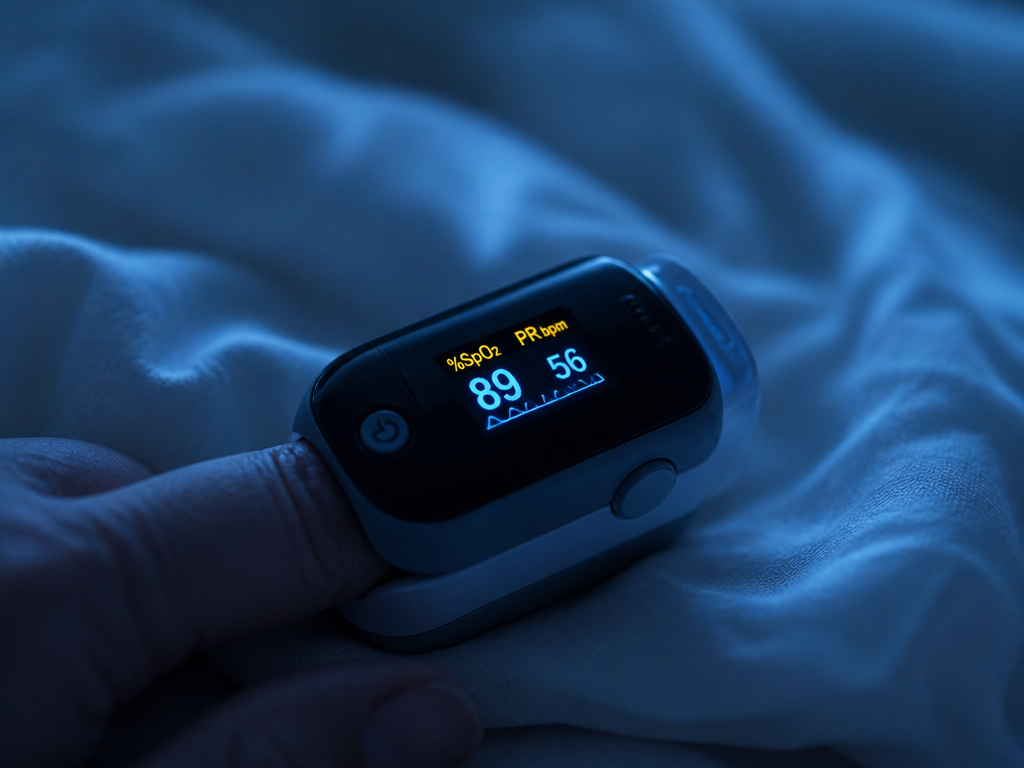
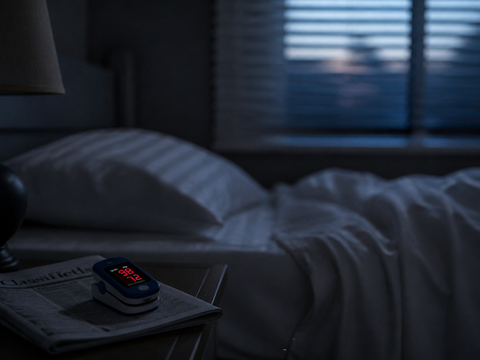
So I ran one night, then a second. One cup — twelve ounces of drip, call it 150 mg of caffeine — at 2 p.m. Oximeter clipped to my left index finger from 11:20 p.m. to 6:40 a.m.
The app counted 31 dips below 90 percent oxygen saturation. The next night I had nothing after breakfast and got 28. That difference is noise. I am one person with a consumer-grade sensor and no control over a hundred variables, and this proves nothing general about caffeine and breathing.
But it settled something local. The coffee was not making my oxygen fall. Something in my throat was. The coffee was what I had been doing about it.
Can you actually buy a used CPAP machine?
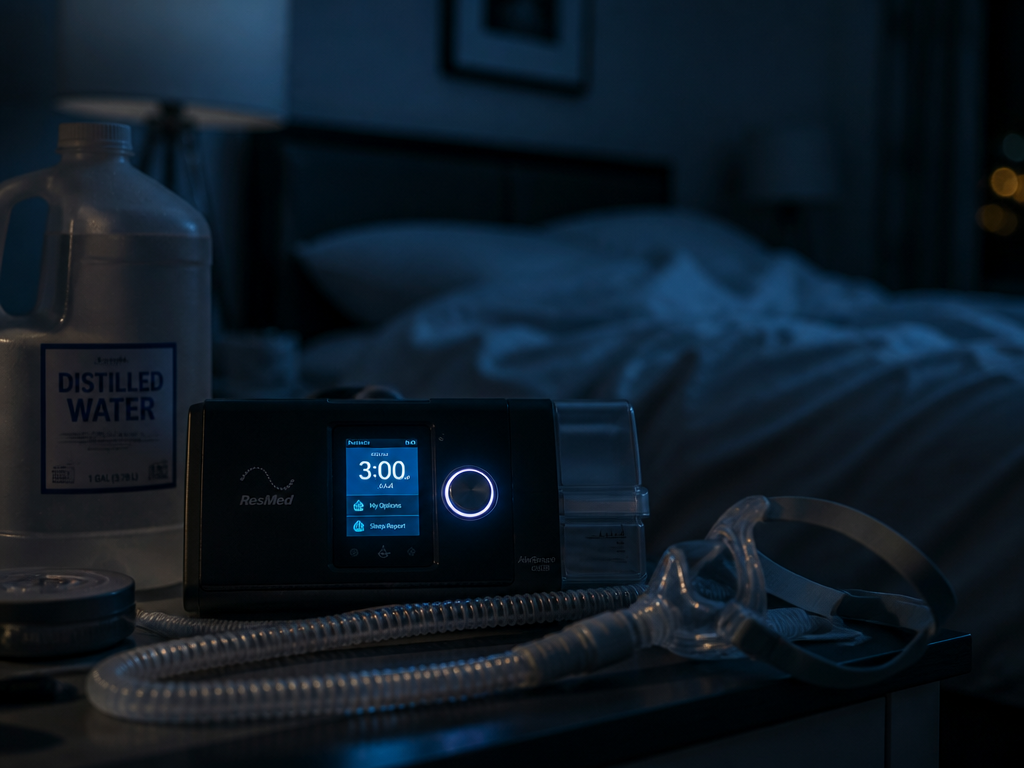
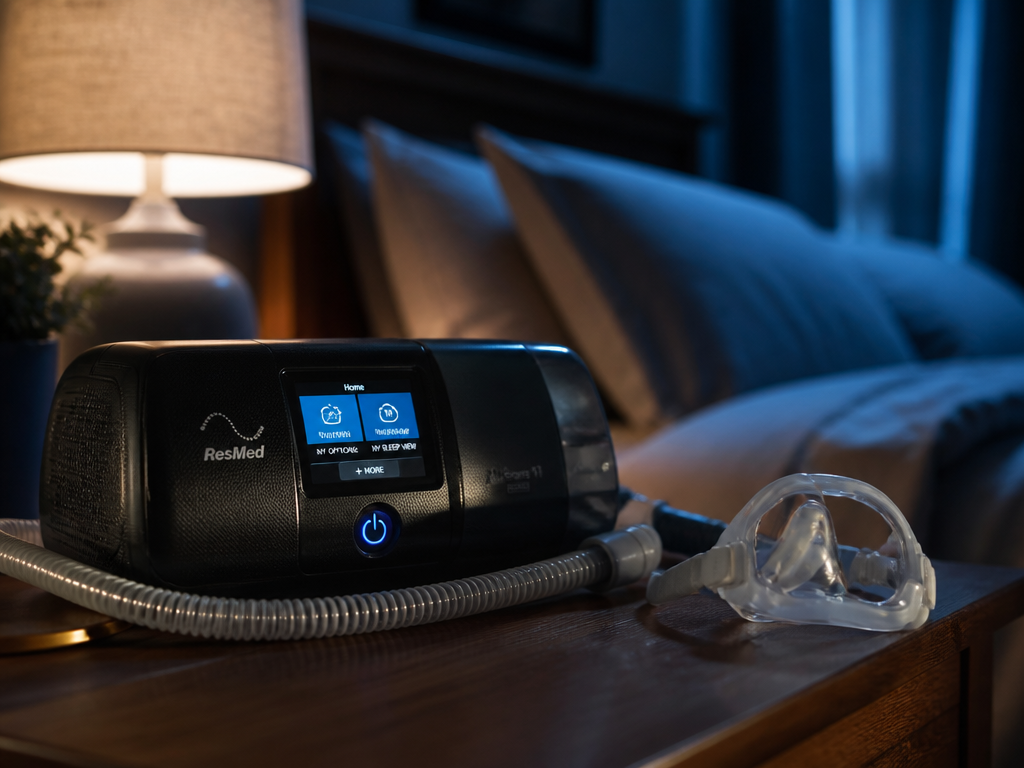
You can buy the hardware. You cannot use it correctly without a prescription, because the prescription is the therapy and the machine is just the pump that delivers it. In the United States, positive airway pressure devices are Class II prescription medical devices. That is why eBay's medical device policy bans listing them, and why the machines migrate instead to Facebook groups, church bulletin boards, and the classifieds page of a county radio station.
Whether a private individual selling a late parent's machine counts as "distributing" a restricted device is a question nobody enforces at that scale. Buying it is not the risky part. Guessing at the pressure is. A CPAP set two centimeters of water too low treats nothing and feels like sleeping in a wind tunnel for no reason; set too high, it drives air into the stomach and wakes you up more than the apnea did. The number comes out of a titration study or an auto-adjusting algorithm working inside a prescribed range. It does not come out of a stranger's memory of what worked for him.
What happens in your throat, in the order it happens
Here is the sequence, start to finish, in the order your body performs it.
You fall asleep, and muscle tone drops across the body — including the genioglossus and the other pharyngeal dilators whose job is to hold a soft, unsupported tube open. The airway narrows. You inhale, which by definition means generating negative pressure inside that tube. A narrowed floppy tube under negative pressure does what physics says it will: it collapses.
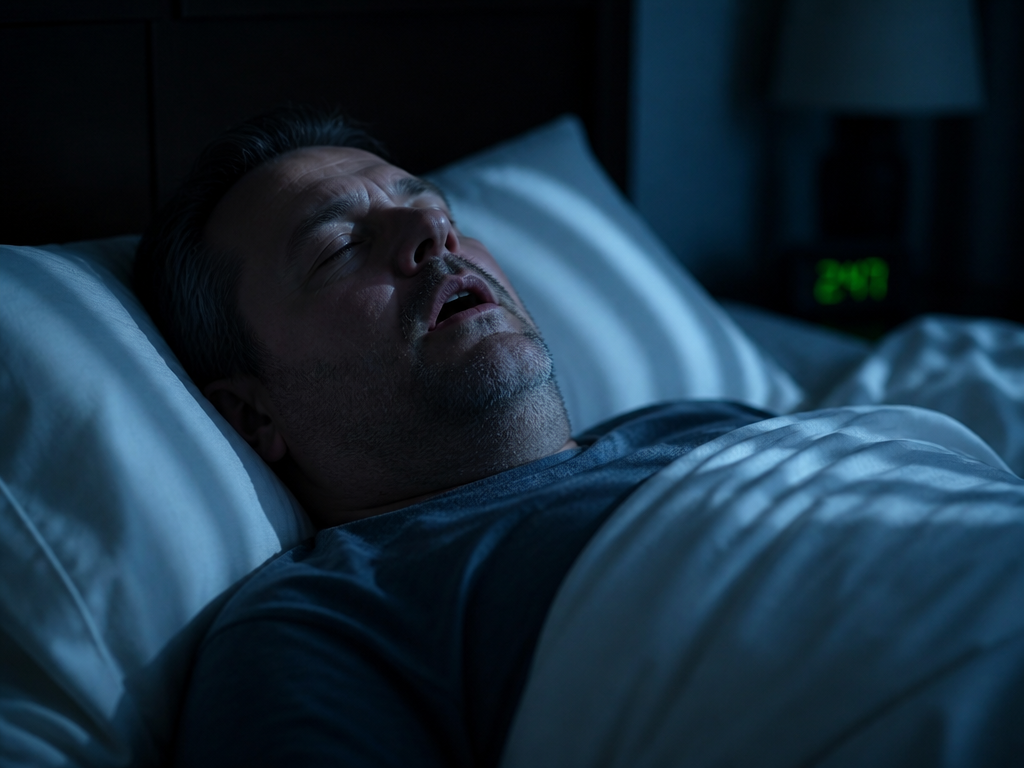
Airflow stops. Your chest keeps working against a closed door, sometimes for thirty seconds or more. Oxygen saturation falls, carbon dioxide climbs, and chemoreceptors in the carotid bodies and brainstem register both. The response is a surge of sympathetic output — heart rate up, blood pressure up — and a cortical arousal lasting perhaps three seconds. Muscle tone returns. The airway springs open. You gasp, and you do not remember any of it.
Then you fall asleep, and it happens again. Five times an hour is the diagnostic threshold with symptoms. Thirty times an hour is severe. Some people run past sixty.
The injury here is not primarily to the lungs. It is to sleep continuity — deep and REM sleep chopped into fragments — and to a cardiovascular system that spends the night in repeated sympathetic surges instead of the dip it is supposed to get.
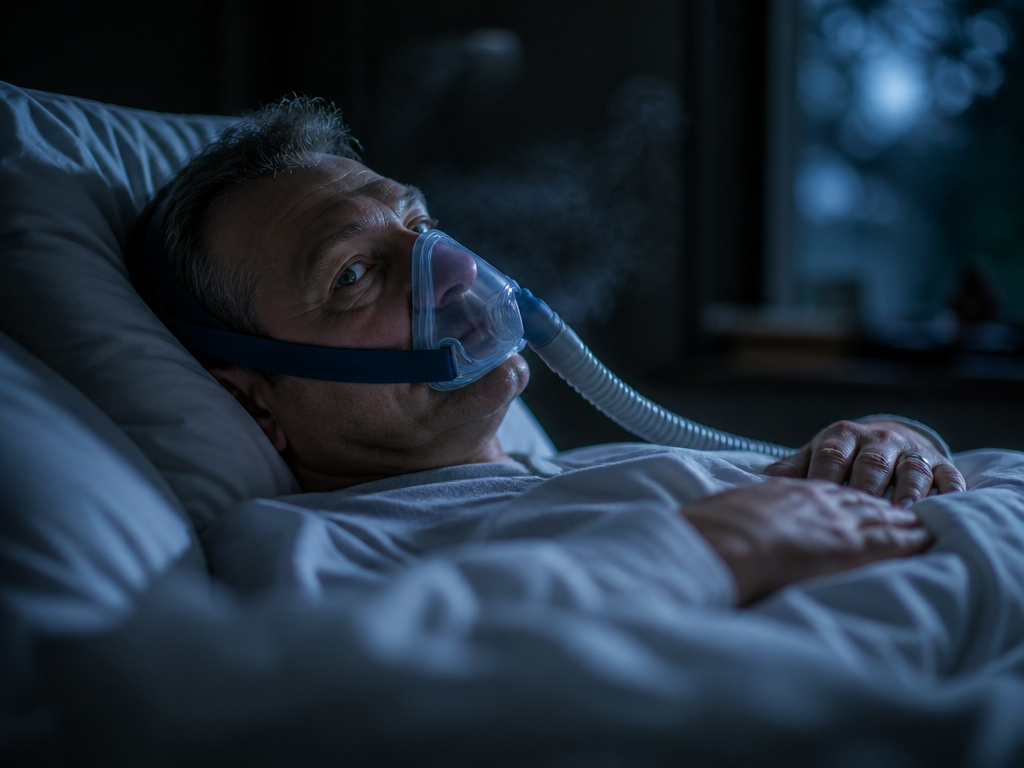
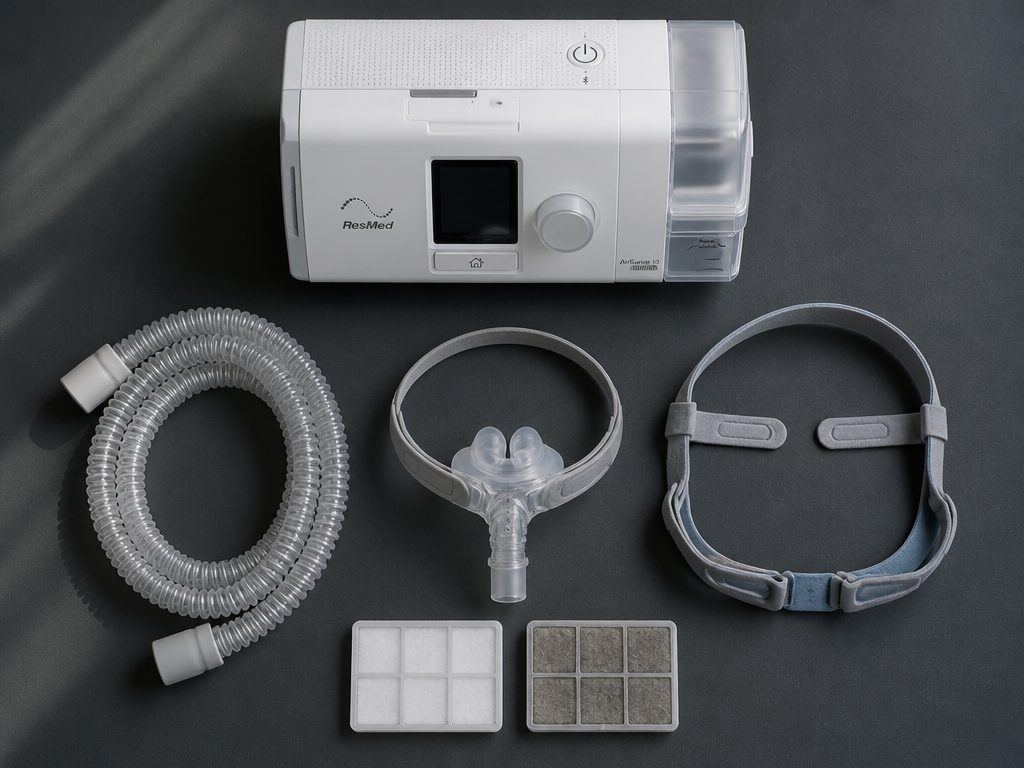
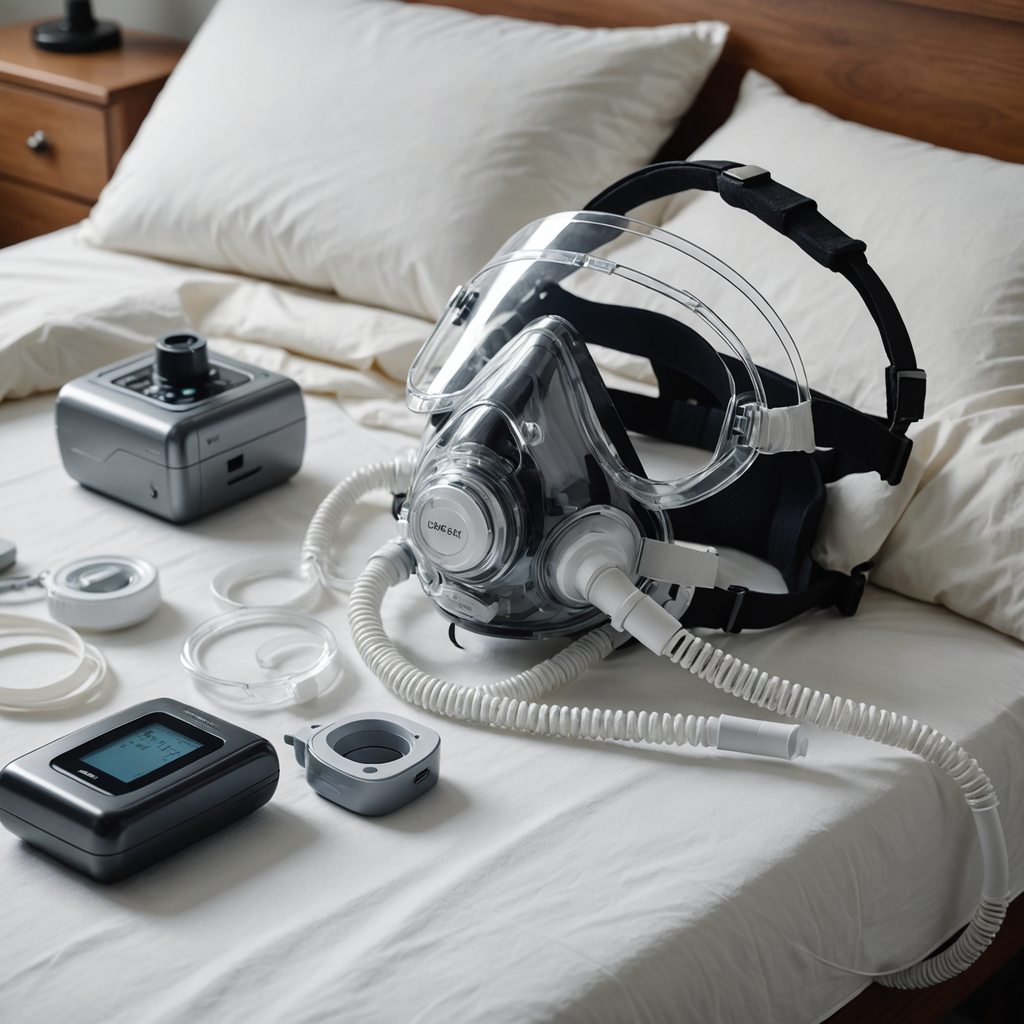
CPAP interrupts that loop at step three. It is a pneumatic splint: a blower delivering a continuous column of air, usually somewhere between 4 and 20 cm H₂O, that holds the airway open from the inside. It does not breathe for you. Bilevel machines deliver two pressures, higher on inhalation and lower on exhalation, and get prescribed for hypoventilation, COPD overlap, or people who cannot tolerate a high fixed pressure. A listing that offers "CPAP/BIPAP" as if the two were interchangeable is telling you the seller does not know which one is in the box.
What the caffeine was actually doing
Adenosine accumulates in the brain across waking hours, a byproduct of the ATP your neurons spend. It binds A1 and A2A receptors, and that binding is a large part of what sleepiness feels like from the inside. Caffeine is a competitive antagonist at those receptors: it occupies the site without activating it. The adenosine keeps piling up behind the blockade. Nothing gets paid down.
Caffeine's half-life in a healthy adult runs a median of about five hours, with a real-world spread of roughly two to eight depending mostly on your CYP1A2 activity, and stretching considerably in pregnancy or on oral contraceptives. My 150 mg cup at 2 p.m. left about 75 mg circulating at 7 and roughly 37 mg at midnight — a quarter cup, still binding.
The study people cite here is Drake et al. (2013), Journal of Clinical Sleep Medicine: 12 subjects, 400 mg of caffeine administered at bedtime, three hours before, and six hours before, measured at home with sleep diaries and actigraphy. The six-hour dose still cost more than an hour of total sleep time. The finding that sticks is that subjects were poor at noticing it themselves.
But none of that explains the dips on my finger, and this is where a piece of folk wisdom deserves to be named. You will occasionally hear that caffeine helps sleep apnea. That belief traces to something real and completely inapplicable: caffeine citrate is a genuine first-line treatment for apnea of prematurity, established by Schmidt et al. (2006) in the New England Journal of Medicine, which randomized more than 2,000 preterm infants and found reduced bronchopulmonary dysplasia alongside the apnea benefit. That is central apnea — an immature brainstem forgetting to send the signal. Adult obstructive apnea is a tube collapsing. A respiratory stimulant does not fix a mechanical problem. Same word, different disease.
What the evidence supports, and how firmly
Well-established: CPAP, used consistently, reduces daytime sleepiness and improves quality-of-life scores in moderate-to-severe obstructive sleep apnea. Dozens of randomized trials agree.
Plausible but thinner than the confidence with which it's stated: that CPAP prevents cardiovascular events in the real world. The SAVE trial — McEvoy et al. (2016), also NEJM, 2,717 patients with moderate-to-severe apnea and existing cardiovascular disease — found no reduction in heart attacks or strokes versus usual care. Average adherence was 3.3 hours a night. You can read that as "CPAP doesn't protect the heart" or as "3.3 hours doesn't protect the heart," and reasonable people read it both ways. Medicare's compliance definition, four hours a night on 70 percent of nights, is a billing rule that quietly encodes the same uncertainty.
For scale: Benjafield et al. (2019), Lancet Respiratory Medicine, estimated 936 million adults aged 30 to 69 worldwide with mild-to-severe obstructive apnea. Most have never been tested. A great many of them are managing it with coffee.
What three lines don't tell you
| The ad says | What to ask before you drive out there |
|---|---|
| "Works great" | What does the blower-hour counter read? Twenty thousand hours is about seven years at eight hours a night. |
| "$150" | Is the SD card or app history intact? Usage hours, leak rate, and residual events are all on it. |
| "CPAP/BIPAP" | Which one — fixed, auto-adjusting, or bilevel? At what pressure range? |
| "Includes mask" | Assume you replace mask, cushion, tubing, and water chamber. Budget $100 to $200. |
| Nothing about the seller | Why is it for sale? "Couldn't tolerate it" often means a high prescribed pressure. |
An honest rule of thumb
Measure before you buy. Tonight, if you're at four cups and it has stopped feeling like a lift and started feeling like maintenance, put the last one before noon and see what happens over a week. If nothing changes — if you're still gone by two in the afternoon on a fraction of the dose — the problem is upstream of the coffee, and the next $150 belongs to a home sleep apnea test rather than a stranger's machine. Four bought coffees a day is north of $4,000 a year. The test is a rounding error against that.
I did not call the number in the ad. I called the clinic instead, and I am waiting on the test. The coffee has settled at two cups, the last one at 10:40 a.m. — early enough that by the time I lie down, whatever is happening in my throat is the only thing left keeping me up. On the oximeter: consumer wrist and finger units average saturation over a rolling window of several seconds, which means brief desaturations get smoothed away. My 31 dips are a floor, not a count. It is a reason to get tested, not a substitute for it.