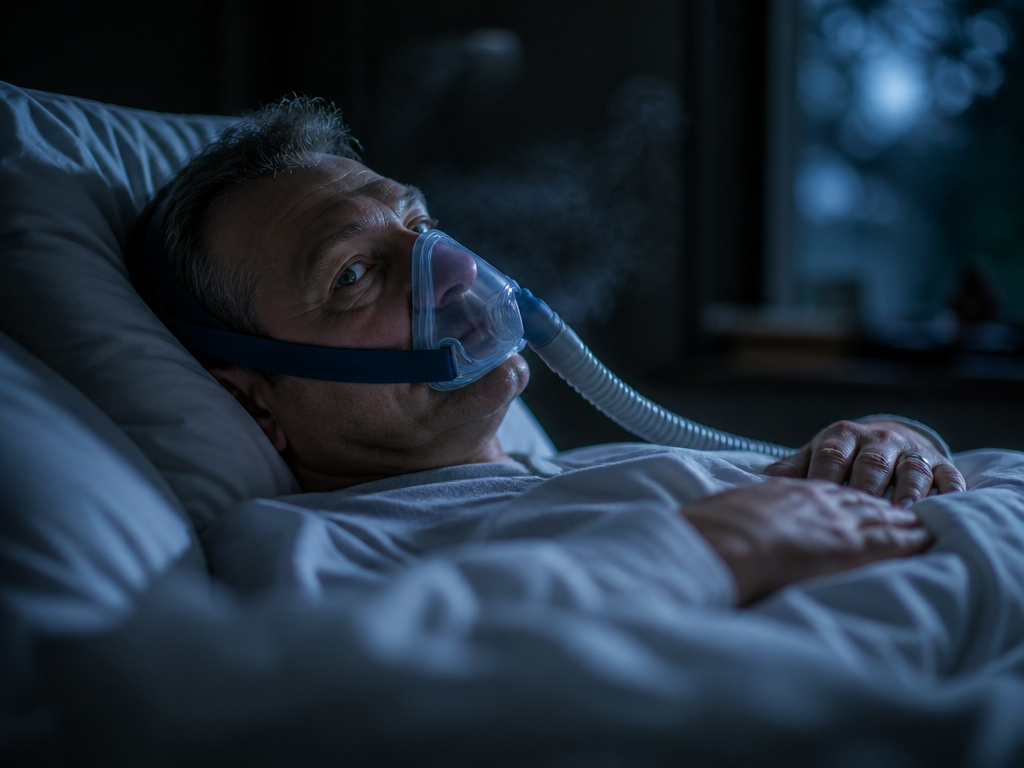
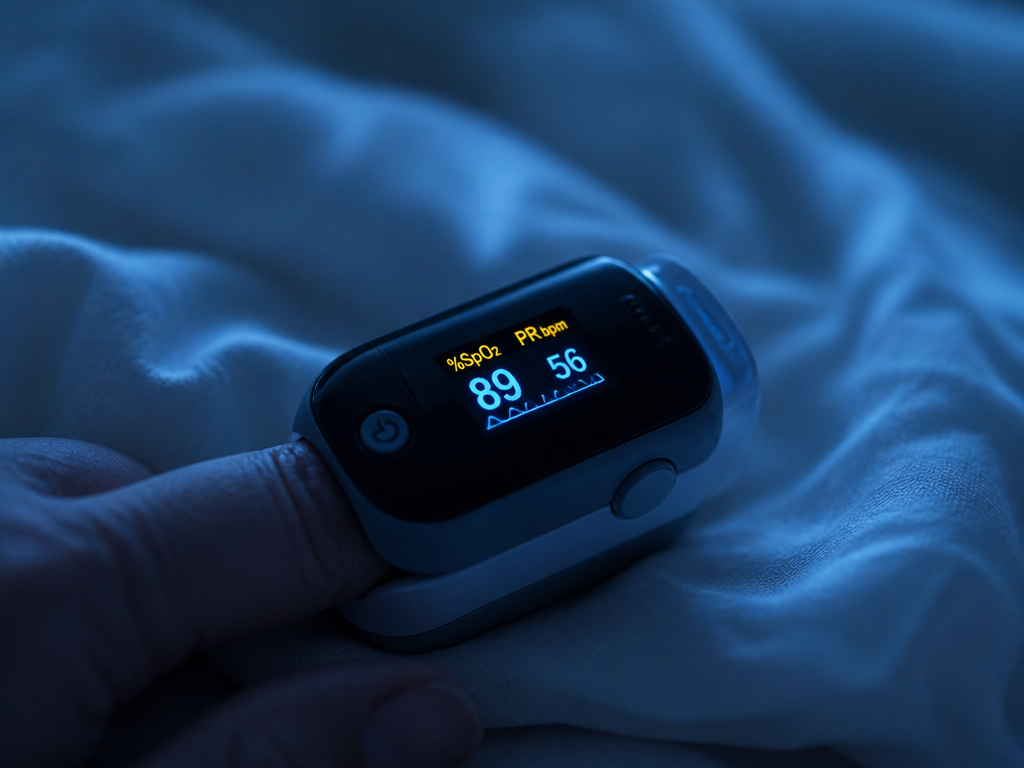
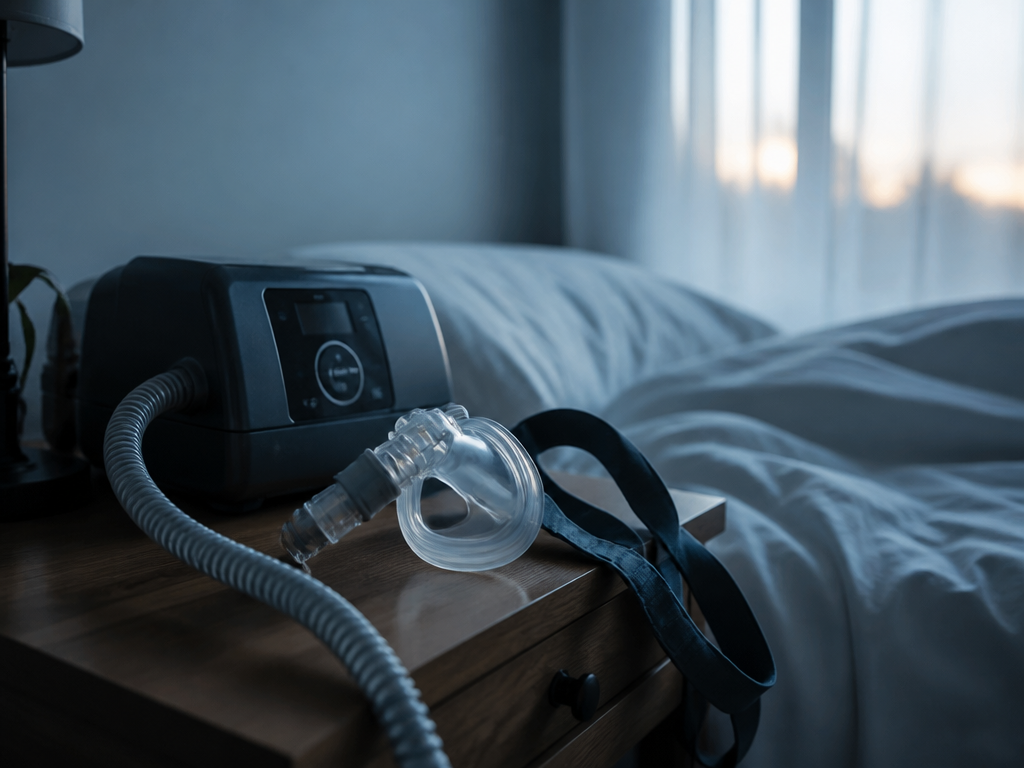
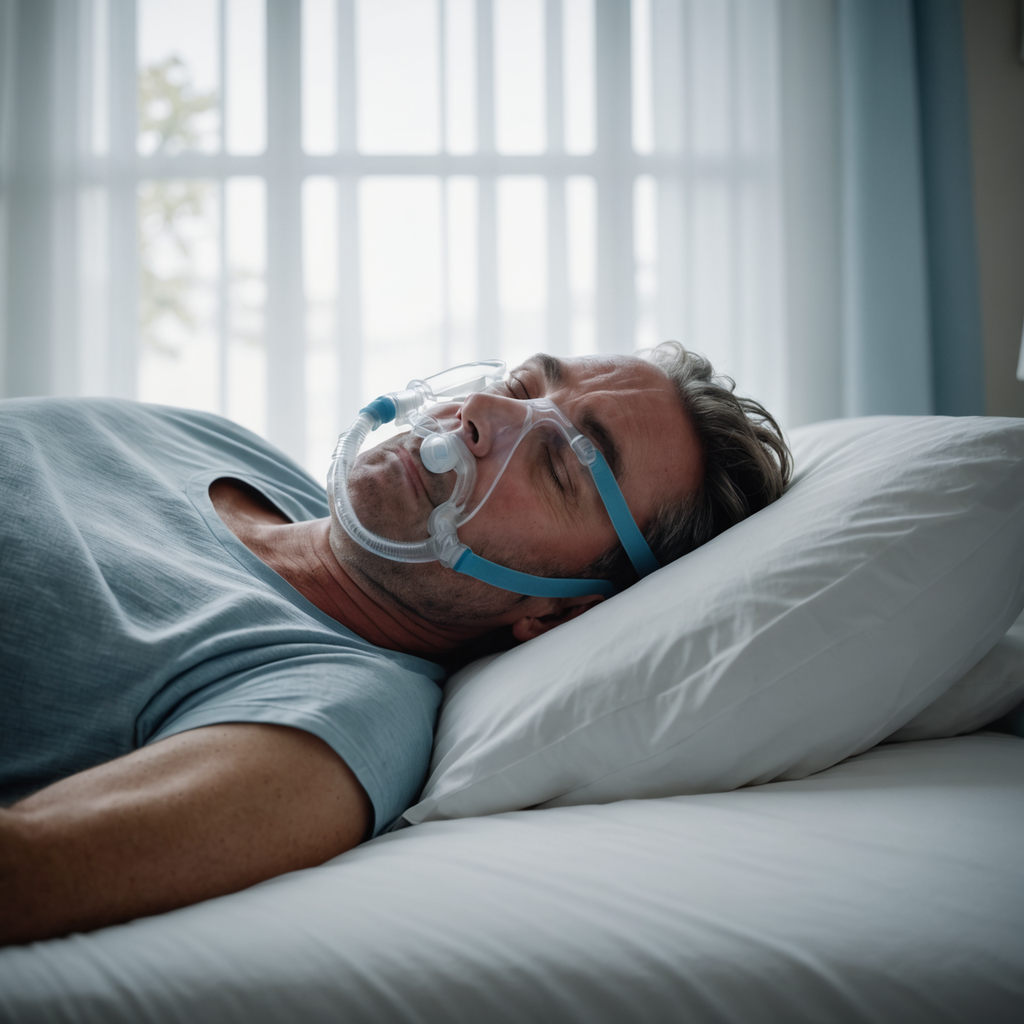
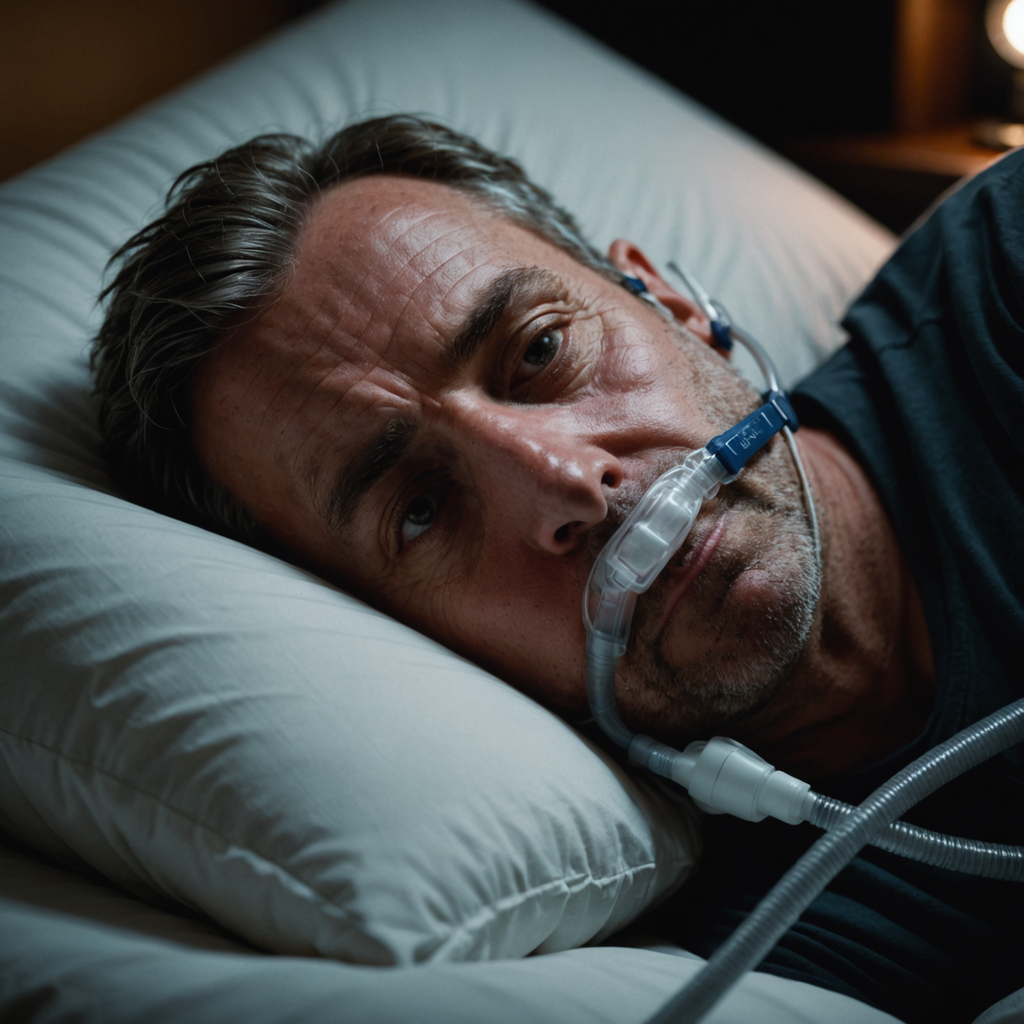
The number you'll hear is 50 percent. Roughly half of people prescribed CPAP for obstructive sleep apnea aren't using it well a year later. The figure gets repeated in clinics and on forums with a faint moral undertone, as if adherence were a character test that half the class fails.
It isn't. Sleep apnea treatment fails for mechanical reasons more often than motivational ones, and most of those reasons happen to the air before they ever happen to the person. A patient who "quit CPAP" usually quit something more specific: a dry throat at 3 a.m., a nose that felt sandblasted by morning, a mask that turned the bed into a wind tunnel. The body registered a problem and pulled the plug. Calling that noncompliance is like calling a cough a personality flaw.
So let's follow the air. Not the patient — the air. Where it enters, what it does to tissue, and where in that journey therapy tends to come apart.
What the research actually measured
The 50 percent figure has a precise and slightly arbitrary definition behind it. The standard for "adherence" in the United States, set by the Centers for Medicare & Medicaid Services, is using the machine at least 4 hours per night on 70 percent of nights over a 30-day stretch. That's the bar. It's a billing threshold, not a biological one — four hours was never claimed to be the dose that fixes you.
The often-cited synthesis is Rotenberg, Murariu, and Pang (2016), Journal of Otolaryngology – Head & Neck Surgery, which reviewed two decades of adherence studies and found that nonadherence had not improved meaningfully over twenty years — hovering around 34 percent by that 4-hour standard. Earlier, the foundational reference is Weaver and Grunstein (2008) in Proceedings of the American Thoracic Society, who put the rate of patients failing to meet the threshold at 46 to 83 percent depending on how you define it.
Two honest caveats. First, those numbers predate the auto-adjusting machines and gentler masks now common, so current real-world adherence is probably somewhat better. Second — and this matters — much of the early dropout happens fast. Studies tracking the first week consistently find that people who will eventually abandon therapy often signal it within the first few nights. Whatever's driving them off acts early. That points away from slow-burn motivation and toward something acute and physical.
Why do so many people stop CPAP?
The most common reason people stop CPAP is physical discomfort from the airflow itself — nasal congestion, dryness of the nose and throat, and mask-related irritation — not a lack of willpower or belief in the diagnosis. Survey work on barriers to adherence repeatedly surfaces the same cluster: dry mouth, nasal symptoms, and mask leak near the top, often ahead of claustrophobia or noise. These are tissue complaints. They have mechanisms, and mechanisms can be engineered around.
The unglamorous truth is that the single most modifiable barrier in that list is also one of the least discussed when a machine is first handed over: what the pressurized air does to the mucous membranes it travels across.
Follow the air
A CPAP doesn't add oxygen. It adds pressure — a continuous splint of moving air, typically somewhere between 4 and 20 cm H₂O, that holds the floppy upper airway open so it can't collapse and choke off breathing. The pressure is the therapy. But pressurized, fast-moving air has properties that ordinary breathing doesn't, and the body meets those properties surface by surface.
At the nose
Inhaled air normally enters slowly and gets conditioned on the way in. The nasal turbinates — scrolls of vascular tissue along the nasal walls — warm incoming air to near body temperature and saturate it with moisture, all in the few centimeters between nostril and throat. It's an efficient little humidifier you were born with.
Now push that air faster and at higher volume. The contact time drops. The turbinates can't keep up, so air arrives at the back of the nose cooler and drier than the tissue expects. Cool, dry air on the nasal mucosa triggers a reflex the body uses for exactly this situation: it increases blood flow and mucus production to defend and rehydrate the lining. The result is the classic early-CPAP complaint — a stuffy, runny, congested nose. The congestion then narrows the passage, the machine reads the resistance and may climb in pressure, and the airflow gets harsher still. The loop tightens.
In the throat and sinuses
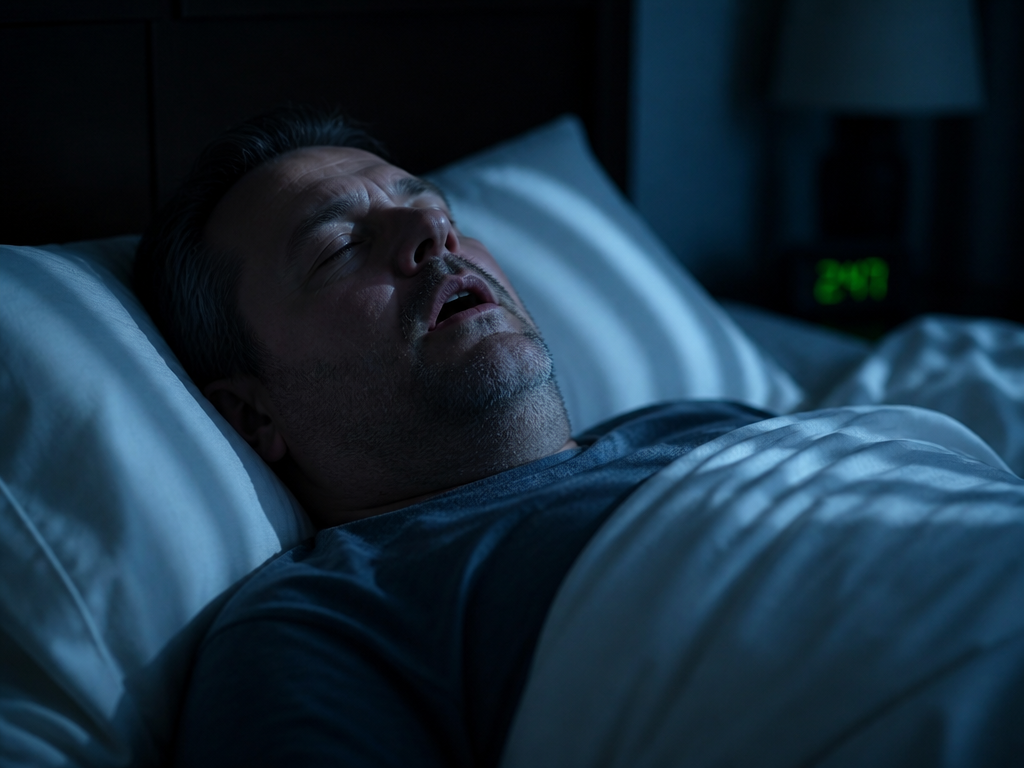
Air that escaped the nose's conditioning arrives at the pharynx still thirsty. This is worse for mouth-breathers and for anyone whose jaw drops open in sleep, because air entering through the mouth bypasses the turbinates entirely — it gets no warming, no humidifying, nothing. Add a small mask leak, common as muscles relax in deeper sleep, and you create a one-way draft: humid air the body exhaled is replaced by dry pressurized air faster than the mucosa can rewet itself.
The tissue dries from the surface down. Mucus, which is mostly water, thickens as water leaves it. Thick mucus moves poorly — the cilia that sweep it along stall — so the throat feels coated and raw, the sinuses feel pressured, and the protective mucus blanket that normally traps pathogens degrades. Morning sore throat, hoarseness, nosebleeds in dry climates: these aren't side effects of the diagnosis. They're the predictable physics of moving unconditioned air across wet tissue for seven hours.
At the brain
Here's where compliance actually dies. None of the above wakes a person dramatically. It produces micro-arousals — brief, often unremembered shifts toward lighter sleep when the throat tickles or the nose blocks or the mouth goes parched. Sleep apnea was already fragmenting this person's nights with its own arousals; that's the disease. The cruel irony is that poorly conditioned therapy can layer a second source of arousal on top, so the patient wakes still tired, concludes "this thing isn't helping," and reaches for the off switch.
That conclusion is rational from the inside. It's also, frequently, wrong about the cause. The therapy was working on the airway. The discomfort was working on the brain. The brain won.
What humidification actually does
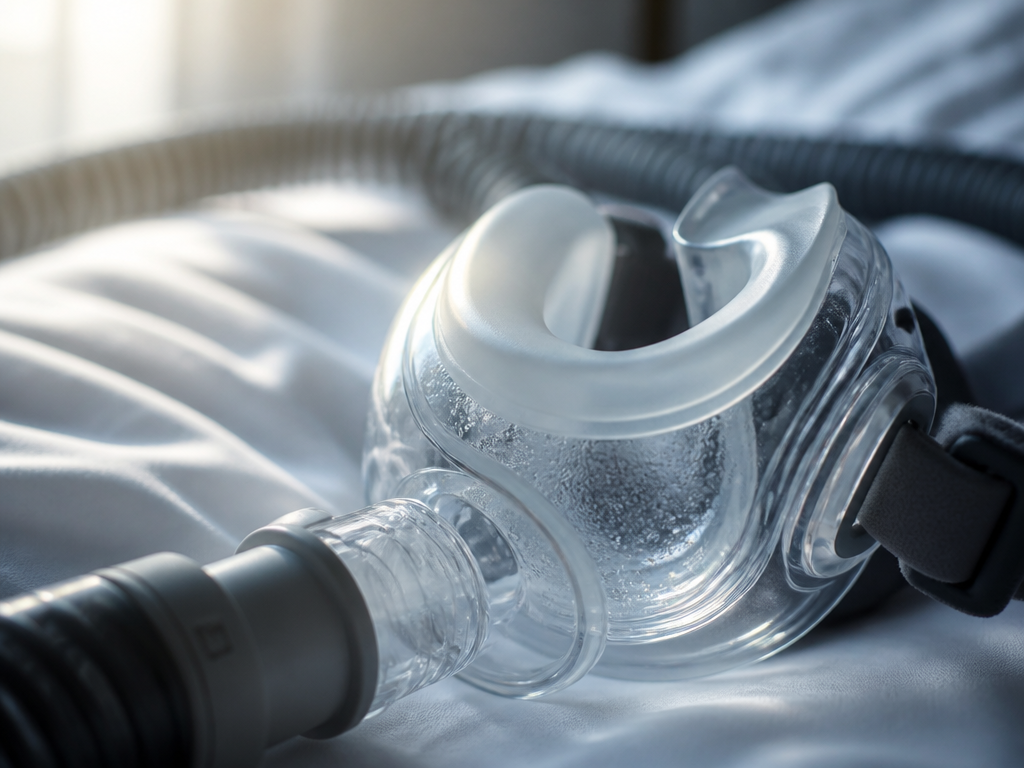
This is the addressable part. Heated humidification — a water chamber the air passes over, often paired with a heated tube to keep the moisture from condensing before it reaches the mask — reintroduces what the natural nose would have added if it had the time. It pre-conditions the air so the turbinates and pharynx aren't doing emergency duty all night.
The evidence here is solid for symptoms, more modest for hard adherence numbers. Early work — the commonly cited reference is Massie et al. (1999), Chest, a randomized crossover trial — found that heated humidification reduced upper-airway dryness symptoms and improved how long patients used the machine compared with dry CPAP or passover (unheated) humidification. Later reviews have been more cautious: humidification reliably cuts nasal and throat side effects, but its effect on whether someone clears that 4-hour bar a year out is real but smaller than you'd hope, partly because mask fit, pressure tolerance, and follow-up all pull in their own directions. Call it well-established for comfort, plausible-but-mixed for raw long-term adherence.
The point of the mechanism walk isn't that humidity is a magic fix. It's that the failure has a location. If you know where the air is hurting — nose, throat, or the leak that dries both — you can aim the intervention instead of blaming the patient.
An honest rule of thumb
If your nose is the problem, raise the humidity before you fight the pressure.
Concretely: if you wake with a dry or burning nose or throat in the first two weeks, turn the humidifier up a step or two and, if your machine has it, warm the tube before you do anything drastic. If you instead wake with a wet, congested, runny nose, that can be too much humidity condensing — try lowering it. And if your mouth is bone-dry every morning, the issue is probably leak: your jaw is opening, and no amount of humidity survives a draft. A chin strap or a full-face mask addresses the cause; cranking the water won't.
| Morning symptom | Likely location | First thing to try |
|---|---|---|
| Dry, raw throat or nose | Under-humidified air | Raise humidity / heat the tube |
| Wet, stuffy, runny nose | Over-humidified, condensing | Lower humidity a step |
| Bone-dry mouth | Mouth leak / open jaw | Chin strap or full-face mask |
Give any single change three or four nights before judging it. Tissue adapts slowly, and your sleep is a noisy signal.
I keep my humidifier one notch higher in winter than in summer, because the bedroom air is drier and I learned — the hard way, after a week of waking with a throat like paper — that the machine can't conjure moisture the room doesn't have. It's a small adjustment that takes ten seconds twice a year. The therapy didn't change. The air did, and I followed it.