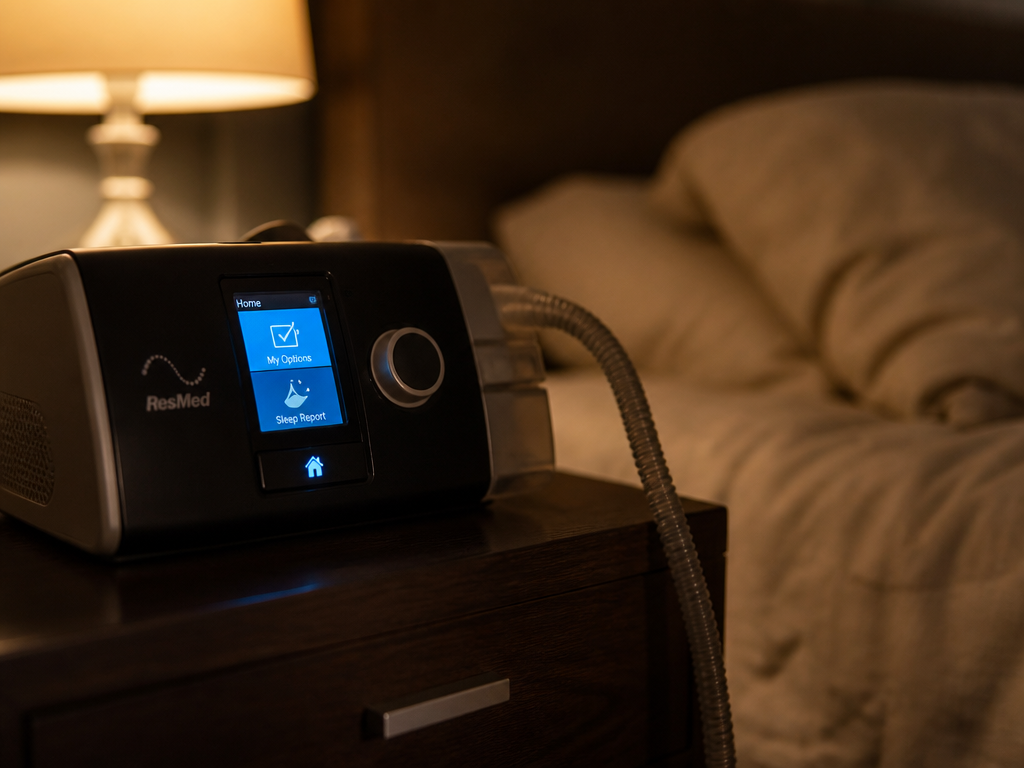
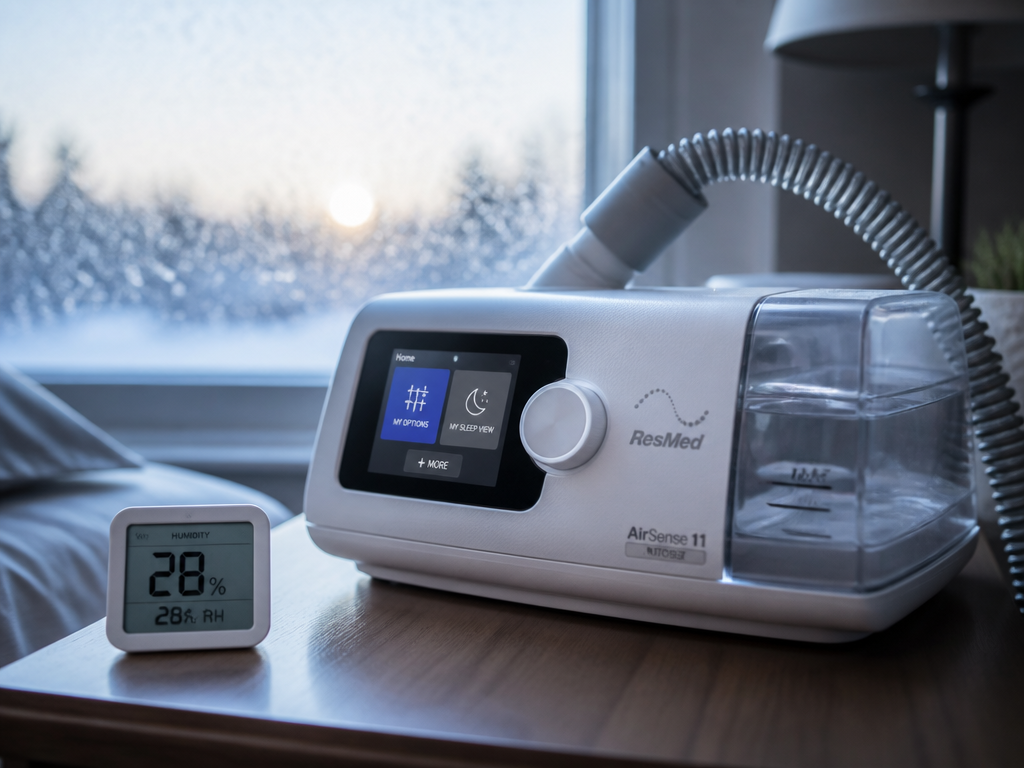
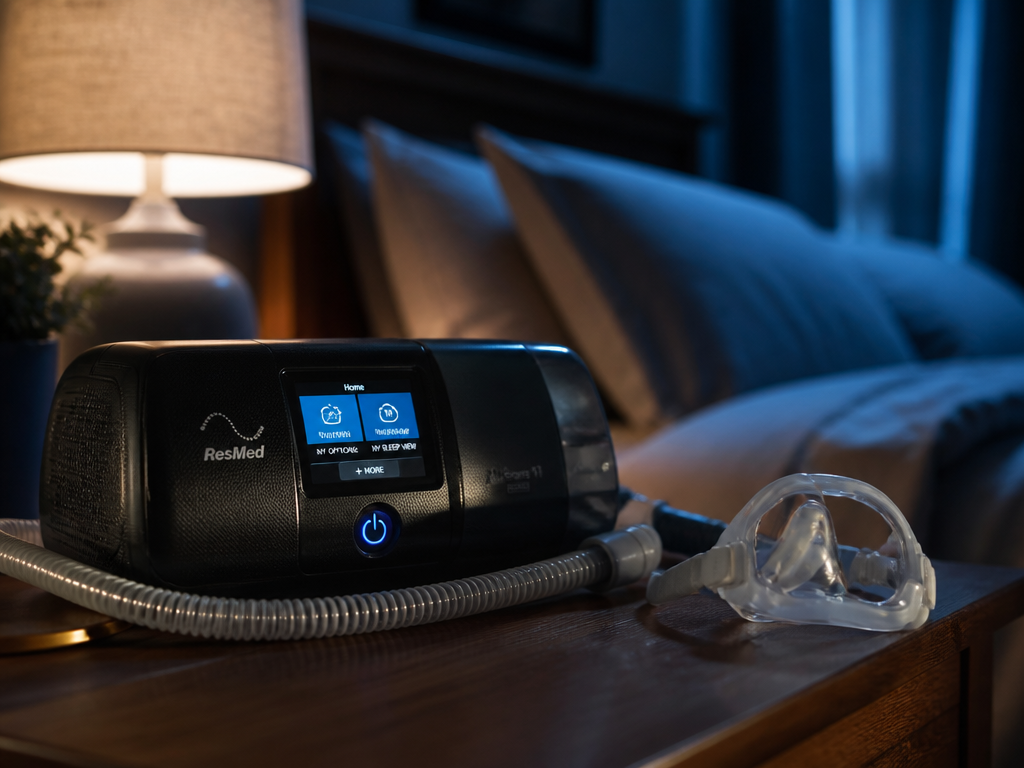
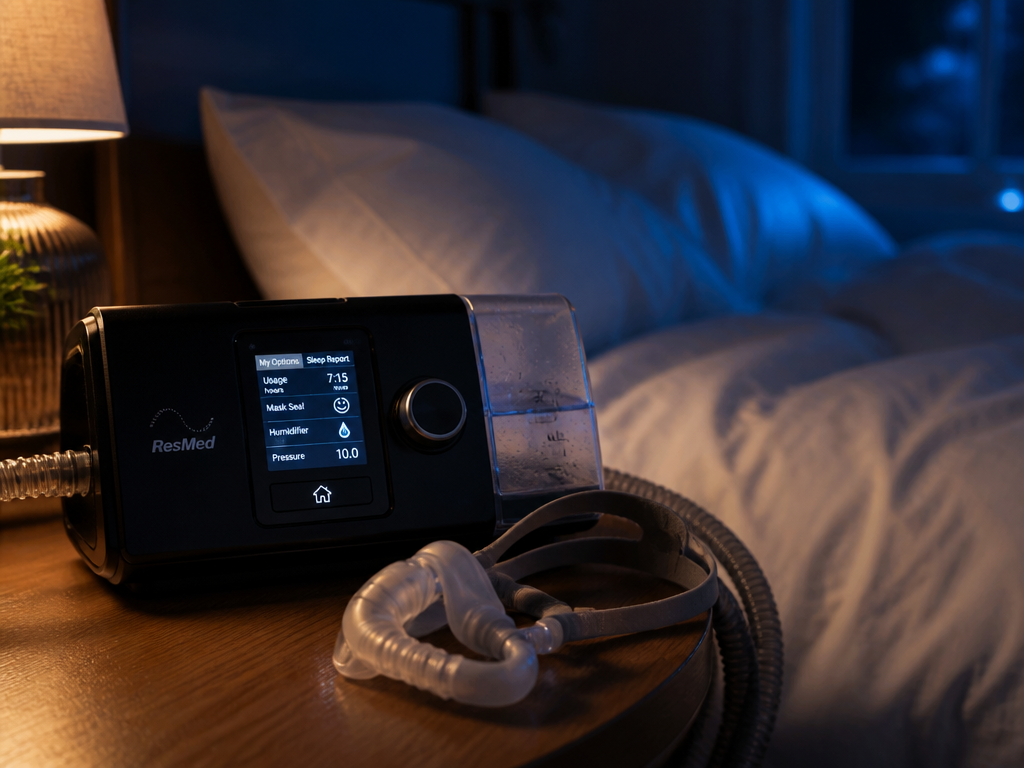
On the second night at my brother-in-law's house, I realized I'd left the SD card from my CPAP machine sitting in my home office, plugged into a laptop. The machine still ran. The humidifier still hissed. But for the rest of that week, nothing was being recorded — no apnea-hypopnea index, no mask-leak numbers, no nightly compliance hours uploading to my clinic's portal. I was, for the first time in three years, flying blind.
What surprised me wasn't the anxiety. It was how quickly I stopped being able to tell whether the therapy was working. I felt groggier by the third morning. But I'd also had two glasses of wine, slept on a strange mattress, and gone to bed ninety minutes late. Effective sleep apnea management depends on isolating variables, and the holidays are a machine for scrambling them all at once.
So I want to talk about what actually changes in December — not as stress in the abstract, but as a set of specific physiological levers, several of which push the airway in exactly the wrong direction.
Why do the holidays make sleep apnea worse?
The short answer: the holidays stack several independent risk factors that each raise your apnea-hypopnea index, and they tend to arrive together. Alcohol relaxes the muscles that hold your upper airway open. Late, irregular bedtimes shorten total sleep and shift more of it toward REM, when apneas often cluster. Couch-and-recliner naps put you on your back. Travel can mean dry cabin air, higher altitude, and — for many people — leaving the CPAP at home or running it without a humidifier. None of these is catastrophic alone. Together, on the same night, they compound.
That last point matters more than any single tip. The disruption isn't one big thing. It's five small ones overlapping.
What's actually happening in your airway
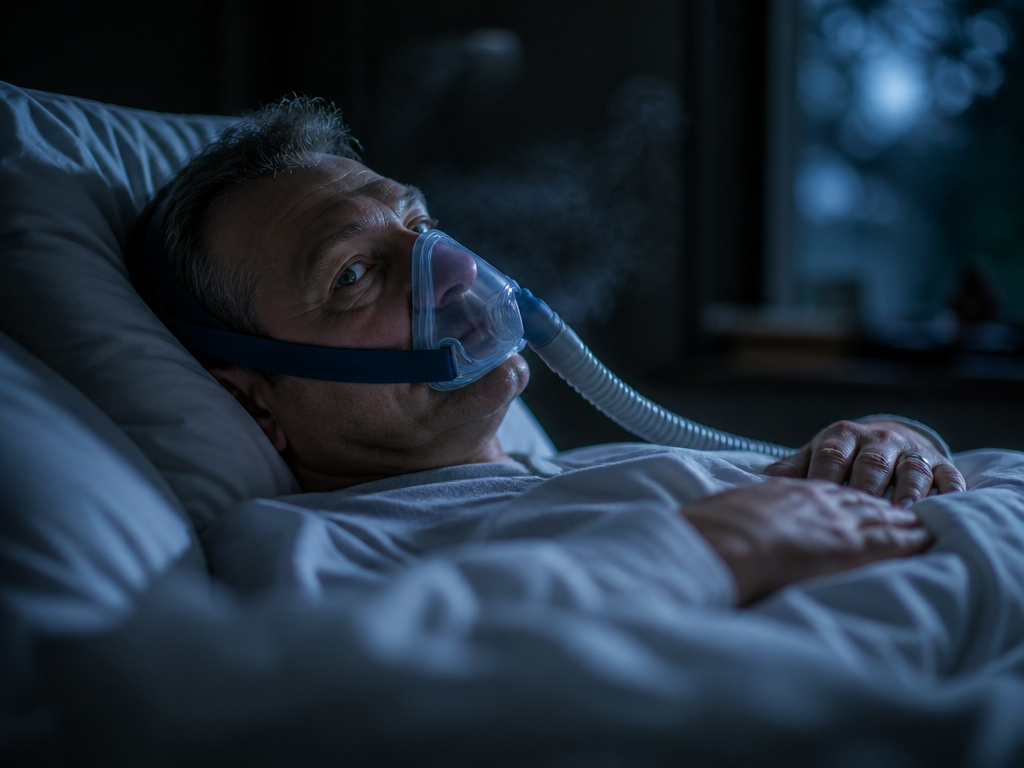
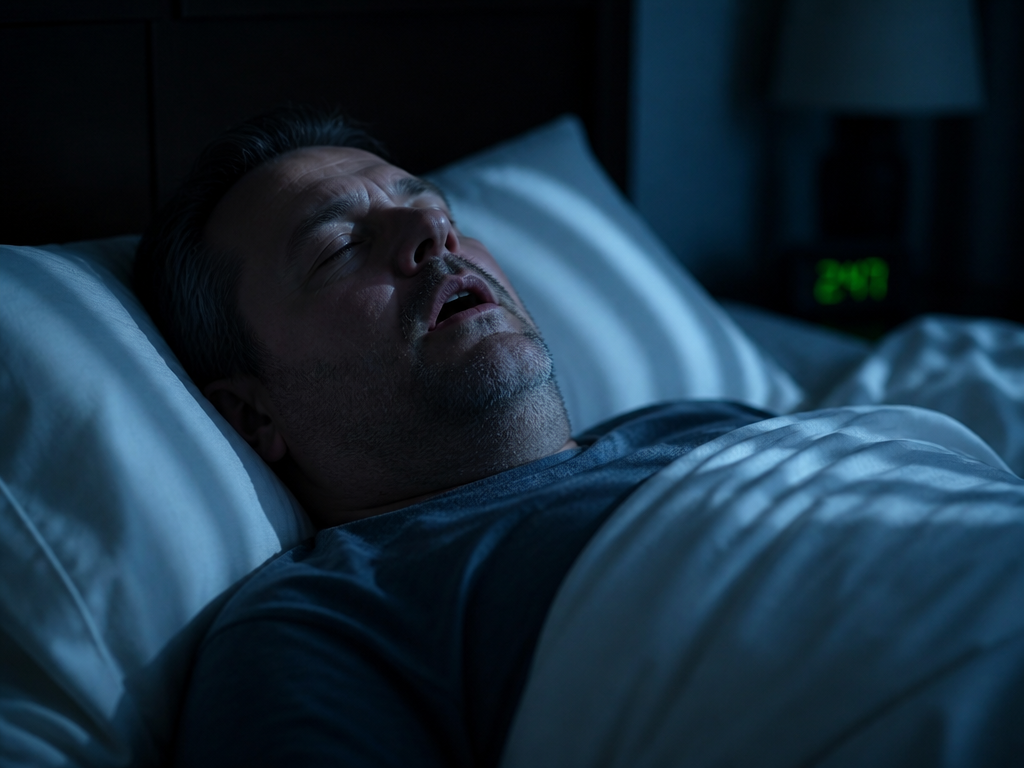
Walk through a single obstructive event in the order it unfolds. As you fall asleep, the tone in your pharyngeal dilator muscles — chiefly the genioglossus, which anchors the tongue forward — drops. In a person without apnea, the airway stays patent anyway. In you, it narrows. On your back, gravity pulls the tongue and soft palate toward the rear wall of the throat. The airway collapses. You keep trying to breathe; your diaphragm pulls against a closed pipe, and the pressure in your chest swings. Oxygen falls. Carbon dioxide climbs. After ten, twenty, forty seconds, your brain registers the threat and jolts you toward wakefulness just long enough to restore muscle tone and gasp. Then you drift down again, and it repeats — sometimes dozens of times an hour.
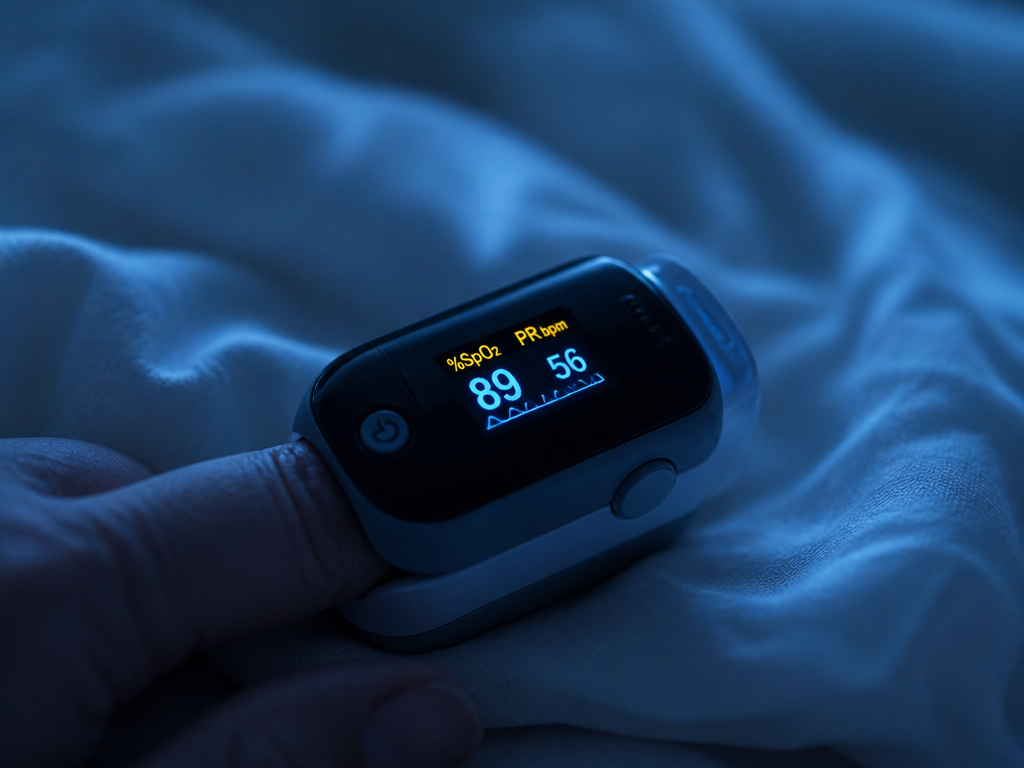
Now add alcohol. It's a central nervous system depressant, and it suppresses that genioglossus tone further while also raising the arousal threshold — meaning your brain is slower to rescue you from each event. That's why a single festive evening can lengthen apneas and deepen the oxygen dips, even at a dose that feels modest.
What the research actually measured
The alcohol effect is well-established. Scanlan et al. (2000), published in the European Respiratory Journal, gave subjects with sleep apnea controlled doses of alcohol before sleep and measured a meaningful rise in apnea frequency and a fall in oxygen saturation. Earlier mechanistic work by Issa and Sullivan (1982) in the Journal of Neurology, Neurosurgery & Psychiatry documented how alcohol prolongs obstructive events and worsens desaturation. The direction of the finding is not in dispute; the dose-response curve in any individual patient is harder to pin down.
CPAP adherence has its own famous number. Most clinical and insurance frameworks define "adherence" as at least four hours of use on 70 percent of nights — a threshold that traces back to Kribbs et al. (1993) in the American Review of Respiratory Disease, which used objective monitoring to show how far self-reported use drifts from actual use. The four-hour line is a regulatory convenience, not a biological cliff. More is better; the benefits accrue roughly with hours used, and the back half of the night — rich in REM — is precisely when skipping costs you most.
Travel and altitude are where the evidence thins relative to the confidence with which advice is usually dispatched. There's reasonable physiological reason to expect that higher altitude worsens both obstructive and central events, and some auto-adjusting machines compensate for altitude automatically. But the controlled data in CPAP users at vacation-relevant elevations is modest. If a guide tells you exactly how your numbers will behave at 7,000 feet, it's extrapolating.
A practical pre-travel pass
Skip the willpower advice. The failures I see are logistical, not motivational. Before you leave:
- Pack the SD card in the machine, and bring the power cord, the right plug adapter, and distilled water or a plan to buy it.
- Confirm whether your model needs altitude adjustment, or set it to auto if available.
- Bring a spare mask cushion; strange sleep positions cause leaks, and a leaking mask is barely treated apnea.
- Keep the machine in your carry-on. It's medical equipment and doesn't count as a personal item on most airlines.
| If you can't bring the CPAP | What it buys you |
|---|---|
| Sleep on your side, not your back | Reduces gravitational airway collapse |
| Limit alcohol, especially within 3 hours of bed | Preserves muscle tone and arousal response |
| Elevate the head of the bed | Modestly reduces supine obstruction |
| Prioritize total sleep time | Less REM rebound, fewer clustered events |
Honest rule of thumb for tonight: if you're going to drink at the party, plan to be on CPAP the same night — the two facts belong together, not as penance, but because that's the night your airway needs the most help.
Back to the lost week
When I got home and the card finally synced again, the gap in my data felt like a missing week in a diary. I'd assumed my numbers had worsened. I'll never actually know — that's the price of forgetting the card. What I changed wasn't dramatic: a second SD card lives in my travel kit now, and I treat "wine night" as a "definitely-wear-the-mask night."
But the lost week left me with a question the literature hasn't cleanly answered. We know nightly adherence matters, and we know each missed night carries some cost. What we don't know well is whether a healthy, otherwise-adherent patient suffers any lasting harm from three or four untreated holiday nights a year — or whether the body simply absorbs it, the way it absorbs an occasional bad night of any kind. The studies measure averages over months. Nobody has cleanly measured the price of a holiday.