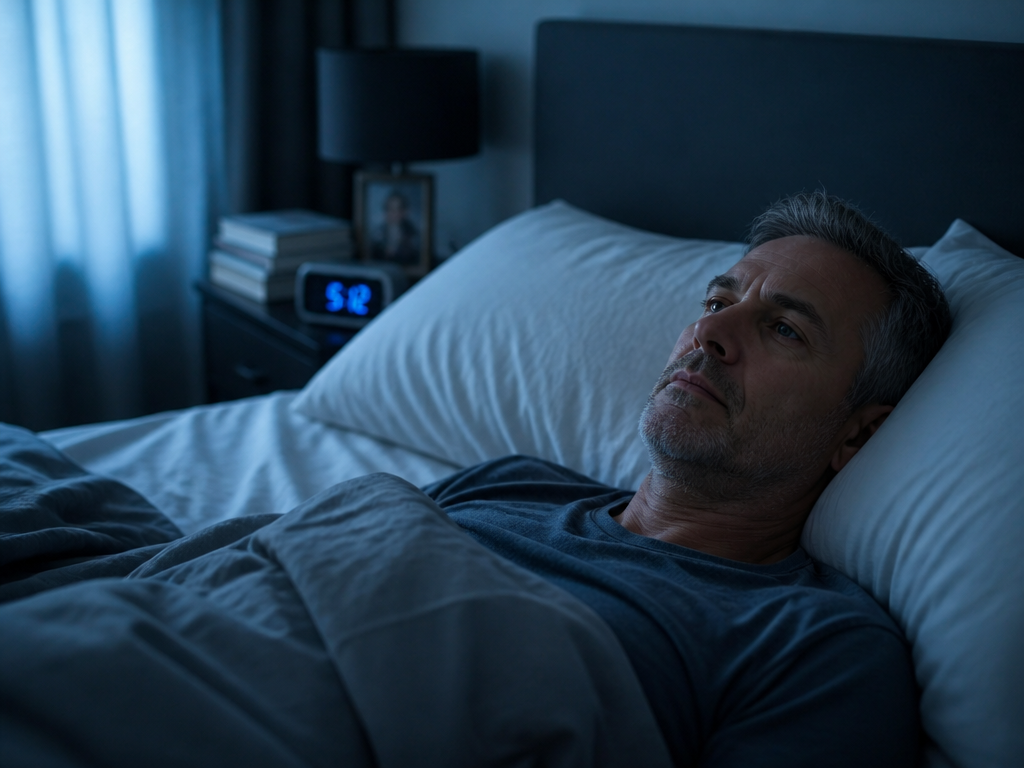
You have probably seen the number: about one in three American adults sleeps less than seven hours a night. The CDC has been repeating some version of it since 2016, and it gets cited so often it has worn smooth, like a coin. What the number almost never says out loud is that the third is not a random third. Sleep deprivation does not fall evenly across a population. It pools — in certain jobs, certain ZIP codes, certain bodies — and the same lost hour costs different people different amounts.
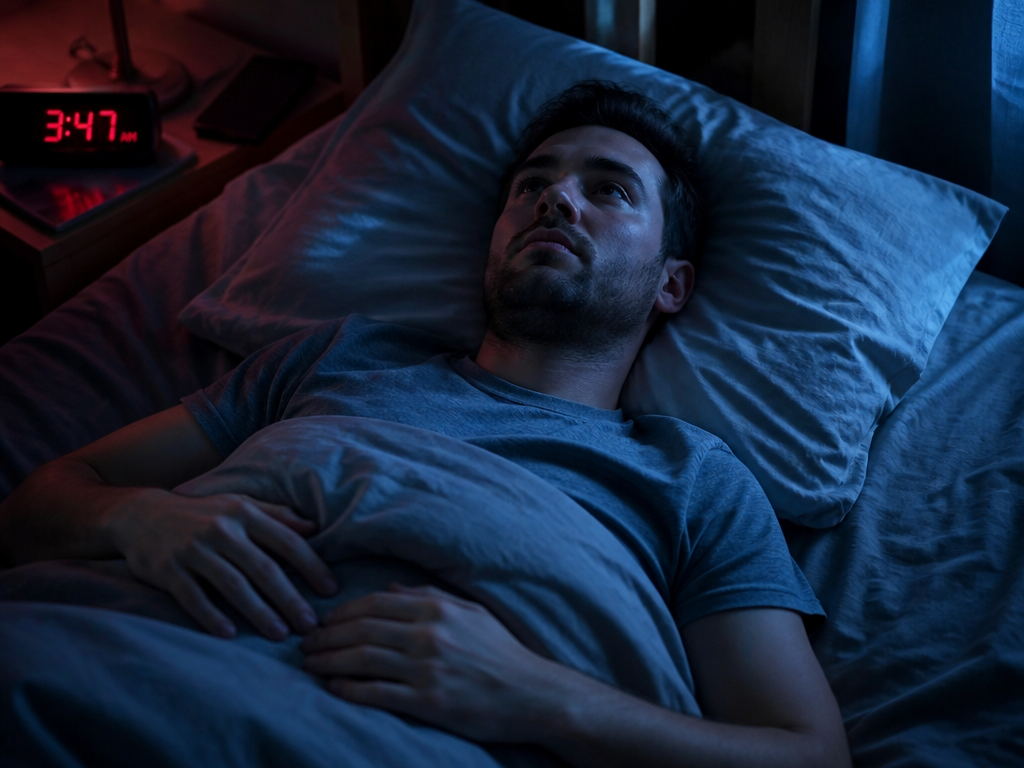
So here is the question this piece is actually about, the one a lot of tired people ask at 2 a.m.: if I'm not sleeping enough, how much is it hurting me — and is it hurting me more than it would hurt someone else?
The honest answer is yes, probably, and the reasons are more interesting and less fair than the wellness aisle lets on.
What "not enough sleep" actually measures
The seven-hour line comes from a 2015 consensus statement by the American Academy of Sleep Medicine and the Sleep Research Society, which concluded that adults should get seven or more hours per night on a regular basis. It's a population recommendation, not a personal prescription. Some people run fine on six and a half; a smaller number genuinely need closer to nine.
When the CDC reports that roughly 35 percent of adults fall short, it's using self-reported habitual sleep duration — what people say they usually get. That matters, because self-report tends to overstate sleep. People count time in bed, not time asleep. So the real shortfall is likely a little worse than the survey suggests, and it's worst in the groups least able to do anything about it.
One more distinction worth holding onto. "Sleep deprivation" technically means too little sleep. "Sleep disruption" means fragmented sleep — waking repeatedly, even if total hours look fine. The second is the quieter problem, and it's central to sleep apnea, which we'll get to.
Why is sleep deprivation worse for some people than others?
Short version: because the damage from lost sleep depends on what else your body and your environment are already dealing with. The same five-hour night lands harder on someone with high blood pressure, a physically demanding job, or a bedroom on a loud street than it does on a healthy adult in a quiet house. Lost sleep isn't a fixed tax. It's a multiplier, and it multiplies whatever risk is already in the room.
That's the biology and the sociology talking at the same time, and they're hard to separate — which is exactly why the topic gets flattened into a single tidy statistic.
What a short night does, in order
Walk it through as it happens.
While you're awake, a molecule called adenosine accumulates in the brain. It builds across the day and creates what researchers call sleep pressure — the heaviness you feel by evening. Deep sleep is when adenosine clears. Cut the night short and you start the next day with a residual load: the pressure never fully drained.
Within hours of insufficient sleep, the autonomic nervous system shifts toward sympathetic dominance — the "on" setting. Heart rate and blood pressure run a notch higher. Normally, blood pressure dips about 10 to 20 percent overnight; this nocturnal dip is one of the cardiovascular system's daily repairs. Short or fragmented sleep blunts it. People whose pressure stays flat overnight — "non-dippers" — show higher rates of cardiovascular events, a pattern documented across multiple cohort studies since the 1990s.
Metabolism shifts too, and fast. In a frequently cited experiment, Spiegel, Leproult, and Van Cauter (1999, The Lancet) restricted 11 healthy young men to four hours in bed for six nights. Their glucose tolerance dropped into a range the authors compared to early diabetes — after less than a week, in healthy twenty-somethings. The sample was tiny and all male, so don't over-read it. But the direction has held up in larger work: short sleep nudges insulin resistance and appetite hormones the wrong way.
None of this is catastrophic after one bad night. The body is built to absorb the occasional short night. The trouble is chronicity, and chronicity is where who you are starts to matter.
The part the statistic hides
Sleep is supposed to be the most private thing we do. In practice it's shaped by conditions almost entirely outside the bedroom.
Start with work. People on rotating or night shifts — disproportionately lower-wage workers, healthcare staff, warehouse and transit employees — sleep against their circadian biology, not with it. Their melatonin rhythm says night while their schedule says work. The result isn't just fewer hours; it's hours taken at the wrong time, which the body uses less efficiently. The International Agency for Research on Cancer classified shift work involving circadian disruption as a probable carcinogen back in 2007 — a designation that says the signal is real and the mechanism plausible, while honestly conceding the human evidence is still mixed.
Then the environment. Noise fragments sleep whether or not you wake fully; the brain registers a passing truck with a micro-arousal you never remember. Light does the same. Studies of neighborhood-level sleep — including work from Lauderdale and colleagues using actigraphy rather than self-report — find that residents of poorer, noisier, more crowded areas get measurably shorter and more broken sleep, even after adjusting for individual habits. Heat matters too: homes without reliable cooling lose sleep on hot nights, and cooling is not evenly distributed.
Here's where I'll be straight about the limits. Most of this evidence is observational. It can show that disadvantage and poor sleep travel together; it's much harder to prove the exact share of, say, a hypertension gap that runs through sleep versus alongside it. The associations are well-established. The precise causal accounting is still thin, and you should be suspicious of anyone who quotes a clean percentage for it.
The diagnosis gap
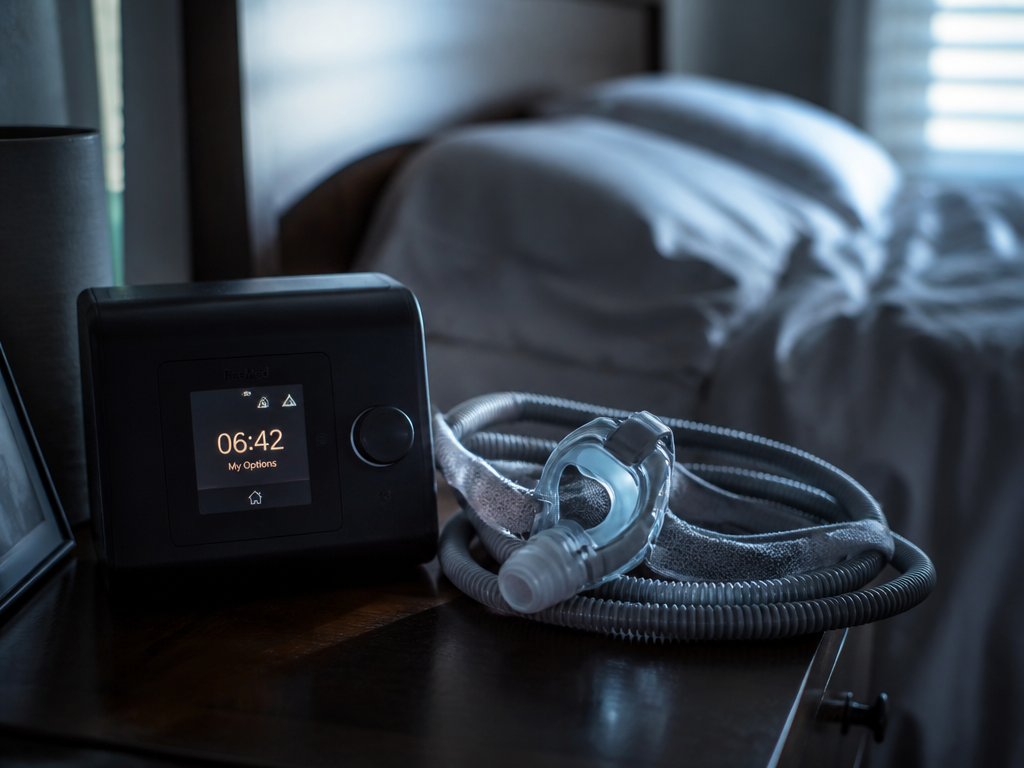
Obstructive sleep apnea is the clearest example of how unevenly this plays out. The airway collapses repeatedly during sleep; oxygen dips; the brain jolts the body awake just enough to reopen it, dozens or hundreds of times a night. The person rarely remembers. They just wake exhausted, and over years the repeated oxygen drops and blood-pressure spikes raise cardiovascular risk.
Estimates suggest a large fraction of moderate-to-severe apnea — by many analyses the majority — goes undiagnosed. And diagnosis tracks access. You need a doctor who asks the right question, a referral, and a sleep study. The classic patient profile (older, heavier, male, loud snorer) also causes real harm by under-flagging women and people who don't fit it, who then wait years for an answer. The condition is treatable. The bottleneck is mostly who gets seen.
An honest rule of thumb
Forget chasing a perfect number tonight. Do this instead: protect the consistency of your sleep window before you obsess over its length. Going to bed and waking within the same hour each day stabilizes the circadian signals that decide how much repair you actually get from the hours you do sleep — and it's the one lever most people can pull without money or a prescription.
And if you wake unrefreshed despite enough time in bed, or a partner notices you stop breathing or gasp at night, treat that as a medical question, not a willpower one. Ask specifically about a sleep study. Don't wait to fit a profile.1
Back to that one in three
So return to the number we started with. One in three adults short on sleep. It's true, and it's useful, and it's also a little dishonest in its evenness — because the cost of being in that third depends on your job, your street, your blood pressure, and whether a doctor ever thinks to ask. The hour you lose is the same hour everyone loses. What it buys, or takes, is not.
A statistic about sleep is never only about sleep; it's a map of who gets to recover, and who pays interest on a debt they didn't choose.
-
If you're a woman, or not overweight, this matters even more — apnea in people outside the stereotype is routinely missed for years. ↩