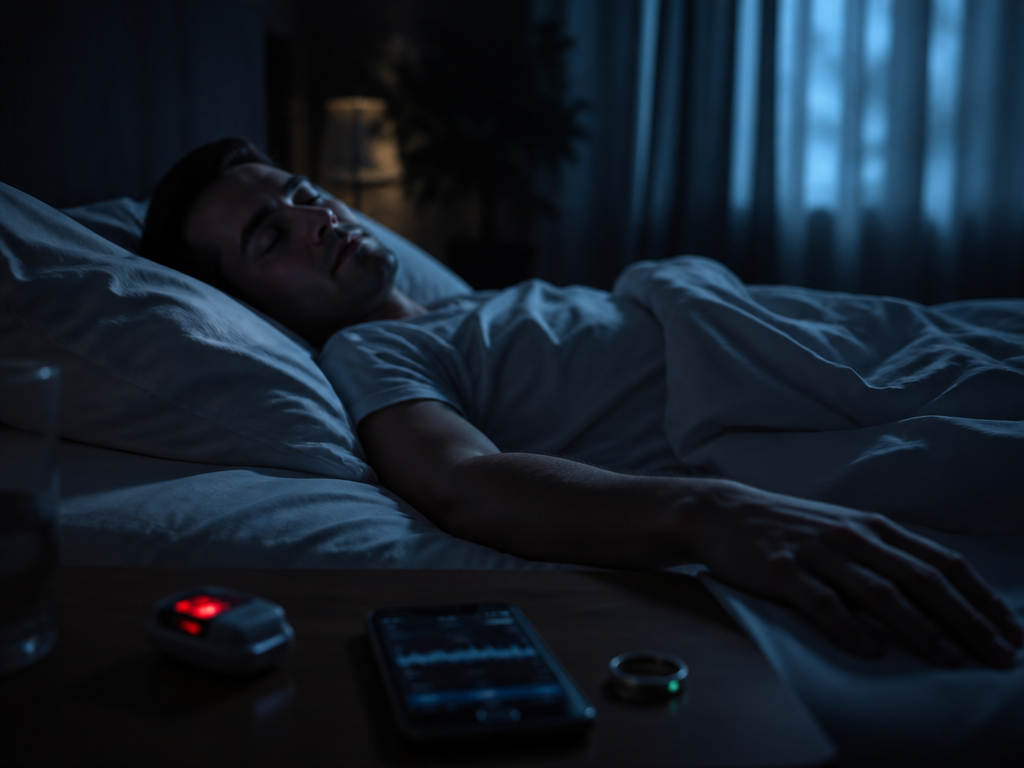
For one month I kept a record nobody asks for: total hours seated per day, against my overnight breathing data. I have a desk job, a ring that estimates oxygen desaturation, and a low-grade worry — shared by a lot of people my age — that sleep apnea is something I'm slowly building toward rather than something I'd suddenly notice. The hypothesis I wanted to test was unglamorous. Not "does exercise help," but: does how much I sit track with how badly I breathe at night, independent of whether I worked out?
The short version: my single workouts barely moved my overnight numbers. My total daily sitting time moved them noticeably. The days I trained hard but still sat for eleven hours looked worse than the days I never exercised but stayed on my feet.
What I measured, and what I couldn't
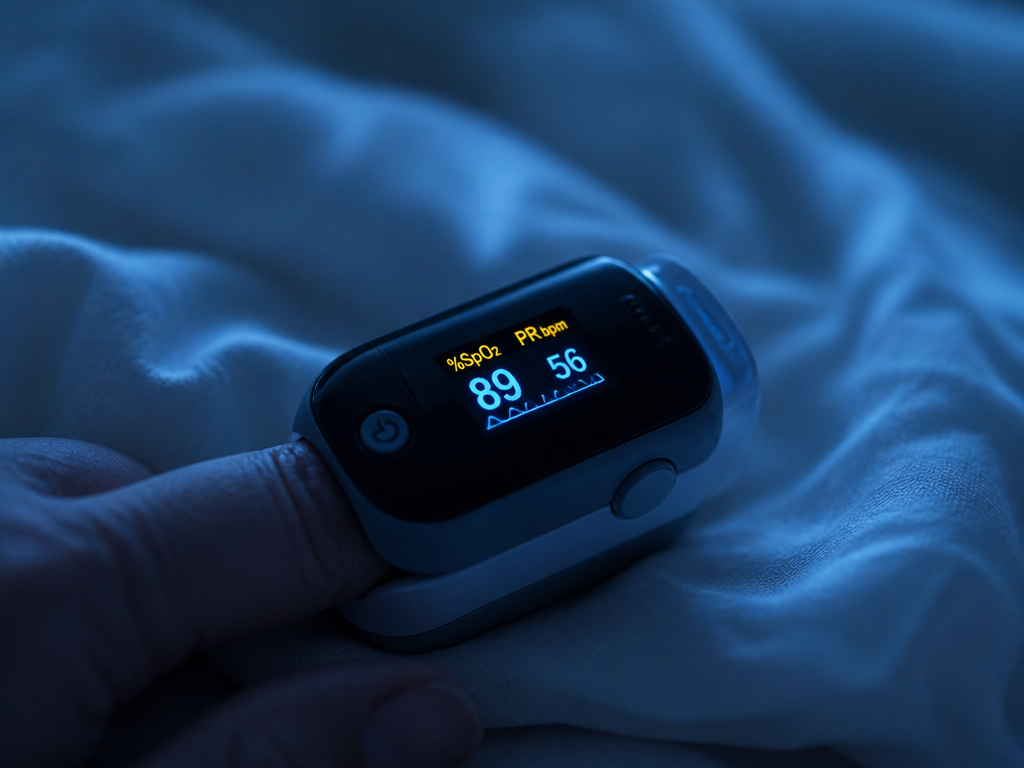
I am not a sleep lab. I tracked four things every day for 31 days: total seated hours (phone timer, manually logged, generous rounding), deliberate exercise minutes, an estimated apnea-hypopnea proxy from a finger pulse-oximeter, and morning resting heart rate. The oximeter is a consumer device; it counts desaturation dips, not true respiratory events. A real diagnosis needs a sleep study. So read everything here as one body, one month, one set of imperfect sensors — directional, not clinical.
What most people do
The dominant mental model is offsetting. You sit all day, then you "earn it back" with a 45-minute session at 6 p.m. The workout is treated like a payment against a debt, and once it clears, the ledger is balanced.
I held this model too. It's intuitive and it's how fitness is marketed. The problem is that it treats sitting as neutral time — empty space between the parts that count. The research on sedentary behavior over the last decade has been quietly dismantling that idea: prolonged sitting appears to carry its own metabolic and cardiovascular cost that a single bout of evening exercise does not fully erase. The phrase that stuck with me from the literature is "active couch potato" — someone who hits their workout target and is still sedentary 90% of their waking hours.
For obstructive sleep apnea specifically, the offsetting model has a second blind spot. People assume the whole story is weight: gain weight, narrow the airway, develop OSA; lose weight, reverse it. Weight matters enormously. But it's not the only lever, and treating it as the only lever makes the problem feel binary and far away — I'm not heavy enough to worry yet — when the day-to-day inputs are more continuous than that.
What the evidence suggests
Three findings reshaped how I read my own data.
Exercise reduces OSA severity even when weight barely changes. This is the genuinely useful one. Multiple intervention studies have found measurable drops in apnea severity from exercise programs that produced little or no weight loss. The proposed mechanisms include reduced fluid accumulation in the neck (less to shift into the airway when you lie down), improved tone in the muscles that hold the upper airway open, and reduced systemic inflammation. So the airway benefit isn't purely downstream of the scale — which means the "I'll deal with it when I gain weight" framing leaks.
Timing is more flexible than the folklore claims. The old advice was to never exercise late because it wrecks sleep. The evidence is gentler: for most people, moderate exercise finishing a couple of hours before bed is fine and may even help sleep onset. Vigorous training right up against bedtime is the part worth avoiding. This was permission I didn't expect — I'd been skipping movement entirely on days I couldn't fit it in early.
Sitting time is its own signal. Studies looking at sedentary behavior and sleep quality find associations that hold after adjusting for exercise. In other words, two people with identical workout habits but different sitting totals can have different sleep outcomes. That's the finding I built my experiment around, because it's the one most likely to be actionable for desk workers — and most likely to be missed by anyone who only counts gym sessions.
Here's how the three common approaches compare, by the criteria that actually matter to a sedentary adult:

| Approach | Targets weight | Targets airway directly | Realistic for desk workers | What it misses |
|---|---|---|---|---|
| Single daily workout | Slowly | Partially | Moderate | Total sitting load |
| Weight loss alone | Directly | Indirectly | Hard to sustain | Day-to-day variability |
| Reducing total sitting time | Modestly | Via fluid shift, fitness | High | Won't replace real cardio |
None of these is a treatment. If you snore loudly, wake gasping, or your partner reports you stop breathing, that's a clinician and a sleep study, not a standing desk.
What I actually do
I broke the month into rough buckets after the fact and looked at my desaturation proxy against them. The numbers are mine alone, but they were consistent enough to change my habits.
The five worst nights — most frequent dips, lowest morning HRV-adjusted resting heart rate recovery — were not the days I skipped exercise. Four of the five followed days I'd logged ten or more seated hours, including two days I'd also trained. The cleanest nights clustered around days under about seven seated hours, regardless of whether I'd done formal exercise.
Concretely, my best week averaged roughly 6.5 sitting hours a day and produced a desaturation-event proxy about a third lower than my worst week, which averaged just over 11 seated hours. Resting heart rate ran 3–4 bpm lower in the low-sitting week. I did not lose meaningful weight in either direction during the month, which is the point: the difference tracked with sitting, not the scale.
So this is what I changed, and have kept:
- I stopped counting the workout as the whole job. It's one input. The bigger lever turned out to be breaking up sitting — a standing call here, a walk to refill water there.
- I set a loose ceiling, not a step goal: try to keep total seated time under eight hours on workdays. Crude, but a number I can feel during the day.
- I moved harder sessions earlier and kept evenings to walks. The late-walk nights were among my best, which lines up with the timing research.
What I couldn't test is the thing that matters most: whether any of this changes a clinical diagnosis. My device can't tell true hypopneas from sensor noise, and a month is short. I also can't separate sitting from everything that travels with a sedentary day — stress, screen light, the wine that appears on long-desk evenings. The honest version is that sitting correlated with worse nights in my data. I can't prove it caused them.
Who this is for — and who it isn't
This is for desk workers with mild, undiagnosed worry: you don't have classic symptoms but you sit a lot, you've gained a little, and you'd rather adjust inputs now than wait for a problem to announce itself. The sitting-time lever is cheap, reversible, and available to people who hate the gym.
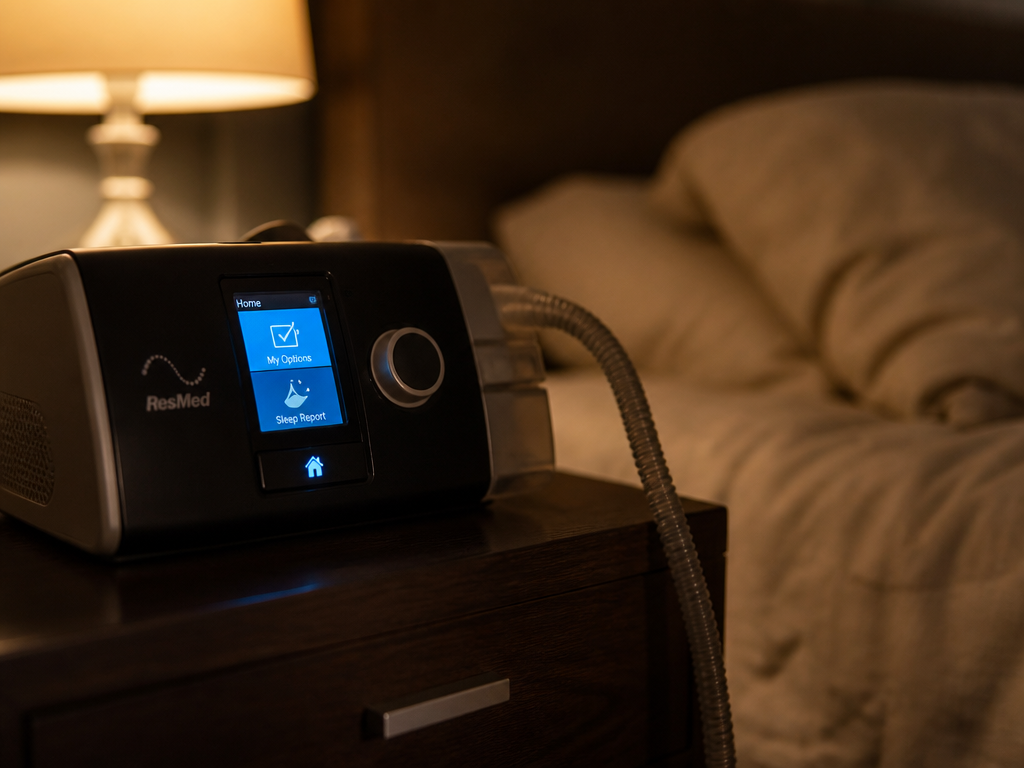
This isn't for anyone with actual symptoms. Loud snoring, witnessed pauses in breathing, waking unrefreshed despite enough hours, morning headaches — those warrant a real evaluation, and no amount of standing-desk virtue substitutes for a CPAP or a proper diagnosis. It's also not for people expecting a number this precise from consumer hardware; treat your wearable's readings as a trend line, not a verdict.
If I had to put one sentence on a screenshot: for a sedentary adult, total daily sitting time tracked my overnight breathing more closely than whether I exercised — so reducing the sitting may matter as much as adding the workout.
One thing to try this week
Don't overhaul anything. For five workdays, write down a single number at the end of each day: roughly how many hours you spent seated. Don't change your behavior yet — just measure. Most people are stunned by the total, and the shock alone tends to put you on your feet more. If you want the gentlest possible second step, take one phone call standing or walking. That's it. The data, if it behaves like mine did, will make the rest of the argument for you.
This is one person's month with imperfect instruments, not medical advice. If you suspect a breathing disorder, see a clinician.