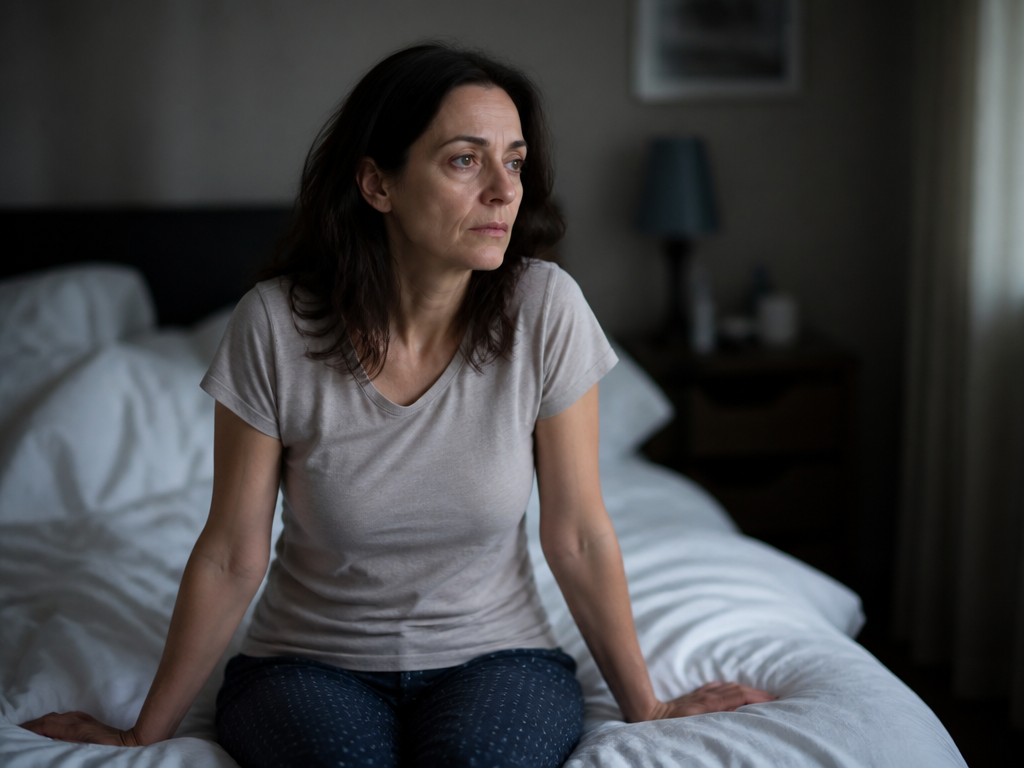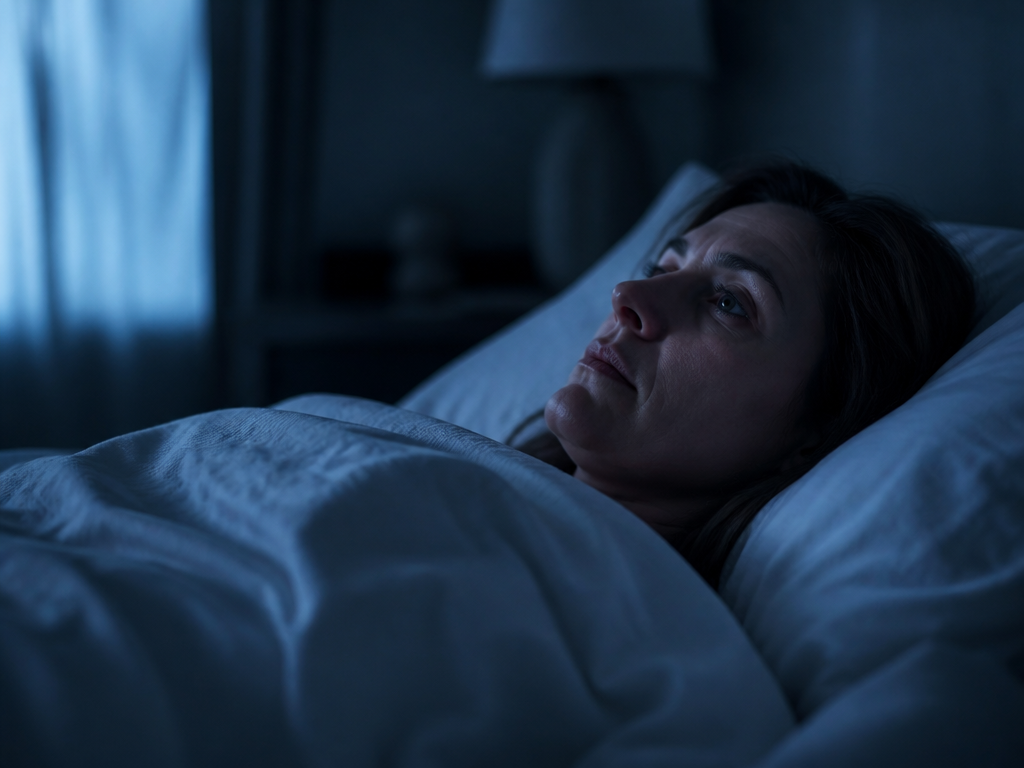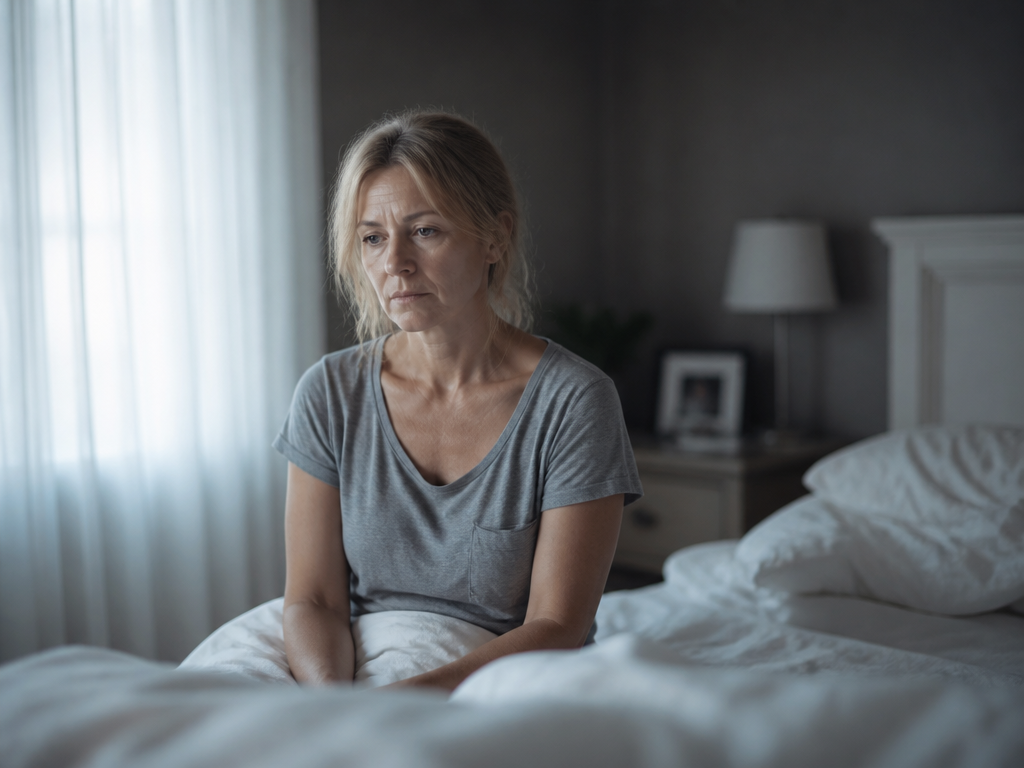
A reader wrote in with a question I have heard, in some form, a dozen times: I don't snore, my blood pressure is normal, my doctor says I look healthy — so why do I wake up exhausted every single day, and could it possibly be sleep apnea?
The short answer is yes, it could be. Sleep apnea in women is real, common, and routinely missed — not because women hide their symptoms but because the questionnaires, the thresholds, and the clinical mental image of "an apnea patient" were largely built around middle-aged men who snore. If you have been told you don't fit the picture, it is worth asking whose picture it is.
The textbook patient is a man
Walk into most primary care offices with a suspected sleep problem and you will be screened with a short questionnaire — STOP-BANG or the Berlin, usually. Look at what they weigh most heavily: loud snoring, witnessed pauses in breathing, high blood pressure, large neck circumference, being male, being over fifty. The STOP-BANG instrument literally awards a point for being male.
These tools are not wrong. They are very good at catching the patient they were validated on. The problem is that they were validated disproportionately on men, and they perform worse in women — studies have repeatedly found they under-predict obstructive sleep apnea in female patients, sending women home reassured when they shouldn't be.
There is also a reporting gap that has nothing to do with biology. Snoring carries social baggage for women; partners under-report it; women themselves under-report it. A bed partner who notices a man "stops breathing at night" may not register the same in a woman whose events are shorter and quieter. The signal that drives the whole referral pathway is the one women are least likely to produce or report.
How women actually present
When researchers stop screening for the male picture and instead describe what women with diagnosed apnea report, a different cluster shows up. Not gasping-awake-choking. More often:
- Persistent daytime fatigue rather than the classic "falling asleep mid-sentence" sleepiness
- Insomnia — trouble staying asleep, frequent waking — which gets treated as primary insomnia or anxiety
- Morning headaches
- Low mood, irritability, depression that doesn't fully respond to treatment
- Unrefreshing sleep even after a "full" night
Two of those — insomnia and depression — are diagnostic dead ends, because each has its own well-worn treatment path. A woman who reports waking at 3 a.m. and feeling flat the next day is far more likely to leave with a prescription for an antidepressant or a sleep hygiene handout than a referral to a sleep lab.
There is a physiological wrinkle underneath this. Women's obstructive events cluster more in REM sleep and tend to be partial (hypopneas, flow limitation) rather than full airway collapse. Standard scoring counts events per hour as the AHI — the apnea-hypopnea index — across the whole night. A woman can have severe, symptom-producing apnea concentrated in REM and still post a whole-night AHI that lands in the "mild" bin. The number looks reassuring. The patient is not reassured, because she is the one living in the body.
Two pictures, side by side
| Criterion | Classic presentation | Often-missed presentation |
|---|---|---|
| Headline symptom | Loud snoring, witnessed apneas | Fatigue, insomnia, low mood |
| Sleepiness type | Falling asleep involuntarily | Tired-but-wired, unrefreshing sleep |
| Typical whole-night AHI | Moderate–severe | Mild on paper, REM-concentrated |
| Common misdiagnosis | (caught) | Depression, anxiety, primary insomnia |
| Screening tool fit | High (STOP-BANG, Berlin) | Low — under-predicts |

I want to be careful here. This is a tendency, not a rule. Plenty of women snore loudly and have textbook severe apnea. Plenty of men present atypically. The point isn't that there are two sexes of sleep apnea; it's that the screening funnel is shaped like one of them.
The mechanism, honestly
Why the difference exists is the part where I have to say it depends, because the evidence is genuinely mixed.
The hormonal story is the most cited: progesterone and estrogen appear to support upper-airway muscle tone and respiratory drive, which is part of why apnea prevalence in women climbs steeply after menopause and converges toward male rates. That much is reasonably well-supported epidemiologically. But "hormones protect the airway" is a tidy summary stretched over a lot of competing data, and hormone replacement has not turned out to be a clean treatment.
Anatomy contributes too — differences in fat distribution, airway length, and where collapse tends to occur. REM-predominant events may reflect how female airways respond to the muscle atonia of REM sleep specifically. These are active research questions, not settled facts, and anyone who tells you the mechanism is fully understood is selling certainty that doesn't exist yet.
What is not in dispute: the consequences of untreated apnea — cardiovascular strain, metabolic effects, cognitive cost — do not wait for your AHI to look impressive. A "mild" number with severe daytime impairment is still a problem to treat.
If you've already been dismissed
This is the practical part. If your symptoms fit the second column and you were screened out, you can ask for specifics:
- Request an actual sleep study, not just a questionnaire — and if you do a home test, know that home tests tend to underestimate in exactly the population we're discussing. A normal home test in a symptomatic woman is a reason to ask for an in-lab study, not to stop.
- Ask whether your REM AHI was reported separately from your whole-night AHI. If REM wasn't captured well — short study, little REM recorded — the result is incomplete.
- Bring the symptom you actually have. "I'm exhausted and I wake at 3 a.m." is a sleep complaint, and it is allowed to be the reason for a referral even without snoring.
None of this means self-diagnosing or overriding your clinician. It means arriving with the right questions so the system's blind spot doesn't become yours.
Who this is for — and who it isn't
This is for you if: you're chronically unrefreshed, your insomnia or low mood hasn't responded as expected, you have a family history of OSA, or you went through perimenopause and something about your sleep changed. It's also for clinicians who keep seeing fatigued women whose questionnaires score low.
This is probably not your issue if: you sleep well, wake refreshed, and feel fine during the day. Apnea is plausible across many body types and ages, but it is a disorder of disrupted breathing and unrefreshing sleep, not a default explanation for ordinary tiredness. Don't let an article convince you of a diagnosis any more than you'd let a questionnaire talk you out of one.
I can't tell you whether you have it. I haven't seen your study, and "it depends" is the honest center of this whole subject — on your sleep architecture, your hormones, how the test was run, and who read it. What I can tell you is that "you don't look like a sleep apnea patient" is a description of a screening tool, not of your airway.
A normal questionnaire is not a clean bill of breathing.