Here is a sentence that has been copied onto thousands of pages: untreated sleep apnea can raise the risk of high blood pressure, heart attack, and stroke. It usually arrives credentialed, attributed to the National Heart, Lung, and Blood Institute, a division of the NIH. The citation does real work. It tells you the question is legitimate and that someone with authority has signed off. What it tends to leave out is everything interesting — how strong the link is, how it works in the body, and how much of it survives a controlled trial.
This piece is about that gap. The institutional consensus is real and worth respecting. But "the NIH says so" is a starting line, not an explanation.
The myth a lot of smart people still hold
The myth goes like this: snoring is a social problem, and apnea is a sleep-quality problem. You feel groggy, your partner relocates to the couch, you maybe nod off in a meeting. Annoying, not dangerous. The cardiovascular stuff, in this telling, is a worst-case footnote for severe cases.
It's an easy belief to hold because the symptoms you notice — fatigue, snoring, morning headache — are nuisances, and the symptom you don't notice happens while you're unconscious. The part that matters for your heart is silent and nightly. You can't feel your blood pressure spiking at 3 a.m. So the felt experience of the disorder and its actual cardiovascular weight point in opposite directions.
The NIH line corrects the myth in one direction — yes, this is a cardiovascular issue — but states it so flatly that it invites a different distortion: the assumption that the link is simple, settled, and uniform. It isn't, quite.
What the research actually measured
Does sleep apnea cause high blood pressure? The honest answer: obstructive sleep apnea is strongly and independently associated with hypertension, the association holds up after adjusting for obesity and other confounders, and the mechanism is biologically plausible — but the leap from "associated" to "causes, in this person, by this much" is where the evidence thins.
Two studies anchor the consensus. The Wisconsin Sleep Cohort (Peppard et al., 2000, New England Journal of Medicine) followed roughly 700 state employees over four years and found a dose-response relationship: the more apnea events per hour at baseline, the higher the odds of developing hypertension later, even after controlling for body weight, age, sex, and alcohol. That temporal ordering — apnea first, hypertension after — is what makes the study more than a snapshot.
The Sleep Heart Health Study (Nieto et al., 2000, JAMA) looked at over 6,000 people in a single cross-section and found the same association across a large, diverse sample. Cross-sectional means it captured everyone at one moment, so it can't establish what came first. Together, though, the two studies do something neither does alone: one shows the relationship is large and general, the other shows it runs in the expected direction over time.
Call the association well-established. Call the causal claim plausible and well-supported, but not airtight — because the cleanest test of causation is a treatment trial, and there the results are more modest than the association would lead you to expect. More on that below.
The mechanism, in the order it happens
This is the part the citation usually skips, and it's the part that makes the association believable. Here is what happens in a single apnea event, in sequence.
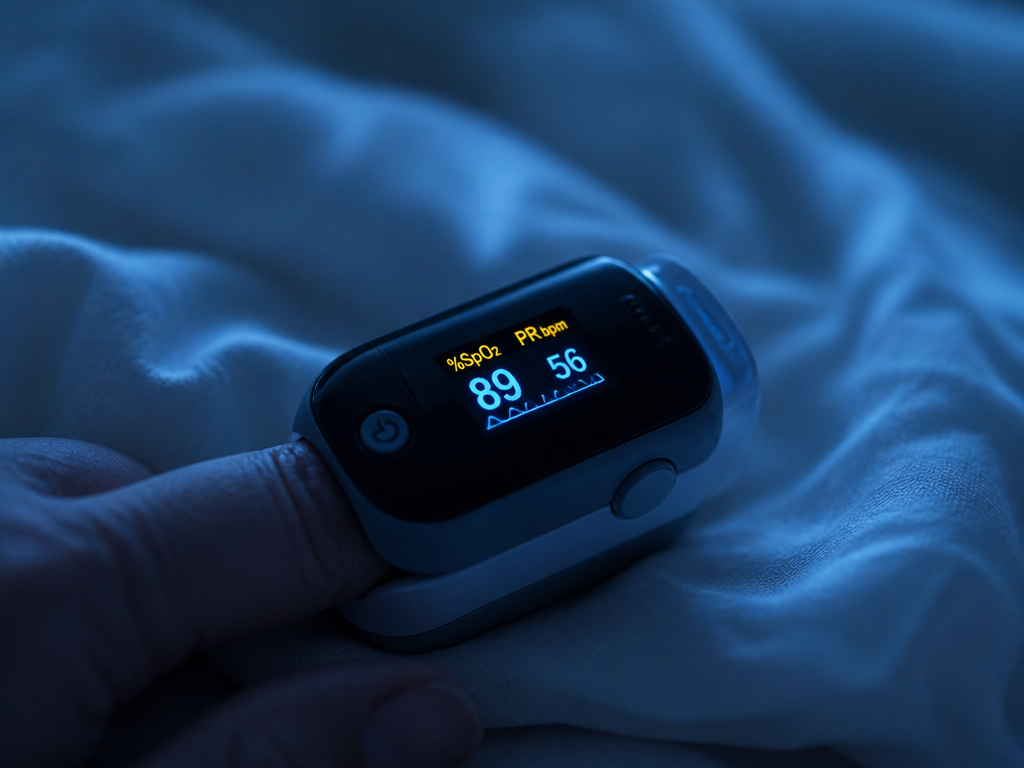
You fall asleep. The muscles of the upper airway relax, as they do in everyone, but in obstructive apnea the airway narrows enough to collapse. You keep trying to breathe — the chest and diaphragm work against a closed pipe — but no air moves. Over the next ten to thirty seconds, the oxygen saturation in your blood falls and carbon dioxide climbs.
Specialized cells called peripheral chemoreceptors, clustered in the carotid bodies in your neck, detect the falling oxygen and rising CO₂. They fire an alarm to the brainstem. The sympathetic nervous system — the fight-or-flight branch — surges in response. Norepinephrine floods out. Blood vessels constrict. Heart rate and blood pressure spike, sometimes to readings that would alarm a cardiologist if they appeared in a clinic.

Finally the brain triggers a brief arousal — usually too short to remember — the airway muscles snap back to attention, you gasp, oxygen recovers. Then you fall back asleep and the whole sequence repeats. In moderate-to-severe apnea this can happen 30, 60, even 100 times an hour.
The cardiovascular cost isn't really any single spike. It's the repetition. In a healthy person, blood pressure "dips" by 10–20% during sleep — the cardiovascular system gets a nightly rest. Repeated sympathetic surges abolish that dip. The pattern is called non-dipping, and it's a recognized marker of cardiovascular risk on its own. The leading hypothesis is that nights of non-dipping, year after year, retrain the system: the elevated sympathetic tone and the constriction it drives stop being nightly events and become the daytime baseline. Plausible, mechanistically clean, and — worth saying — still partly inferential. The chemoreceptor-to-sympathetic chain is well-documented in the lab; the precise route from there to fixed daytime hypertension is the link that's argued over.
Does treating it actually lower blood pressure?
If apnea drives blood pressure up, treating it should bring blood pressure down. This is the test that matters, and it's where confidence should be calibrated carefully.
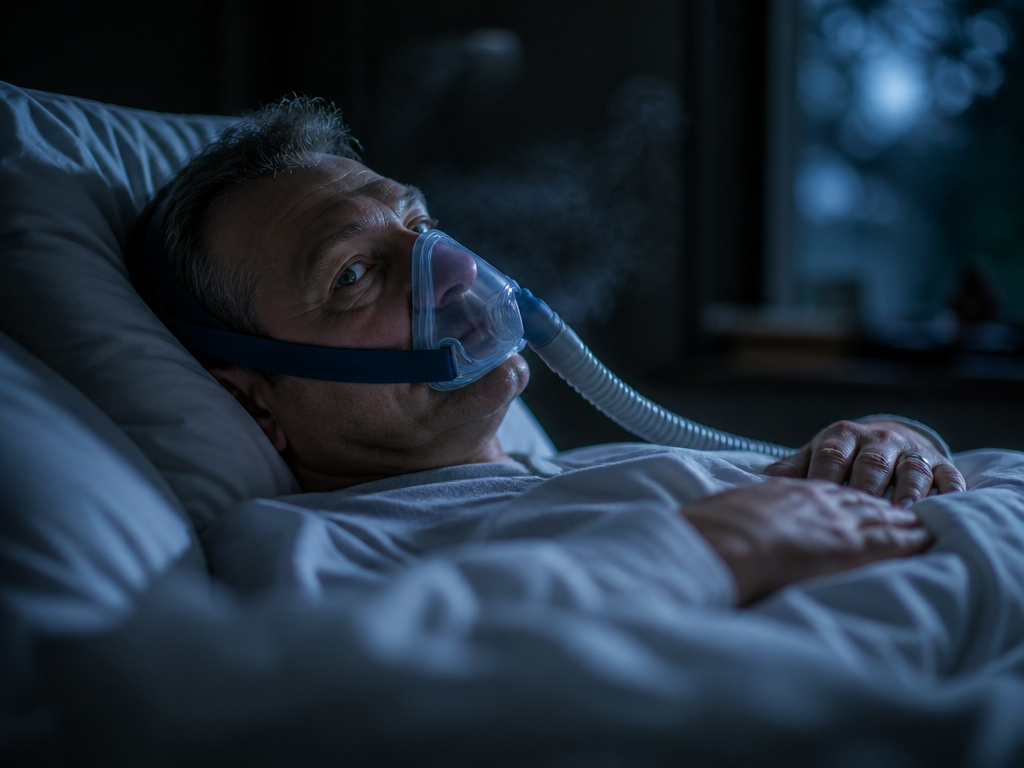
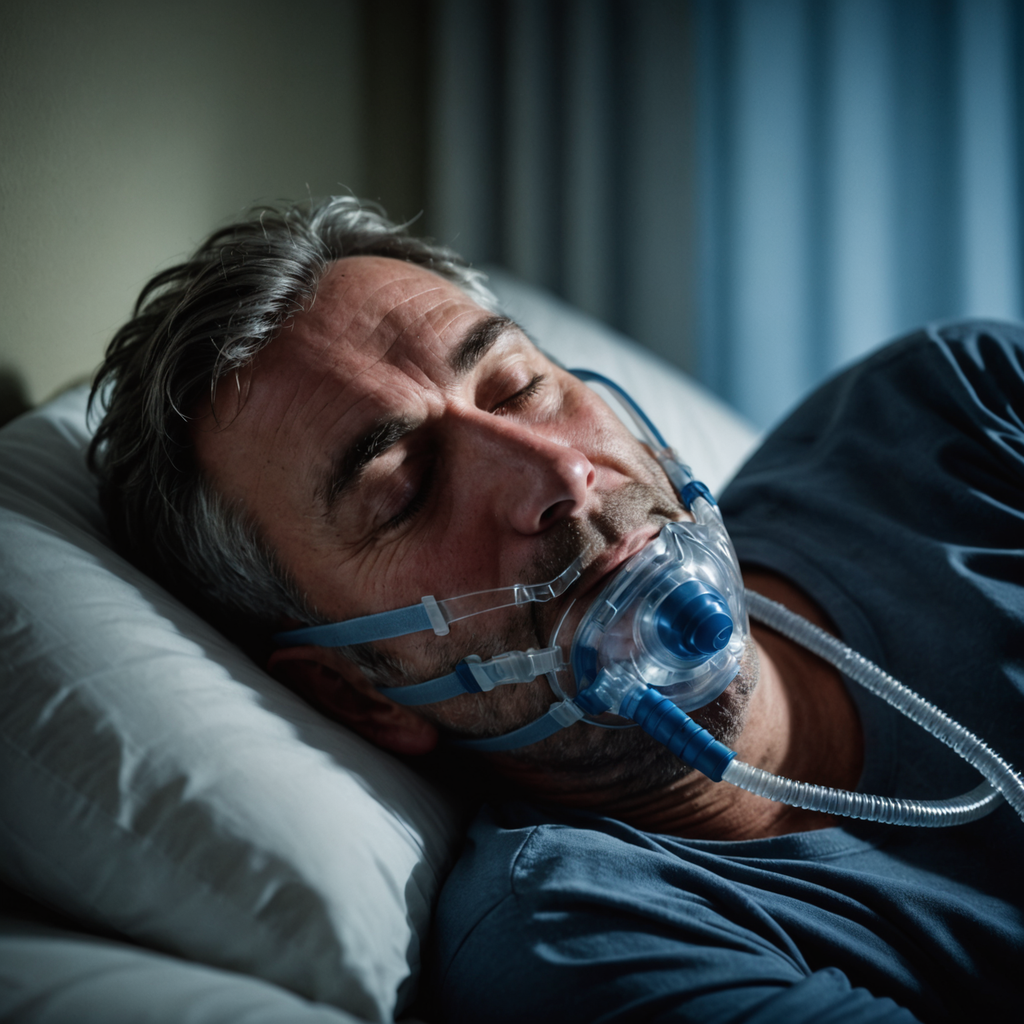
Continuous positive airway pressure (CPAP) — a machine that splints the airway open with pressurized air — is the standard treatment, and several meta-analyses have pooled the randomized trials. The consistent finding is a real but modest reduction: on the order of 2 to 3 mmHg in both systolic and diastolic pressure on average (Montesi et al., 2012, Journal of Clinical Sleep Medicine, among others). That is smaller than many patients expect from a diagnosis framed around heart attack and stroke.
Two qualifications make the modest average more interesting. First, the effect is larger in people with resistant hypertension — blood pressure that won't come down despite three or more medications — where some trials report drops of 5 mmHg or more. Second, it scales with adherence: people who actually wear the mask most of the night get most of the benefit, and the trial averages are dragged down by people who don't.
So the treatment data both confirms and qualifies the NIH line. Apnea is part of the blood-pressure story — treating it moves the number in the right direction. But it's rarely the whole story, and a 2–3 mmHg population average is a long way from "fix the apnea, fix the hypertension."
An honest rule of thumb
If you've been told you have apnea and you also have blood pressure that's high or hard to control, treat the apnea as a genuine cardiovascular intervention, not a comfort upgrade — and if you're prescribed CPAP, the single number that predicts your benefit is hours-per-night worn. Aim for a full night, every night, because the dose that showed up in the trials was adherence, not ownership.
What this piece didn't answer
Three things stay open. First, causation in low-symptom apnea — the person with a high event count who feels fine — is genuinely unsettled; the large CPAP outcome trials (notably SAVE, McEvoy et al., 2016, NEJM) did not show the reduction in cardiovascular events that the blood-pressure logic predicted, and untangling why is ongoing work. Second, who benefits most — beyond "resistant hypertension" and "high adherence" — isn't well predicted in advance. Third, the relative weight of apnea versus the obesity it so often travels with is still being separated.
For the consensus framing, the NHLBI's sleep apnea pages are a reasonable plain-language anchor. For the unsettled edges, read the trial papers directly — SAVE and Peppard are both readable — and watch for newer work on which patients the average is hiding.
The citation tells you the question is real. The body tells you why. The trials tell you to keep your expectations the size of the actual effect.