In a cardiology clinic, the question comes up again and again, usually phrased with some frustration: Did the apnea give me high blood pressure, or did my blood pressure mess up my sleep? It is a fair question, and the honest answer is the one nobody likes — the relationship between sleep apnea and blood pressure runs in both directions, and the part we understand best is also the part most people get told about last.
Let's stay with the question, because it deserves a real answer rather than a slogan.
So which causes which?
The clearest evidence points one way: untreated obstructive sleep apnea (OSA) raises blood pressure, and the more severe the apnea, the stronger the effect. The reverse — that having high blood pressure causes apnea — is far weaker as a direct claim. What's true is that the two share a long list of risk factors, so they travel together for reasons that aren't strictly causal. If you have to bet on a single arrow, point it from apnea to pressure. But keep the second arrow lightly drawn, because the body is rarely that tidy.
What actually happens, in the order it happens
Follow a single apnea event from the inside.
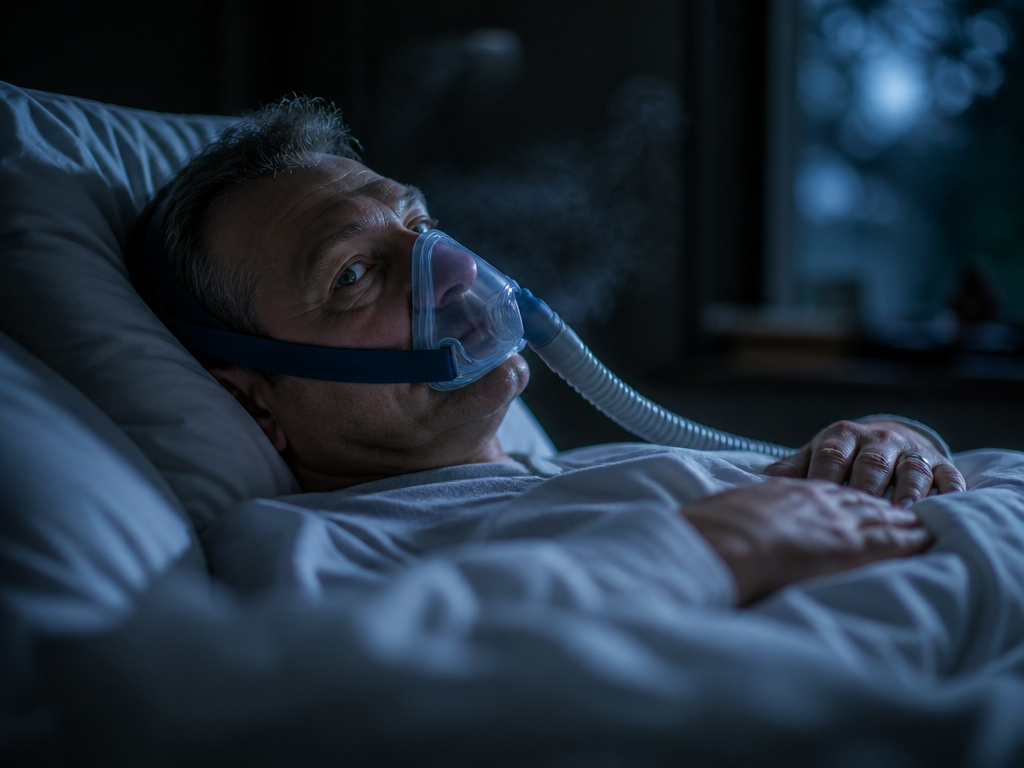
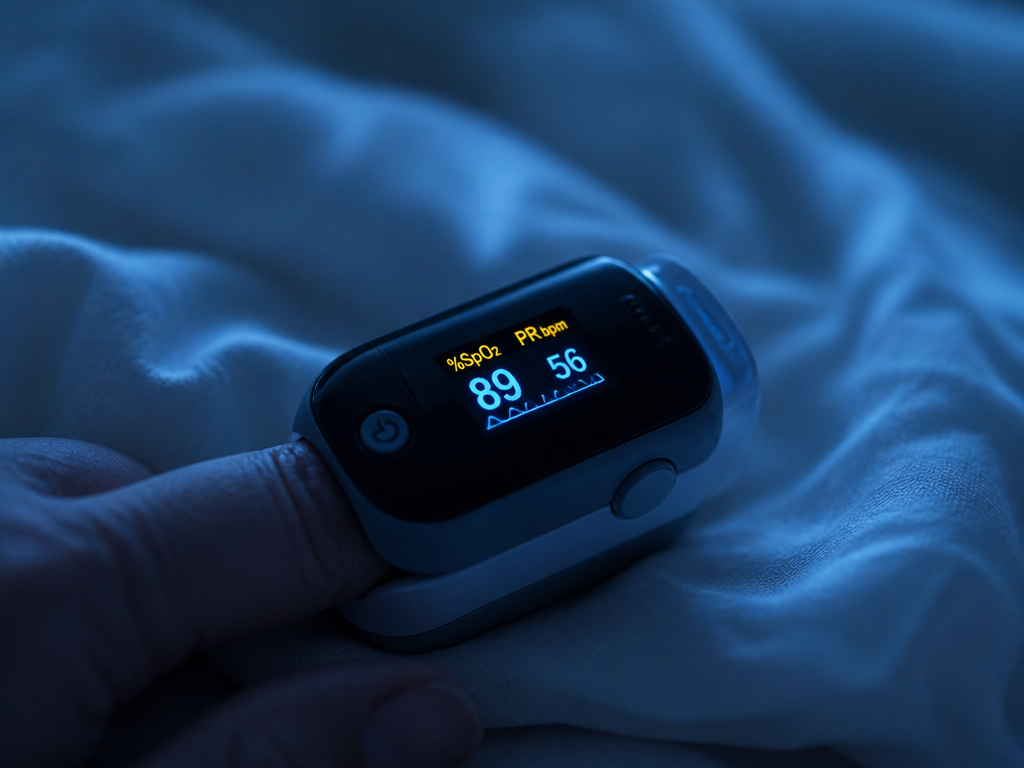
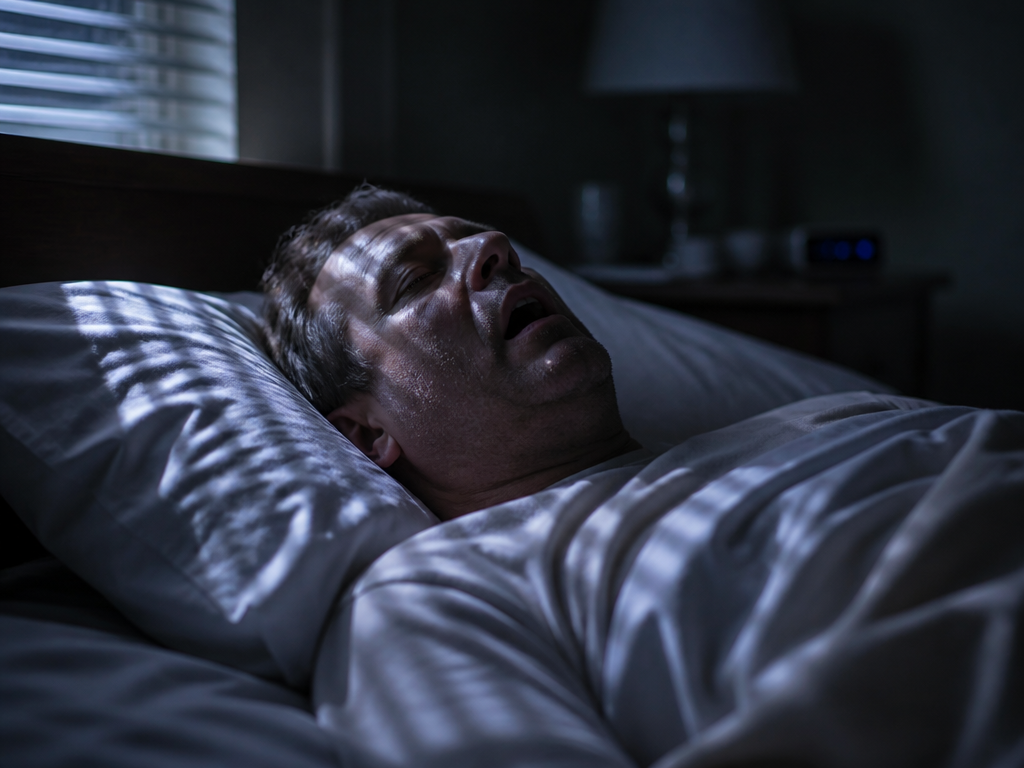
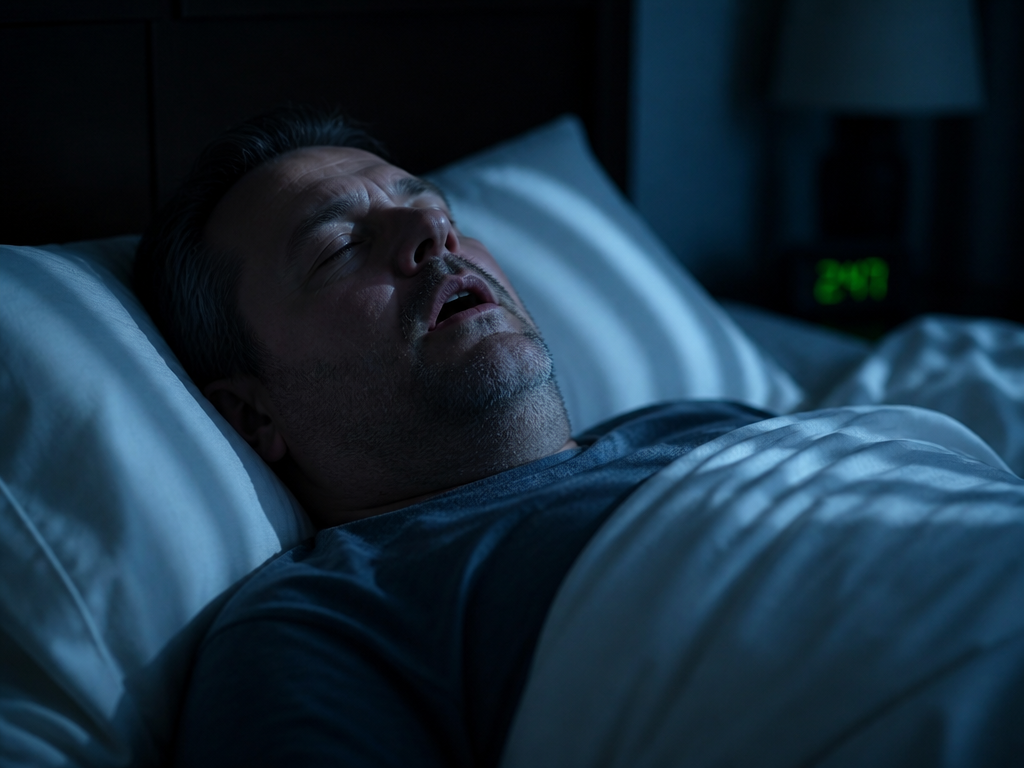
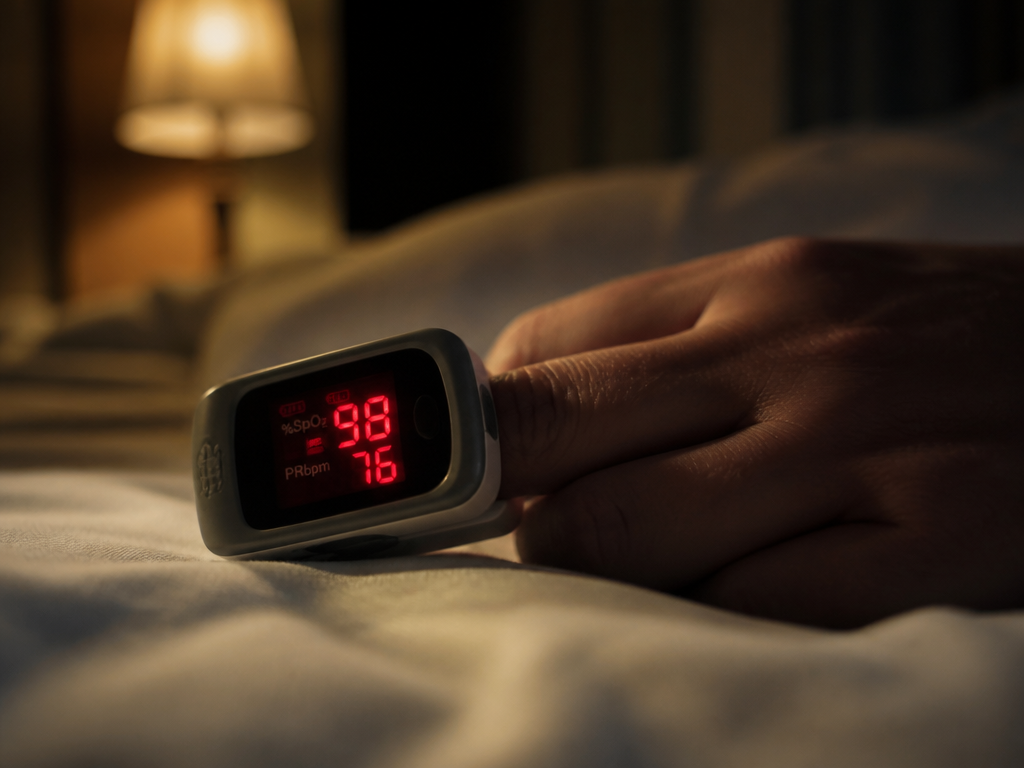
You're asleep. The muscles holding your upper airway open relax a little too far, and the airway narrows or collapses. You keep trying to breathe — the chest works against a closed door — but air isn't moving. Over the next ten, twenty, forty seconds, the oxygen in your blood falls and carbon dioxide climbs.
The brain notices. Chemoreceptors in the carotid arteries register the falling oxygen and trigger the sympathetic nervous system — the same circuitry behind a startle. Heart rate and vascular tone jump. Then comes a brief arousal, often too short to remember, just long enough to snap the airway open. You gasp, oxygen recovers, and at that moment blood pressure spikes, sometimes by 30 mmHg or more, into vessels that have just been squeezed tight.
Then you fall back asleep and it happens again. In moderate-to-severe apnea, this cycle repeats fifteen, thirty, sixty times an hour, all night.
Here's the part that outlasts the night. In healthy sleep, blood pressure falls 10 to 20 percent overnight — the "dip" that gives the cardiovascular system its only real rest. People with significant apnea often lose that dip; they become non-dippers, carrying daytime-level pressure through the hours that should be lowest. Over months and years, the repeated surges and the missing dip appear to recalibrate the system upward. The sympathetic tone stays elevated even during waking hours, and the kidneys' renin-angiotensin-aldosterone pathway — which governs salt, fluid, and vascular tension — gets nudged along with it. The night writes a setting the day then keeps.
What the research actually measured
The link is well-established at the population level. OSA is common — a frequently cited 2019 Lancet Respiratory Medicine analysis (Benjafield et al.) estimated nearly a billion adults worldwide with at least mild OSA — and large cohorts have repeatedly found that apnea predicts incident hypertension. The landmark here is the Wisconsin Sleep Cohort: Peppard et al. (2000), New England Journal of Medicine, followed roughly 700 adults over four years and found a dose-response relationship — the worse the apnea at baseline, the higher the odds of developing hypertension later, even after adjusting for weight.
The most striking association is with resistant hypertension — blood pressure that stays high despite three or more medications. Studies of resistant-hypertension patients have found OSA in the large majority of them, often cited in the 70-to-80-percent range. That's an association, not proof of cause, and the patients in those studies tend to be heavier and older, which complicates the read. But the signal is strong enough that current guidelines suggest screening resistant-hypertension patients for sleep apnea, not the other way around.
What the research is less sure about is how much treating one moves the other. Which brings us to the question every CPAP candidate asks.
Does CPAP actually lower blood pressure?
Modestly, on average, and more for some people than others. This is where the honest answer is "it depends," and the depending matters.
Meta-analyses of randomized trials — pooling many CPAP-versus-control studies — tend to land on an average reduction of roughly 2 to 3 mmHg in systolic pressure. That sounds small, and for one person it may be. But two things temper the disappointment. First, the average hides a wide spread: people who use CPAP for more hours per night, who have more severe apnea, who have resistant hypertension, or who were sleepy to begin with tend to see larger drops — sometimes into the 5-to-7 mmHg range. Second, at the population level, even a few mmHg shifts stroke and heart-disease risk meaningfully.
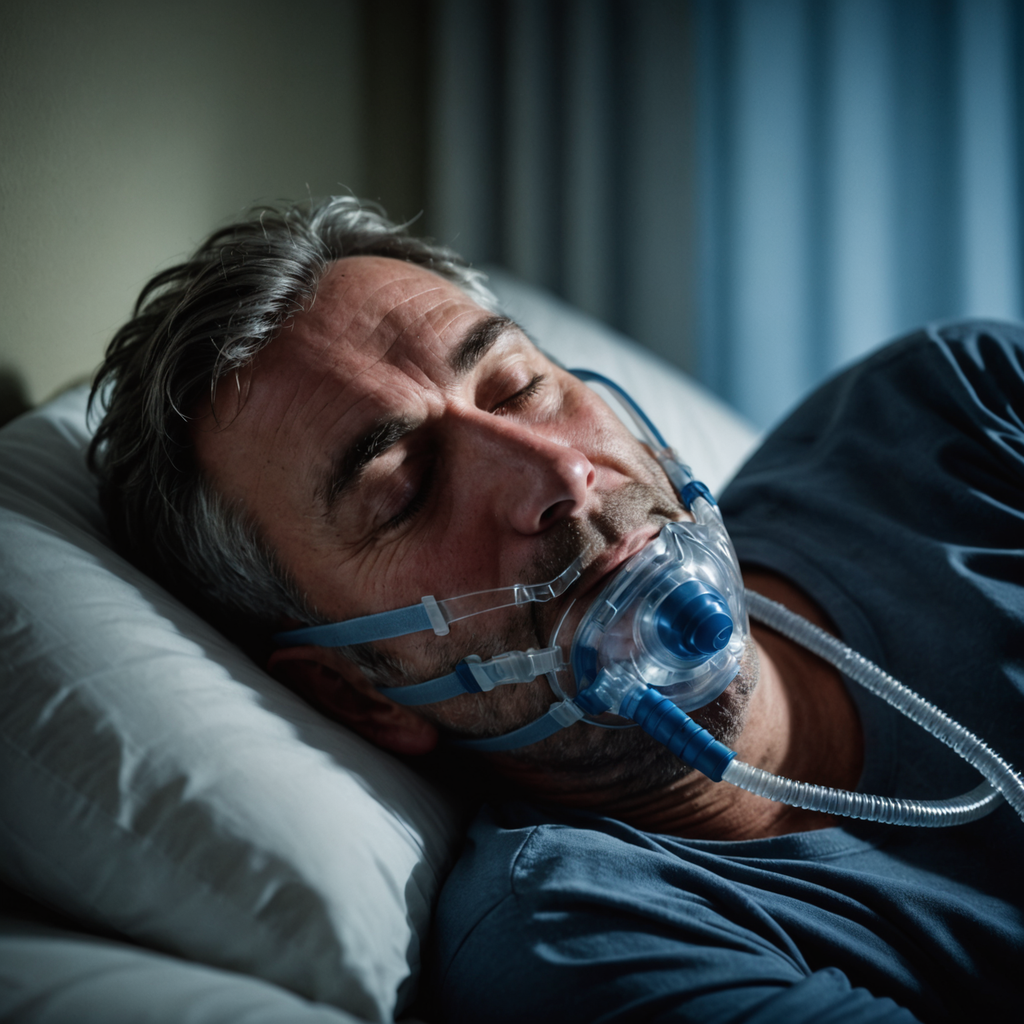
The catch is adherence. Trials that find little benefit often find little because participants wore the mask three or four hours a night, not seven. CPAP can't recalibrate a system it isn't running for. The honest framing: CPAP is reliable treatment for the apnea and the daytime sleepiness; its blood-pressure benefit is real but secondary, and it rewards consistent use rather than ownership of a machine.
Why the picture stays a little blurry
The two conditions share too many roots to fully separate by mechanism. Excess weight, especially around the neck and abdomen, narrows the airway and drives hypertension independently. Age stiffens arteries and weakens airway muscles at once. And there's a genuinely interesting reverse pathway: in people with fluid retention — from heart or kidney disease — fluid pooled in the legs by day shifts toward the neck when lying down, swelling the tissues around the airway and worsening apnea overnight. There, the cardiovascular problem really is feeding the breathing problem. So the second arrow isn't imaginary. It's just narrower than the first.
| Strength of evidence | |
|---|---|
| Untreated OSA raises blood pressure | Well-established |
| OSA is common in resistant hypertension | Well-established association; causation likely |
| CPAP lowers BP a few mmHg on average | Established but modest, adherence-dependent |
| High BP directly causes OSA | Plausible only via fluid shifts; thin |
What to try this week
If you have hypertension and snore, gasp at night, or wake unrefreshed, the most useful thing you can do is gather two pieces of real data rather than guess at the arrow.
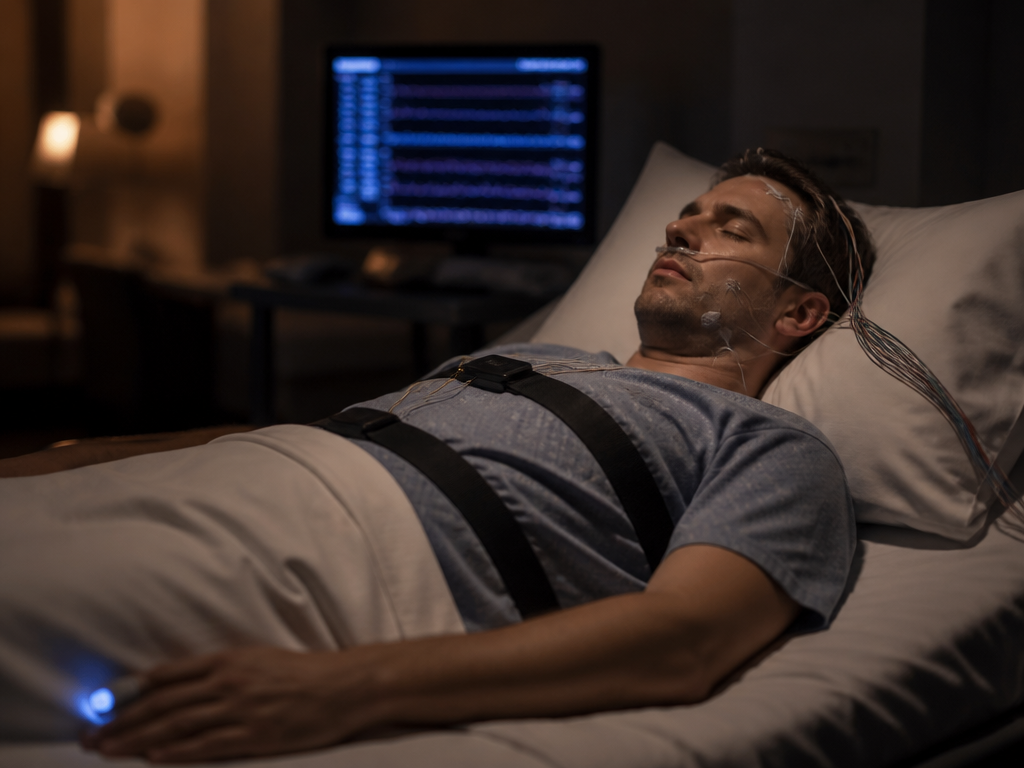
First, ask whoever shares your bed — or set a phone recording — whether your breathing stops or you gasp. That single observation is what moves a doctor toward ordering a sleep study, and a home sleep test is now an easy first step. Second, if you own a home blood-pressure cuff, take a reading within ten minutes of waking, before coffee, for several mornings. Persistently high morning numbers are exactly the pattern a non-dipper produces, and they're worth showing your doctor.
Neither step diagnoses anything. Both turn a vague worry into the kind of specific information that actually changes what happens next.
The arrow between sleep and pressure points mostly one way, but the help points back — fix the nights, and the days often follow.