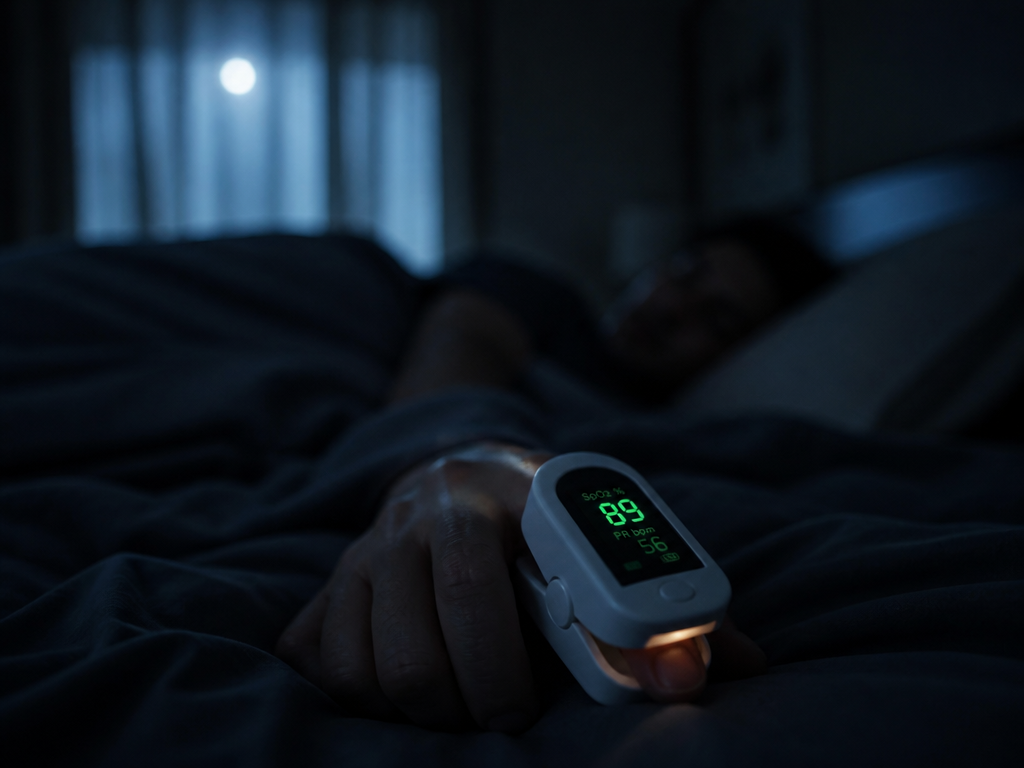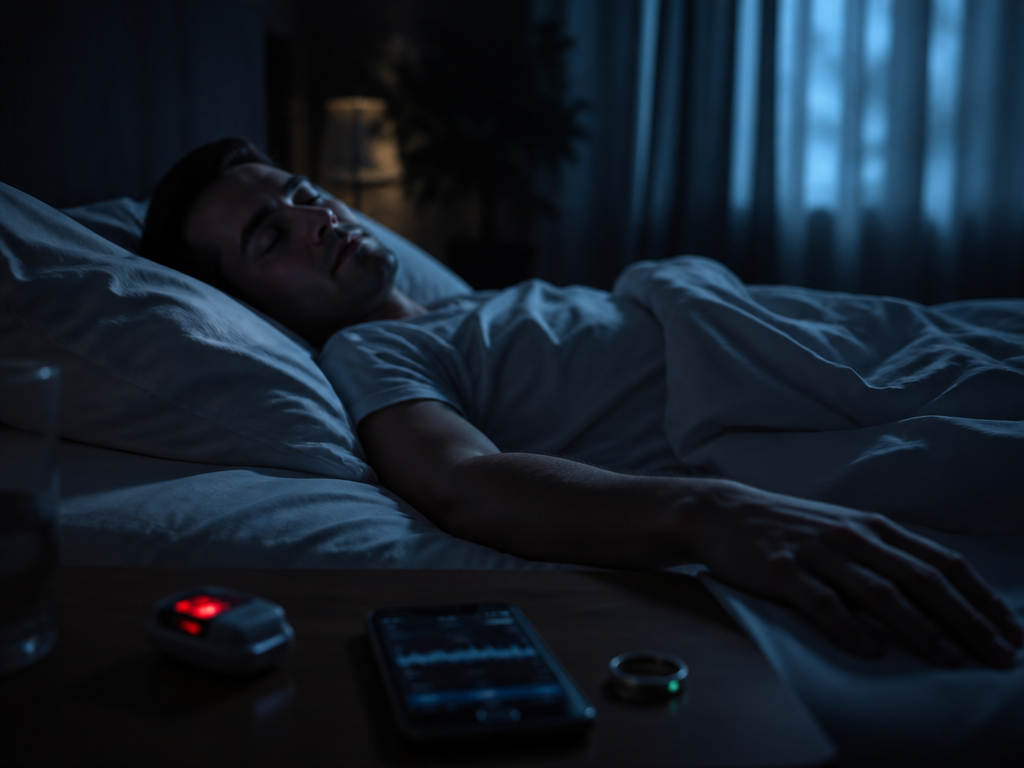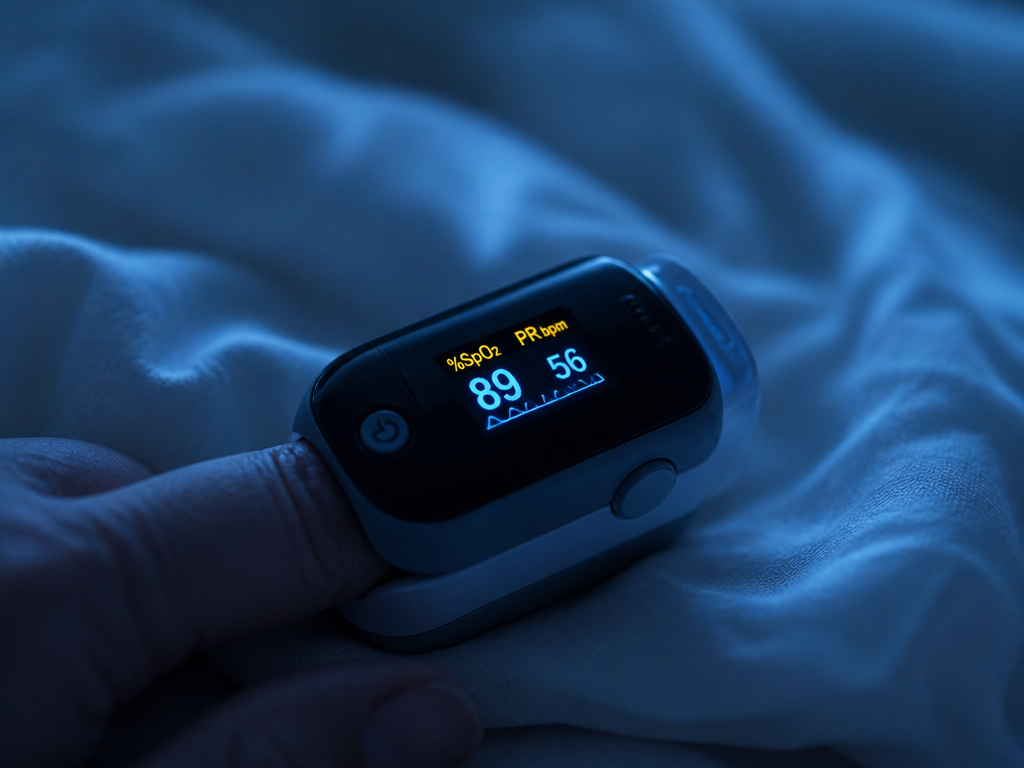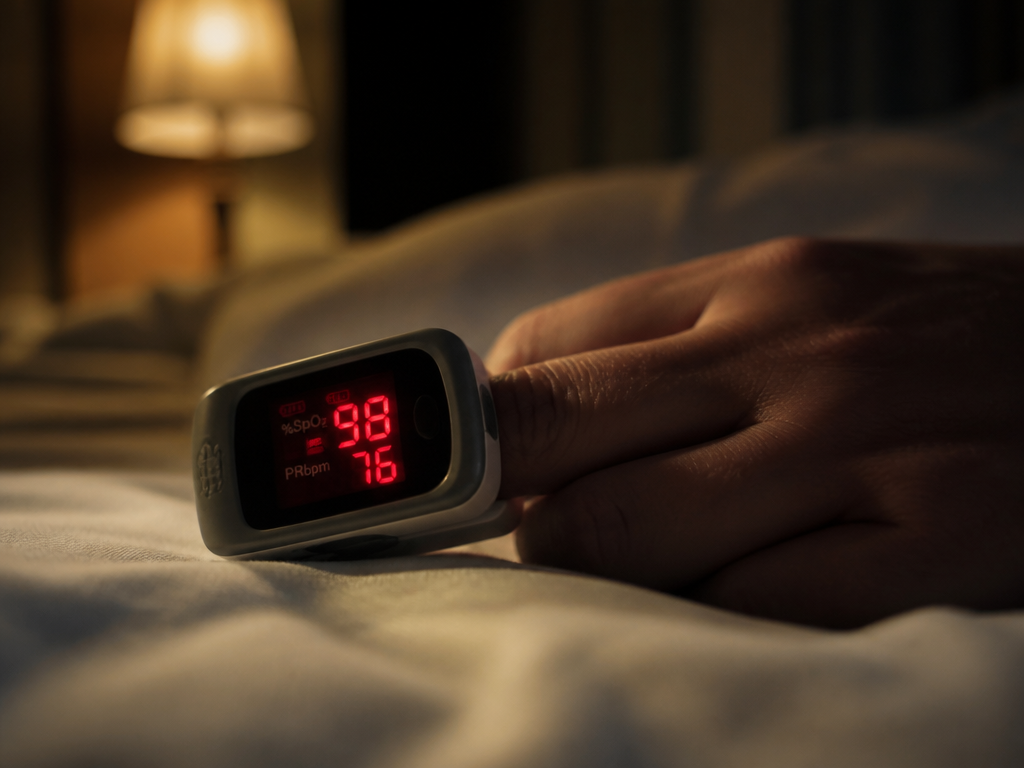
For seven nights I clipped a $40 pulse oximeter to my finger before bed — the kind sold for hikers worried about altitude, with a continuous-recording mode and a strap so it doesn't fall off when you roll over. I wanted to see my own blood oxygen while I slept, because my partner had been telling me, in the flat tone of someone who has said it many times, that I stop breathing.
The number that stopped me was 84. Not the average — the average was a reassuring 95 percent — but a single trough at 4:12 a.m., where the trace dropped from 96 to 84 over about forty seconds and then snapped back up as, presumably, I gasped myself half-awake without remembering it. Healthy sleeping oxygen sits at 95 to 100 percent. Repeated dips below 90 are the signature of obstructive sleep apnea, the most common form of sleep-disordered breathing.
The verdict, in one sentence
A consumer oximeter cannot diagnose anything — but a week of watching my own oxygen sawtooth up and down taught me more about what obstructive sleep apnea actually does to a night than any pamphlet had, and it sent me to a real sleep study.
What is actually happening down there
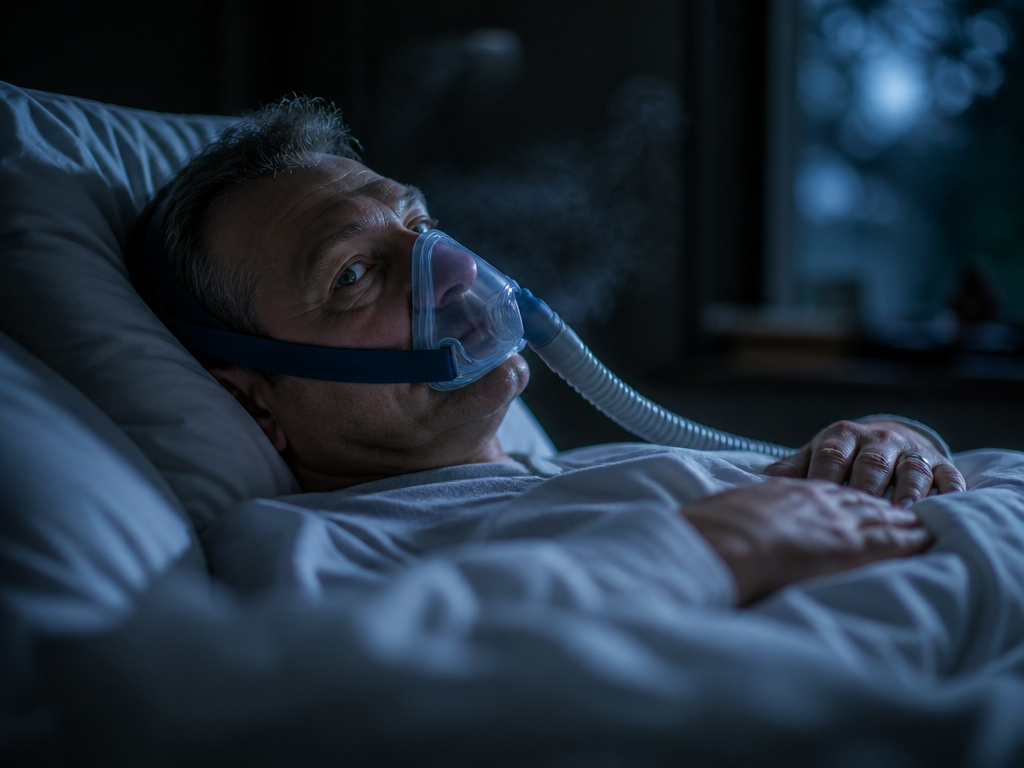
When you fall asleep, the muscles that hold your upper airway open relax along with everything else. In most people the airway stays patent — open enough to move air. In obstructive sleep apnea, the soft tissue at the back of the throat collapses inward far enough to block airflow, partially (a hypopnea) or completely (an apnea). Your chest keeps trying to breathe; the air just can't get past the blockage.
Oxygen falls. Carbon dioxide climbs. After ten, twenty, sometimes forty seconds, the brain registers the chemistry going wrong and triggers a brief arousal — a flick toward wakefulness that tightens the airway muscles, opens the throat, and lets you breathe again. Often with a snort. You almost never remember it. Then you sink back down, the throat relaxes again, and the cycle repeats. In severe cases this happens more than thirty times an hour, all night, every night.
That is the cruelty of it. You are technically in bed for eight hours. You are not, in any meaningful sense, resting.
OSA is not the only kind
The word "apnea" covers two mechanisms that look similar from the outside and are managed very differently. The distinction matters enough that a sleep study measures both.
| Obstructive sleep apnea | Central sleep apnea | |
|---|---|---|
| Cause | Throat physically blocks airflow | Brain stops signaling the muscles to breathe |
| Effort during pause | Chest keeps straining to breathe | No breathing effort at all |
| Typical clue | Loud snoring, gasping arousals | Quiet pauses, often no snoring |
| Who it shows up in | Very common; linked to weight, anatomy, age | Rarer; linked to heart failure, stroke, opioids |
A home gadget on your finger cannot tell these two apart — both produce the same oxygen dips. Only a study that also measures your breathing effort can. That limitation is exactly why "I saw scary numbers on my watch" is a reason to book an appointment, not a reason to draw conclusions.
The symptoms, and why each one happens
The reason apnea goes undiagnosed for years is that its symptoms are easy to file under "getting older" or "stress." Reading them with the mechanism attached is what made me recognize myself.
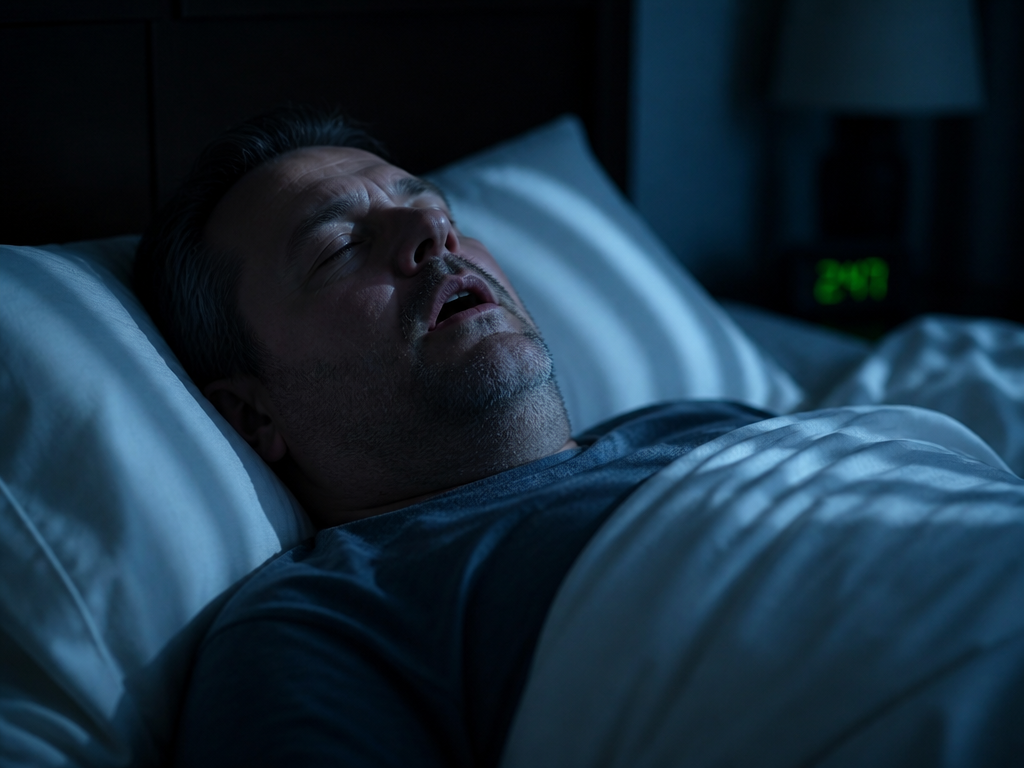
Snoring that's loud, ragged, and punctuated by silences. Snoring is the sound of turbulent air squeezing past a narrowed throat. The silences between are the apneas — the moments when nothing gets past at all. A steady purr is usually benign; a snore that stops, pauses, and resumes with a gasp is the pattern worth noticing.

Waking unrefreshed after a full night. Every arousal pulls you out of deep and REM sleep before you've banked enough of either. You can spend nine hours horizontal and assemble almost no restorative sleep from them, which is why the tiredness feels disproportionate to the hours.
A dull morning headache. When breathing stalls, carbon dioxide accumulates in the blood. CO₂ dilates the vessels in your skull, and the pressure shows up as a diffuse ache that tends to fade an hour or two after waking.
Daytime sleepiness that ambushes you. Not "I could use a coffee," but the kind that closes your eyes at a red light. Fragmented sleep produces a sleep debt your body tries to repay at the worst moments.
Waking to use the bathroom, repeatedly. Less obvious: the strain of trying to breathe against a closed airway raises pressure in the chest, which prompts the heart to release a hormone that tells the kidneys to make urine. Two or three trips a night can be a breathing problem wearing a plumbing costume.
Irritability, fog, a memory that's gone slippery. Sleep is when the brain consolidates memory and clears metabolic waste. Interrupt it thirty times an hour and the cognitive bill comes due during the day.
What my week of data could and couldn't show
I want to be precise about the limits, because the gadget is seductive and the temptation is to over-read it.
It could show oxygen desaturation — clear, repeated dips clustered in the early-morning hours when REM sleep (and the muscle relaxation that comes with it) is heaviest. It could show my pulse spiking at the bottom of each dip, which is the physical signature of an arousal.
It could not tell me whether the pauses were obstructive or central, because it measured no breathing effort. It could not give me an apnea-hypopnea index, the actual diagnostic number. It missed any event too brief to drop oxygen below its sampling threshold. And n=1 across seven nights, with a $40 sensor, is not data anyone should treat me on. My sleep study later returned an AHI of 11 — mild-to-moderate. The oximeter had pointed in the right direction and gotten the magnitude wrong, which is roughly what you should expect from it.
Who should take this seriously — and who can relax
Worth a conversation with a clinician: - You've been told you stop breathing or gasp in your sleep. - You wake unrefreshed most days despite adequate time in bed. - You have morning headaches, unexplained high blood pressure, or daytime sleepiness severe enough to affect driving.
Probably fine for now: - You snore gently and consistently with no pauses, and wake up rested. - You had one bad week of sleep during a stressful stretch. - A single low reading on a consumer device, with no daytime symptoms at all.
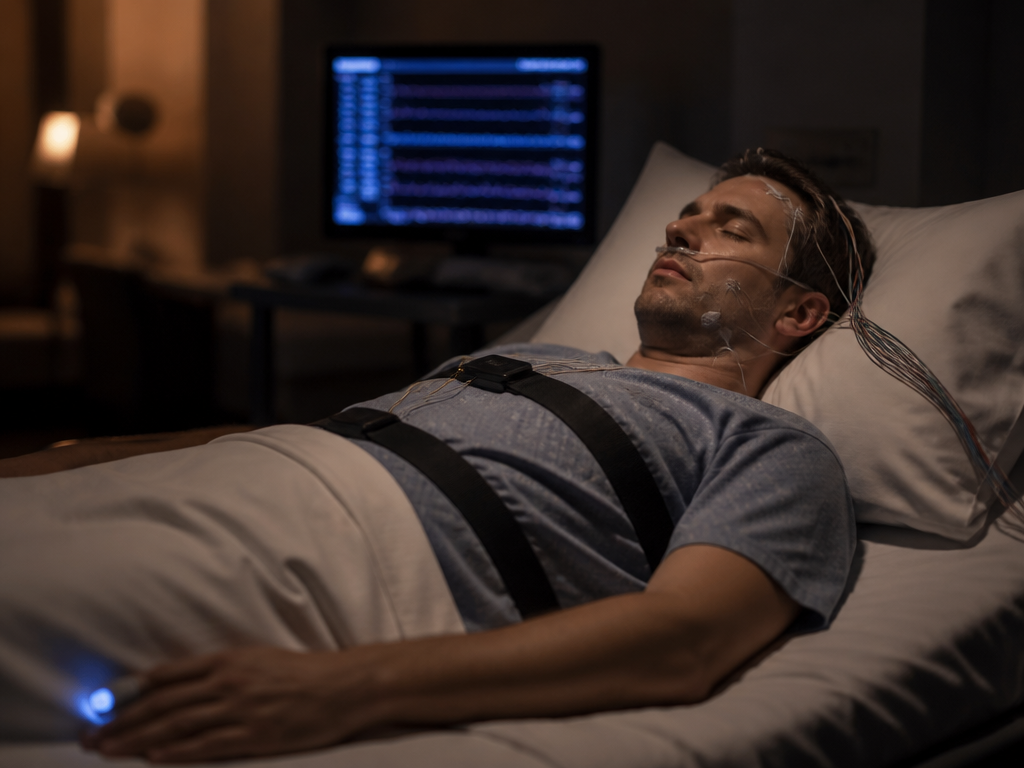
If you fall in the first group, the path is unglamorous and effective: a sleep study, in a lab or, increasingly, an at-home test your doctor prescribes. The clearest takeaway I can offer is the one I'd screenshot: a finger gadget is a smoke detector, not a fire inspector — it's allowed to send you looking, not to tell you what's burning.
What it looks like, lived out
I stopped sleeping on my back. That's it — for now, while I sort out the rest. On my back, gravity drops the tongue and soft palate straight down onto the airway; on my side it falls away from it. The change cost nothing and required a tennis ball sewn into the back of an old shirt so I'd resist rolling over.
On the third side-sleeping night, the oximeter's lowest reading was 91. The 4 a.m. cliff didn't appear. One number, one night, one cheap sensor — not a cure, and I know it. But it was the first morning I'd seen the trace stay flat, and that flat line told me, more plainly than the headache ever had, what the airway had been doing all those years I called it snoring.