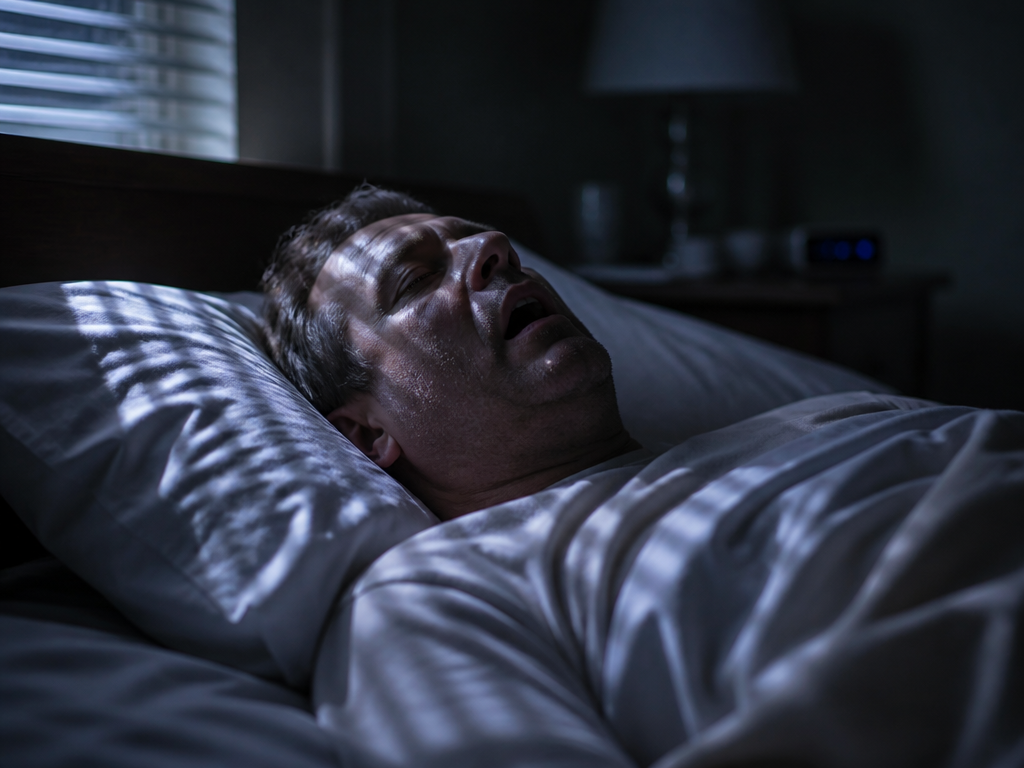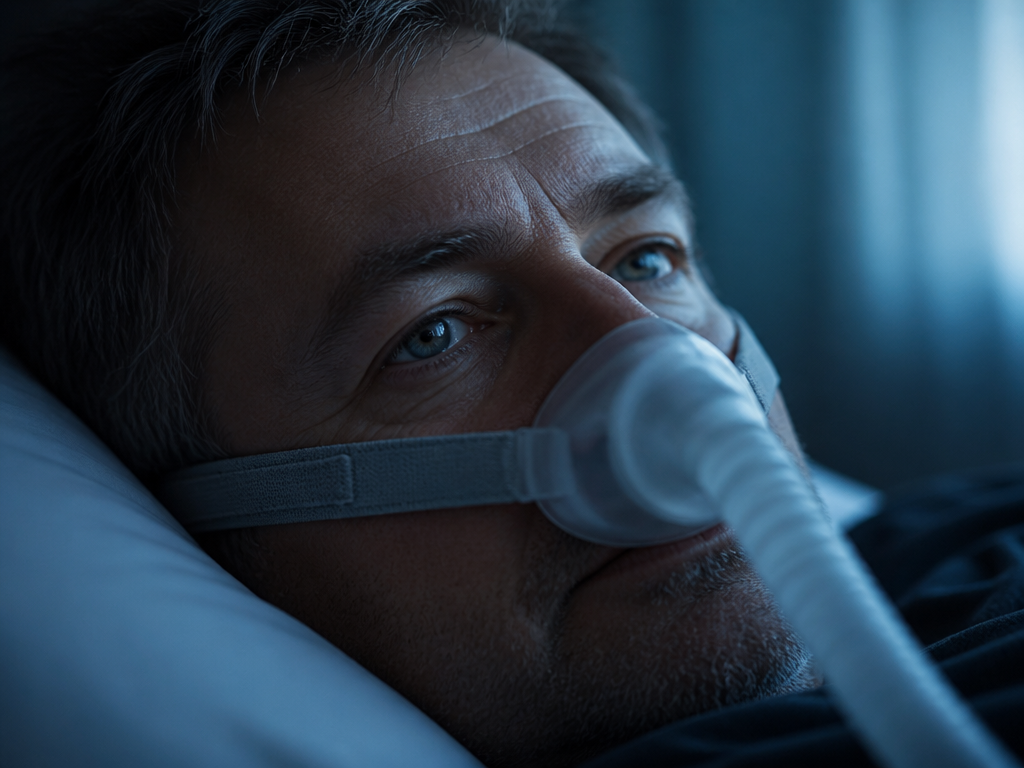
The line you'll hear in a sleep clinic, or read on the pamphlet they hand you after a positive home test, goes something like this: treat your apnea and you protect your heart and your brain. Untreated, the warning continues, sleep apnea roughly doubles your risk of stroke. It is a clean, motivating sentence. It is also, like most clean sentences about the body, partly true and partly oversold.
Sleep apnea cardiovascular risk is one of the better-studied links in sleep medicine, and the stroke piece of it is real enough that ignoring a diagnosis is a genuinely bad idea. But the relationship between the breathing disorder, the heart, and the brain is more tangled than the doubling figure suggests — and the most reassuring part of the standard advice, the part that says a machine will fix it, is exactly where the evidence gets thin.
Where the "doubles your stroke risk" number comes from
The most likely question a newly diagnosed reader is asking: does sleep apnea actually cause strokes, or just travel alongside them?
The honest answer is that the association is well-established and the causation is plausible but not airtight. The figure people quote traces largely to Yaggi et al. (2005) in the New England Journal of Medicine, an observational study of 1,022 patients followed for a median of about three years. Those with obstructive sleep apnea had roughly twice the rate of stroke or death, and the risk climbed with severity even after adjusting for hypertension, diabetes, smoking, and other usual suspects. Redline et al. (2010), drawing on the Sleep Heart Health Study cohort, found that men in the most severe apnea category had close to triple the stroke risk of men without it; the signal in women was weaker and appeared mostly at higher severity.
So the doubling number isn't invented. It comes from large, careful cohorts. What those studies measured, though, was who got sick over time — not what happened when you intervened. Hold that distinction. It does most of the work later.
What the airway actually does to the brain
To see why the link is biologically coherent, follow a single apneic event in the order it unfolds.
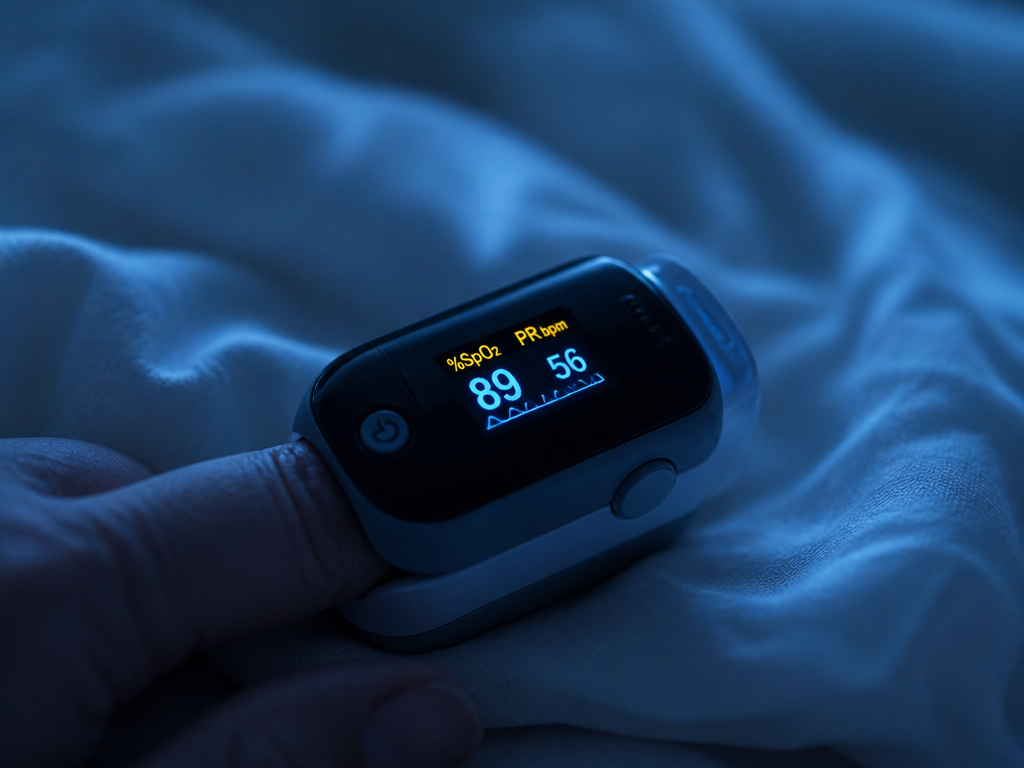
You fall asleep, and the muscles holding your upper airway open relax. In obstructive sleep apnea the airway narrows or collapses, and airflow stops for ten seconds or longer — sometimes for a minute. Your blood oxygen falls. Carbon dioxide climbs. The body reads this as an emergency, because it is one, and the sympathetic nervous system fires: a surge of adrenaline-like signaling that jolts you into a brief, usually unremembered arousal to reopen the airway. You gasp. Breathing resumes. Blood pressure, which had been climbing through the obstruction, spikes hard on that arousal.
Now repeat that fifteen, thirty, sixty times an hour, every hour, for years.
The downstream consequences are where the cardiovascular damage accrues. The repeated oxygen drops — intermittent hypoxia — drive oxidative stress and inflammation in the lining of blood vessels, impairing the endothelium's ability to dilate normally. The nightly sympathetic surges blunt the usual nocturnal dip in blood pressure, so the cardiovascular system never gets its overnight rest, and daytime hypertension follows. There's evidence of heightened platelet activation and clotting tendency, and the pressure swings strain the heart's chambers, setting up atrial fibrillation — itself a leading cause of stroke. None of these pathways is exotic. Each is a recognized route to vascular disease, and apnea pulls several levers at once.
That convergence is why physiologists find the apnea–stroke link credible even where the trial data disappoints. The mechanism isn't a vibe. It's a chain you can name link by link.
Where the standard advice is roughly right

Start with what holds up. The association between untreated obstructive sleep apnea and cardiovascular trouble — hypertension, atrial fibrillation, coronary disease, stroke — is consistent across large cohorts, dose-dependent (worse apnea, higher risk), and biologically explicable. Apnea is also a confirmed, independent contributor to resistant hypertension, the kind that won't come down on three drugs, and treating it does measurably lower nighttime blood pressure. If your advice is simply "this is a real cardiovascular condition, not just snoring, and it deserves evaluation," the science is on solid ground.
Where it breaks down
The trouble starts with the implicit promise — that a CPAP machine will undo the stroke risk.
The landmark test was SAVE (McEvoy et al., 2016), published in the New England Journal of Medicine: 2,717 adults with moderate-to-severe OSA and existing cardiovascular disease, randomized to CPAP plus usual care or usual care alone, followed about 3.7 years. CPAP improved snoring, daytime sleepiness, and mood. It did not significantly reduce the rate of strokes, heart attacks, or cardiovascular death. Later trials (RICCADSA, ISAACC) reached broadly similar conclusions for secondary prevention.
Why the gap between the strong observational signal and the flat trial result? A few honest possibilities, none fully resolved. Adherence is the big one: average CPAP use in SAVE was about 3.3 hours a night, and the airway collapses again the moment the mask comes off, so partial use may simply be too little protection. The trials enrolled people who already had heart disease, possibly too late to reverse damage. And it's genuinely possible that observational studies overstated causation — that apnea is partly a marker of risk it doesn't fully create. The data here is thinner than the confidence with which the "CPAP protects your heart" claim is usually stated.
This is not a reason to skip treatment. It's a reason to be precise about what treatment buys you, and on present evidence the clearest, most reliable wins are how you feel and function by day.
An honest rule of thumb
If you have symptoms — loud snoring, witnessed pauses in breathing, gasping awake, unrefreshing sleep, morning headaches, or daytime sleepiness — and especially if you also have high blood pressure, atrial fibrillation, or have had a stroke, get tested. Don't wait to feel worse. Severity is graded by the apnea-hypopnea index (AHI), events per hour of sleep:
| AHI (events/hour) | Severity | What it generally means |
|---|---|---|
| Under 5 | Normal | No diagnosis |
| 5–14 | Mild | Treat if symptomatic |
| 15–29 | Moderate | Treatment usually advised |
| 30+ | Severe | Strongest cardiovascular association |
If you're diagnosed, use the therapy nightly, not occasionally — the dose-response in the cohorts and the adherence problem in the trials point the same way: more hours, more benefit. And treat CPAP as one move within heart care, not a substitute for managing blood pressure, weight, atrial fibrillation, and the rest.1
One caution before you self-diagnose. The headline symptoms overlap with plenty of other conditions — insomnia, depression, thyroid disease, simple sleep deprivation — and snoring alone is not apnea. A proper sleep study, home or in-lab, is what separates them. Bring the symptoms to a clinician rather than a search bar.
Back to that number
So: does untreated sleep apnea roughly double your stroke risk? The cohorts say yes, and the mechanism explains how — through years of oxygen drops, pressure surges, and inflamed vessels. What the doubling figure can't promise is the tidy converse: that a machine reverses the risk cleanly. The risk is real; the repair is partial and depends heavily on what you actually do. The doubling isn't a sentence handed down at diagnosis — it's a description of a road you've started down, and one you have more power to change than to undo.
-
Newer trials are testing whether stricter adherence, earlier treatment before cardiovascular disease sets in, or alternatives like mandibular advancement and hypoglossal nerve stimulation shift the hard outcomes. As of now, the cardiovascular-event data for any single therapy remains weaker than the symptom data. ↩