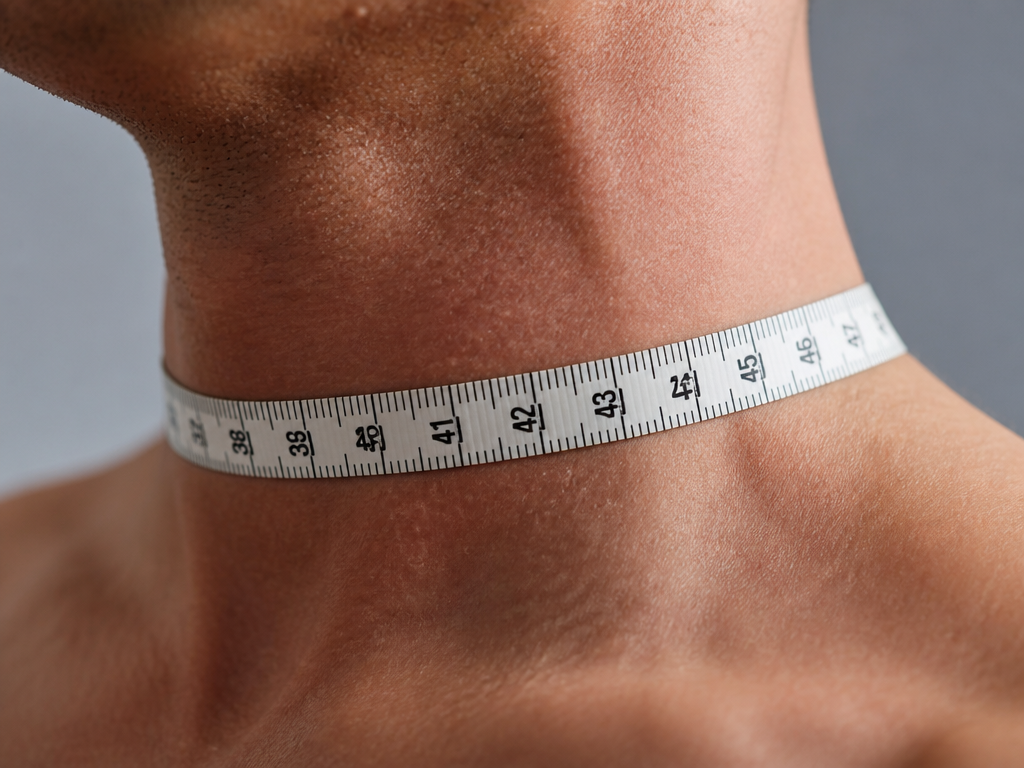
The standard advice goes like this: if you're a big man — especially the kind of big that comes from a barbell rather than a buffet — you should get checked for sleep apnea, because your neck is thick and thick necks collapse airways. Coaches repeat it. Team doctors repeat it. The internet repeats it with a number attached: neck over 17 inches, go see someone.
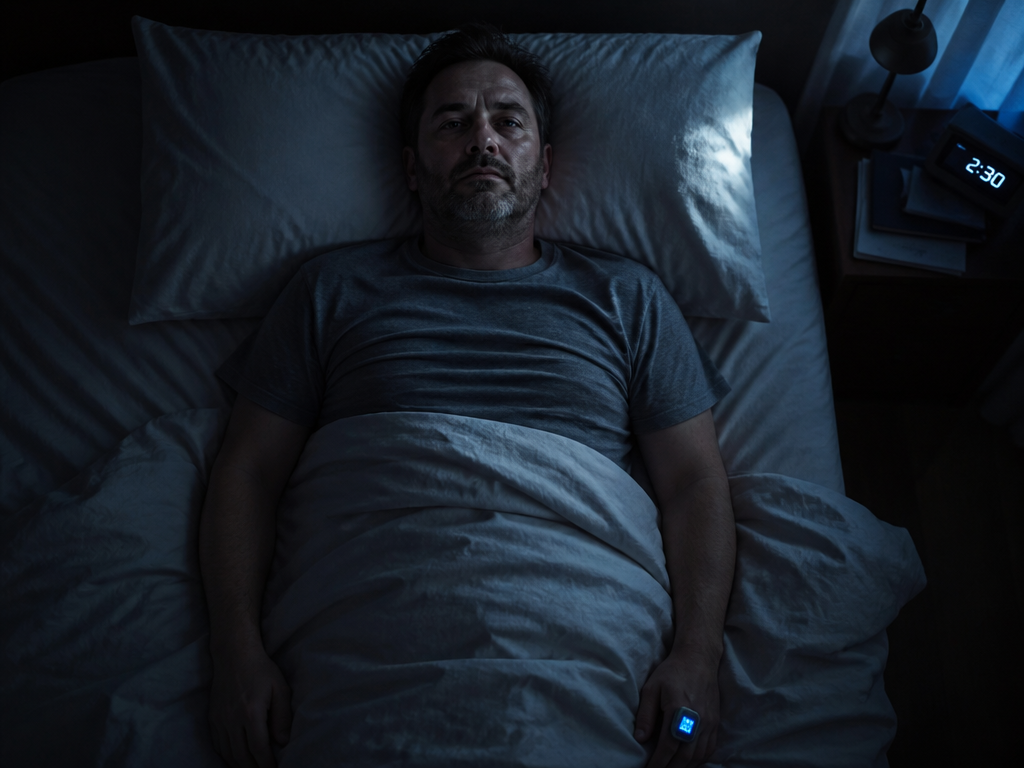
I have a 17.5-inch neck, a decade of strength training behind me, and a partner who has been complaining about my snoring for two years. So I wore a home sleep apnea test every night for a month to find out whether the rule applied to me, and whether it deserves the confidence people say it with.
The verdict, in one sentence: the advice is directionally correct but anchored to the wrong single number — neck size predicts risk far less reliably than what you did that specific day, and the people most likely to be falsely reassured are exactly the fit, muscular ones the rule was supposedly written for.
What I actually measured, and what I couldn't
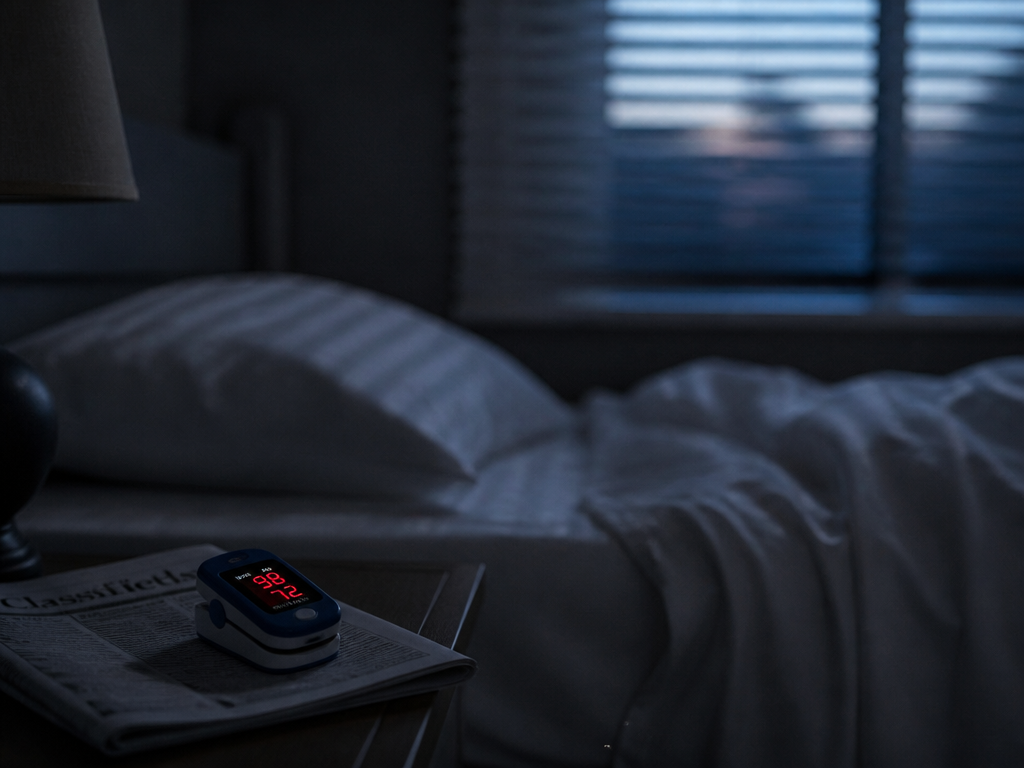
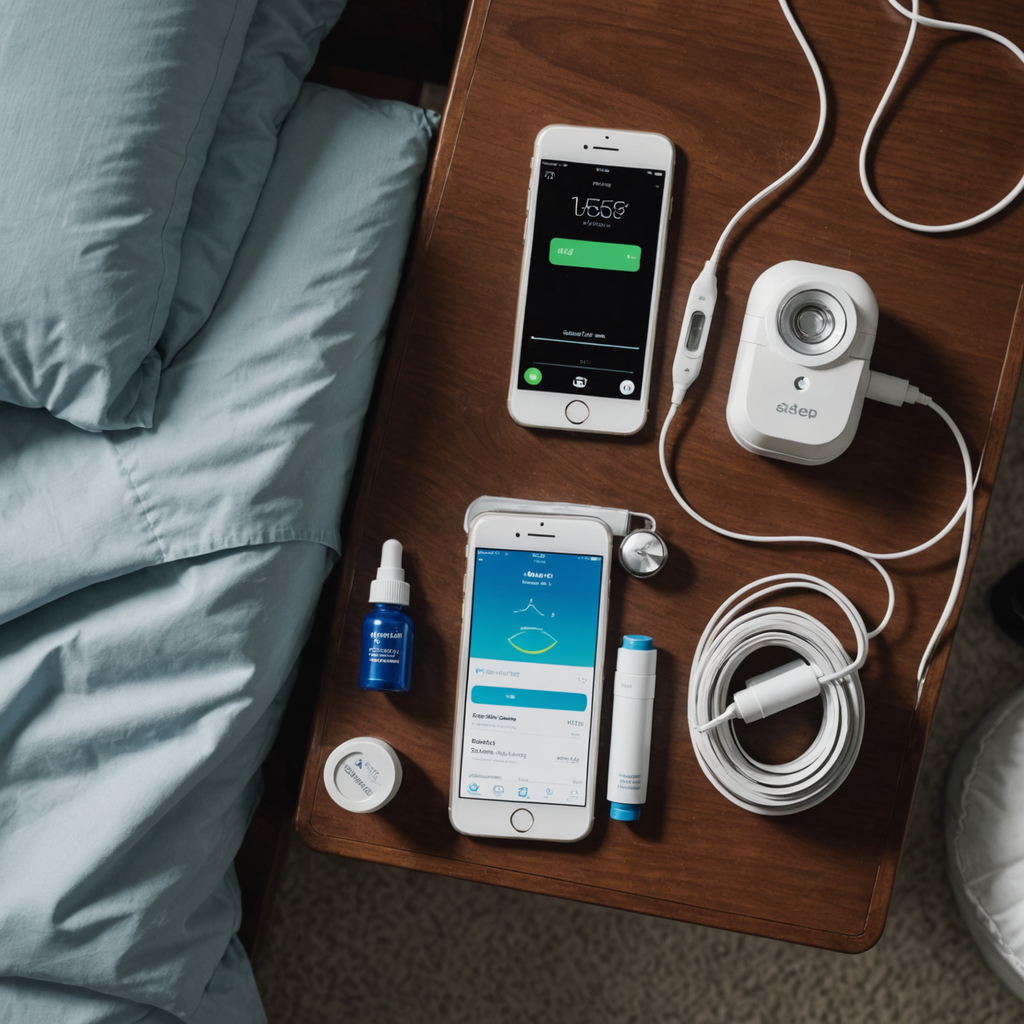
I used a WatchPAT One, a single-use home sleep apnea test that clips a sensor onto a finger and measures peripheral arterial tone, blood oxygen, heart rate, and actigraphy. It is not a polysomnogram. A real sleep lab wires your scalp, your chest, your legs, and your eyes, and a technician watches. The home test infers a lot from the finger. It is FDA-cleared and validated against lab testing well enough that most sleep physicians will accept it for uncomplicated cases, but it cannot distinguish central apnea from obstructive apnea as cleanly, and it can miss things a lab catches.
The number everything hangs on is the AHI — the Apnea-Hypopnea Index, the count of breathing interruptions per hour of sleep. Under 5 is normal. 5 to 15 is mild. 15 to 30 is moderate. Above 30 is severe. That single integer decides whether a doctor shrugs or hands you a CPAP prescription.
My relevant stats, for calibration:
- Age: 38
- Height / weight: 6'1", 232 lbs
- BMI: 30.6 — which, on paper, files me under "obese"
- Neck: 17.5 inches
- Body fat (DEXA, three weeks before the test): 19%
Hold onto that last pair. A BMI of 30.6 and a body fat of 19% do not belong to the same person in most clinical models, and the gap between them is most of this article.
The obvious caveat: this is one body, 30 nights. I cannot tell you what happens in yours. What I can do is show where my month confirmed the rule, where it contradicted it, and where the rule simply wasn't asking the right question.
Where the advice is roughly right
Start with the part that holds up, because it does hold up.
A thicker neck really does correlate with obstructive sleep apnea, and the mechanism is not mysterious. The airway is a soft tube held open by muscle tone, and when you fall asleep that tone drops. Tissue crowding around the airway — fat, yes, but also muscle and lymphatic tissue — narrows the tube before sleep ever relaxes it further. More circumference, more crowding, more collapse. Neck circumference is one of the better single anthropometric predictors of apnea precisely because it captures crowding that weight alone misses.
For athletes specifically, the picture is real enough that it stopped being a curiosity years ago. Retired offensive and defensive linemen — the largest men in professional football — show sleep-disordered breathing at rates that dwarf the general population. The cardiology literature on retired players has flagged this repeatedly, and the connection between size at those positions and breathing trouble in middle age is one of the more robust findings in the whole athlete-health conversation. A 320-pound frame built to occupy space does occupy space in the throat too.
There's also a less-discussed pathway that has nothing to do with fat. Heavy resistance training thickens the muscles of the neck and tongue alongside everything else. Some of the crowding in a strong, lean athlete is muscular, not adipose. The rule's underlying instinct — big neck, watch your breathing — is grabbing at something true.
My own month confirmed the direction. My average AHI across 30 nights was 11.4 — squarely mild apnea, not a borderline reading I could wave away. The rule said a man my size and neck should get checked. The rule was right that I had something to find.
Where it breaks down
Now the problems, because there are several, and they compound.
BMI lies on a muscular body
The clinical screening tools lean hard on BMI. The most common one, the STOP-Bang questionnaire, gives you a point for BMI over 35 and a point for neck over 16 inches (or 17, depending on the version). On a sedentary body those proxies work because weight tracks fat tracks airway crowding. On a trained body the chain snaps at the first link. My BMI says obese; my DEXA says lean. If a screening tool reads my weight as fat, it overstates one kind of risk while a leaner-looking athlete with a genuinely crowded airway gets under-scored because the scale flatters him.
This cuts both ways and that's the point. The rule mis-sorts muscular people in both directions. It is not precise enough to trust on bodies that don't match the population it was tuned on.
"Fit people sleep fine" is the dangerous half
The more insidious failure is cultural, not statistical. There is a widespread assumption — held by patients and, frustratingly, by some clinicians — that a visibly fit person doesn't have a sleep breathing problem. You run, you lift, you have a resting heart rate in the 50s, so the snoring is just snoring. My resting heart rate is 54. My VO2 max tested in the "excellent" band for my age six months ago. And my airway collapsed an average of eleven times an hour.
The fitness reads as a clean bill of health and it isn't one. The athletes most likely to be falsely reassured are precisely the ones the original rule was supposed to protect, because they pass the eyeball test the rule's enforcers are actually using even when they recite the neck-size number.
"Tired equals soft" hides the symptom
Athletic culture treats daytime fatigue as a character flaw. You're tired because you didn't sleep enough, or didn't recover, or aren't tough enough. Untreated apnea produces exactly the fatigue, irritability, and morning headaches that get coded as poor discipline. The symptom that should send someone to a test gets absorbed into a story about willpower. I had assumed for two years that my mid-afternoon crash was a caffeine-timing problem. It was partly an oxygen problem.
Active and retired are different problems
Most of the alarming athlete-apnea data comes from retired players, often years into the weight gain and detraining that follow a career. Whether a currently competing, currently lean athlete carries the same risk is much less settled. My reading suggests the risk doesn't wait politely for retirement — but I'm a recreational lifter, not a 25-year-old pro at peak conditioning, and I won't pretend my month answers the active-career question.
The four weeks, broken apart
Averaging 30 nights into a single AHI of 11.4 hides the most useful thing I learned: the number was wildly unstable, and what moved it had almost nothing to do with my neck, which did not change size during the month.
I ran four loose "conditions" — not a controlled experiment, just an honest log of what each cluster of nights had in common. Here's how the AHI sorted out.
| Condition | Nights | Avg AHI | Severity band |
|---|---|---|---|
| Side sleeping, no alcohol, normal training | 9 | 6.1 | Mild (low) |
| Back sleeping, no alcohol | 7 | 14.8 | Mild (high) |
| Any alcohol (2+ drinks) before bed | 6 | 22.3 | Moderate |
| Deload week (light training, more sleep) | 8 | 9.0 | Mild |
Read that table and the rule reorganizes itself in front of you.
Sleeping position moved my AHI more than two-fold. On my back, the tongue and soft tissue fall straight into the airway gravity-assisted; on my side, the same neck behaves far better. The neck circumference the rule fixates on was identical across every row.
Alcohol was the single biggest lever. Two or more drinks pushed me from mild into moderate apnea — a band where a physician might genuinely discuss treatment. Alcohol relaxes the airway muscles whose tone is the only thing holding the tube open during sleep. Six nights of wine turned a manageable reading into one that, if it were my baseline, would change my care.
The deload week is the quiet surprise. I expected my best numbers during light-training weeks with more sleep, and they were better than my hard-training average but not dramatically. If heavy lifting were thickening my airway in some acute way, I'd have expected a bigger swing. The training intensity barely registered next to position and alcohol. That's a small data point against the "muscular crowding" pathway being my main driver — but it's one body and one week, so I hold it lightly.
The lesson isn't that neck size doesn't matter. It's that neck size is the fixed part of the equation, and my actual breathing on a given night was dominated by the variable parts the rule never mentions: what I drank and which way I rolled.
What the home test got right and wrong
Worth being concrete about the instrument, because a review of advice that relied on a flawed measurement would be its own kind of dishonest.
The WatchPAT was excellent at trend and pattern. The night-to-night swings tracked perfectly with the things I knew were different — I could pick out the alcohol nights from the data before checking my own log. That consistency is the strongest reason I believe the position and alcohol effects are real and not noise.
Where I'd flag caution: the finger sensor occasionally lost contact, and two nights got thrown out for insufficient data. The device also reports a single whole-night AHI; it does not show me, in the consumer app, whether a cluster of events happened in REM versus deep sleep, which a lab would. And it cannot tell me what it can't see. A home test that comes back clean is less trustworthy than one that comes back positive — a positive result like mine is hard to fake, but a negative one might just mean the device missed it. If your home test says you're fine and your partner still describes you choking on air, believe the partner.
Retail, the single-use test ran about $200 out of pocket through a telehealth sleep service, including the physician read. A lab study, billed to insurance, would have been several times that and required a referral and a wait. For a first look, the home test was a reasonable instrument. For a diagnosis I'd want to act on surgically, it isn't the final word.
Who this is for, and who it isn't
This is for you if:
- You're a current or former athlete with a thick neck who's been told "you're fit, you're fine" and has stopped believing it. The eyeball test fails on your body type specifically.
- You snore, you wake unrefreshed, or someone has watched you stop breathing — and you've been writing it off as a recovery or discipline problem.
- Your BMI flags you as high-risk but your body composition obviously doesn't match, and you want to know which number to trust. (Answer: neither, alone. Test.)
- You drink in the evening and sleep on your back and have never connected either to how you feel at 3 p.m.
This isn't for you if:
- You have symptoms suggesting central sleep apnea — breathing that stops without the effort of trying, often tied to heart conditions or opioid use. A finger-clip home test is the wrong tool; you need a lab.
- You've already tested clean in a lab recently and your symptoms haven't changed. A consumer device won't overrule a polysomnogram.
- You're looking for a reason not to get checked. A normal home result is the one I'd trust least, and using it as permission to ignore a partner's account is exactly the mistake this whole piece is arguing against.
The honest version of the rule
Here's the line worth screenshotting:
A big neck is a reason to test, not a diagnosis — and a fit body is not a reason to skip the test. What you drank tonight and which way you sleep may matter more than your collar size ever will.
The original advice — thick neck, get checked — isn't wrong. It's incomplete in a way that fails the exact people who hear it most. It treats a fixed anatomical number as the headline when the night-to-night reality is governed by modifiable behavior. It hands fit, muscular people a reassurance the data doesn't support. And it lets a serious, treatable, cardiovascularly expensive condition hide inside a story about toughness.
If I were rewriting the locker-room version, it would be longer and less catchy: If you're large, lean or not, and you snore or wake up tired, get a real test — not a mirror check — and know that your numbers will look worse on the nights you drink and sleep on your back, which is also useful information.
What I didn't answer, and where to look next
I did not answer the question I most wanted to. My month tells me my apnea is real and behaviorally sensitive, but it can't tell me the cause — whether the crowding in my airway is muscle, fat, jaw structure, or some mix. A home test measures events, not anatomy. To know whether a decade of training built part of my problem, I'd need imaging of the airway, and ideally a comparison against a trained cohort that doesn't exist in any data I could find for recreational lifters specifically.
I also can't separate obstructive from central events with confidence on this device, and I never tested back-sleeping and alcohol together, which the table implies would be the worst case but I didn't deliberately run.
Three places to look next if this is your question too. First: a sleep physician who will order a lab study rather than just read a home test, especially if your home number sits in that ambiguous 5-to-15 zone where treatment decisions get personal. Second: the retired-athlete cardiology literature, which is where the most rigorous size-and-apnea data actually lives — read it knowing it describes detrained bodies, not necessarily yours. Third, and most practical: try a positional trial yourself before any device arrives. Sleep on your side, skip the evening drinks for a week, and notice your mornings. If that alone fixes you, you've learned which lever matters. If it doesn't, you've earned the lab.
The neck was never the whole story. It was just the part you could measure with a tape, so it became the part we talked about.