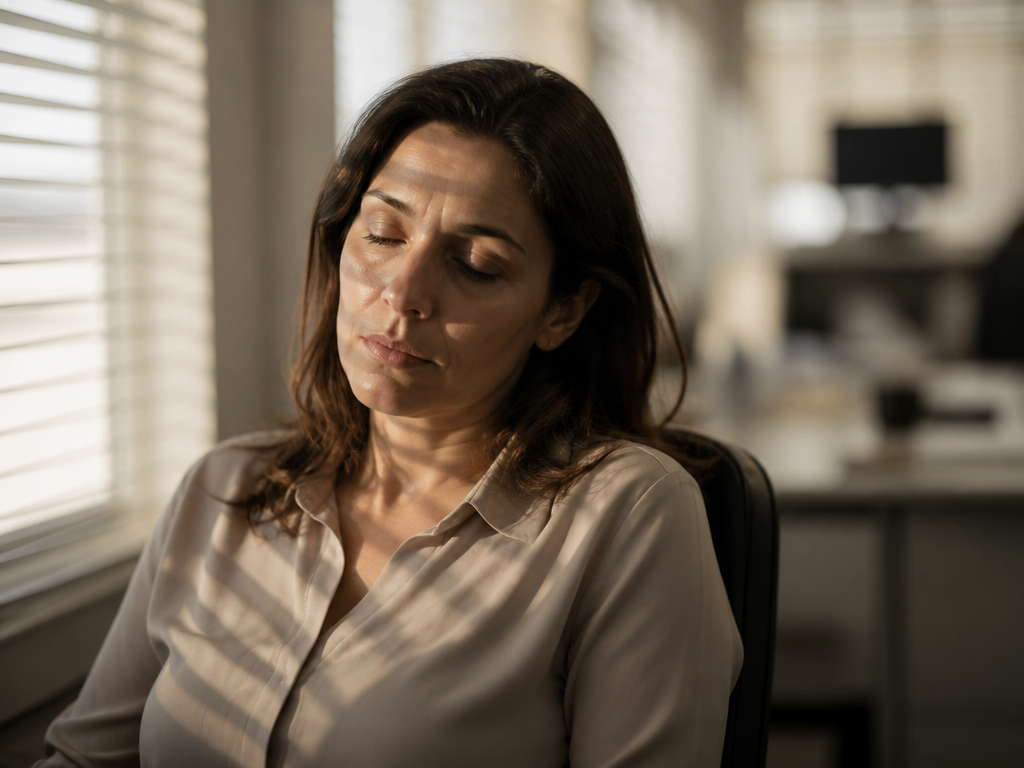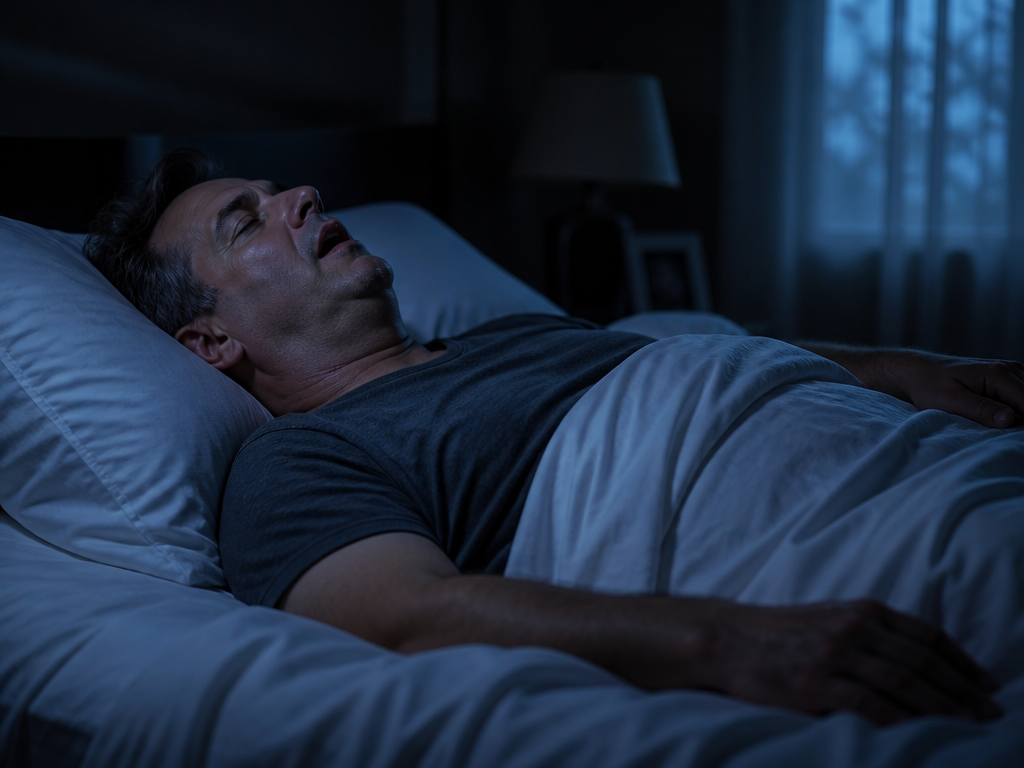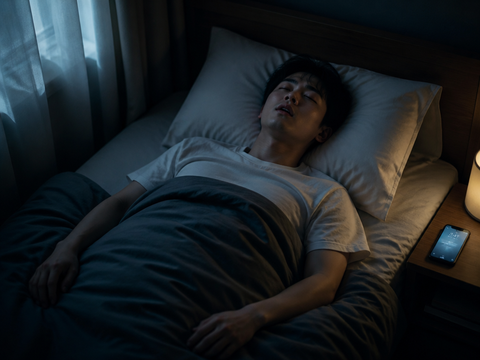
I put my phone on the nightstand, opened a free audio-recording app, and went to sleep. The next morning I had six hours and forty minutes of myself. Most of it was nothing — the hum of a fan, a few sighs, the occasional rustle. But scattered through the file were stretches I didn't expect: long silences, then a sharp, ugly intake of breath, like someone surfacing from a pool a beat too late.
I had gone looking for snoring. What I found was more interesting, and it's the reason the most useful sleep apnea symptoms are often the ones you can't hear yourself make. Snoring is the noise. The silence is the event.
What the silence actually was
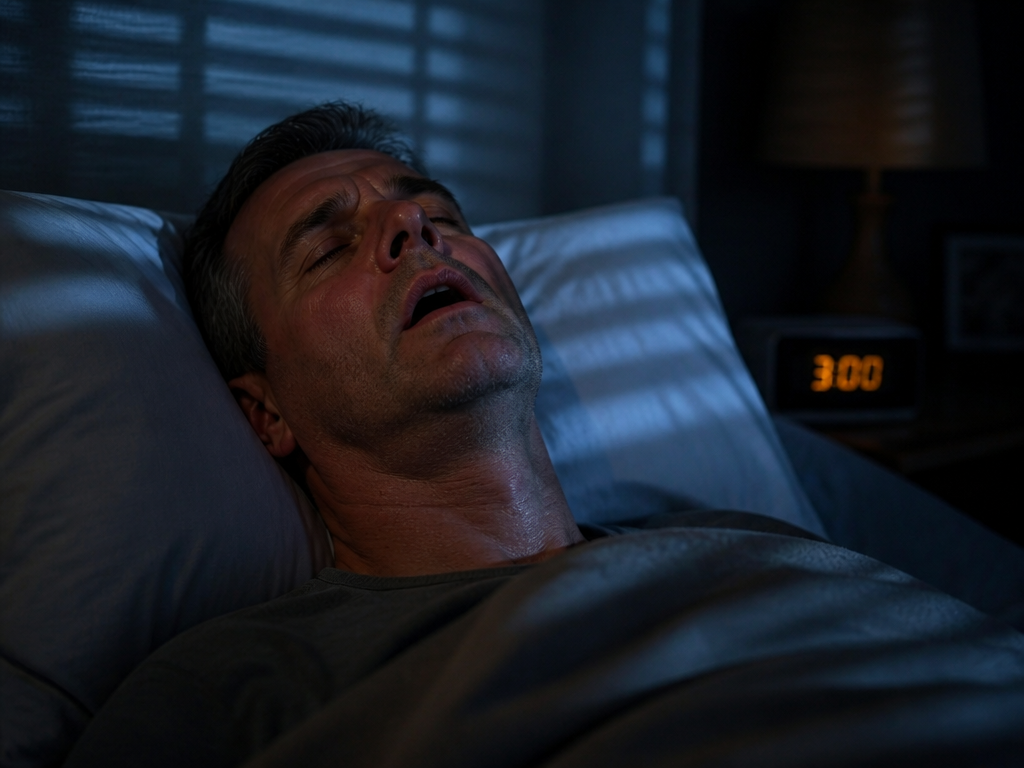
Snoring is turbulent airflow — soft tissue at the back of the throat vibrating as air squeezes past. It's common, frequently harmless, and a bad predictor on its own. The thing worth listening for is the gap that follows: airflow stopping or dropping for ten seconds or more, ended by a gasp or a snort as the body forces the airway back open.
That stop-and-restart pattern is obstructive sleep apnea in miniature. During sleep the muscles that hold your upper airway open relax. In some people — more often those carrying weight around the neck, with a recessed jaw, or large tonsils — the airway narrows or collapses. Oxygen in the blood dips. Carbon dioxide climbs. Sensors in your brainstem notice, and the brain issues a brief alarm: a micro-arousal, just long enough to stiffen the throat muscles and pull in a breath. You rarely wake up enough to remember it. Then you drift back down, the muscles relax again, and the cycle repeats. Someone with moderate apnea may run through it fifteen to thirty times an hour. Severe cases, more than thirty.
You can sleep eight hours and never reach the deep, consolidated rest your body was aiming for, because something keeps tapping you on the shoulder all night.
The signs you notice, and the ones your partner does
Here's the awkward structure of this disorder: the person with it is asleep for the main event. The best witness is whoever shares the bed.
What partners report tends to be vivid — loud, irregular snoring, pauses in breathing, that gasping or choking sound on the restart. These are the signals that send couples to a doctor, and they're worth taking seriously. If someone has told you that you seem to stop breathing at night, that's not nagging. That's data.
What you notice yourself is quieter and easier to explain away. A dry mouth or sore throat in the morning, because you spent the night breathing through an open mouth. A dull headache on waking, which may track with overnight changes in blood gases. Waking up more than once to use the bathroom — nocturia — which apnea can drive through hormonal signals that tell the kidneys to produce more urine at night.1 None of these screams "sleep disorder." Each one has a dozen innocent explanations. That's exactly why they get missed.
The daytime tell
If the nighttime signs are easy to dismiss, the daytime ones are easy to misattribute. People with untreated apnea are tired in a particular way: not the pleasant heaviness of a short night, but a sleepiness that ambushes you at your desk, in traffic, in the slack moments after lunch. The clinical name is excessive daytime sleepiness, and it's measured with a simple questionnaire called the Epworth Sleepiness Scale — eight situations, rated zero to three for how likely you are to doze. A score above 10 is a flag worth showing a doctor.
The mechanism is fragmentation, not duration. Sleep does its repair work in stages, and the restorative ones — deep slow-wave sleep, REM — require uninterrupted runs of time. Chop the night into hundreds of micro-arousals and you get the hours without the architecture. People describe trouble concentrating, a shorter fuse, a memory that's gone slippery. Those aren't character flaws. They're what a sleep-deprived prefrontal cortex feels like from the inside.
What's solid, and what's still loose
The link between untreated sleep apnea and cardiovascular trouble is well-established in direction, if not always in magnitude. The repeated oxygen dips and arousals spike sympathetic nervous activity and nighttime blood pressure; over years, observational cohorts associate moderate-to-severe untreated apnea with higher rates of hypertension, atrial fibrillation, and stroke. The landmark Wisconsin Sleep Cohort, which has followed hundreds of state employees with overnight studies since 1988 (Young et al.), is where much of the population-level estimate comes from — including the often-cited figure that a large share of moderate-to-severe cases go undiagnosed.
Where the evidence gets thinner is treatment proving it reverses those risks. CPAP reliably reduces daytime sleepiness and blood pressure modestly. But large randomized trials — the SAVE trial (McEvoy et al., 2016, New England Journal of Medicine, ~2,700 patients) — did not show that CPAP prevented future cardiovascular events in people who already had heart disease, partly because participants struggled to wear the device enough hours. The honest reading: apnea is a real risk factor, and treatment clearly improves how you feel, but the claim that a machine guarantees a healthier heart is more confident than the data supports.
An honest rule of thumb
If your partner has witnessed you stop breathing and you're sleepy during the day despite spending enough time in bed, that combination is the single strongest informal signal — stronger than snoring alone, stronger than any one morning symptom. Bring it to a doctor and ask specifically about a sleep study. Snoring without daytime sleepiness is worth mentioning but not worth losing sleep over.
A quick reference for what's worth flagging:
| Signal | On its own | Weight when combined |
|---|---|---|
| Loud, irregular snoring | Common, weak predictor | Stronger with witnessed pauses |
| Witnessed gasping or pauses | Take seriously | Strong |
| Daytime sleepiness (Epworth >10) | Many causes | Strong with nighttime signs |
| Morning headache / dry mouth | Easily dismissed | Supporting evidence |
| Waking to urinate 2+ times | Often overlooked | Supporting evidence |
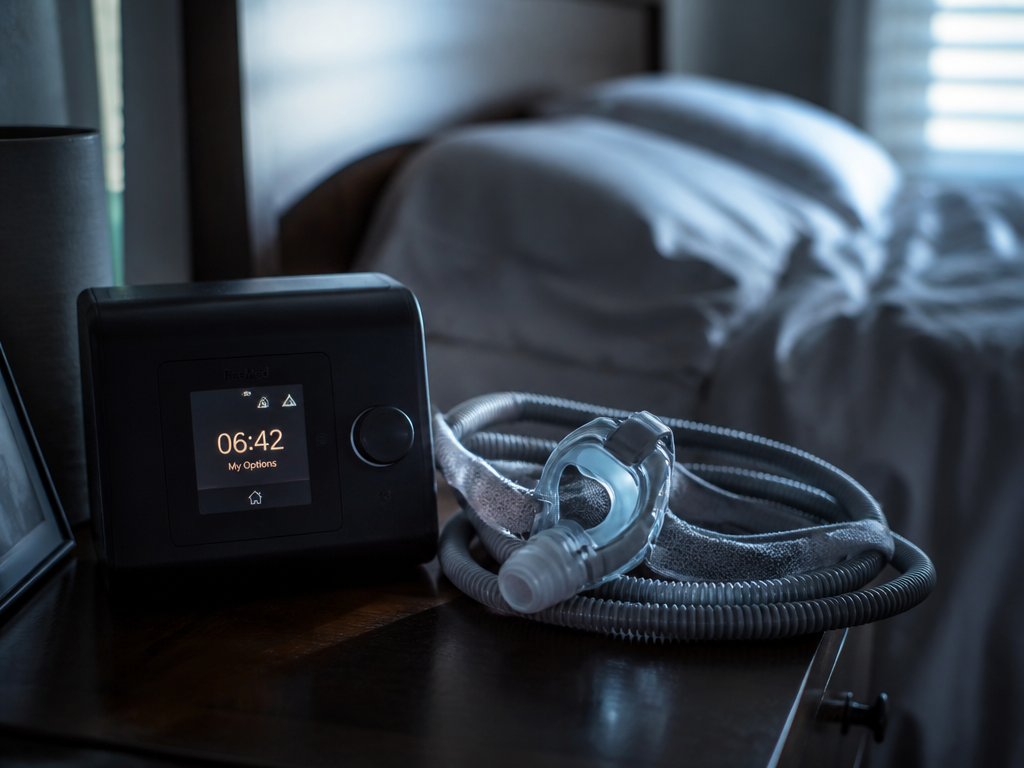
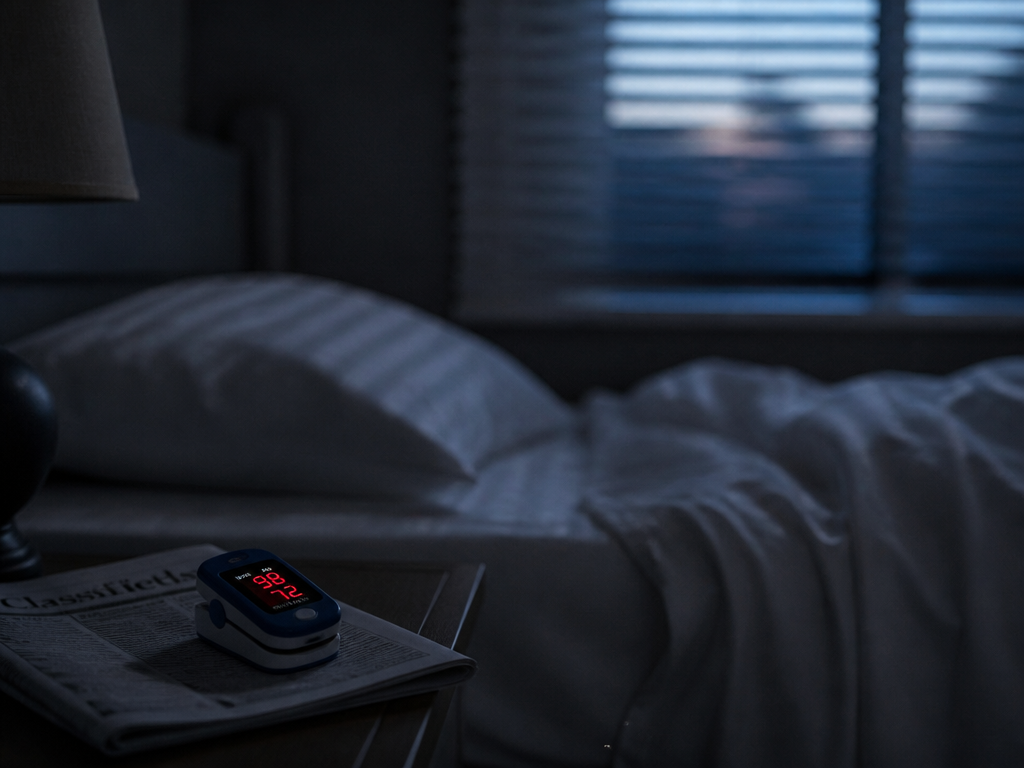
A diagnosis still requires a sleep study — either an overnight lab test or a validated home device. A phone recording can't measure your blood oxygen, and it can't count what it didn't catch. It only tells you whether the question is worth asking.
What I did with my recording
I scrubbed back through the gaps. There were a handful — not dozens — and they clustered when I'd been sleeping on my back. That's not a diagnosis. It's a hint, the kind you take to someone with the right equipment rather than to a comment section.
If any of this sounds like your nights, you don't need to overhaul your life this week. Do one small thing: record a single night of audio, and the next morning send three honest sentences to your doctor — what you heard, how you feel during the day, and what the person next to you has noticed. The recording isn't the test. It's the reason you finally make the call.
-
Nocturia in apnea is linked to elevated atrial natriuretic peptide, a hormone released when the heart's chambers are stretched during obstructed breathing — which is why treatment sometimes reduces those nighttime trips. ↩