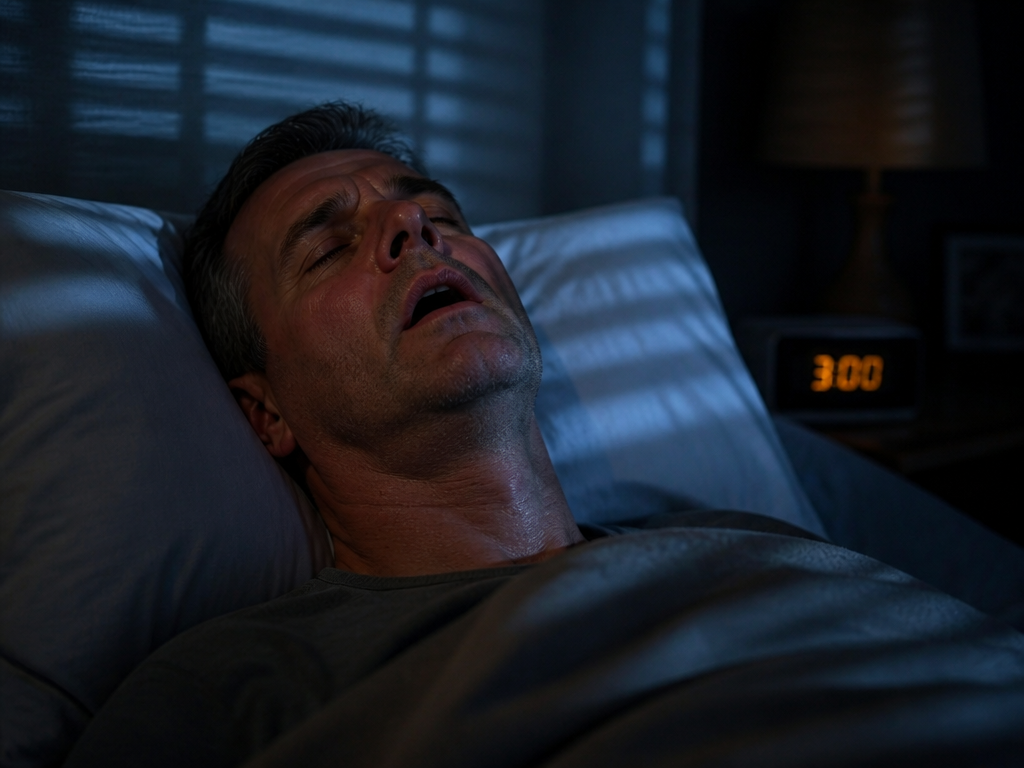
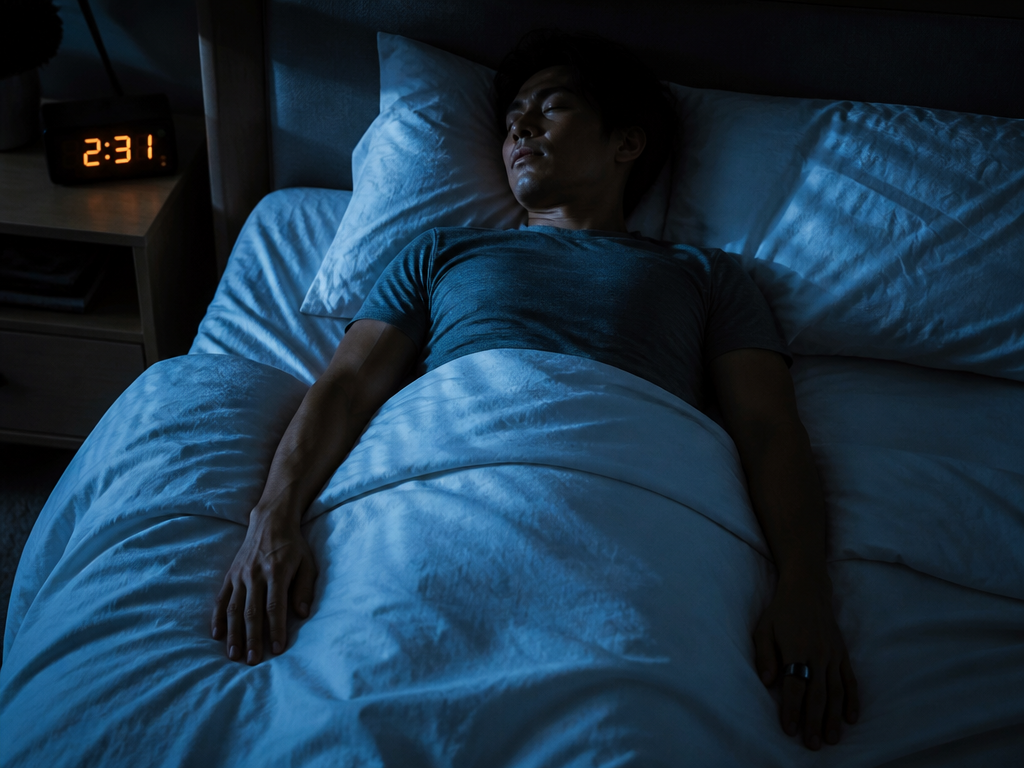
The loudest sleep apnea is the easy one. The dangerous one is quiet.
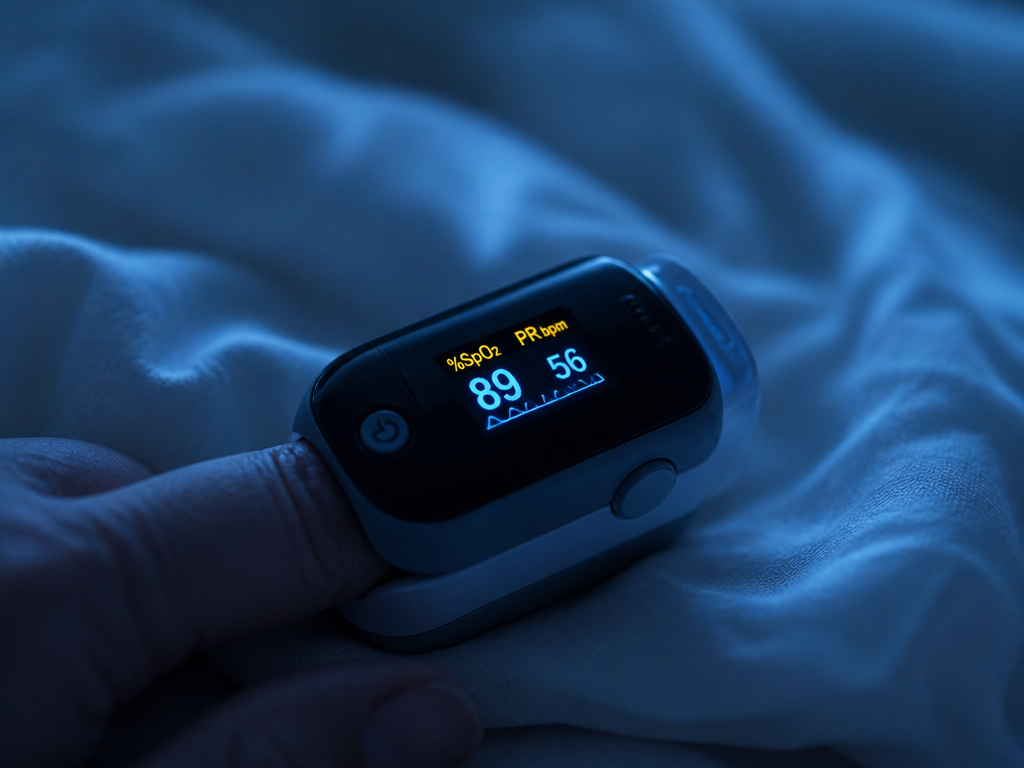
That sentence sounds backwards, and for the first month I lived beside it I would have argued with it. Snoring is the thing we worry about — the throat that collapses, the gasp, the elbow in the ribs. But central sleep apnea is the version that announces itself with nothing at all. No snore, no struggle. Just a chest that goes still and a brain that, for ten or twenty seconds, forgets to ask for the next breath. I spent those months watching a partner's breathing on a pulse-ox graph after a heart-failure diagnosis put central apnea on the table, and the rest of this piece is me earning the right to that opening claim.
Two disorders that share a name and almost nothing else
The word "apnea" just means a pause in breathing, so both conditions land under the same umbrella and end up confused constantly. The mechanism is where they split, and the split is total.
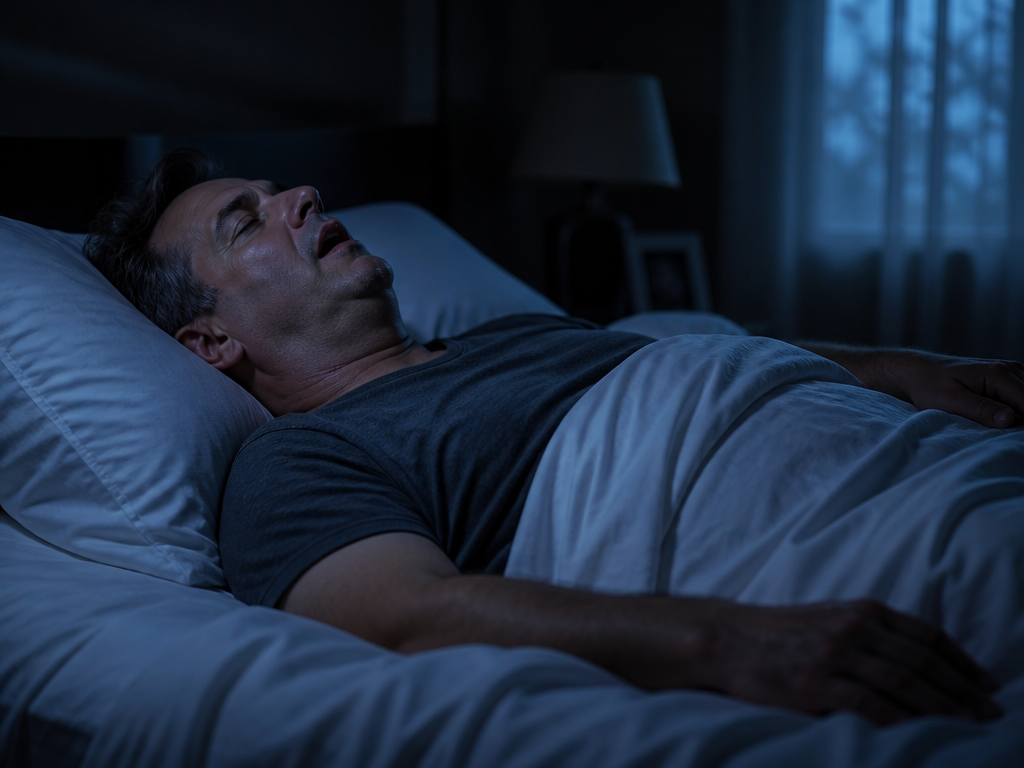
Obstructive sleep apnea is plumbing. The airway is the problem — soft tissue at the back of the throat relaxes and seals the pipe shut. The drive to breathe is intact and frantic; the body heaves against a closed door, which is exactly why it's loud. Snoring, choking, the violent recovery breath.
Central apnea is wiring. The airway is open and unobstructed. What's missing is the instruction. The brainstem, which normally fires the diaphragm on a steady rhythm without your involvement, drops the signal. There's no door to fight, so there's no fight. The chest simply doesn't move, and then it does again, often without the sleeper ever surfacing enough to notice.
| Criterion | Obstructive (OSA) | Central (CSA) |
|---|---|---|
| Root cause | Airway physically collapses | Brain skips the breathe signal |
| Effort during pause | Present, straining | Absent — chest is still |
| Hallmark sound | Loud snoring, gasping | Often silent |
| Common driver | Weight, anatomy, age | Heart failure, stroke, opioids, altitude |
| Who notices first | Bed partner | Frequently no one |
That last row is the whole problem.
Why the silence is the danger
OSA recruits a witness. The snore is a smoke alarm — annoying, impossible to ignore, the reason most people get sent to a sleep clinic in the first place. A partner loses enough sleep and eventually says go get that checked.
Central apnea has no alarm. The pauses can be long and frequent and still produce a person who looks like they're sleeping peacefully. What surfaces instead are second-order symptoms that point everywhere but the lungs: waking unrefreshed, daytime exhaustion that coffee doesn't dent, difficulty concentrating, mood that's gone flat. If you wake gasping it tends to be brief and you blame a dream. These read as stress, as depression, as getting older. They almost never read as my breathing stopped forty times an hour.
This is the part worth sitting with if you suspect it in yourself or someone you care for: the absence of dramatic symptoms is not reassurance. It can be the diagnosis hiding.
The company it keeps
Central apnea rarely arrives alone. It travels with conditions that damage or distract the systems controlling breath. Heart failure is the big one — a struggling heart and the brain's respiratory timing fall out of sync, and the result is a haunting pattern called Cheyne-Stokes respiration: breaths that build in a crescendo, peak, fade to a full stop, then start the climb again. Watching it on a monitor is unforgettable. It looks deliberate, almost tidal, and it is the opposite of healthy.
Stroke can disrupt the same control centers. So can opioid medication, which suppresses respiratory drive directly. So, temporarily, can high altitude — a healthy person sleeping at 12,000 feet can develop central pauses that vanish on the drive back down.
If you've had a cardiac event or a stroke and you're sleeping badly, the apnea and the underlying condition are not two separate problems to be triaged in order. They feed each other. The pauses spike blood pressure and starve the heart of oxygen all night; the weakened heart worsens the pauses. Treating one without the other is bailing a boat with a hole still in it.
What diagnosis actually looks like
There's no breath-on-mirror test for this. It takes a sleep study — ideally an in-lab polysomnogram rather than a home kit, because home devices are tuned to catch obstruction and can miss the quiet kind.
The study counts events per hour (the AHI, apnea-hypopnea index) and, critically, sorts them by type. Five or fewer per hour is normal; over thirty is severe. But the number that matters here is the split: an AHI of 40 that's mostly central events tells a completely different story than 40 obstructive ones, and points to a completely different treatment. Ask for that breakdown specifically. A headline AHI without the central-versus-obstructive ratio is half a result.
Who this is for, and who it isn't
This is worth taking seriously if you: - Have diagnosed heart failure, atrial fibrillation, or a stroke history and sleep poorly - Take long-term opioid medication and wake unrefreshed - Were treated for obstructive apnea but a CPAP machine didn't fix the daytime fatigue - Have a partner who reports your breathing simply stops — no snore, no gasp, just stillness
This probably isn't your problem if your nights are defined by loud snoring and gasping with no cardiac or neurological history. That's the obstructive picture, far more common, and a different conversation. Central apnea is the rarer animal; most people who suspect apnea have the mechanical kind.
Why the standard fix can backfire
Here's where central apnea earns its reputation as the harder one. Plain CPAP — the steady air pressure that splints an obstructed airway open — is the default apnea treatment, and for central cases it can be the wrong tool. There's nothing to splint. Worse, in some patients pushing constant pressure can provoke central events, a frustrating phenomenon clinicians call treatment-emergent central apnea.
The targeted device is adaptive servo-ventilation (ASV), which doesn't just hold a pressure — it watches the breathing pattern and delivers a breath when the brain skips one, smoothing out that Cheyne-Stokes tide. It's smarter and it's more expensive, and it isn't appropriate for every cardiac profile, which is exactly why the central-versus-obstructive split on that sleep study isn't a technicality. It decides the machine. Treating the underlying heart condition often improves the apnea on its own, sometimes dramatically.
I can't tell you ASV is comfortable to sleep beside; the sample I observed was one person, and adjusting to it took weeks. What I can tell you is that the alternative — leaving silent pauses untreated in a failing heart — is the thing the cardiologist was visibly unwilling to do.
What it looks like lived out
The change in my own routine was small and specific. I used to fall asleep first and not think about it. Now, on the nights the ASV is running, I've learned to stop listening for sound and start watching the small chest-rise instead — the device's display throws a faint glow, and the breaths come even now, padded out where they used to fall away. I don't lie awake counting them. But I notice, the way you notice a clock that has finally stopped losing time, and then I sleep.