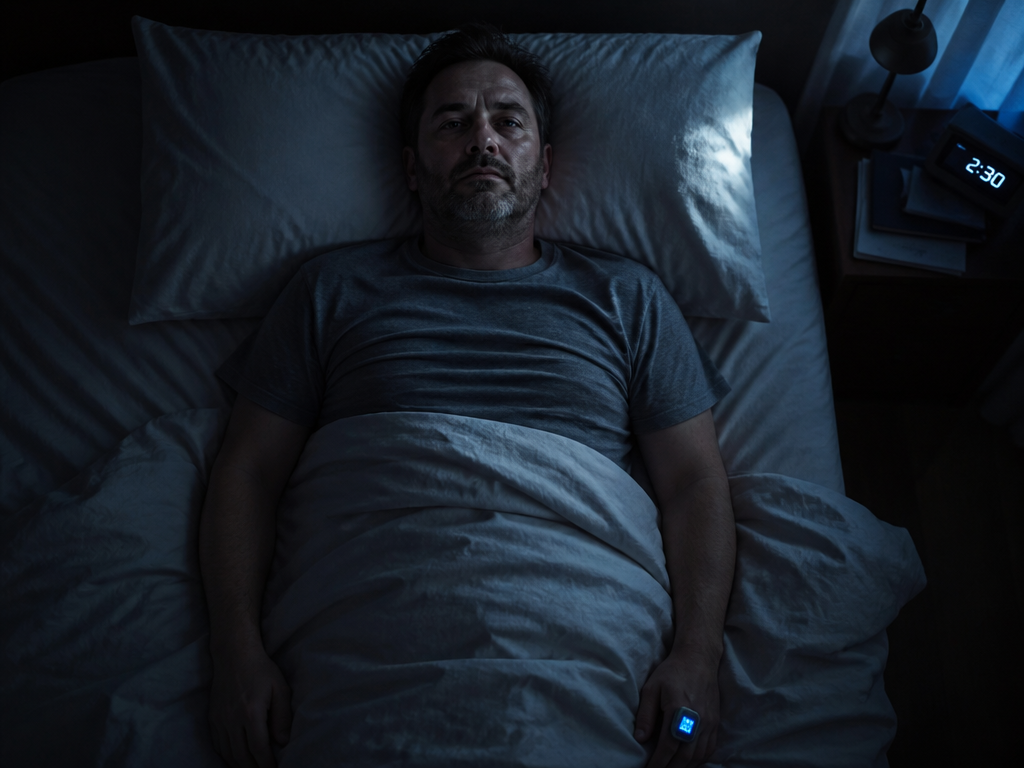
The first thing people say is that you must be eating more than you think.
They say it kindly, mostly. A trainer says it while scrolling a macro spreadsheet. A physician says it while looking at a chart instead of a face. And the arithmetic isn't crazy — dietary self-report is a famously leaky instrument, and most of us undercount.
But there's a pattern that shows up often enough to deserve a name. The training log hasn't changed in three years. The scale climbs anyway. Resting heart rate has drifted up eight beats. She wakes at 4 a.m. with her heart going and no reason for it. Everything gets checked except her breathing at night, because sleep apnea is filed under snoring, under men, under a body she doesn't have.
That filing error is the subject here. So is the nervous system that was supposed to be off duty.
The myth: time in bed is time in recovery
The belief is rarely stated outright, which is what makes it durable. It goes like this: sleep is the parasympathetic part of the day. You lie down, the vagus takes over, heart rate falls, digestion resumes, cortisol bottoms out somewhere near midnight, and the body does its repair work. Eight hours in bed, eight hours of recovery. The only variable worth managing is how many hours you got.
It's a good story because it's mostly true — for people whose airways stay open.
The parasympathetic shift is real and it is measurable. In healthy sleep, heart rate falls roughly 10 to 20 percent below waking baseline, blood pressure drops by a similar margin overnight (clinicians call it the nocturnal dip), and high-frequency heart rate variability — the beat-to-beat wobble produced by vagal traffic to the sinus node — climbs during slow-wave sleep. That is the parasympathetic nervous system doing its actual job. Not relaxation in the spa sense. A coordinated handover, in which the sympathetic branch stands down and the body spends several hours in a different metabolic mode.
The myth is the assumption that the handover happens automatically. It doesn't. It has to be permitted.
What the research actually measured
The clearest single measurement comes from Somers and colleagues (1995), Journal of Clinical Investigation. They used microneurography — a fine electrode threaded into the peroneal nerve, recording sympathetic traffic to blood vessels directly, in real time — in a small group of patients with obstructive sleep apnea and a matched control group, roughly ten per arm. Two findings mattered. During sleep, each breathing event was followed by a burst of sympathetic activity and a blood pressure spike. And during quiet wakefulness, breathing normally, sitting still, the patients' sympathetic nerve activity was still markedly higher than the controls'. The nighttime pattern had become a daytime setting.
That's the load-bearing result. This is not a condition that ends when you open your eyes.
For the metabolic half, the cleanest experiments aren't apnea studies at all — they're sleep manipulations in healthy volunteers, which is worth flagging, because it makes the leap to apnea an inference rather than a measurement. Spiegel, Leproult, and Van Cauter (1999), The Lancet, restricted 11 young men to four hours in bed for six nights. Glucose clearance slowed dramatically; the widely quoted figure is around 40 percent, into a range the authors likened to older adults with impaired tolerance. Tasali et al. (2008), PNAS, did something more surgical: in nine young adults, acoustic tones suppressed slow-wave sleep for three nights without shortening total sleep. Insulin sensitivity fell about 25 percent. Same hours in bed. Different sleep.
Apnea does both of those things at once — it shreds deep sleep and it drops oxygen — which is why the association with insulin resistance is consistent across cohorts. Both sample sizes above are tiny, and both used young men or mostly young men, which is a real limitation in a piece aimed largely at women.
The underdiagnosis is better documented than most people assume. The common citation is Young et al. (1993), New England Journal of Medicine, the Wisconsin Sleep Cohort, which estimated that the large majority of moderate-to-severe cases were going undiagnosed, and that women were disproportionately among the missed. Women more often present with fatigue, insomnia, morning headache, and flattened mood rather than the loud-snoring, witnessed-gasping script the screening questionnaires were built around. Events also cluster more in REM, which some scoring conventions under-weight.
Does sleep apnea cause weight gain, or does weight gain cause it?
Both, and the honest answer is that it runs as a loop rather than an arrow. Untreated sleep-disordered breathing raises overnight sympathetic tone and cortisol, pushes ghrelin up and blunts leptin signaling, and degrades insulin sensitivity — all of which favor fat gain. Fat deposited around the neck, tongue, and pharyngeal walls narrows the airway, which makes events more frequent and more severe. Each side feeds the other, and by the time anyone measures, you can't tell which came first.

What deflates the tidy version of this story: treating the breathing does not reliably reverse the weight. The common citation is a 2015 meta-analysis led by Drager in Thorax, pooling randomized CPAP trials, which found that CPAP users gained a small amount of weight on average — well under a kilogram, but in the wrong direction. Any account that ends she got a CPAP and the weight came off is describing one person, not a dependable effect. Something real is happening in these bodies. It is not a simple lever.
What actually happens, in the order it happens
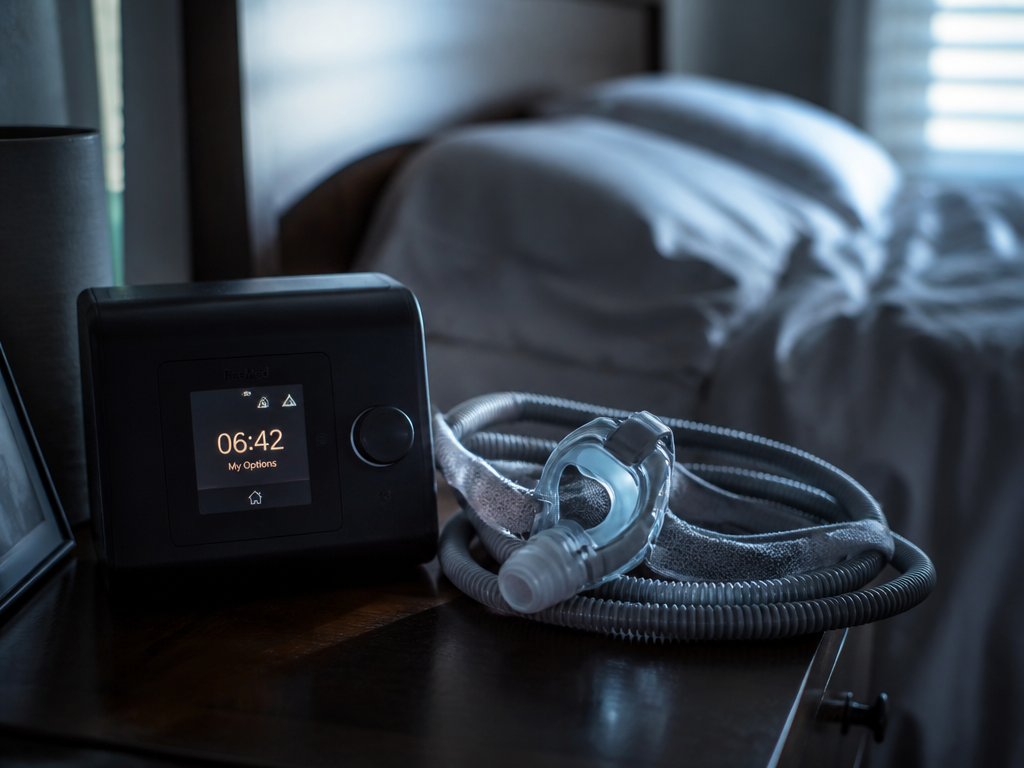
You fall asleep. Muscle tone drops throughout the body, including in the pharyngeal dilator muscles that hold the upper airway open against negative pressure. The airway narrows, or closes.
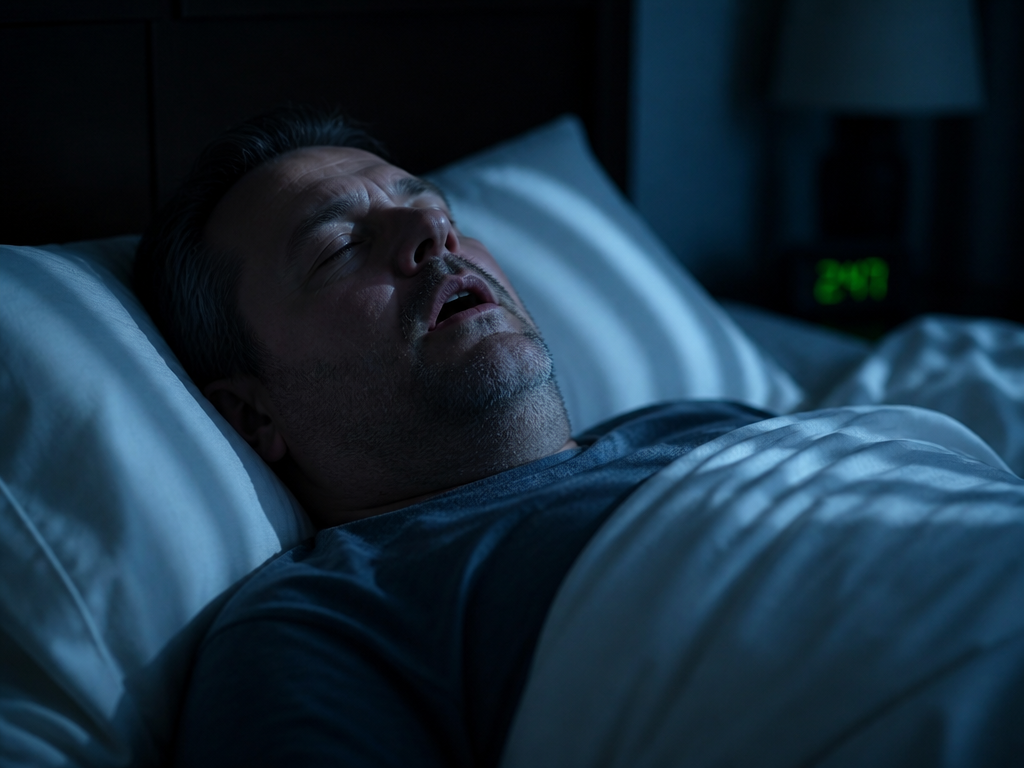
The diaphragm keeps working. Nothing moves. Oxygen saturation falls, carbon dioxide climbs. Carotid body chemoreceptors detect it and signal the brainstem, which answers with a sympathetic surge: vasoconstriction, and a blood pressure spike that can run 30 to 60 mmHg above baseline. Then a cortical arousal — three seconds, usually unremembered — restores muscle tone, the airway springs open, and there's a gasp. Heart rate leaps. Things settle. Then it begins again.
Thirty events an hour counts as moderate-to-severe. That is one every two minutes, all night.
The damage isn't in any single event. It's in the arithmetic. You never assemble the long uninterrupted stretch of slow-wave sleep during which the vagal shift consolidates. The nocturnal blood pressure dip flattens — clinicians call the result non-dipping, and it independently predicts cardiovascular risk. Growth hormone pulses, which ride on slow-wave sleep, get truncated. Cortisol's overnight nadir grows shallower. By morning, the autonomic set point has moved: sympathetic is the default, and parasympathetic is something you have to reach for.
This is, incidentally, what a wearable is registering when morning HRV drifts down over months while nothing in your training explains it.¹
How to get this taken seriously
| What you notice | What it gets called | What to ask for |
|---|---|---|
| Weight climbing on an unchanged program | "Track your food more carefully" | "Can we rule out sleep-disordered breathing before we assume intake?" |
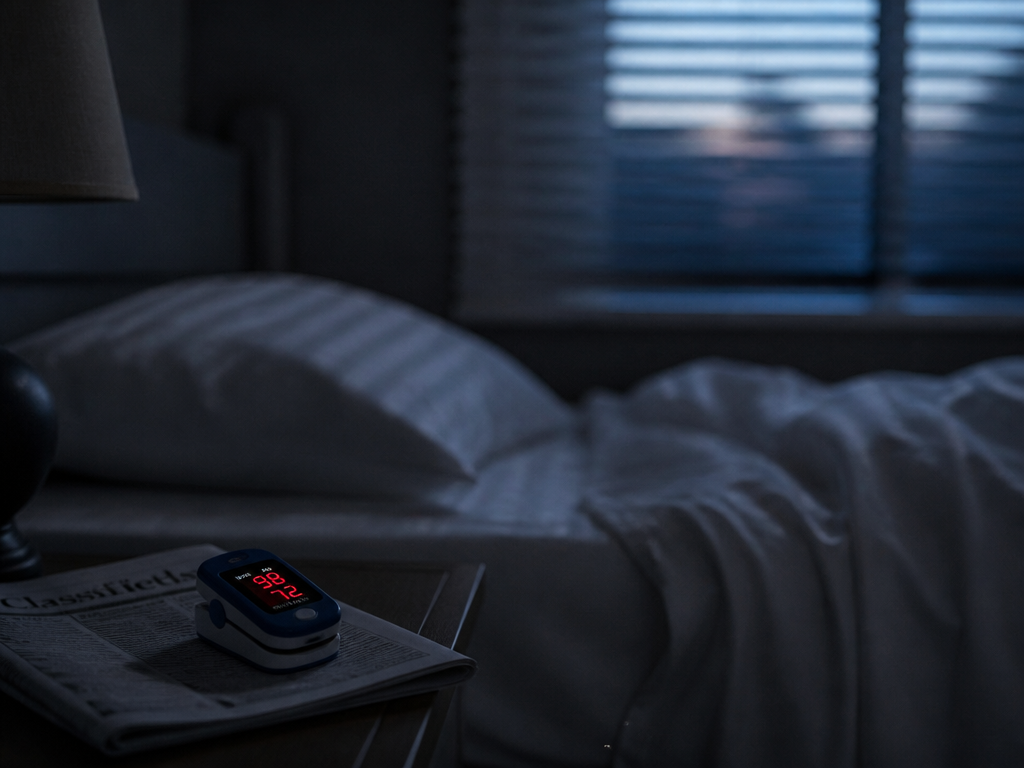
| Waking at 3–4 a.m. with your heart pounding | Anxiety, perimenopause | Overnight oximetry, or a home sleep apnea test |
| Resting HR up and morning HRV down for months | Overtraining, stress | Bring the actual trend chart; ask about nocturnal non-dipping |
| Wrecked after eight hours in bed | Depression, "you're a mom" | A sleep study, not a sleep-hygiene handout |
Two things worth knowing before that appointment. Home tests systematically underestimate severity — they can't score arousals without EEG, so the events that fragment your sleep without dropping oxygen much are invisible to them. A negative home test alongside a strong story is a reason for in-lab polysomnography, not a closed case. And the number you'll be handed, the apnea-hypopnea index, is a count. It says how often. It says nothing about how far your oxygen fell or how long it stayed there.
An honest rule of thumb: if your resting heart rate has drifted up while your training stayed flat, and your mornings feel worse than your bedtime should allow, treat it as a breathing question before you treat it as a discipline question — and walk in with the trend line, not the feeling.
What's still unsettled
Azarbarzin et al. (2019), European Heart Journal, proposed measuring hypoxic burden instead — the area under the desaturation curve, depth times duration — and found it predicted cardiovascular mortality in cohorts where the event count did not. Plausible, increasingly cited, and still not the number on your report.
The deeper gap is this. We know untreated obstructive apnea shifts autonomic balance toward sympathetic dominance, and we know that state tracks with insulin resistance. We do not know whether giving the parasympathetic nervous system its nights back restores metabolic function, or how much of the change has by then become independent of the breathing. CPAP reliably fixes the airway. Nobody has shown it reliably fixes the metabolism.
Which leaves the question your body is actually asking: after enough years of nights that never became recovery, does the nervous system, handed the hours back, still remember what to do with them? ¹ Consumer HRV is a real signal buried in noise — it moves with alcohol, luteal phase, illness, and sensor placement. A single low morning means nothing. A six-month slope means something.