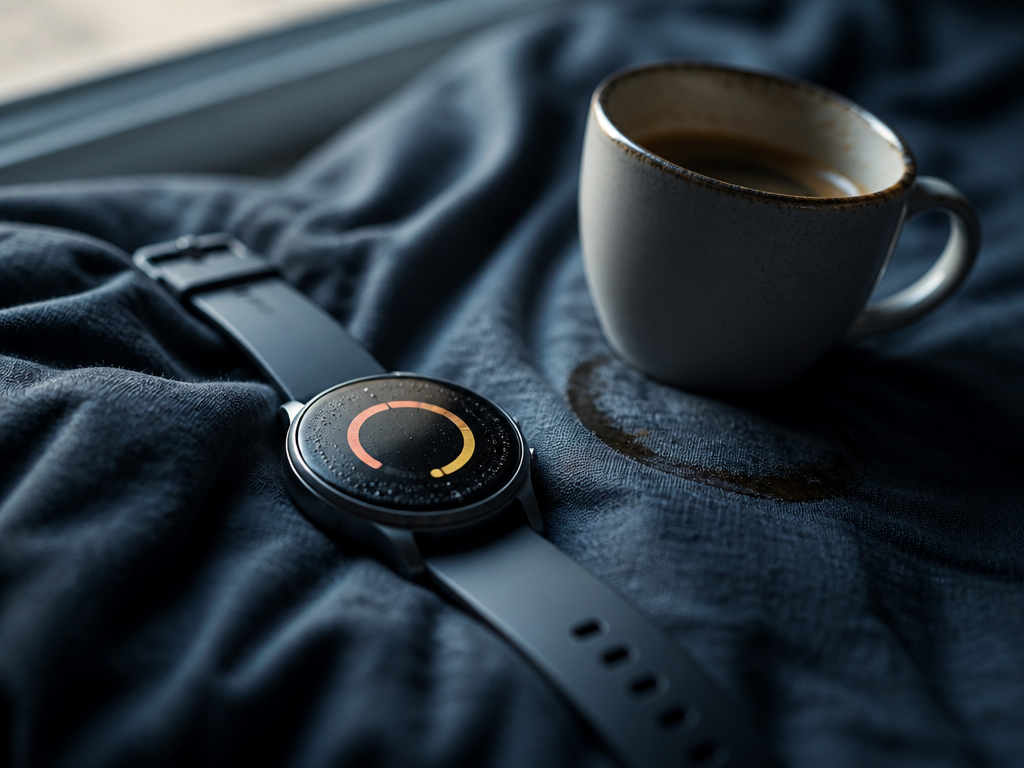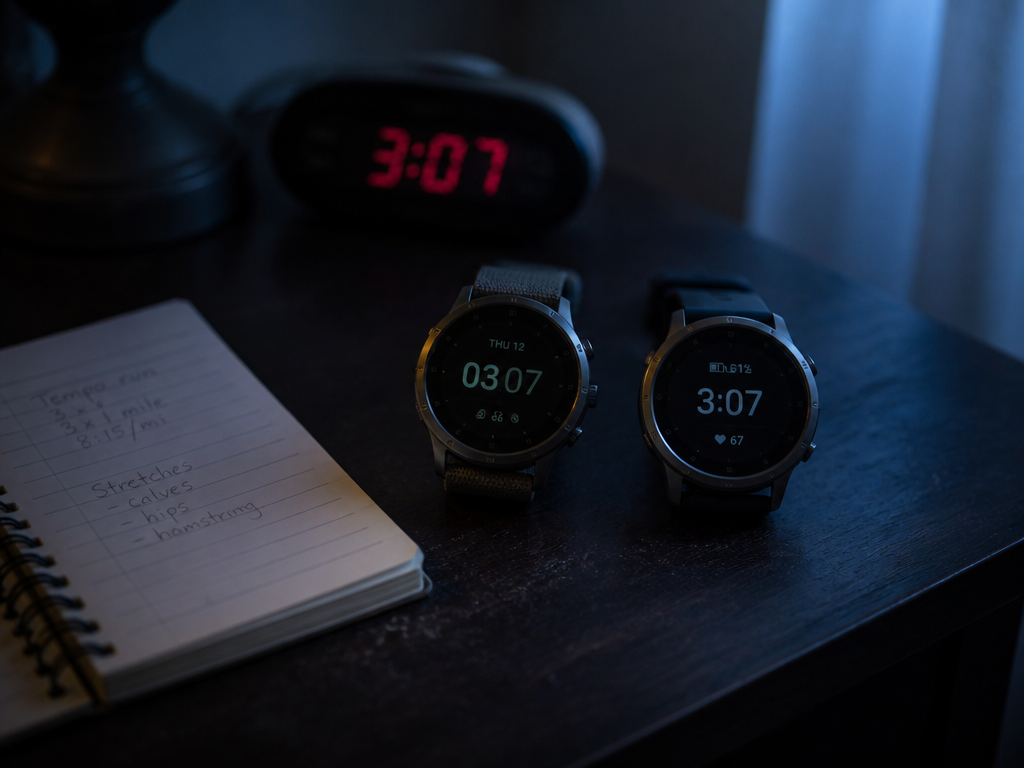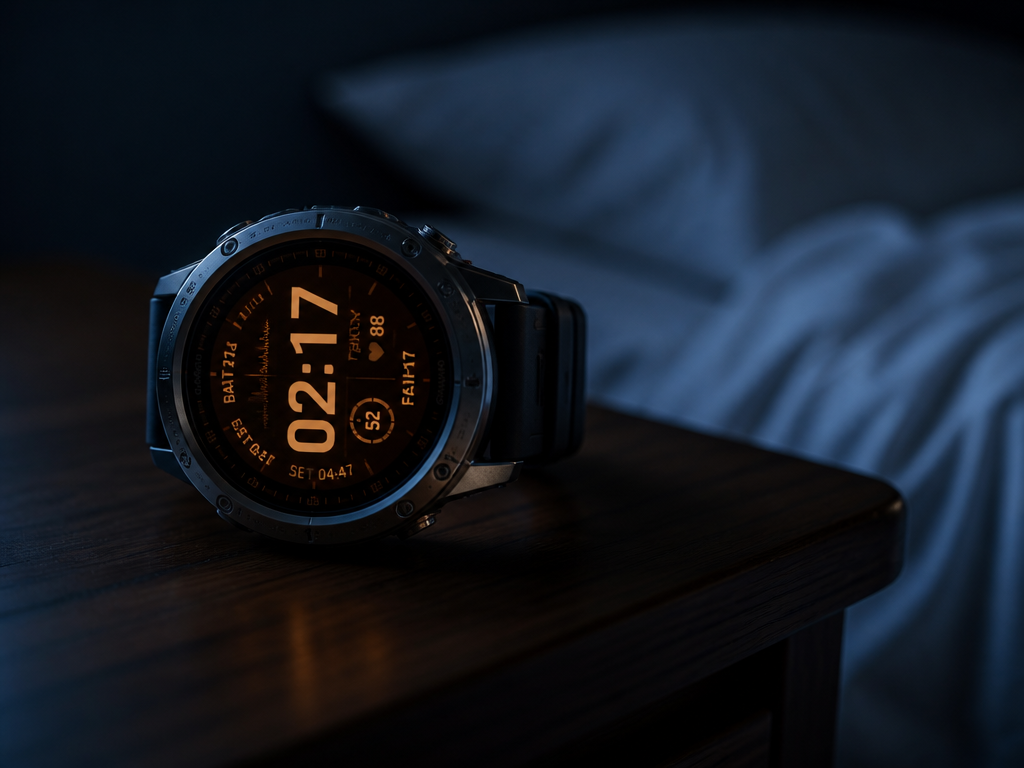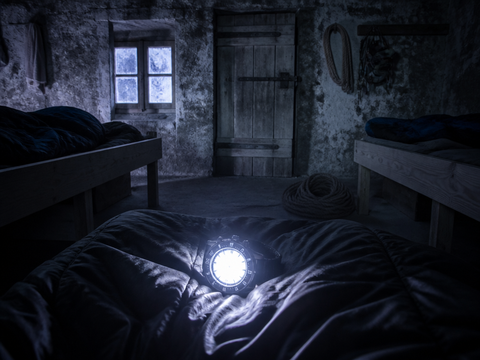
The second night of the traverse, in a stone hut at 2,340 m with the door strapped shut against the wind, I woke at 02:40 and did what everyone does: raised my wrist to check the time. The Garmin Fenix 8 Pro microLED lit the room. Not the ceiling above my bunk — the room, including the face of the person sleeping four feet away, who described the experience to me at breakfast in plain terms.
That moment is the whole review in miniature. The 51 mm microLED is the most usable outdoor display I have ever worn and the most disruptive object I have ever taken into a sleeping bag, and both facts come from the same panel. If you navigate in glare — snow, sand, water, low winter sun — the $1,999.99 asking price buys you something the AMOLED version cannot do. If you also intend it to be your sleep instrument, you will spend two weeks fighting it. The fight is winnable. It is not automatic, and nothing in the box tells you it's coming.
What the test actually was
I bought this one: 51 mm titanium, sapphire, 96 g on the stock silicone band. I wore it for eighteen weeks from February, taking it off only to charge. Four blocks did the real work.
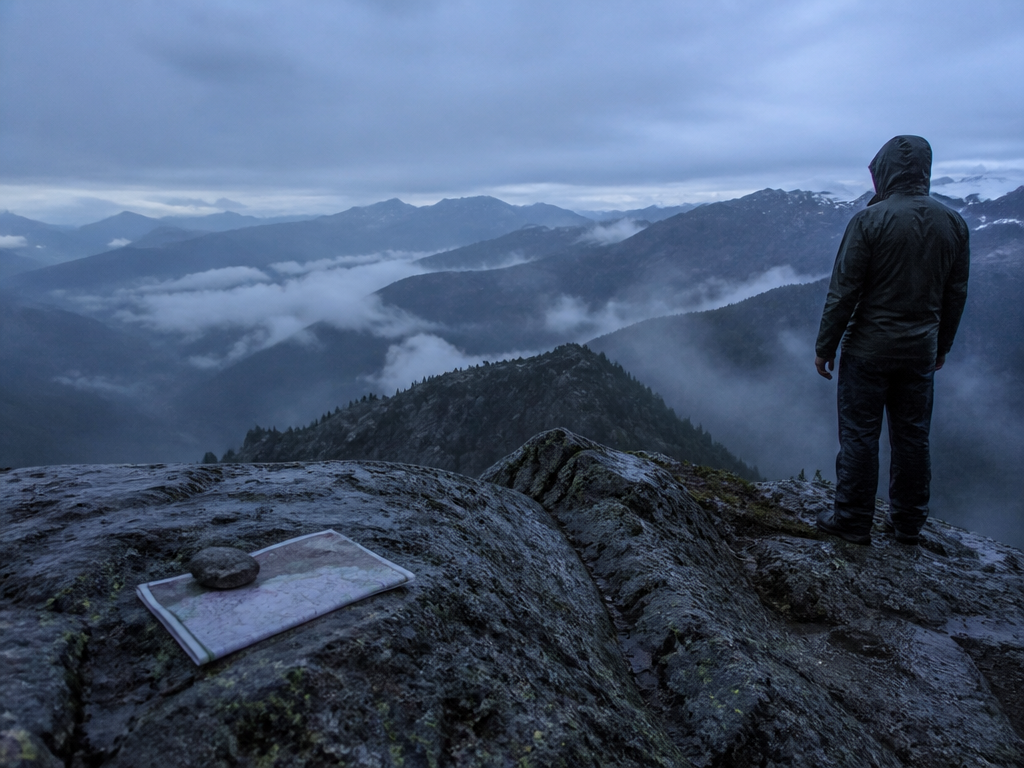
- Cairngorms, February. Three days at −9°C with gusts the forecast put at 70 mph, most of it in flat light and spindrift.
- Ski traverse, March. Six hut nights and one tent night, low of −24°C at 02:00, four consecutive pre-dawn starts.
- Bolivia, April. Ten days acclimatizing — four nights sleeping at 4,050 m, three at 4,700 m, one summit push above 6,000 m.
- Utah, June. Nine days of desert trail running, 41°C peak air temperature, midday sun on pale slickrock.
What I could not do: I don't own a spectroradiometer, so every light measurement below is a $60 lux meter held at a fixed 40 cm, which tells you illuminance and nothing about spectrum. I have never had a polysomnogram. Sleep onset latency is my own stopwatch-and-notebook estimate, which is a soft number, and the altitude comparisons are six nights against six nights with no blinding and no control for the fact that I knew exactly what I was testing. One palate, one wrist, one sample size of me.
First, the light: what reaches the eye
Start where the day starts. Light hits the retina and, separately from vision, a small population of intrinsically photosensitive ganglion cells reads it as a time signal and pushes it upstream to the circadian clock. That pathway is most responsive to short-wavelength light and it does not care whether the source is the sun, a headtorch, or a watch. This is textbook physiology, not something I discovered in a hut.
So the relevant question about a 4,500-nit display is not "is it bright" but "how much of it lands in your eye, and when."
Daytime, the answer is: gloriously, and it changes the watch's job. On slickrock at noon with polarized sunglasses on, the map screen was legible at a glance — not squint-and-tilt legible, glance legible. My phone at maximum brightness in the same conditions was a mirror. I stopped stopping. On a technical descent that matters more than any battery figure, because the alternative is halting, shading the screen with your other hand, and losing the line. In a February whiteout, where the ambient is dazzling but the contrast is zero, the display was the only high-contrast object in my visual field. I could read a bearing without breaking stride.
Night is where it turns on you. At maximum brightness, a white map screen measured 61 lux at 40 cm. My headtorch on its lowest setting measured 90 lux at the same distance. That is the actual comparison: a wrist-mounted torch, aimed at your face, triggered by rolling over.
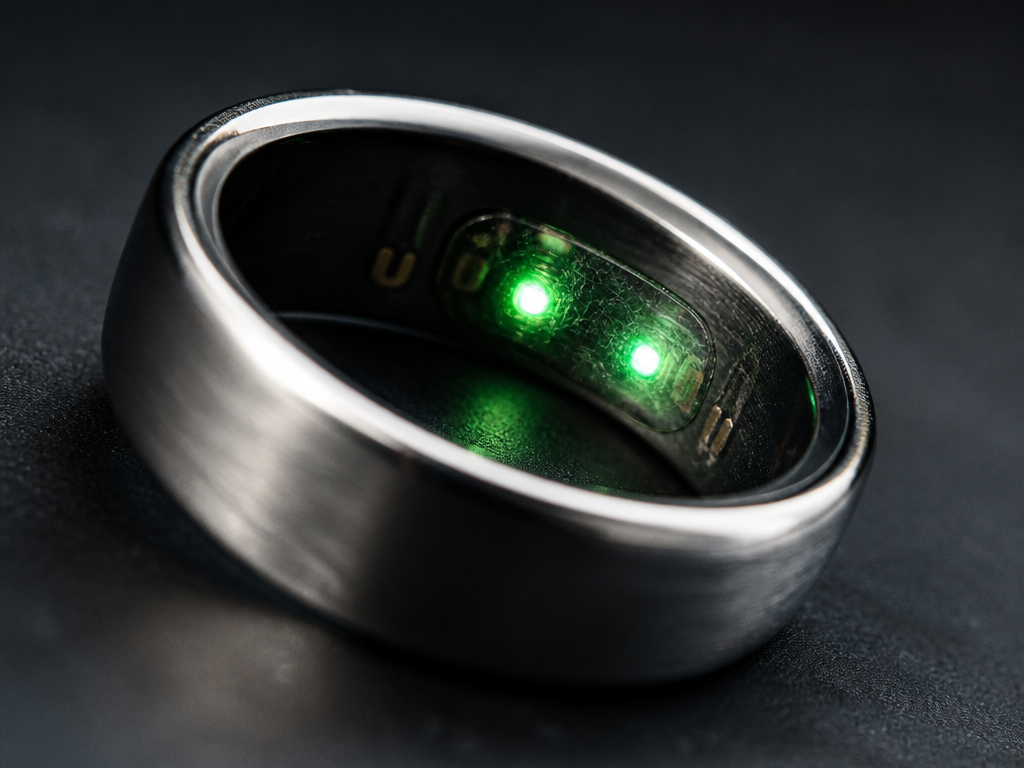
The brightness slider is not the fix, because the problem is not the setting — it's the gesture. Raise-to-wake is a separate toggle from sleep-mode brightness, which is a separate menu from the red-shift night mode, and on my unit the default sleep-mode brightness was high enough to read by. Once I found all three, the same 02:40 wrist-check measured under 1 lux in red night mode at the floor setting: enough to read four digits, not enough to wake the hut. The watch can be made nearly harmless. It simply doesn't ship that way, and it takes three trips into Settings to get there.
Then the caffeine: absorption, and the clock you can't see
Next in the sequence, and the reason I care about any of this: what you swallow.
My field protocol is unglamorous. Roughly 3 mg per kg — about 215 mg at my weight — at 05:30 for a pre-dawn start, then 80 mg from a gel if the day runs past eight hours. Caffeine clears the stomach, absorbs across the small intestine, and is doing real work in the blood inside 30 to 60 minutes; it occupies adenosine receptors that would otherwise be reporting how long you've been awake. It doesn't add anything. It hides the tally.

At sea level that hiding is cheap. At 4,050 m it isn't, and this was the single clearest number I got all spring.
Same 160 mg dose, same 14:00 timing, same person. At sea level my sleep onset latency averaged 19 minutes across six nights. At 4,050 m, across six nights, it averaged 47 minutes. My no-caffeine baseline at that altitude was 31 minutes — altitude alone costs plenty. The afternoon dose roughly doubled what was already a bad number. Above 4,000 m you are sleeping through periodic breathing and hypoxic arousals whether or not you drink anything; adding an adenosine blocker to a night that is already fragmenting itself is paying twice for the same problem.
So I moved my cutoff from 14:00 at sea level to 09:00 above 4,000 m, and the acclimatization nights got measurably shorter to start and longer to hold.
What did the watch contribute? Timing, not truth. I set a repeating alert labelled CUTOFF, which sounds trivial and was the most useful software feature of the trip, because at altitude your judgement about small decisions degrades before you notice. The overnight HRV status and the Body Battery slope gave me a morning read on whether the previous day's dose had been worth it. I don't trust Body Battery's absolute number — it's a closed box and Garmin won't say what's inside — but its slope tracked something real: on the two days I mistimed caffeine, the curve flattened by mid-afternoon in a way it didn't on the days I got it right.
The honest framing is this: the watch never told me when to drink coffee. It told me, the following morning, what a 200 mg dose had cost.
Next, the blood: where the sensors held, and where they lied
Everything downstream of the gut is measured optically through your wrist, which is where extreme conditions start breaking things.
Cold is the worst case, and the failure is physiological rather than electronic. In cold, blood leaves the periphery. On a −24°C skinning climb with the watch under a mitt and a chest strap on, the watch reported 61 bpm while the strap reported 118. That is not a small error. Worn over a base layer and a softshell sleeve — the only way to see the screen without de-gloving — it lost lock entirely within a minute. Neither result is a scandal; it's what wrist optical sensing does when your capillary bed has shut down. But if you plan to train by heart rate in genuine cold, you need a strap, and no amount of $2,000 changes that.
Pulse ox at altitude was the more interesting result, because it was wrong in a consistent direction. Across eleven paired readings at 4,700 m, taken still and warm inside the hut, the watch ran 3 to 5 points optimistic against a fingertip clinical unit — mid-70s to low-80s on the finger, high-70s to mid-80s on the wrist. Consistent bias is workable; you can subtract. But it's the wrong direction for the one situation where the number matters, and I stopped using the watch's spot-check for anything but trend.
The skin temperature sensor was quietly the most useful of the three. It caught the two nights I slept cold — a genuine downward step in overnight wrist temperature that matched exactly how those nights felt — without me having to interpret anything.
Then the core: the object itself
Sleep onset needs a core temperature drop, and you get that by dumping heat from your hands and feet. The physics of what you strap to a wrist is therefore not a footnote.
96 g of titanium is fine in daylight and noticeable in a bag. In a −24°C tent, the case reached a temperature that woke me twice on first contact; I ended up sleeping with the watch over a merino sleeve, which fixed the cold and gutted the heart rate data. Worn snug enough for a clean optical signal, I woke with a band impression and one hand colder than the other. Worn loose enough to be comfortable, the sleep data got noisy in a way I could see in the morning graph.
I can't measure how much a tight metal band on the wrist interferes with peripheral heat loss, and I'm not going to pretend the two nights I noticed it constitute evidence. What I can say is that after four months I do not sleep in this watch at home, and the reason is the object, not the screen.
Then the brain: what the sleep tracking got right, and what it invented
I logged every remembered wake longer than about five minutes in my phone's notes with a timestamp, then compared the morning report.
At sea level the agreement was good enough to be useful: it caught four of my five logged wakes across a week, and the total sleep time was within 15 minutes on five nights of seven. The stage breakdown I take as a rough shape rather than a measurement — every wrist device is inferring architecture from motion and heart rate — but the shape was plausible and it moved when my behaviour moved.

At 4,700 m it fell apart. Across three nights I logged nine wakes; the watch scored three. One night I remember as broken into roughly hour-long pieces was reported as 1 h 12 m of deep sleep and a score of 74. Periodic breathing produces arousals with a heart rate signature that apparently doesn't look like waking to this algorithm, and the result is a score that flatters a night you know was bad. That's more corrosive than a missing feature, because it invites you to trust it on exactly the trip where you shouldn't.
Below about 3,500 m, I'd act on the sleep data. Above it, I'd read my own notes.
Last, the morning: battery, and the first dose
Garmin quotes up to ten days in smartwatch mode with sparing display use, and around 25 hours of all-systems GNSS. My numbers: 4.5 days of real mixed use with always-on enabled and brightness at 60%, and 21 hours of multiband GPS on a long day. In sustained cold, expect roughly a third less — I lost about 35% of the quoted endurance on the traverse, which is battery chemistry, not a defect. Satellite messaging via inReach costs meaningfully more; two days of regular check-ins knocked a full day off the projection.
Charging in a cold hut is its own small skill. A power bank that has been in a pack all day at −10°C will refuse to deliver, and I lost an evening learning to sleep with mine.
The useful thing about the morning report is narrow and real. On a good night, it changed nothing — I made the 215 mg and started. On a night the watch and my notebook agreed had been bad, I cut the pre-dawn dose to about 150 mg and moved the second dose earlier rather than adding a third, because on those days the extra 65 mg buys about two hours and costs the following night. That's the whole loop. It is not sophisticated. It is the only intervention I found that actually compounds across a ten-day trip.
microLED vs AMOLED vs MIP, in numbers
| 8 Pro microLED 51 mm | 8 Pro AMOLED 47 mm | Fenix 8 Solar 51 mm (MIP) | |
|---|---|---|---|
| Price | $1,999.99 | $1,199.99 | $1,099.99 |
| Peak brightness (claimed) | 4,500 nits | ~2,000 nits | reflective, no rating |
| My battery, mixed use | 4.5 days | 8 days | 3+ weeks |
| Night light at 40 cm, floor setting | <1 lux (red mode) | ~2 lux | 0 lux (backlight off) |
| Wins in | glare, whiteout, low sun | everything ordinary | multi-week expeditions |
The MIP row is the one people skip and shouldn't. In bright sun a reflective display gets better, costs nothing to run, and emits no light at night at all. It is also dim and grey in a tent at 3 a.m. and always will be. This is a genuine three-way trade, not a ladder.
Who this is for
Buy the Garmin Fenix 8 Pro microLED if you routinely make navigation decisions in high glare — ski touring, desert running, sailing, anything on snow — and if those decisions are time-sensitive. The display converts a stop into a glance, and over a long day that adds up to something you can feel. Buy it if you carry satellite messaging anyway and would rather not carry a second device. Buy it if you have already accepted that a 51 mm watch is a 51 mm watch.
Who it isn't for
Don't buy it if the sleep tracking is the point. The AMOLED model gathers the same physiology in a lighter, cheaper, less obtrusive case, and it is the better bedside object by a clear margin. Don't buy it if your priority is heart rate accuracy in cold — buy a $90 chest strap first and the watch second. Don't buy it if your trips run past a week without power; the MIP Fenix will still be alive when this one is a bracelet. And don't buy it expecting the brightness to be free. Four and a half days of real endurance from a flagship, in 2026, is the bill.
If you navigate in glare, the microLED earns its premium in a single winter. If you sleep with your watch on, buy the AMOLED and put the $800 toward the flight.
Since Bolivia my last caffeine of the day is a 95 mg espresso at 14:00 at sea level and nothing after 09:00 above 4,000 m, which I hold to even on summit days when the afternoon says otherwise. The watch goes on the kitchen windowsill charger at 21:15 whether or not it still wants to measure me. It costs me a sleep score most nights. I sleep better without the score.