The spec sheet said 28 days. I got eleven, and the eleventh ended on a wet ridge in the North Cascades with a black screen and a paper map I was suddenly very glad I'd packed. Most smartwatch recommendations for the outdoors are written from that spec sheet, which is why most of them are useless. The sheet is not a report of what the watch does. It's a set of claims made under conditions you will never reproduce.
Twenty-eight days assumes the display is not always on, the pulse oximeter is off, the optical heart rate sensor is sampling at its laziest interval, you never opened a map, you never played music, and the watch spent most of the month sitting still on a warm wrist in a warm room. Switch on the features you paid for and the number falls apart. Mine fell by about sixty percent.
I bring this up because the Garmin Fenix is the default answer in this category, and a lot of people are currently in a holding pattern waiting for the Fenix 9. As I write this in August 2026, Garmin hasn't announced one. The current flagship still runs past a thousand dollars and the Pro variants run well past that. If the last three launches are any guide, a 9 lands in the same neighborhood or above, and the reviews will lead with two numbers: battery days and a sleep score.
Both of those numbers are models. Almost nothing on the marketing page of any of these watches is a measurement. Understanding which is which is the single most useful thing I know about buying one, and it is the spine of everything below.
What most people do
They anchor on the flagship. This is not stupid — it's how anyone shops in a category they don't know well. The Fenix is the watch that shows up in the search results, in the trip reports, on the wrist of the person who did the Wonderland Trail in three days. It becomes the reference object. Every other watch gets evaluated as a discount from it, which quietly frames the cheaper option as a compromise rather than a different set of tradeoffs.
Then they wait. There's a specific flavor of purchase paralysis that attaches to annual hardware cycles: buying now means buying the old thing, and buying the old thing feels like losing. So the watch sits in a cart from March to September while the person hikes with their phone in a jacket pocket, which is the worst navigation setup available and also the one most likely to end with a dead phone and no map.
They use price as a proxy for sensor quality. This is the assumption I'd most like to dislodge. The optical heart rate array, the accelerometer, the barometric altimeter, and the GNSS chip in a $300 watch and a $1,100 watch are frequently in the same performance class, sometimes literally the same parts. What the money buys is titanium and sapphire, a brighter display, a bigger battery, satellite messaging, dive certification, more onboard storage for maps, and — this matters more than people think — a longer support tail of firmware updates. Those are real things. They are not sensor accuracy.
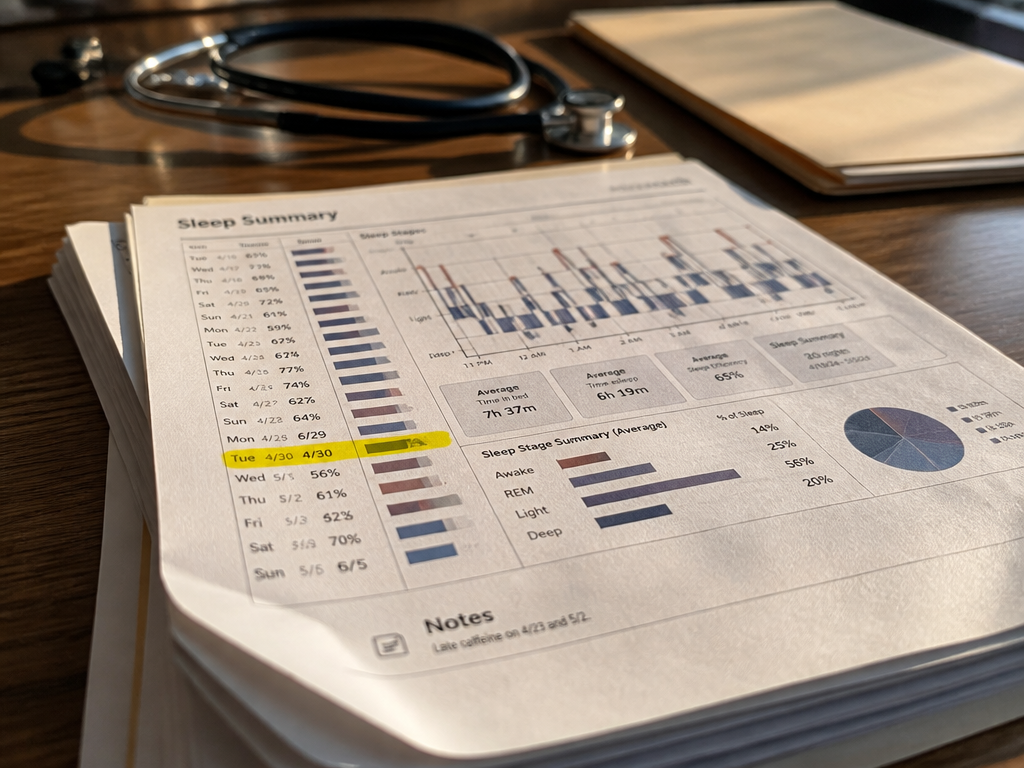
And then they check the sleep score. Every morning, before the coffee, before the weather. In my experience it's the most-looked-at screen on any of these devices, and it is also the screen with the thinnest evidence behind it. A watch that says you got 41 minutes of deep sleep is not reporting an observation. It is reporting the output of a proprietary classifier that has never been published, running on a signal that is one long step removed from the thing it claims to describe.
What the evidence suggests
Start by splitting the watch's outputs into two piles.
| Signal | What the hardware actually senses | What gets inferred from it | How solid |
|---|---|---|---|
| Position, distance, pace | Satellite timing from GNSS constellations | Route, elevation profile, grade | Well-established |
| Elevation, ascent | Barometric pressure at the case | Altitude, vertical gain, storm trend | Well-established, drifts with weather |
| Movement | Triaxial accelerometer | Steps, cadence, stillness | Well-established |
| Heart rate | Green-light reflectance off capillary blood | Beat intervals, HRV, calorie burn | Good at rest, degrades under load |
| Sleep stages, readiness, body battery, VO2max | Nothing directly | All of it | Model output, mostly unvalidated |
The top three rows are why you buy an adventure watch. The bottom row is what the marketing is about.
How a watch decides you were asleep
Worth walking through in the order it happens in your body, because the chain is longer than most people assume.
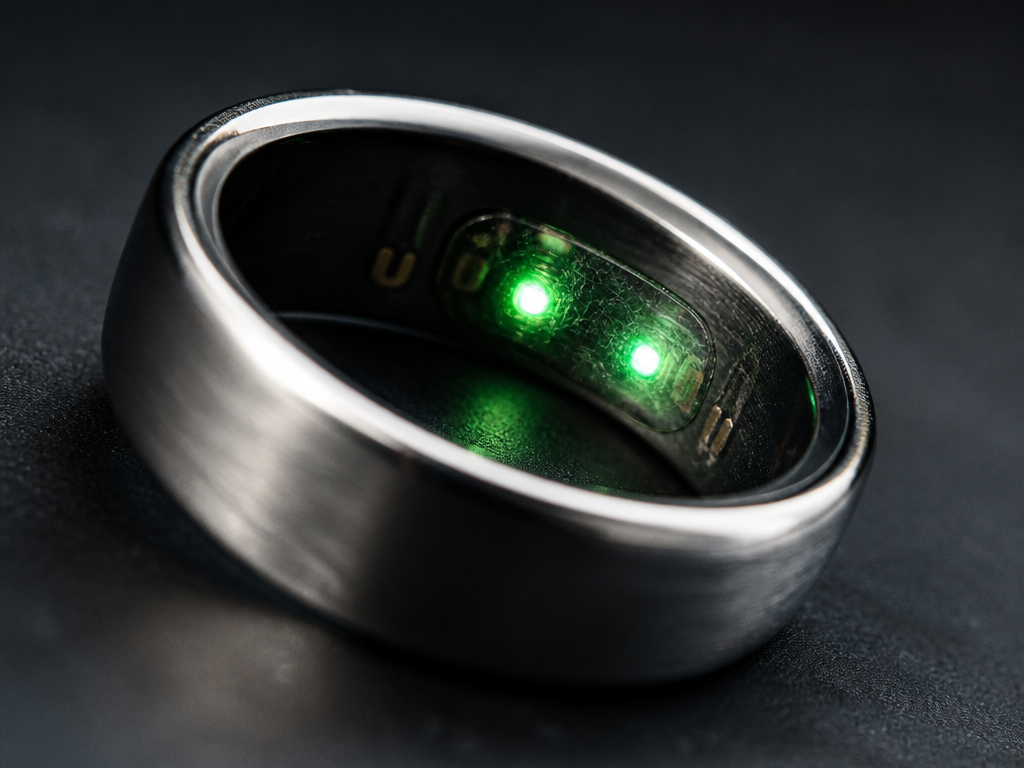
A green LED on the caseback fires light into the skin of your wrist. Hemoglobin absorbs green strongly, so when a pressure wave from your heartbeat pushes a slug of extra blood through the capillary bed under the sensor, less light bounces back. A photodiode registers that dip. The watch now has a photoplethysmogram — a waveform whose peaks correspond to arterial pulses arriving at your wrist, roughly 200 milliseconds after the ventricle actually contracted.
From peak spacing it derives beat-to-beat intervals, and from the variation in those intervals it estimates heart rate variability. As you fall asleep, parasympathetic tone rises, heart rate drops several beats below your waking baseline, and HRV typically climbs. Meanwhile the accelerometer registers a collapse in movement. Skin temperature at the wrist rises as peripheral vasodilation dumps core heat.
Those four streams — pulse rate, HRV, motion, temperature — go into a classifier trained against polysomnography, the lab standard, which scores sleep from brain electrical activity, eye movement, and chin muscle tone. The watch has none of those inputs. It is predicting an EEG-defined state from cardiovascular and movement proxies. That it works at all is genuinely impressive. That it works well enough to tell you your deep sleep was down 12 percent is a much larger claim.

The best public accounting is Chinoy et al. (2021) in Sleep, which ran 34 healthy adults through a laboratory protocol wearing seven consumer devices simultaneously against polysomnography — among them a Garmin Fenix 5S and a Vivosmart 3. The pattern was consistent across brands: very high sensitivity for sleep, meaning if you were asleep the device almost always said so, paired with poor specificity for wake, meaning when you were lying awake it often scored you as sleeping anyway. Stage-level agreement was substantially worse than overall sleep/wake agreement. Earlier, de Zambotti et al. (2019) in Chronobiology International found much the same shape with a Fitbit Charge 2 in 35 adults — sleep detection around 96 percent sensitive, wake detection close to a coin flip, with deep sleep overestimated.
Two honest caveats. Those studies tested firmware that is now several years old, and the algorithms have been revised since — probably improved, though the manufacturers publish neither the changes nor independent revalidation. And both used healthy sleepers in a lab, which is close to the best case. The direction of the error is what carries over: these devices are biased toward telling you that you slept.
The readiness and body-battery style scores sit further out still. They're composites of overnight HRV, resting heart rate, recent training load, and sleep estimate, weighted by formulas no one outside the company has seen. The underlying idea — that suppressed HRV alongside elevated resting heart rate signals accumulated physiological load — is well-supported in the sports science literature. The specific number on your wrist is plausible but thin. Treat it as a mood ring with a good prior.
Pulse oximetry deserves its own warning, because outdoor buyers specifically pay for it. Wrist SpO2 has to read through more tissue, with less perfusion, than a fingertip clip, and it degrades further with motion, cold, and tattoos. Even medical-grade oximeters have a documented equity problem: Sjoding et al. (2020) in the New England Journal of Medicine found occult hypoxemia — a true oxygen saturation below 88 percent while the device read 92 to 96 — roughly three times more frequent in Black patients than white ones. A consumer wrist sensor inherits that limitation and adds several of its own. Meanwhile the actual physiology of sleeping high is well-established and mostly invisible to your watch: above roughly 2,500 meters, most unacclimatized people develop periodic breathing at night, a Cheyne-Stokes cycle of hyperventilation and central apnea driven by the tug-of-war between hypoxic drive and CO2-mediated suppression. Your sleep fragments badly. The watch will usually report that you slept fine.
The caffeine variable no algorithm adjusts for
Here is a thing every readiness score ignores: what time you had your last cup.
Adenosine accumulates in the brain across your waking hours as a byproduct of cellular energy use, binding A1 and A2A receptors and producing the felt sense of sleep pressure. Caffeine is a competitive antagonist. It occupies those receptors without activating them. The adenosine is still there — you've muted the alarm, not turned it off — which is why the tiredness lands all at once when the caffeine clears.
The clearance is slower than most people's intuition. Median half-life in healthy adults is around five hours, but the population spread runs from roughly two to ten, driven substantially by variation in CYP1A2, the liver enzyme that handles most caffeine metabolism. Smoking roughly halves the half-life. Oral contraceptives can nearly double it. So a 200 mg afternoon dose can leave anywhere from 12 mg to 100 mg circulating at midnight depending on which body you happen to have.
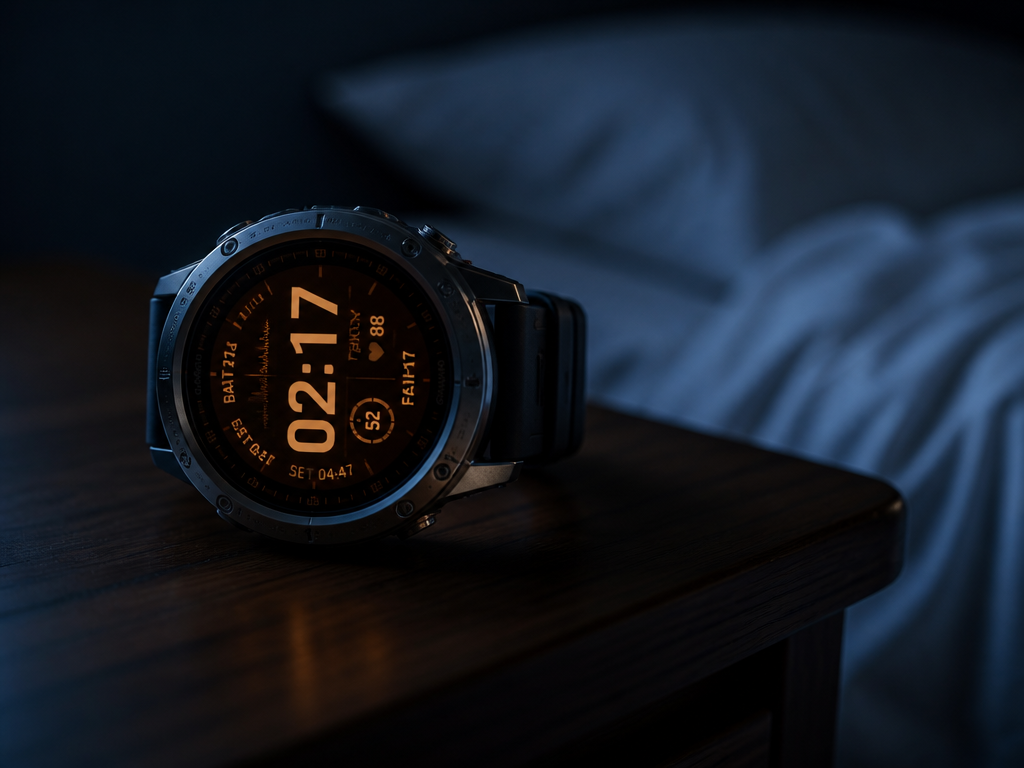
The reference experiment is Drake et al. (2013) in the Journal of Clinical Sleep Medicine: twelve subjects, 400 mg of caffeine — call it four cups of drip — administered at 0, 3, and 6 hours before bedtime, with sleep measured by polysomnography. The 6-hours-before dose still cost more than an hour of total sleep. Sample of twelve, so hold it loosely. But it lines up with the pharmacology, and it means the 2 p.m. summit coffee is a live variable in your 4 a.m. alpine start.
One more evidence note, since heart rate is what most of these watches are actually sold on for training. Gillinov et al. (2017) in Medicine & Science in Sports & Exercise compared several wrist-worn optical monitors against ECG in 50 adults across treadmill, elliptical, and stationary bike work. Chest straps tracked ECG closely. Wrist accuracy varied by modality and generally worsened as arm motion and grip tension increased. If heart rate zones matter to your training, a $50 chest strap paired to a $250 watch will beat a $1,100 watch alone. That is the highest-leverage forty dollars in this entire category.
Is a $300 watch actually enough for backcountry navigation?
For the large majority of what most people do outdoors, yes. A $300 watch with offline topographic maps, dual-frequency GNSS, a barometric altimeter, and 30-plus hours of full-accuracy GPS tracking will navigate a trail, follow a loaded GPX route, hold a track for a two-night trip, and tell you your elevation. It does the navigation job the flagship does.
Two caveats, and they are the real ones.
First, satellite messaging is a separate purchase, not a price tier. If you need two-way communication or an SOS beacon outside cell coverage, that's an inReach or a Zoleo or the satellite features on a recent iPhone — it is not something you get by spending more on a mid-range watch. A $300 watch plus a $200 messenger covers more genuine risk than a $1,000 watch alone.
Second, watch dual-frequency GNSS specifically. Receiving L1 and L5 bands cuts multipath error in slot canyons, under dense conifer canopy, and against rock walls — the exact places where a track goes to nonsense. It has trickled down to genuinely inexpensive watches. Confirm it's there rather than assuming.
What you actually lose at $300: sapphire glass, titanium, a display you can read in the dark without a wrist flick, several days of headroom, onboard music storage, and the confidence that firmware updates will keep arriving in year five.
What I actually do

I own a mid-tier watch and a chest strap, and I've stopped upgrading on the annual cycle. Here's the shortlist I actually hand to people who ask, with street prices as of August 2026. Prices in this category swing hard around sale windows; treat these as neighborhoods, not quotes. Battery figures are manufacturer claims in their most favorable modes — plan on about two-thirds of them.
| Watch | Street price | Offline maps | Claimed GPS battery | Who it's for |
|---|---|---|---|---|
| Coros Pace 3 | ~$230 | No (breadcrumb only) | ~38 h | Runners who day hike; lightest real GPS watch here |
| Amazfit T-Rex 3 | ~$260 | Yes, free topo | ~40 h | Cheapest genuine map watch; weaker software ecosystem |
| Garmin Instinct 3 Solar | ~$400 | No full maps | Weeks, solar-extended | Abuse tolerance and battery over cartography |
| Coros Apex 2 Pro | ~$400 | Yes, topo | ~66 h | The multi-day value pick |
| Suunto Vertical | ~$450 | Yes, free global topo | ~60 h dual-band | Best maps per dollar; solar titanium runs ~$700 |
| Polar Grit X2 Pro | ~$550 | Yes, topo | ~43 h | Buyers who want the deepest published sleep and recovery work |
| Garmin Forerunner 970 | ~$600 | Yes, TopoActive | ~25 h | Garmin ecosystem, lighter than a Fenix, same maps |
| Garmin Enduro 3 | ~$800 | Yes | ~120 h | Expedition battery without expedition pricing |
Segment by what you'll actually do, not by how serious you'd like to feel.
If you day hike marked trails and run a few times a week, buy the Pace 3 and stop. You do not need onboard maps to walk a signed trail you can see. What you need is a track log, an altimeter, and a watch light enough that you forget it's there — 30 grams versus 90 changes whether you wear it to bed, which changes whether the sleep data exists at all.
If you do weekend overnights and want maps, the Apex 2 Pro and the Suunto Vertical are the two I'd actually choose between, and I'd pick on interface preference rather than specs. Suunto gives away global topo maps and has the better battery story. Coros has the better route-following behavior in my hands and a lighter case.
If you're doing multi-day traverses or expedition work, this is the one place the flagship argument has teeth — and even here, the Enduro 3 beats the Fenix on battery, weighs less on a nylon strap, and costs meaningfully less. If you were about to spend Fenix money, spend Enduro money and put the difference toward a satellite messenger.
If you mainly want sleep and recovery data, don't buy any of these. Buy a chest strap for training, and if you want overnight physiology, a ring is more comfortable to sleep in and its sensor sits on a finger, where perfusion is better. Or buy nothing: the highest-yield sleep intervention available to you is a fixed wake time, and it costs zero dollars.
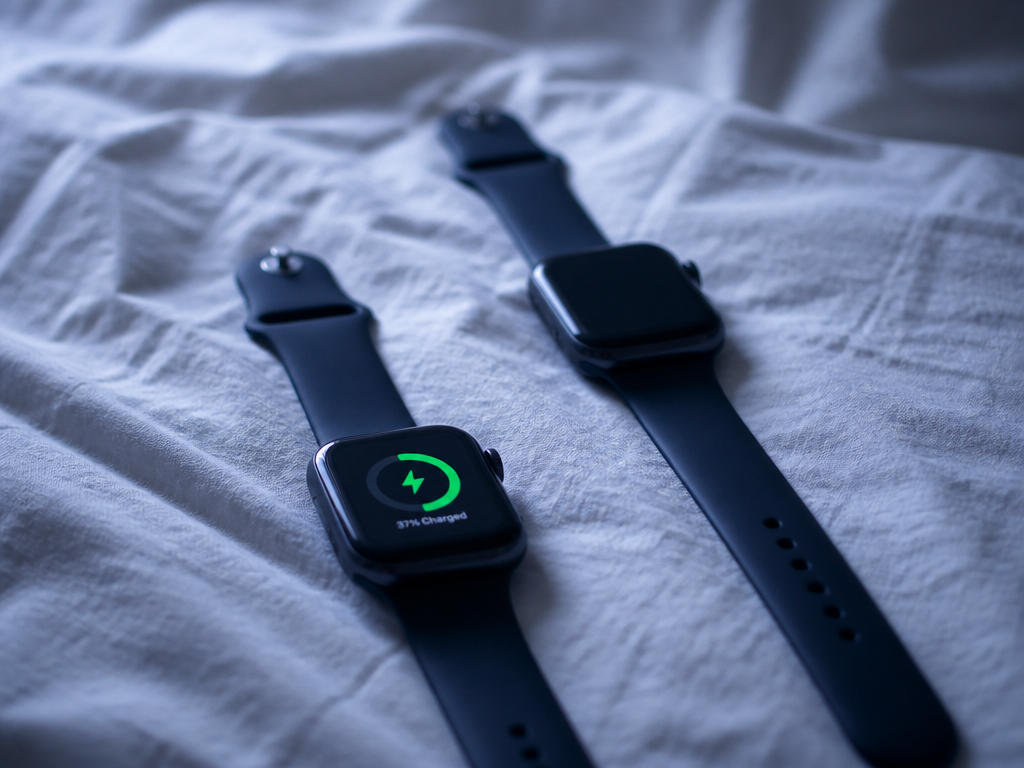
The Apple Watch Ultra is a legitimately excellent piece of hardware that I would not take past one night out. Its battery assumes a charger at the end of every day, and in the backcountry that assumption is the whole problem.
An honest rule of thumb
Before you spend anything, run this for four nights, starting tonight.
Keep a notebook by the bed. Each morning, before you look at your watch or phone, write down when you think you fell asleep, how many times you remember waking, and how you feel on a scale of one to five. Then open the app and compare. Four mornings is enough to learn whether your device tracks your experience or contradicts it — and if it contradicts it, you've just saved yourself from paying a premium for a more expensive version of the same disagreement.
While you're at it, move your last caffeine to eight hours before your target bedtime for one week. Eight hours is deliberately conservative — roughly 1.5 half-lives for a median metabolizer, more margin for a slow one. If a week of that changes nothing, your caffeine timing isn't your problem and you can stop thinking about it. If it changes something, you've found a bigger lever than any watch sells.
Then buy on three questions only: Do I need offline maps, yes or no? Do I need more than 24 hours of tracking between charges, yes or no? Will I wear it to bed? Everything else is finish.
Twenty-eight, eleven
The spec sheet said 28 days. I got eleven.
Eleven wasn't a defect. Eleven was the number the watch produced when I asked it to hold a map, keep a satellite lock, sample my heart rate at a useful rate, and stay lit long enough to read in the rain. Twenty-eight was the number it produced when I asked it to do almost nothing. Both numbers are true. Only one of them describes a watch being used.
The same split runs through the sleep score, the readiness percentage, the oxygen saturation trend, and the price of the Fenix 9 whenever it arrives. Somewhere underneath, there's a real measurement — a satellite fix, a pressure reading, a pulse arriving at your wrist. Layered on top is a model, tuned under ideal conditions, presented in the confident typography of a fact. The premium you're being asked to wait for is mostly on the second layer.
Buy the measurements. Rent the models, and don't believe them past the second decimal place.
-
Barometric altimeters drift with weather, not just elevation — a passing front can add or subtract 30 meters overnight while the watch sits on a nightstand. Most watches auto-calibrate against GPS elevation to correct this, which is why your ascent totals can quietly change after a sync. ↩
-
The green light in optical heart rate sensors isn't aesthetic. Green sits near a hemoglobin absorption peak, which maximizes the contrast between blood-filled and blood-empty capillaries. Pulse oximetry needs red and infrared instead, because the whole method depends on oxygenated and deoxygenated hemoglobin absorbing those two wavelengths differently. ↩