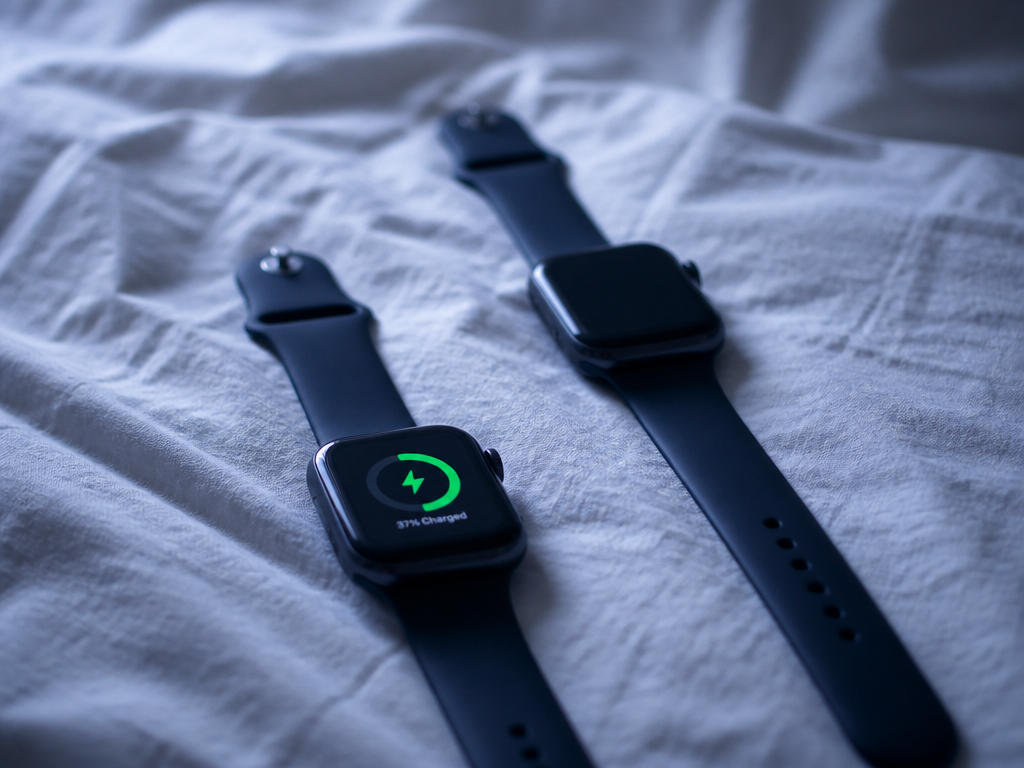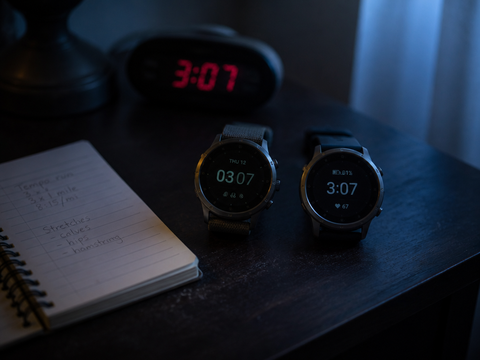
For eight weeks I wore two watches at once, one on each wrist, because I could not answer a question that should have been simple. Amazfit smartwatches now sell for roughly half what a comparable Garmin costs, and the spec sheets have stopped being embarrassing: dual-band satellite, sleep staging, training load, direct pairing with gym machines. If both watches claim to log my intervals and score my sleep, what is the extra money actually buying?
The one-sentence verdict: the Garmin is measurably more accurate when my heart rate is changing fast or the sky is blocked, and the Amazfit is measurably better at the one thing that matters most for sleep data — still being on my wrist at 3 a.m.
Everything below is why, including the parts where the answer is genuinely "it depends."
The question, stated precisely
"Is Amazfit as good as Garmin" is unanswerable, because the two brands are not competing on a single axis. So I split it into two questions I could actually test on my own body.
First: when the signal gets hard, how much worse is the cheaper sensor? Steady-state heart rate on a flat run is a solved problem; every wrist optical sensor on the market gets it roughly right. The interesting cases are the ones where hardware and algorithm are under load — 30-second intervals, a river path under tree cover, a pool turn, a wrist flexed on an erg handle.
Second, and this is the question a magazine about sleep has to ask: how many nights of data do you actually end up with? A sleep metric you didn't record because the watch was on a charger is worth zero. Accuracy per night is only half of the equation; the other half is nights captured. Nobody puts that on a spec sheet.
Those two questions pull in opposite directions, which is the whole story.
What I actually ran
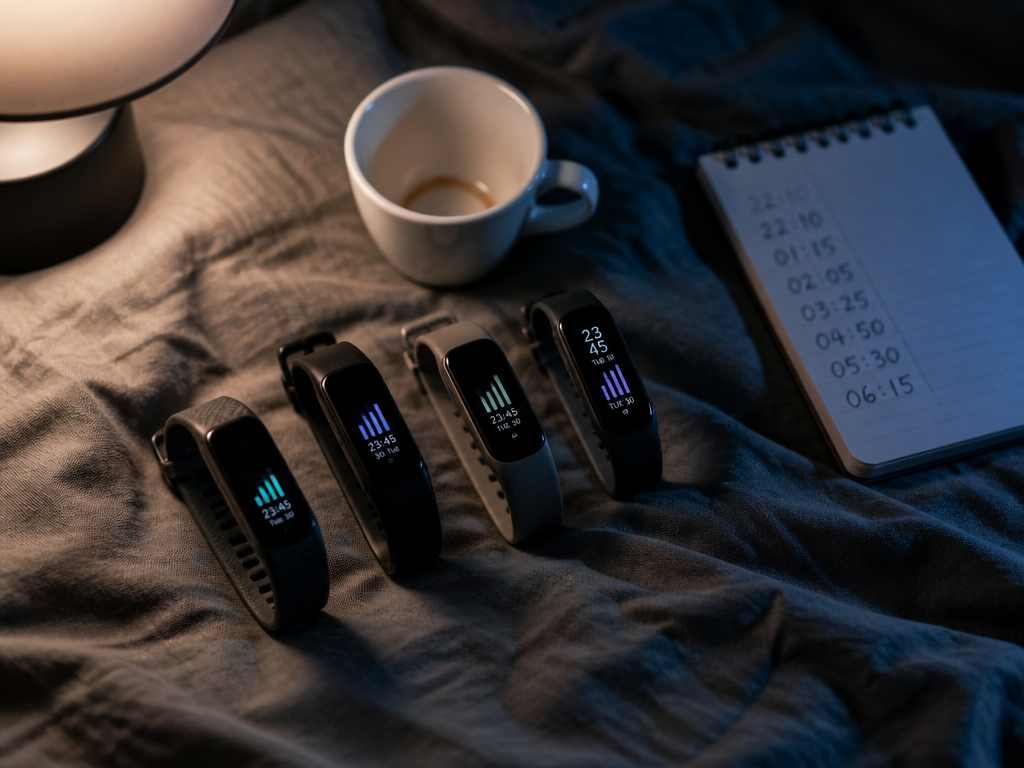
Amazfit Balance 2 on the left wrist, Garmin Forerunner 265 on the right, swapped wrists every seven days so that wrist dominance couldn't quietly become the finding. I paid $299 for the Amazfit and $379 for the Garmin on a sale against a $449 list — call the real-world gap somewhere between $80 and $150 depending on your patience.
Sixty-one consecutive nights. Forty-four workouts: 28 runs, nine rowing sessions on a Concept2 with a PM5 monitor, seven pool swims of 1,500 m in a 25 m pool. A Polar H10 chest strap ran alongside every workout as the heart-rate reference.
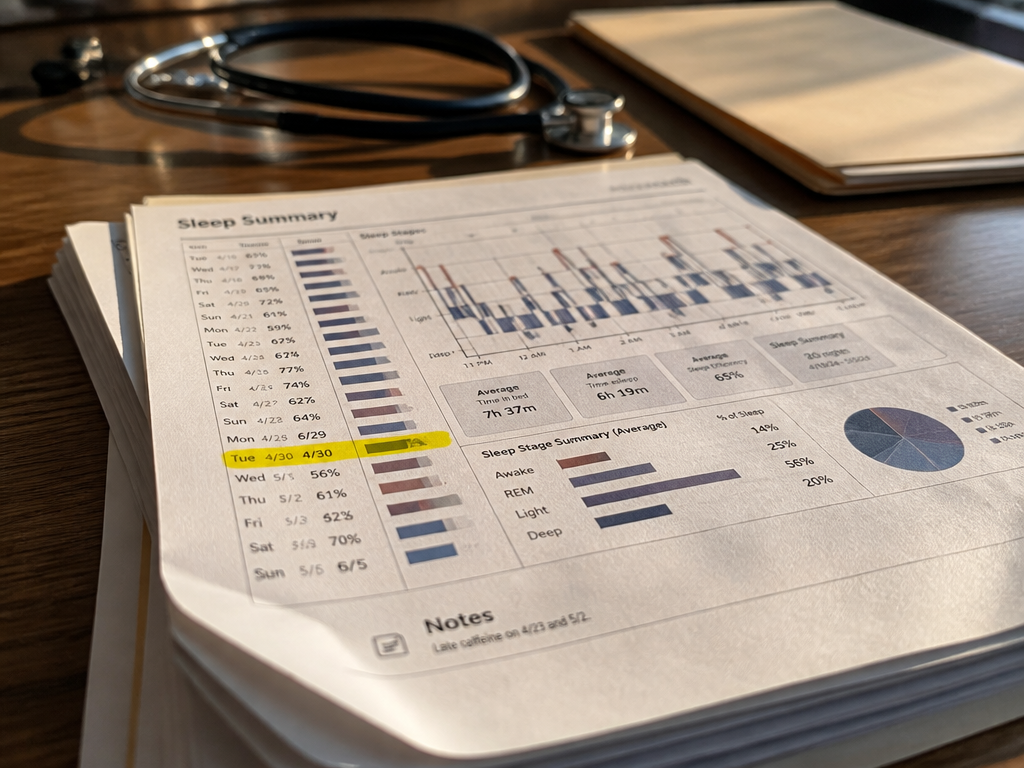
For sleep, my ground truth was thin and I want to be honest about it: a timestamped phone screen-off log for lights-out, a bedside notebook for anything I remembered in the morning, and nothing else. There is no lab reference in this piece. I cannot tell you which watch stages sleep correctly. I can tell you where they agree, where they disagree, and where each one matches what I wrote down at 7 a.m. That is a smaller claim than most wearable reviews make, and it is the largest claim my setup supports.
The caffeine arm: 12 nights with a 20 g pourover at 15:30 (somewhere in the 180–220 mg range; I didn't assay it), alternating with 12 decaf control nights from the same roaster at the same hour. Not blinded. I knew which cup was which, and you should discount the subjective half of that data accordingly.
The workout half
GPS on a loop I've run 200 times
Twenty-eight runs on the same 8.05 km river loop, both watches recording simultaneously in their best satellite mode.
The Garmin returned 8.04 to 8.12 km — an 80 m spread across 28 repetitions of an identical route. The Amazfit returned 7.96 to 8.31 km, a 350 m spread. Both are dual-band. The average was fine on both; the repeatability was not comparable.
The failure was also specific rather than random. On the 900 m section where the path runs under a plane-tree canopy with a stone wall on one side, the Amazfit consistently smoothed the two switchbacks into a lazy curve, shaving 40–60 m per lap. It wasn't noisy there — it was confidently wrong in the same direction every time. Open sky, the two traces are hard to tell apart.
If you run road loops and care whether Tuesday was faster than last Tuesday, that 350 m spread is 2.6 seconds per kilometre of phantom pace difference. That's enough to lie to you about a training block.
Heart rate, steady and unsteady
Against the chest strap, on steady aerobic running:
- Garmin mean absolute error: 2.1 bpm
- Amazfit mean absolute error: 3.4 bpm
Both of those are fine. Neither would change a single training decision.
On 30-second-on / 30-second-off intervals, the gap stopped being academic:
- Garmin: 6.8 bpm
- Amazfit: 14.2 bpm

The Amazfit's error is almost entirely lag. It arrives at the right number roughly 15–20 seconds after the strap does, which means on a 30-second rep it is still climbing when the rep ends, and still falling when the next one starts. Across a 12-rep session the Amazfit reported a peak heart rate 11 bpm lower than the strap and put me in a training zone I was not in. On the long steady runs, its zone allocation matched the strap to within a few percent.
This is not a defect so much as a design point: the smoothing that makes the Amazfit's resting and sleeping heart rate clean and stable is the same smoothing that blunts a 30-second spike.
The rowing machine, where the cheaper watch wins outright
Here the price logic inverts. The Amazfit pairs to the PM5 as a fitness machine over Bluetooth and simply reads distance, stroke rate, and split off the erg's own sensor. Over nine sessions its 5,000 m distance matched the monitor exactly, because it is the same number.
The Garmin estimated from the wrist. On the same nine pieces it came in between 4,720 m and 5,340 m — 4 to 7 percent off, in both directions, with the worst error on the session where I let my stroke get sloppy in the third kilometre.
A watch that reads the machine will always beat a watch that guesses at the machine. If a meaningful share of your training happens on an erg, a bike trainer, or a connected treadmill, this single feature is worth more than the entire GPS difference above.
The pool, where it loses again
Seven swims, 1,500 m each, 25 m pool. The Garmin counted every length correctly on all seven. The Amazfit added a phantom length on three of them, always after a rest longer than about 40 seconds at the wall — it read the push-off from a long rest as a turn. Logging the rest manually as its own segment cleaned up two of the three. The third one I never got to behave.
That's a 25 m error on 1,500 m. It matters if you're chasing pace per 100; it doesn't if you're swimming for 40 minutes and want a rough load number.
The sleep half, which is why we're here
Onset and total time
Against my screen-off timestamps, median error on detected sleep onset was 6 minutes for the Garmin and 11 minutes for the Amazfit. Both acceptable. The tails were not equal: the Amazfit's worst night placed my sleep onset 41 minutes before I had actually put the phone down, on an evening I spent reading very still. The Garmin's worst miss was 19 minutes.
On total sleep time the two watches averaged 18 minutes apart, Amazfit reading longer. They disagreed by more than half an hour on 14 of 61 nights. If your use case is "am I averaging seven hours or six," both watches answer it and they answer it nearly identically.
Deep sleep: two watches inventing different nights
This is where I stopped trusting the pretty charts on either wrist.
Median deep sleep: 1 h 19 m on the Amazfit, 54 m on the Garmin. They disagreed by more than 30 minutes on 47 of 61 nights. Worse than the offset is the ranking. Take each watch's ten deepest nights out of the 61 — the lists share three nights. Two devices on the same body, on the same nights, largely disagreeing about which nights were the good ones.
One of them may well be right. I have no way to know which, and neither do you, and anyone reviewing either watch without an EEG reference doesn't either. What I can say is that the disagreement is large enough that stage-level numbers from either watch should not drive a decision. Total sleep time, they agree on. Architecture, they do not.
The caffeine block
Twelve caffeinated nights, twelve decaf, 15:30 dose, alternating.
The headline sleep scores were noise. The Amazfit's nightly score dropped an average of 4 points on caffeine nights, the Garmin's 7, against night-to-night swings of 10 to 15 points on both. Neither score separated the two conditions cleanly enough to be useful.
One metric did. Overnight resting heart rate rose on caffeine nights on both watches — +3.1 bpm on the Amazfit, +3.8 bpm on the Garmin — and the two agreed on direction on 10 of the 12 matched pairs. That is the finding I'd defend: the $299 watch detected the same cardiac signature of an afternoon coffee as the $449 one, and reported it within a beat.
But my own log said sleep onset ran a median of 14 minutes longer on caffeine nights, and only one watch came close to reproducing it. The Garmin's detected onset stretched by 9 minutes on those nights. The Amazfit's stretched by 2. The smoothing that made the Amazfit's nocturnal heart rate so clean is, I think, the same smoothing that let it decide I was asleep while I was still lying there doing arithmetic about the coffee.

So: cheaper watch, same physiological signal, blunter timing.
The battery argument nobody makes about sleep data
Over 61 nights the Amazfit needed six charges; the Garmin needed eleven with the always-on display enabled. I charge at my desk, mid-morning, which should be harmless.
It wasn't, quite. I lost four nights of Garmin sleep data and one night of Amazfit data to a watch that was still on the charger at bedtime. That's a 6.6% data loss rate on the expensive watch versus 1.6% on the cheap one, and it lands entirely on the metric class that most needs continuity, because sleep trends only mean something across weeks.
Eleven days of real-world battery with sleep tracking on and four workouts a week is not a spec-sheet flourish. On the sleep side it is an accuracy feature.
The grid
| Criterion | Amazfit Balance 2 | Garmin Forerunner 265 |
|---|---|---|
| GPS spread, same 8.05 km loop ×28 | 350 m | 80 m |
| HR error vs chest strap, 30/30 intervals | 14.2 bpm | 6.8 bpm |
| Rowing distance vs PM5, 5,000 m | exact (machine-fed) | 4–7% off |
| Sleep onset, median error vs log | 11 min | 6 min |
| Nights lost to charging (of 61) | 1 | 4 |
| Price paid | $299 | $379 |
So what does the price gap actually buy?
Here is the honest shape of it, and it's not a single answer.
The extra money buys fidelity under stress: correct heart rate when it's changing by 40 bpm in twenty seconds, a GPS trace that repeats itself, length counts that survive a long rest at the wall. It also buys export and ecosystem — I pulled FIT files out of Garmin Connect in one click, while getting my Zepp sleep data into a spreadsheet was a per-day, several-taps affair I gave up automating.
The cheaper watch buys continuity and machine honesty: nearly twice the battery, so nearly four times fewer missed nights, and a direct data feed from any gym equipment that broadcasts as a fitness machine, which beats any amount of wrist-based estimation.
Which is better depends on a question about you, not about the watches: are you chasing a night or a trend? If you want to know what last Thursday's late espresso did, you need per-night sharpness and you should buy the Garmin. If you want to know whether a month of moving your cutoff from 4 p.m. to noon shows up in your overnight heart rate, you need forty uninterrupted nights more than you need any single one of them to be perfect, and the Amazfit will hand you more of them.
Who this is for. Who it isn't.
Buy the Amazfit if most of your training is steady-state, a chunk of it happens on connected machines, you take your sleep data seriously as a trend line, and you resent charging things. It is not a compromise in those conditions; on the erg it is straightforwardly better.
Buy the Garmin if you do structured interval work and act on the zone data, you run technical or covered terrain, you swim with a stopwatch mentality, or you want your data in files you own. Also buy it if you're the kind of person who will look at a single bad night and change something — that use case needs the sharper instrument.
Buy neither if what you want is a trustworthy deep-sleep number. Neither watch has earned that, and my 47 nights of disagreement are the evidence.
If you want the screenshot line: the Garmin wins the workout, the Amazfit wins the month.
What this didn't answer
No lab reference. Everything above about sleep is agreement and self-report, not accuracy — I can rank these two against each other and against my notebook, and no further. My caffeine arm was unblinded, which contaminates every subjective observation in it and none of the heart-rate ones. One body, one wrist pair, one winter, one skin tone, one 25 m pool. Sample size on the swims was seven.
I also tested exactly one model on each side. The long-battery outdoor tier and the sub-$100 end of the range use different sensor packages, and nothing here transfers to them. And I ran eight weeks, which is long enough to characterise a sensor and far too short to say whether either watch's readiness guidance is worth following across a training year.
The next version of this experiment needs a third device between the two: an EEG headband as a staging reference, which would finally settle which of those two deep-sleep charts is fiction. It also needs someone else labelling the decaf bags. Until then, ask both manufacturers the same question I'm still asking — where is the validation data for the sleep-staging algorithm, and against what reference? One of them will send you something. That answer, when it arrives, is worth more than any spec sheet.