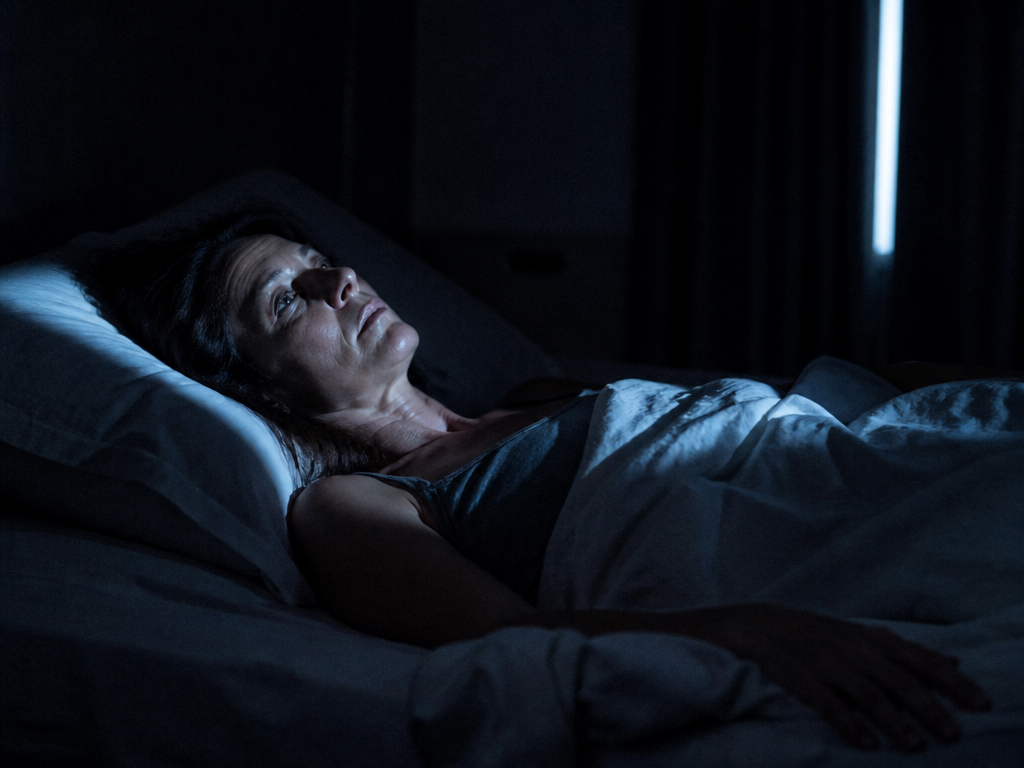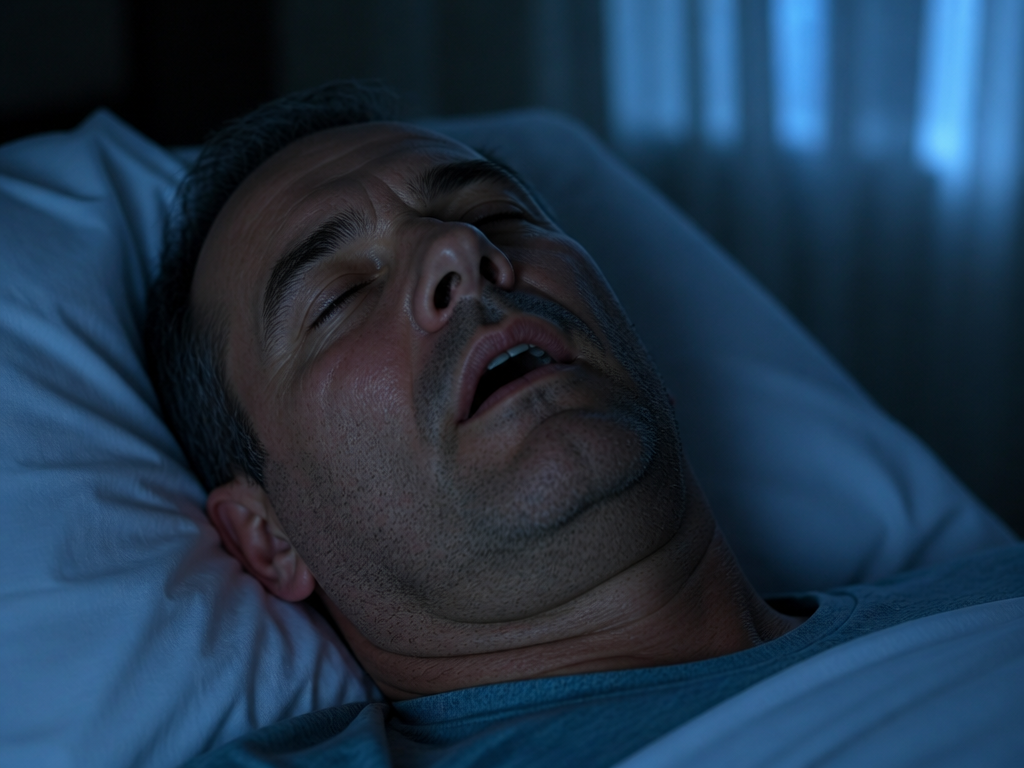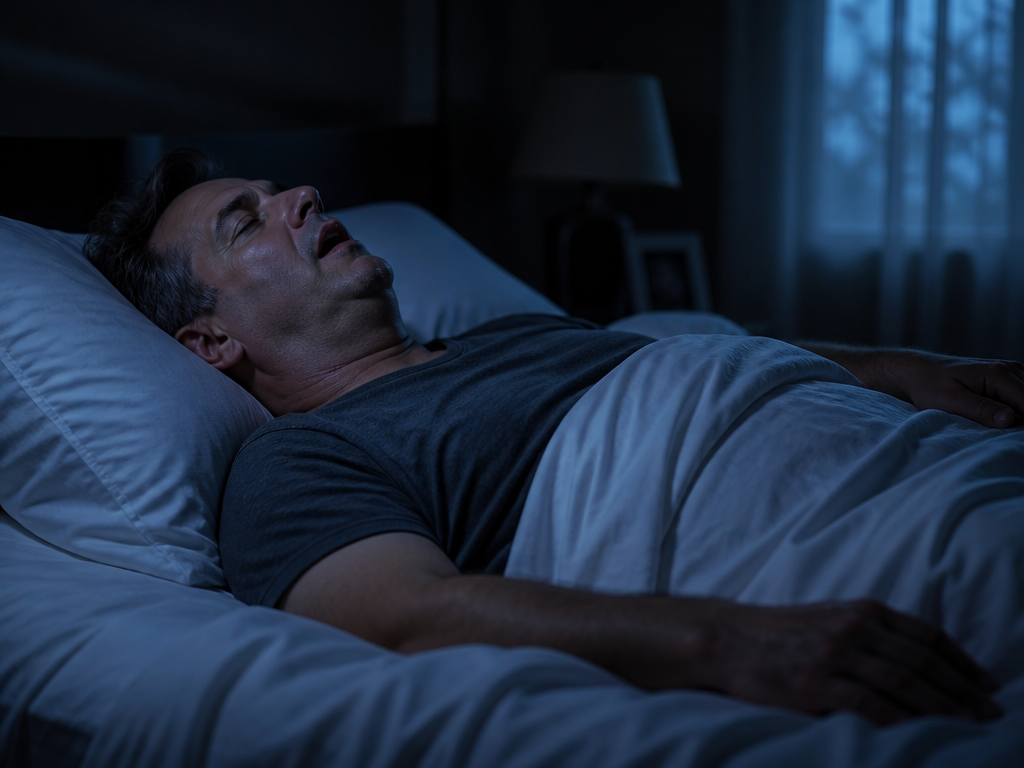
Patients ask it more often than you'd think, usually in a lowered voice, as if the question itself is embarrassing: If I stop breathing in my sleep — really stop — why don't I just die?
It's a good question. The honest answer is that obstructive sleep apnea is, in a sense, your body refusing to let that happen, hundreds of times a night, at a cost. The condition is not the airway closing. The airway closing is just the trigger. The condition is everything your nervous system does in response — the jolt, the gasp, the surge of adrenaline — repeated until morning, while you remember none of it.
So let's take the question seriously and follow it all the way down.
The question under the question
Most people who suspect they have apnea aren't really asking what is it. They're asking something more specific and more anxious. Is my throat actually closing? Why mine? Is this dangerous, or is my partner exaggerating? And underneath all of it: Am I going to be okay?
Those are answerable. Not all with the same confidence — some of the science is solid bedrock and some is still soft ground, and I'll be clear about which is which. But the mechanism itself, the physical event happening in your throat at two in the morning, is well understood. We can walk through it almost frame by frame.
What is obstructive sleep apnea, exactly?
Obstructive sleep apnea is a condition in which the upper airway repeatedly narrows or fully collapses during sleep, briefly cutting off airflow despite continued effort to breathe. The key word is effort. Your chest and diaphragm keep trying. The pipe they're pulling air through has simply pinched shut. Each of these events lasts at least ten seconds — sometimes thirty, occasionally longer — and ends when your brain rouses you just enough to restore muscle tone and reopen the passage.
How many is too many? Clinicians count events per hour of sleep and call the result the Apnea-Hypopnea Index, or AHI. An apnea is a near-total stop in airflow; a hypopnea is a partial reduction paired with either a drop in blood oxygen or an arousal. Fewer than 5 events per hour is considered normal. Five to 15 is mild, 15 to 30 is moderate, and above 30 is severe. A person with severe apnea may experience an airway event roughly once a minute, all night, and have no conscious memory of any of them.
That last fact is the strange heart of the disease. You can be drowning in your own sleep, over and over, and wake up only with a headache and the vague sense that rest didn't take.
A walk through one apnea, in order
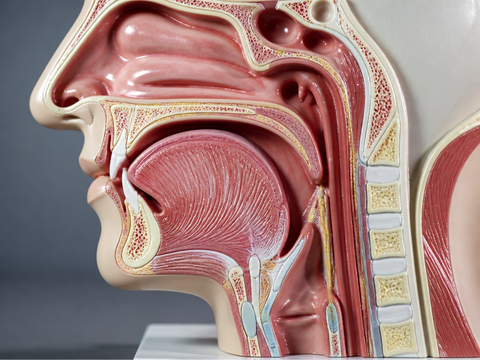
To understand why your throat closes, it helps to know one anatomical oddity: the human pharynx — the stretch of airway behind your tongue and soft palate — has no rigid skeleton holding it open. Your nose has cartilage. Your windpipe lower down is reinforced with stiff rings. But the pharynx is essentially a collapsible tube of muscle and soft tissue, kept open during the day by constant, low-level muscular activity you never notice. It's a design that allows you to swallow, speak, and breathe through the same passage. The trade-off is that it depends on muscle tone to stay open.
Here is what happens, in the order it happens, during a single obstructive event.
You fall into deeper sleep, and muscle tone drops. This is normal and universal. As you descend through the sleep stages, the muscles throughout your body relax, including the dilator muscles that hold your pharynx open. In most people this slackening is harmless. In some, it's the first domino.
Soft tissue settles inward. With less muscular support, the tongue, the soft palate, and the walls of the throat sag toward the center of the airway. The tube narrows. If you're lying on your back, gravity pulls the tongue further back still. The channel for air gets thin.
Airflow turns turbulent — this is the snore. As the passage narrows, air moving through it speeds up and becomes turbulent, vibrating the floppy tissues of the soft palate and throat. That vibration is snoring. Snoring is not apnea — plenty of people snore and never stop breathing — but it's the sound of an airway under strain, and it often precedes collapse.
The airway closes. At a certain point the negative pressure your inhaling chest creates is enough to suck the slack walls fully together, like a wet paper straw drawn on too hard. Now there is effort but no flow. You are trying to breathe against a sealed pipe.
Oxygen falls, carbon dioxide rises. Within seconds to tens of seconds, the oxygen saturation in your blood begins to drop. Carbon dioxide, which you can no longer exhale, climbs. Your body has dedicated sensors for both — chemoreceptors in the carotid arteries and brainstem — and they begin to alarm.
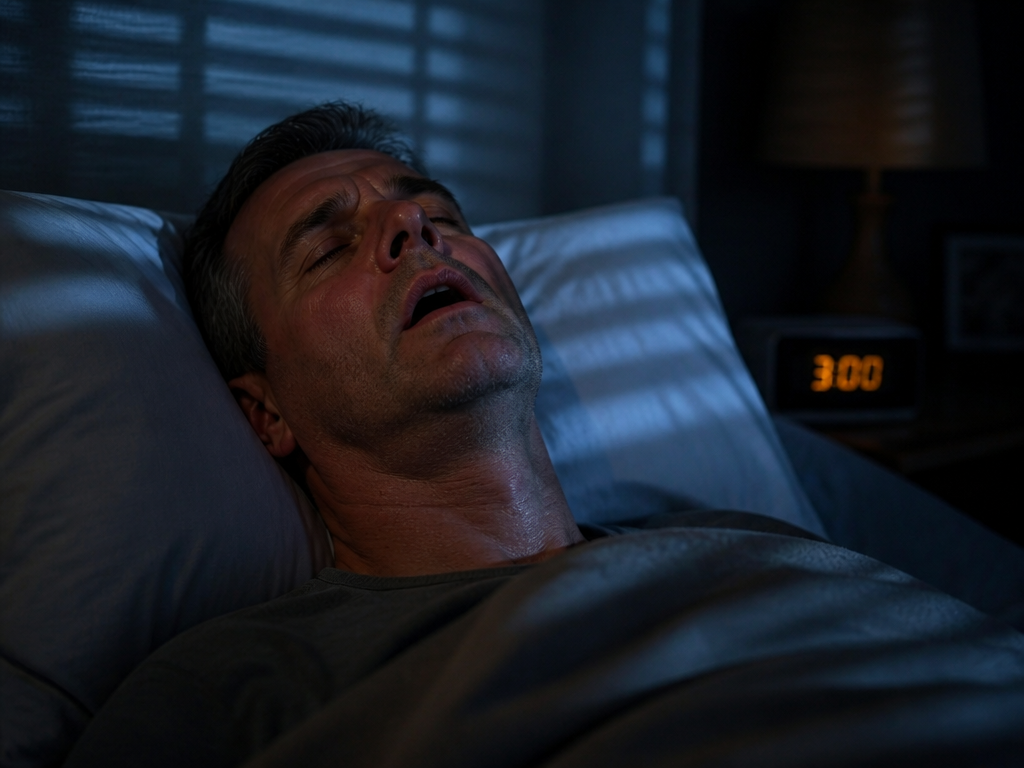
Your brain pulls you up out of sleep. This is the rescue. Rising CO2 and falling oxygen trigger a brief arousal — usually not a full waking, just a shift toward lighter sleep lasting a few seconds. Muscle tone snaps back. The dilator muscles fire, the airway pops open, and you take a deep, often gasping, recovery breath. Bed partners describe it as a snort or a choke.
You fall back asleep, and it begins again. The arousal was so brief you don't remember it. You sink back down, tone drops, tissue collapses, and the loop restarts. Thirty times an hour, in severe cases.
So, to circle back to the original question: you don't die because the arousal system works. Your brainstem treats each blocked breath as an emergency and overrides sleep to save you. The problem is that "saving you" means fragmenting your sleep into hundreds of useless pieces and bathing your cardiovascular system in stress hormones all night. The rescue is real. It's also the injury.
Why your airway and not your neighbor's
If everyone's muscle tone drops in sleep, why do only some people collapse? This is where the answer becomes genuinely "it depends," and anyone who tells you otherwise is simplifying.
The single biggest contributor in most populations is soft tissue crowding the airway, often related to excess weight — fat deposited around the neck and at the base of the tongue narrows the channel before sleep even begins. But weight is not the whole story, and it's important to say so plainly, because plenty of thin people have severe apnea and plenty of heavy people have none. Anatomy matters as much as mass. A naturally small or recessed lower jaw shifts the tongue backward. A large tongue, enlarged tonsils, a long soft palate, a narrow facial structure — all reduce the margin for error. Some of this is inherited; certain craniofacial patterns run in families and across ancestries.
Then there are the modulators. Age slackens tissue and weakens muscle tone, which is part of why prevalence climbs after midlife. Alcohol and sedatives suppress the arousal response and relax the airway muscles further, deepening and lengthening events — a nightcap can convert a quiet night into a bad one. Men are diagnosed more often than women, though the gap narrows after menopause, which points to a hormonal influence that we understand only partially. Nasal congestion increases the suction forces upstream. Sleeping on your back worsens it for many people and changes nothing for others.
The truthful summary is that obstructive sleep apnea is usually not one cause but a stack of them, and your particular stack is yours. Two people with identical AHIs can have arrived there by entirely different routes — one through anatomy, one through weight, one through a jaw they were born with. This is also why a single fix rarely works for everyone.
Obstructive vs. central — the distinction that changes everything
There's a second kind of sleep apnea, and confusing the two leads people badly astray, so it's worth being precise.
In obstructive apnea, the breathing command is sent and the muscles try — but the pipe is blocked. The chest heaves against a closed airway. It's a plumbing problem.
In central sleep apnea, the airway is open, the muscles are willing, but the command never comes. The brainstem's respiratory control center briefly fails to send the signal to breathe. There's no effort, no struggle, no snoring against an obstruction — just a pause, a flat line of stillness, until the system restarts. It's a signaling problem, not a mechanical one.
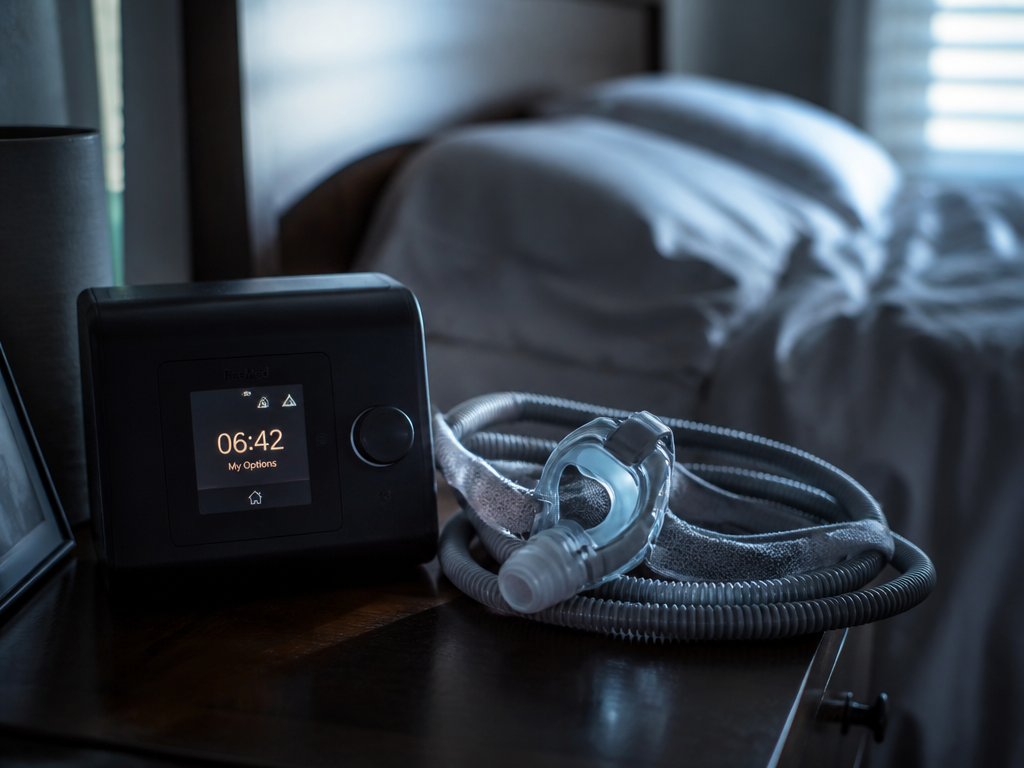
The distinction matters enormously because the treatments diverge. Central apnea is often tied to heart failure, stroke, certain medications (opioids are a notable cause), or high-altitude exposure, and it's managed by treating the underlying driver. Obstructive apnea is treated by keeping the airway open — most reliably with continuous positive airway pressure, or CPAP, which is essentially a gentle pneumatic splint of pressurized air that holds the collapsing tube open from the inside.
To complicate matters honestly: some people have mixed apnea, where a single event begins as a central pause and finishes as an obstruction, or where treating one type unmasks the other. This is real and not rare. A sleep study scores each event by type for exactly this reason — the count alone doesn't tell you which machine in the body is breaking.
What the research actually measured
It's easy to say apnea is "linked to" heart disease, diabetes, and early death. Those phrases get repeated until they feel like settled law. Some of them are close to it. Others are softer than the confidence with which they're usually stated. Here's where the lines actually fall.
That obstructive apnea is common — well-established. The most-cited modern prevalence figures come from analyses building on the Wisconsin Sleep Cohort, the long-running study begun by Terry Young and colleagues in 1988 that followed state employees with repeated overnight studies. A 2013 reanalysis by Peppard and colleagues in the American Journal of Epidemiology estimated that moderate-to-severe apnea affects a substantial minority of middle-aged adults — on the order of 10 percent of men and 3 percent of women in their sample — and that prevalence had risen with population weight. Mild apnea is far more common still. A large fraction of cases are undiagnosed.
That apnea raises cardiovascular risk — established, with caveats. The mechanism is plausible and the observational data is strong. The repeated oxygen dips and arousals drive surges in sympathetic nervous activity and blood pressure; the Sleep Heart Health Study, a multi-center cohort of several thousand participants, found associations between apnea severity and hypertension, and untreated severe apnea tracks with worse cardiovascular outcomes across multiple cohorts. The caveat is causation versus correlation. The randomized trials testing whether treating apnea with CPAP prevents cardiovascular events have been more sobering. The SAVE trial (McEvoy et al., 2016, New England Journal of Medicine), with over 2,700 participants, did not show that CPAP reduced cardiovascular events in patients with established disease — though average nightly use in that trial was only about three hours, well below what's likely needed. So: the risk link is solid; the proof that treatment reverses the cardiac risk is genuinely incomplete, partly because people struggle to use the treatment enough to test it.
That CPAP improves sleepiness and quality of life when actually used — well-established. This is among the most reliable findings in the field. People who use the machine consistently feel measurably better, and daytime sleepiness improves. The bottleneck is adherence, not efficacy.
That treating mild apnea changes long-term health — thin. For someone with an AHI of 7 and no symptoms, the evidence that intervention extends or improves life is much weaker than for severe disease. This is an honest gray zone, not a solved problem.
The part where I admit what's unsettled
A few things deserve open acknowledgment, because patient education that pretends everything is settled does no one any favors.
The AHI itself is an imperfect yardstick. It counts events but treats a ten-second pause the same as a thirty-second one, and it doesn't fully capture how deeply your oxygen falls or how badly your sleep is fragmented. Two people with the same AHI can feel completely different. Newer metrics that weight events by oxygen burden exist, but they aren't yet standard, and the threshold numbers you'll be handed — 5, 15, 30 — are useful conventions, not laws of nature.
Treatment is a real problem. CPAP works beautifully when worn and does nothing in the closet. Long-term adherence in the real world is imperfect; a meaningful share of patients abandon the device. Alternatives — oral appliances that advance the lower jaw, positional therapy, weight loss, surgery in selected cases, and newer implanted nerve stimulators — each help some people and not others, which loops back to the truth that your apnea has its own particular causes.
And the mild end of the spectrum is genuinely uncertain territory. If your study comes back mild and you feel fine, the right next step is a real conversation, not a foregone conclusion.
An honest rule of thumb, and what to try this week
Here is a rough mental model that holds up: loud habitual snoring plus witnessed gasping or pauses plus daytime sleepiness is the triad that should get evaluated, regardless of your weight or age. Any one alone is weak evidence. Together they're a strong signal worth a doctor's attention. Snoring without the other two is common and usually benign; sleepiness without snoring has many other causes. It's the combination that points at an airway closing.
| Symptom | On its own | Combined with the others |
|---|---|---|
| Loud, habitual snoring | Common, often benign | A real flag |
| Witnessed pauses or gasping | Hard to self-detect | Strongly suggestive |
| Daytime sleepiness despite enough hours in bed | Many possible causes | The piece that ties it together |
| Morning headache, dry mouth | Nonspecific | Supporting detail |
So what can you actually do this week, without a prescription or a sleep lab?
Find out what happens to your breathing at night. If you sleep next to someone, ask them — directly and without embarrassment — whether you snore loudly and whether they've ever heard you stop breathing or gasp. They are the best sensor you have, and most people have never simply asked. If you sleep alone, record yourself: most phones have a free sleep-sound or snore-tracking app that captures audio overnight, and hearing your own breathing stop and restart is more persuasive than any article. It is not a diagnosis. Only a sleep study can give you that. But it's a concrete, honest first observation, and it costs you nothing but one night's curiosity.
Bring whatever you find to a clinician. The collapse in your throat is a mechanical event with a name, a measurement, and real treatments — and the first step toward all of them is simply confirming, with your own ears, that it's happening.