A man with a 17-inch neck and a woman with a 16-inch neck are, statistically, more likely to stop breathing in their sleep. That number gets repeated in clinics and on screening forms because it is genuinely useful — and because it is easy to measure with a tape from a sewing kit. But it is also one of the more misunderstood sleep apnea risk factors, treated as a verdict when it is really just one variable in a crowded equation.
The reason the neck matters at all is anatomical, not cosmetic. Obstructive sleep apnea (OSA) is a mechanical problem: the soft tissue around your upper airway relaxes during sleep and partially or fully blocks the passage of air. A thicker neck often means more tissue crowding that passage. That is the whole logic. The trouble is that the logic is sound while the threshold is blunt, and plenty of people on either side of 16 or 17 inches don't fit the story they've been told.
What most people do
Most people screen themselves with a folk algorithm. It goes roughly like this: I snore, my partner says I gasp, my neck is thick, therefore I probably have sleep apnea. Or the reverse: I'm not overweight, I don't snore much, so I'm fine.
Both shortcuts fail in predictable ways.
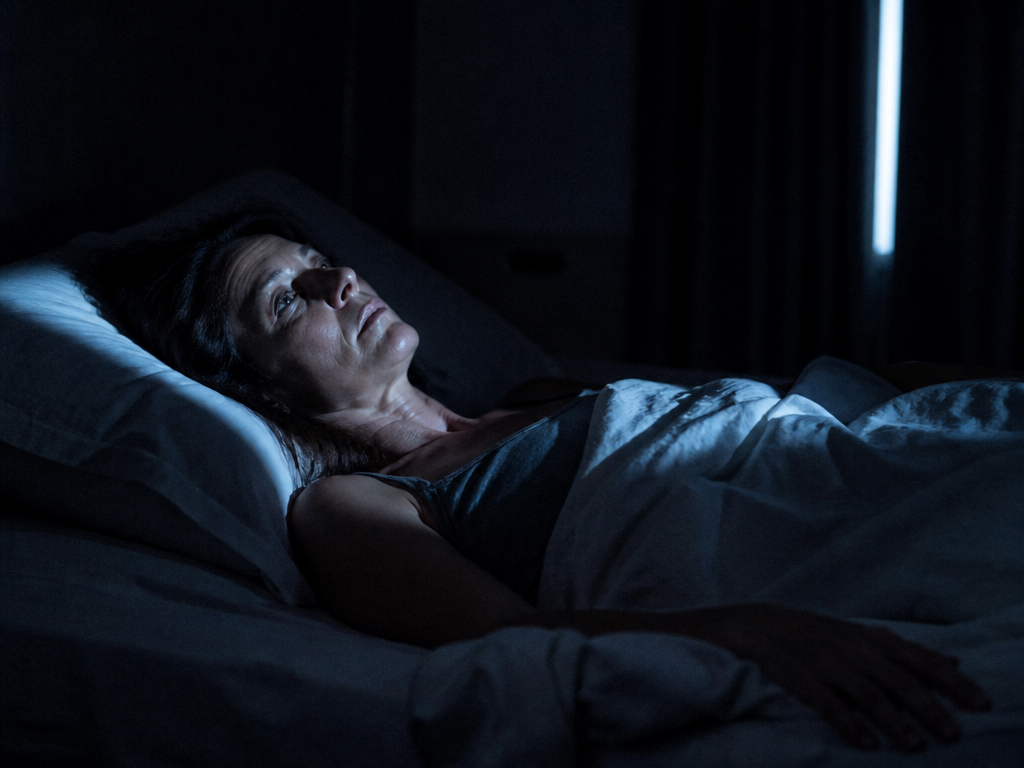
Snoring is the loudest symptom, so it gets treated as the diagnostic one. It isn't. Snoring is the sound of turbulent air moving past relaxed tissue. Apnea is the absence of air — the airway closes, the sound stops, and after several seconds the brain registers falling oxygen, surfaces toward wakefulness, and reopens the airway with a gasp. You can snore loudly for decades without a single apnea event. You can also have moderate OSA and snore very little, particularly if you sleep on your side or live alone and have no one to report the silences.
The other shortcut — I'm lean, so I'm safe — fails because neck circumference and body weight are correlated but not identical. A person with a recessed jaw, large tonsils, or a naturally narrow airway can score low on every weight metric and still collapse their airway dozens of times an hour. Endurance athletes show up in sleep labs more often than the stereotype predicts.
What the evidence suggests
Here is the question people actually type into a search bar:
Does neck size really predict sleep apnea?
Neck circumference is a real and useful predictor, but it works as a probability nudge, not a diagnosis. The commonly cited thresholds — roughly 17 inches (43 cm) for men and 16 inches (41 cm) for women — come from screening research where larger neck circumference correlated with higher rates of OSA. Crossing the line raises your statistical odds; it does not confirm the condition, and staying under it does not rule it out. Neck size is one input, and the airway underneath the skin is what's being approximated.
To see why, follow what happens in the order it happens.
You fall asleep. Muscle tone drops everywhere, including the muscles that hold your throat open — the genioglossus, which anchors the tongue, and the pharyngeal dilators along the airway walls. In most people, the airway narrows but stays patent. In someone with crowding, the now-slack walls drift inward. Air moving through the narrowed gap speeds up and turbulates: that's the snore. If the walls touch and seal, airflow stops entirely. For perhaps ten to thirty seconds nothing moves. Blood oxygen falls, carbon dioxide rises, and chemoreceptors in your brainstem trigger a brief arousal — usually too short to remember. Tone returns to the dilator muscles, the airway pops open, and you gasp. Then you fall back asleep and the cycle repeats, sometimes hundreds of times a night.
Thicker neck tissue makes that collapse more likely because there's simply more mass pressing on a soft, collapsible tube. This is well-established. So is the broader link with obesity: the landmark Wisconsin Sleep Cohort (Young et al., 1993, New England Journal of Medicine, 602 working adults) found that excess body weight was among the strongest predictors of sleep-disordered breathing, and follow-ups have repeatedly confirmed it.
But several other risk factors carry weight the neck number can't see:
- Sex and age. Men have higher OSA rates than premenopausal women, partly due to fat distribution and airway length; women's risk climbs notably after menopause. Risk rises with age in both.
- Craniofacial structure. A small or set-back lower jaw (retrognathia), a high narrow palate, or enlarged tonsils and adenoids can produce a crowded airway in a thin person. In children, tonsils and adenoids are often the whole story.
- Alcohol and sedatives before bed. These further relax the dilator muscles, deepening collapse. The effect is real and dose-dependent, though how much any one drink matters varies between people more than the confident advice usually admits.
The interaction between these is where the simple thresholds break down. A 15.5-inch neck on a person with a recessed jaw can behave like a much larger one. The tape measure is measuring a proxy for a proxy.
A rough sense of how the major factors stack — directional, not a score to take to a doctor:
| Factor | Strength of association with OSA |
|---|---|
| Obesity / high BMI | Strong, well-established |
| Neck circumference above threshold | Moderate to strong |
| Male sex; older age | Moderate, well-established |
| Recessed jaw, large tonsils | Strong when present, often missed |
| Alcohol/sedatives before sleep | Real, situational |
| Loud habitual snoring | Suggestive, not specific |
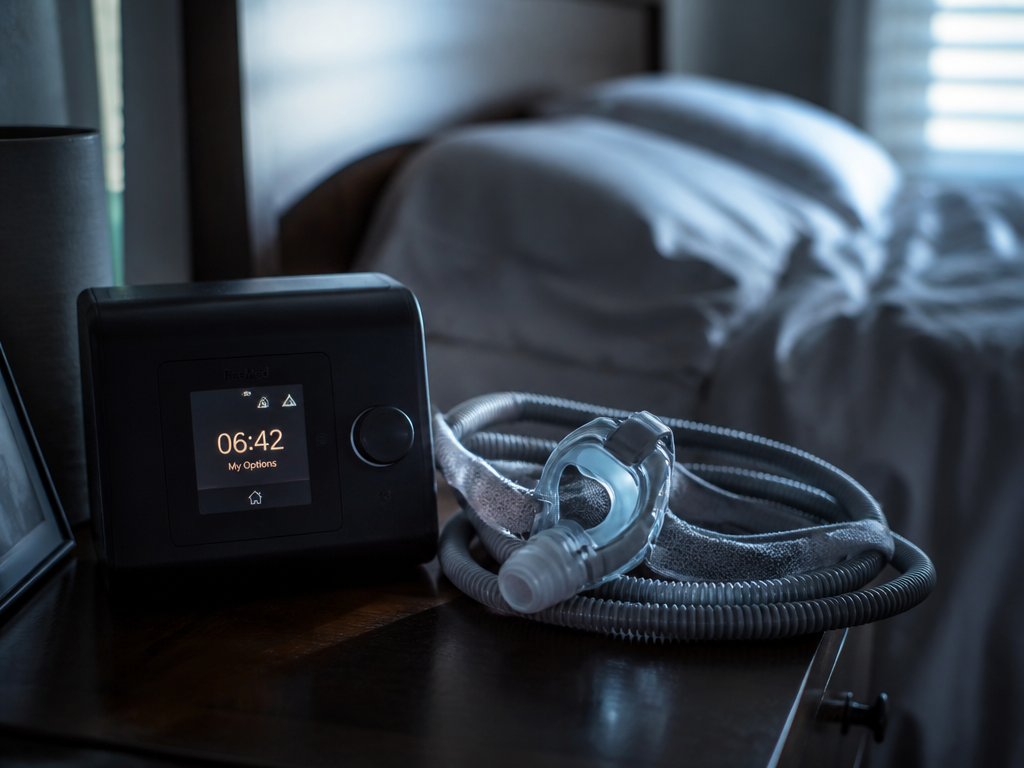
What none of this gives you is a self-diagnosis. Severity in OSA is measured by the apnea-hypopnea index (AHI) — events per hour — and you cannot count your own apneas. That requires a sleep study, either an in-lab polysomnogram or a validated home test.
What I actually do
I have a neck that sits right around the threshold, a family history on my father's side, and a partner who once described my breathing at 3 a.m. in a way that made me sit up. So I treat the screening question as a portfolio, not a single number.
My honest rule of thumb, the one I'd offer tonight: if you have two or more of these — habitual loud snoring, witnessed pauses in breathing, daytime sleepiness that coffee doesn't fix, a neck over the threshold, or high blood pressure that won't quite behave — stop estimating and ask for a sleep study. Any one alone is weak evidence. Two start to compound.
The tool clinicians use for exactly this is STOP-BANG: eight yes/no items (snoring, tiredness, observed apneas, pressure, BMI over 35, age over 50, neck over threshold, male sex). It's free, it takes two minutes, and three or more "yes" answers flags intermediate-to-high risk. It is a screen, not a diagnosis — but it's a better starting point than the bathroom mirror, and it gives you something concrete to hand your doctor.
What I don't do is chase a verdict from a smartwatch. Consumer wearables that estimate "blood oxygen" or "breathing disturbances" are getting better, but the gap between a flagged anomaly and a measured AHI is still wide, and the data behind those features is thinner than the marketing implies. I treat a watch alert the way I'd treat a smoke detector chirp: worth checking, not worth panicking over.
When I did finally get tested, the result was milder than my anxiety had drafted in advance — which is the more common outcome than the internet suggests, and the reason I'd rather people get measured than spiral.
So here is the lived version of the article's logic, offered as evidence and not instruction: I keep a cloth tape measure in my nightstand drawer, next to the book I read before sleep, and twice a year I check my neck against the same notch — not because the number diagnoses anything, but because a slow upward drift is the cheapest early warning I own.