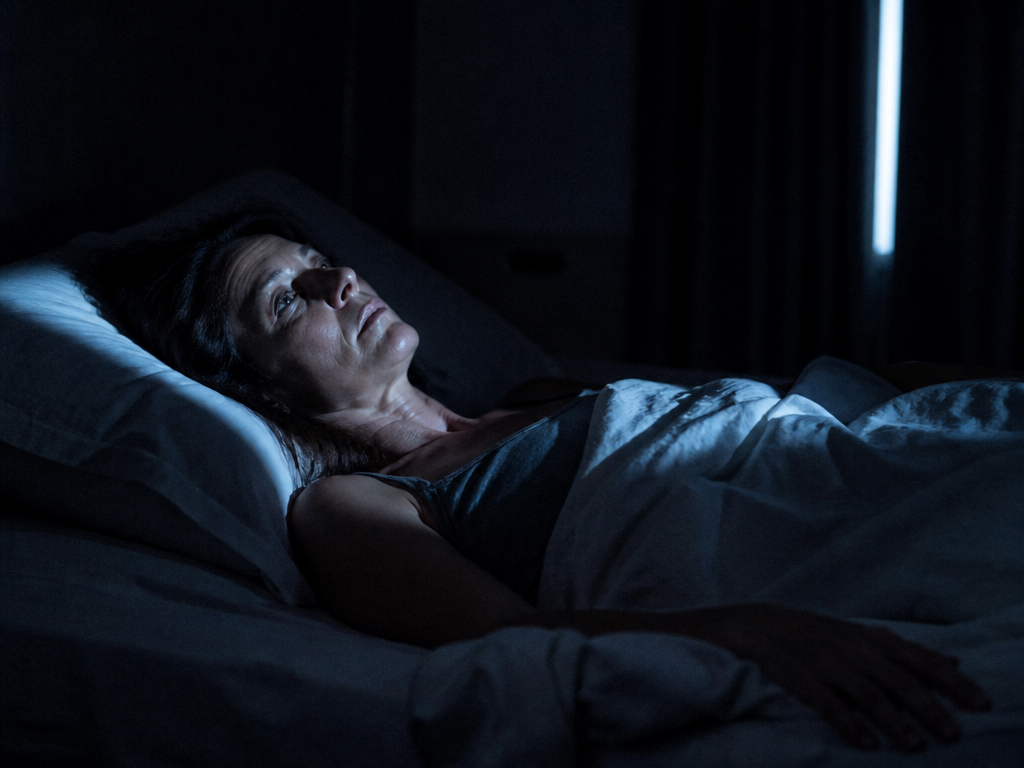
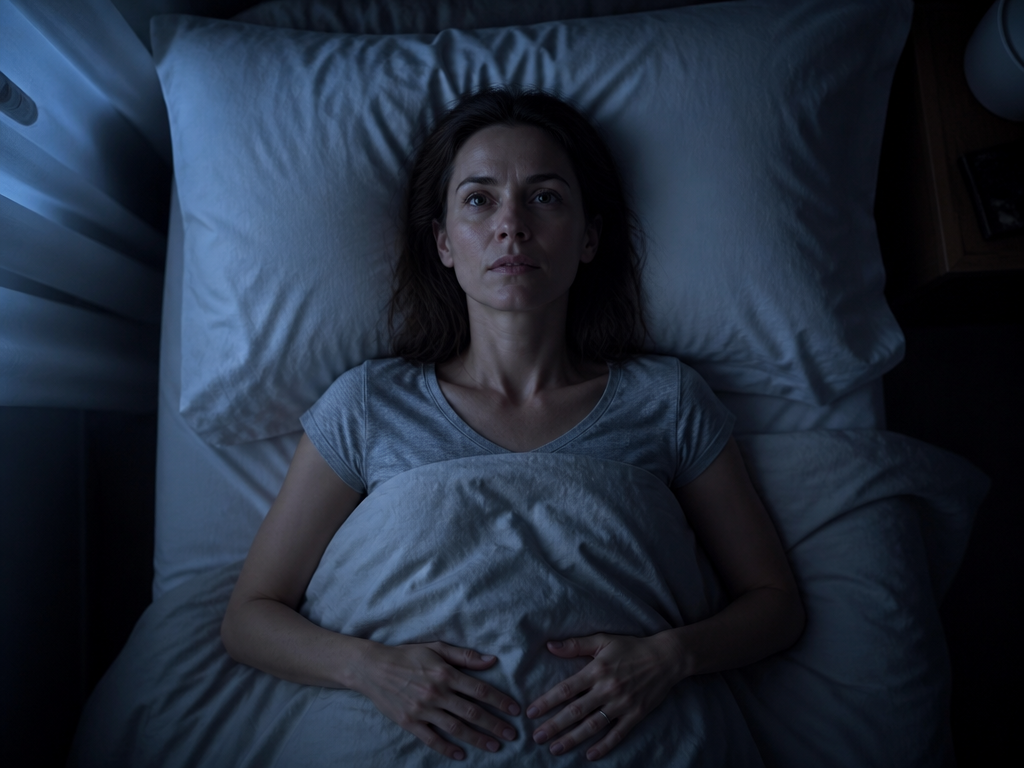
You have heard the reassuring version. Slim people don't get sleep apnea. You're not heavy, you don't snore that loud, you wake up more or less in one piece — so the obstruction in the airway is somebody else's problem. It is one of the most durable sleep apnea myths, and it survives because it contains a sliver of truth: body weight does raise risk. But the sliver gets mistaken for the whole.
In a 2014 sample from the Wisconsin Sleep Cohort, a meaningful fraction of people with moderate-to-severe obstructive sleep apnea (OSA) had a body mass index under 30. Thin people get it. Athletes get it. The shape of your jaw, the set of your tongue base, the diameter of your throat at 3 a.m. — none of that shows up on a bathroom scale.
So rather than march through five myths in a row, let's follow a single breath. Air enters at the nose, the throat narrows, the brain registers the struggle, the heart pays, the morning collects the bill. Most myths about apnea live at one of those stations. Walk the airway in order and they fall in order.
What is the most common myth about sleep apnea?
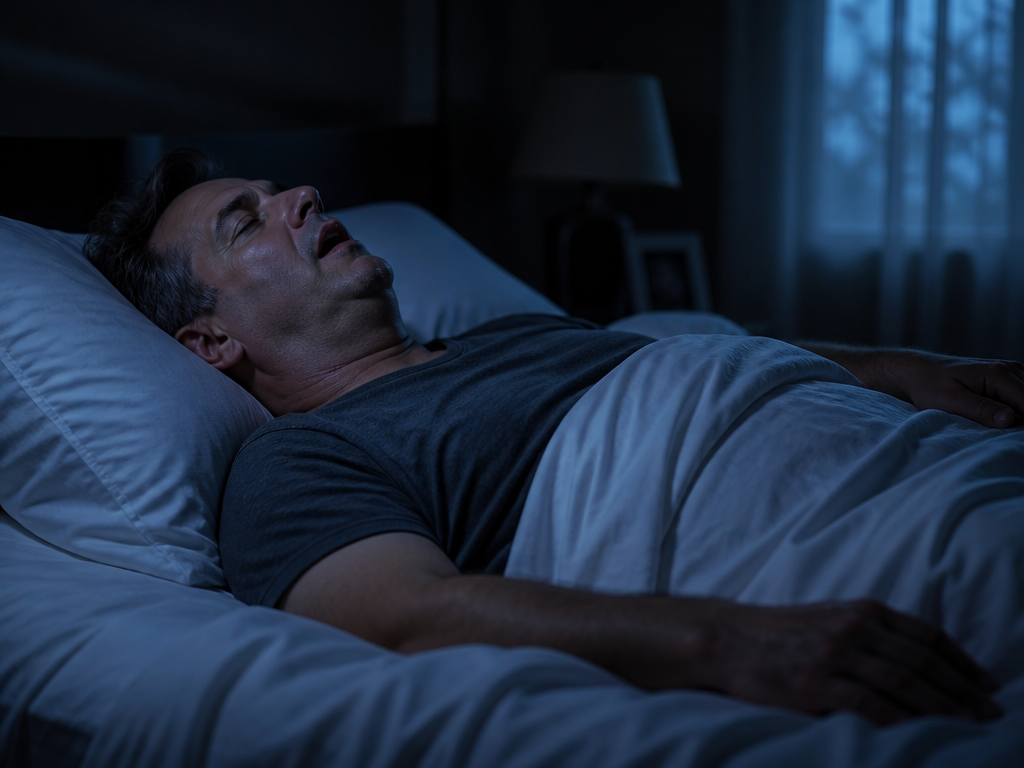
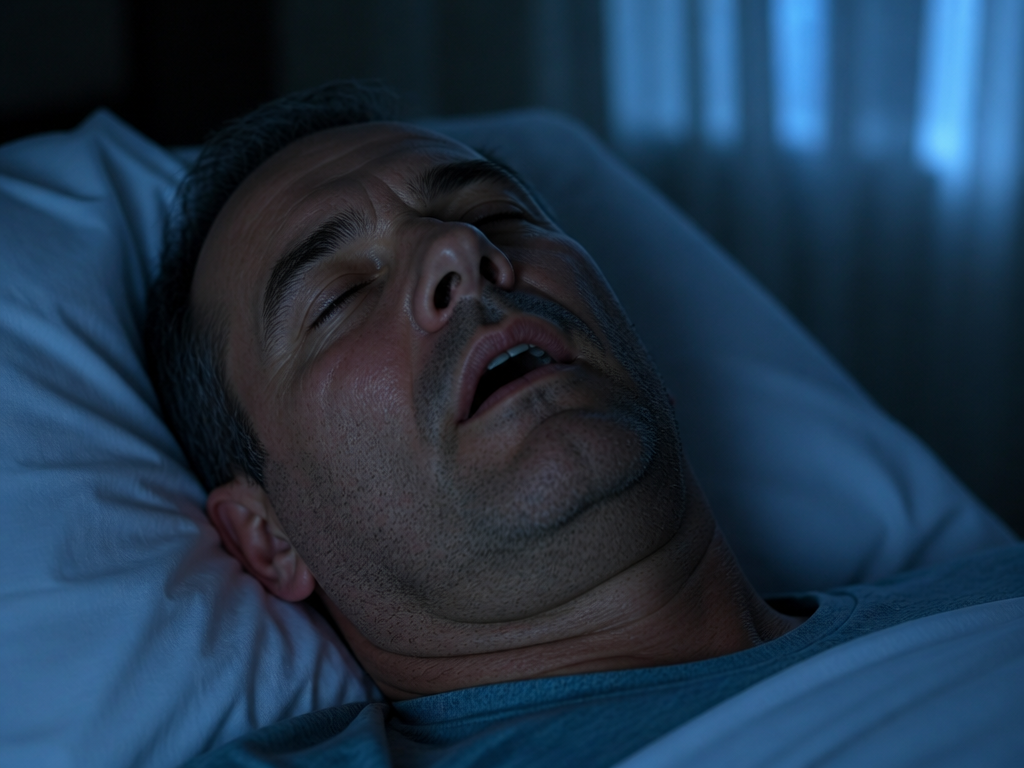
The most common myth is that loud snoring is the disease, and quiet sleep means you're safe. It isn't, and it doesn't. Snoring is the sound of a partially obstructed airway — turbulent air vibrating soft tissue. Apnea is the closure of that airway, with or without the soundtrack. Some of the most severe cases are nearly silent, because a fully blocked throat can't vibrate. The dangerous events are the pauses, not the rumble.
Station one: the airway
Air comes in through the nose and mouth and travels down the pharynx, a tube held open by muscle tone rather than bone. When you fall asleep, that muscle tone drops. In a vulnerable airway — narrow, crowded by a thick tongue base, low-hanging soft palate, or recessed jaw — the walls drift together. Partial collapse buzzes (a hypopnea). Full collapse seals shut (an apnea). The body keeps trying to breathe against a closed door.
This is where the snoring myth and the thinness myth both die. Snoring volume tracks how much the tissue vibrates, not how completely it closes. And the anatomy that does the closing is often inherited, not acquired. Craniofacial structure — the position of the lower jaw, the length of the soft palate — is a well-established risk factor independent of weight. Funny enough, the lean patient with a small, set-back jaw can have a tighter airway than a heavier patient with a roomy one.
What's not settled is exactly how much each factor contributes in any given person. Two people with identical neck circumferences can have wildly different airways. The honest statement is that we can list the risk factors confidently and predict the individual poorly.
Station two: the brain
Now the door is shut. Oxygen drops, carbon dioxide climbs, and the brainstem — sensing the chemistry going wrong — fires a brief arousal. You don't wake up in any way you'd remember. You surface just enough to snap muscle tone back, gulp a breath, and sink again. This can happen five times an hour, or eighty. The Apnea-Hypopnea Index (AHI) counts them: 5 to 15 is mild, 15 to 30 moderate, above 30 severe.
Here is the myth this station kills: "I sleep fine — I'm out the second my head hits the pillow, and I sleep eight hours." People with significant OSA often do fall asleep fast. That's not a sign of good sleep. It's a sign of sleep debt, because the architecture is being shredded from the inside.
Each arousal yanks you out of deep slow-wave sleep and out of REM before either can do its work. You can spend eight hours in bed and bank almost no consolidated deep sleep. The clock says you slept. The EEG says you barely did. "I don't wake up, so I'm fine" confuses not remembering with not happening. The arousals are designed to be forgettable — that's the whole point of the brainstem reflex.
Station three: the heart and the blood
Each obstructed event is a small physiological emergency. Oxygen falls. The sympathetic nervous system spikes. Blood pressure jumps with every gasp, sometimes by 30 mmHg or more, and the heart strains against the closed airway in a pattern that, repeated hundreds of times a night, doesn't stay benign.
This is where the most comforting myth — "it's just snoring, it's a nuisance, not a danger" — runs out of room. The Sleep Heart Health Study, a large prospective cohort running since the mid-1990s, has linked untreated OSA to higher rates of hypertension, atrial fibrillation, and stroke. The association is robust and dose-dependent: more events, more risk.
What deserves an honest caveat: cohort studies show association, and untreated apnea travels with obesity, age, and other heart risks that are hard to fully untangle. The randomized treatment trials — most notably SAVE (McEvoy et al., 2016, NEJM, over 2,700 patients) — did not show that CPAP prevented cardiovascular events across the whole group, partly because people used the machine only a few hours a night. So the cleanest read is this: the damage is real, the link is strong, and the proof that treatment reverses it is more complicated than the clinic poster suggests.
Station four: the morning
The bill arrives at breakfast. Fragmented sleep and intermittent oxygen drops produce daytime sleepiness, slowed reaction time, irritability, and memory that won't hold. The myth here is the inverse of the one upstairs: "I'm just tired because I'm busy." Sometimes you are. But sleepiness that survives a full night in bed, week after week, is a symptom, not a personality trait.
Children break the myth in their own direction. Pediatric OSA — often driven by enlarged tonsils and adenoids — frequently shows up not as sleepiness but as its opposite: hyperactivity, inattention, behavior that gets mislabeled as ADHD. A snoring child who's bouncing off the walls is not obviously a sleep case to most parents. That's exactly why it's missed.
Station five: the mask
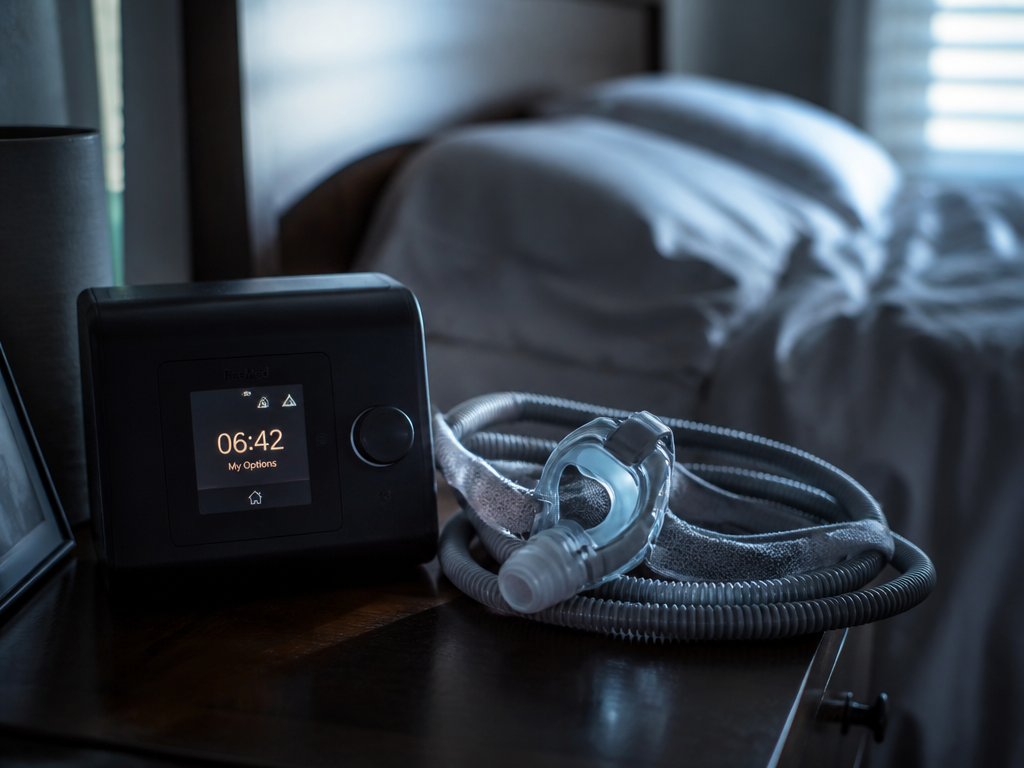
Which brings us to the most reputation-damaged piece of equipment in medicine. The myth: CPAP is unbearable, everyone hates it, nobody sticks with it. The reality is more honest and more hopeful. Adherence is a genuine problem — across studies, somewhere around a third to a half of patients struggle to use it consistently — but that number is mostly about fit, pressure settings, and follow-up, not about some universal intolerance. People who get the right mask and real support often do fine.
And CPAP isn't the only door. For mild-to-moderate cases, custom mandibular advancement devices — a dental appliance that holds the lower jaw forward and keeps the airway open — work for many people who can't tolerate a mask. Positional therapy, weight change, and, in select cases, surgery or hypoglossal nerve stimulation all have roles. The myth flattens a menu into a single dreaded option.
An honest rule of thumb
Tonight, ask one question instead of reaching for a scale: Do I feel rested after a full night, or just less tired? If a genuine eight hours leaves you foggy, sleepy at the wheel, or reaching for caffeine to function — and especially if someone has watched you stop breathing — get a sleep study. Not a quiz, a study. Home tests are now accurate enough for many people, and you don't need to be overweight, male, or a foghorn snorer to qualify.
The myths all promise the same thing: that silence means safety. The airway knows better.