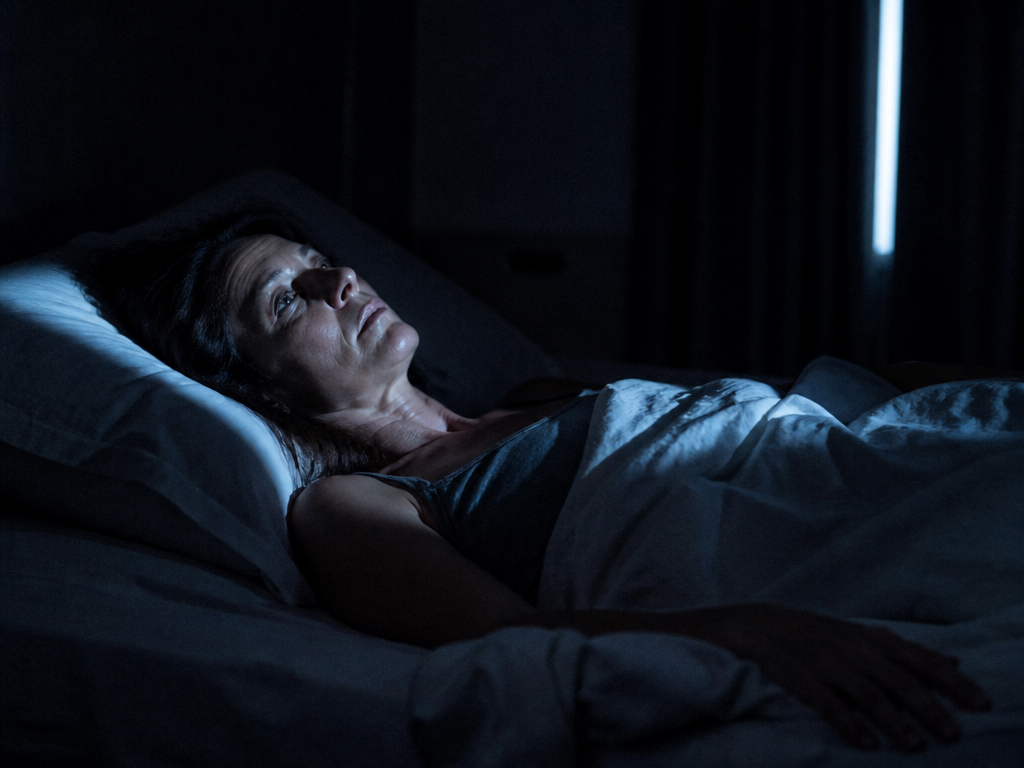
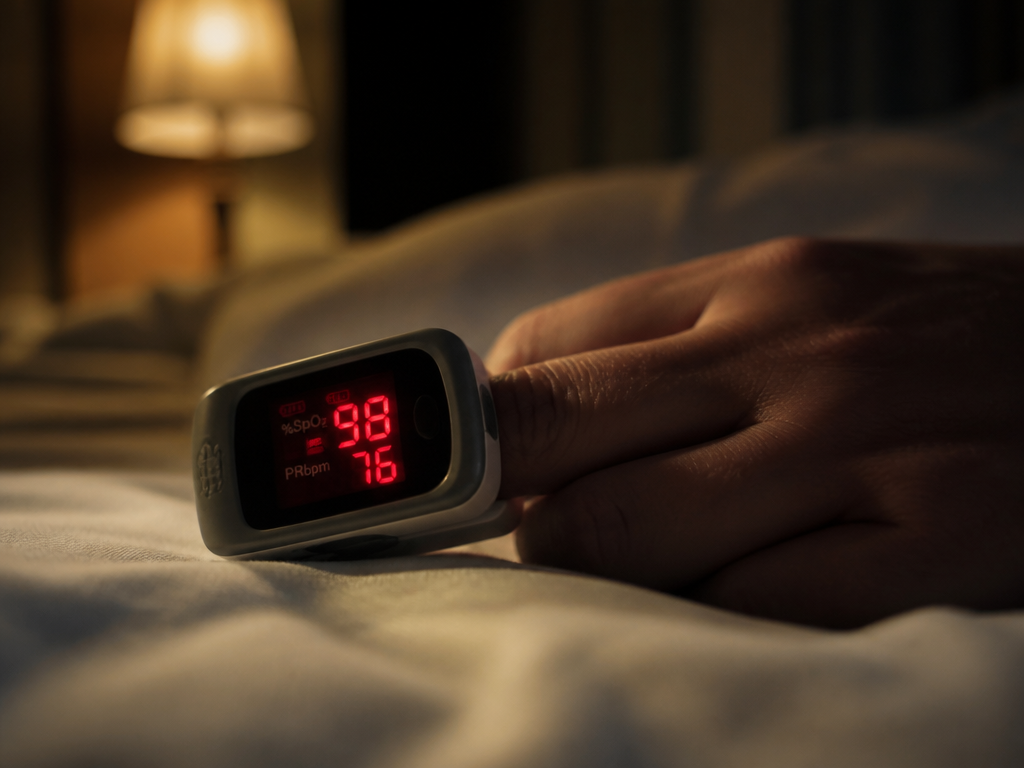
For a week last winter I clipped a pulse oximeter on my finger every morning before coffee and wrote the number on the back of an envelope. I'm a former smoker — eleven years quit, fourteen years on — and I'd read enough to know that the morning, before the day inflates you, is when a lung tells the truth. Most mornings the number sat at 97 or 98 percent. Fine. Then on the seventh morning, after a night I half-remembered as restless, it read 91, climbed to 94 by the time the kettle boiled, and I sat there with a cooling cup wondering what my lungs had been doing while I slept.
That envelope is why I went looking for the COPD basics I'd been avoiding. Chronic obstructive pulmonary disease is the third leading cause of death worldwide, and the unsettling part isn't the ranking — it's how quietly it arrives. So this is the honest version: what the disease is, what the overlap with sleep apnea actually means, and which numbers are worth trusting.
What "obstructive" actually refers to
COPD is not one disease but a stable name for a pattern: airflow that leaves the lungs too slowly and incompletely. The "obstruction" is mechanical and measurable. Two processes usually drive it, often together.
The first is chronic bronchitis — the airways themselves narrow and fill with mucus, inflamed by decades of irritation. The second is emphysema, in which the walls of the alveoli, the tiny air sacs where oxygen crosses into blood, break down. Healthy alveoli are elastic; they recoil and push air out. Emphysematous ones go slack, like a balloon stretched too many times, and air gets trapped behind them.
This is why doctors measure COPD with spirometry rather than a blood test or a feeling. You blow as hard and long as you can into a tube. The key ratio is FEV1/FVC: how much air you can force out in the first second versus how much you can force out total. Below 0.70, after a bronchodilator, is the standard diagnostic threshold. It's a flow problem, and flow is what the test catches.
Why it hides for so long
The lung has reserve. You can lose a surprising fraction of function before daily life complains, because at rest you're using a small slice of your capacity. Symptoms tend to surface when the damage is already substantial — a cough that lingers past every cold, breathlessness on stairs you used to take without thought, a wheeze, a tightness.
The result is a large population of people who have the disease and don't yet know. The frequently cited figure is that roughly half of COPD cases globally go undiagnosed, and in the United States the at-risk pool — current and former smokers — runs into the tens of millions. Treat the exact percentages as estimates that shift with screening methods. The direction is not in doubt: a great deal of COPD is walking around unnamed.
One breath, in order
It helps to follow a single breath through a damaged lung, because the trouble compounds at each step.
You inhale. Air moves down narrowed, inflamed airways — already more resistance than a healthy tube. It reaches alveoli whose walls have lost elasticity. Oxygen still crosses into the blood here, but across less surface area than you were born with, so each breath delivers a little less. Then you exhale, and this is where COPD declares itself: the slack air sacs don't recoil, the narrowed airways collapse under the pressure of pushing out, and air gets trapped. The next breath stacks on top of the last. Over a night of shallow, trapped-air breathing, carbon dioxide can rise and oxygen can drift down — which brings us to the morning number on my envelope.
Where COPD and sleep apnea collide
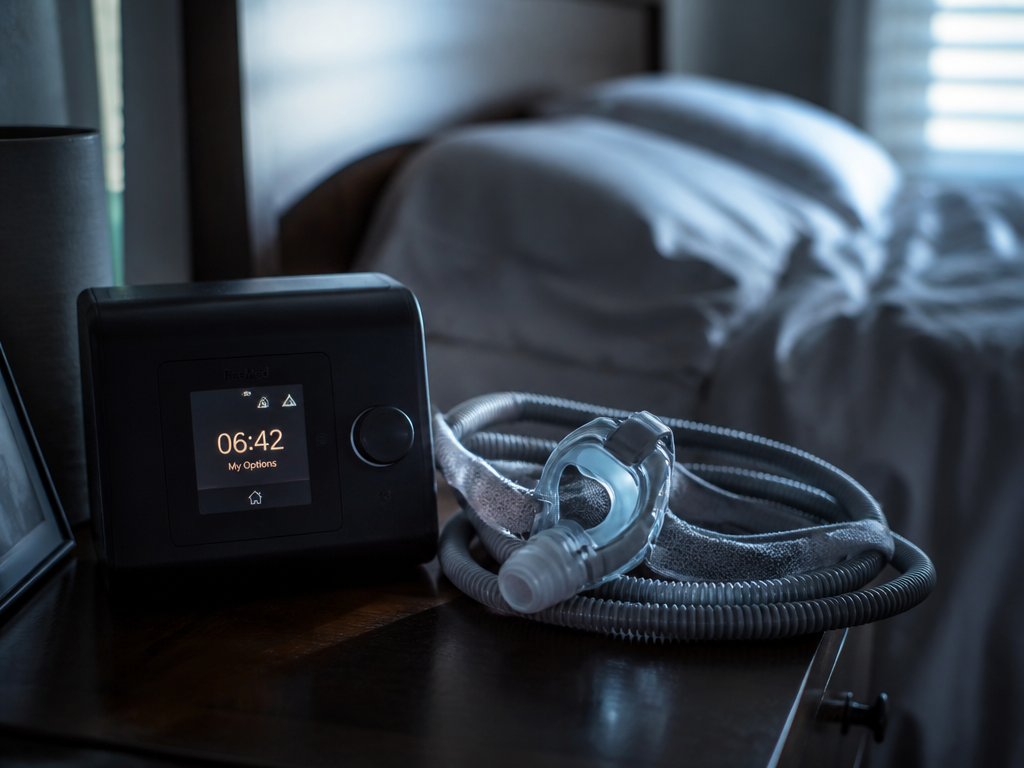
Obstructive sleep apnea is a different mechanism entirely: the upper airway — throat, soft palate — collapses during sleep and blocks airflow in repeated episodes, jolting you toward wakefulness and dropping your oxygen each time. COPD obstructs the lower airways all the time. When a person has both, clinicians call it overlap syndrome, a term introduced by David Flenley in 1985.
The combination is worse than the sum. A COPD lung already runs closer to the oxygen floor, especially during the long shallow breaths of deep sleep. Add the apnea's repeated airway closures on top, and the nighttime oxygen drops are steeper and last longer. Lecube and colleagues, and a body of work since, have linked overlap syndrome to more nighttime desaturation, higher pulmonary artery pressure, and worse outcomes than either condition alone. This is the part the morning oximeter hints at but can't diagnose: a number that's fine by 8 a.m. may have spent hours in the 80s at 3 a.m.
Can you have COPD and not know it?
Yes — and it's common. Because the lung holds reserve capacity, airflow can decline for years before breathlessness becomes obvious enough to mention to a doctor, and the early cough is easy to file under "smoker's cough" or "getting older." Many people first learn they have COPD only when an unrelated chest scan, a surgery workup, or a bad respiratory infection prompts a spirometry test. If you're over 35 with a smoking history and a cough that has outlasted every winter, the absence of dramatic symptoms is not reassurance. It's the normal way this disease behaves before it announces itself.
What's solid, and what's thinner than it sounds
Some of this is well-established. Smoking is the dominant risk factor; the GOLD (Global Initiative for Chronic Obstructive Lung Disease) reports have anchored the FEV1/FVC < 0.70 threshold for years. The genetic cause alpha-1 antitrypsin deficiency — a missing protein that normally protects lung tissue from its own enzymes — is real, accounts for a small percentage of cases, and explains COPD in younger people and never-smokers who otherwise wouldn't fit.
Other claims are plausible but thinner. The precise prevalence of overlap syndrome depends heavily on which population you sample and how you define each disease; estimates range widely. And the popular idea that home pulse oximetry can screen for lung disease is folk wisdom dressed as data — a fingertip reading is a snapshot, sensitive to cold hands, nail polish, and movement, and it tells you nothing about airflow, which is the thing spirometry measures and COPD is defined by.
An honest rule of thumb
If you are 35 or older and have smoked — currently or in the past — and you have one persistent symptom, ask for spirometry. Not a chest X-ray, not an oximeter, not reassurance. The specific test that measures the specific problem.
Here's how to read the common nighttime signals without overreacting to any one of them:
| What you notice | What it might mean | Reasonable next step |
|---|---|---|
| Morning oxygen consistently below 92% | Possible overnight desaturation | Mention the readings to a doctor; ask about overnight oximetry |
| Loud snoring + breathing pauses + COPD | Possible overlap syndrome | Ask specifically about a sleep study, not just spirometry |
| Cough lasting past every cold | Possible chronic bronchitis | Request spirometry |
| Breathless on stairs you used to manage | Possible airflow limitation | Request spirometry |
One reading, one bad night, one number on an envelope proves nothing on its own.1 A pattern is what matters, and a pattern is what you bring to the appointment.
Back to the envelope
I brought the envelope to a pulmonologist, mostly embarrassed. She glanced at it, set it aside, and had me blow into the spirometer three times. My FEV1/FVC came back at 0.78 — above the threshold, which is to say: not COPD, not yet, with the asterisk that fourteen years of smoking leaves a lung you watch rather than forget. She told me to repeat the test in two years, sooner if the cough returned.
What stayed with me wasn't the result. It was how close I'd come to never doing the test, on the strength of feeling basically fine.
This week, do the modest version of what I did: pick a recurring symptom you've been explaining away — the morning cough, the stairs, the snoring your partner mentions — and write down the date you first noticed it. That single line is the most useful thing you can hand a doctor, because COPD is diagnosed by patterns over time, and the timeline is the one piece of evidence only you can provide.
-
My own 91% almost certainly reflected a cold finger and a poor night's sleep more than my lungs. The point of the week wasn't the diagnosis — it was that I finally booked the test instead of guessing. ↩