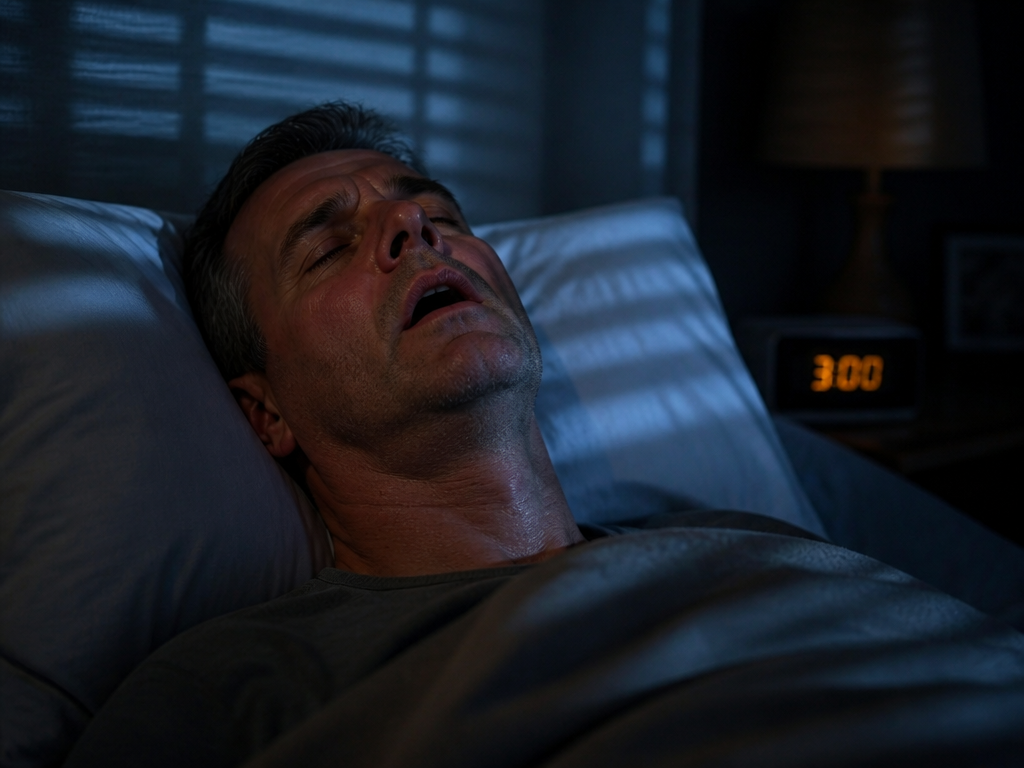
A cough you've had for years stops being a symptom and starts being a personality trait. The morning hack, the throat-clear before you talk, the way you avoid stairs and call it getting older. If you smoked — or still do — you've probably filed all of this under "smoker's cough" and moved on. That filing error is the single most common entry point into COPD basics, because the disease most people are trying not to think about announces itself this quietly, and often at night, before it ever shows up in daylight.
Chronic obstructive pulmonary disease is the umbrella name for emphysema and chronic bronchitis. It's common, it's underdiagnosed, and in current and former smokers over 35 it is the most likely explanation for a cough that won't quit. Let's take the myth seriously first, because it's not stupid. It's just wrong.
The myth a reasonable person actually believes
The myth goes: a smoker's cough is the price of smoking, it's annoying but stable, and if it were serious you'd be short of breath, not just coughing. There's a grain of logic in it. Cigarette smoke irritates the airway lining directly, so a productive morning cough really can be "just" irritation for a while. People hear "lung disease" and picture an oxygen tank, not a guy clearing his throat at his desk.
Here's where it breaks. COPD is defined by airflow that doesn't fully reverse — the obstruction is built into the airway, not borrowed from a cold. By the time breathlessness on exertion is obvious, lung function has usually been declining for years. The cough isn't the disease running in place. It's the disease's earliest, most ignorable shift.
What the research actually measured
Is a chronic smoker's cough really an early sign of COPD? Often, yes. Chronic cough and sputum in a current or former smoker is the clinical picture that should prompt spirometry — a breathing test measuring how much air you exhale in one second (FEV1) against your total exhaled volume (FVC). The standard diagnostic threshold, per the GOLD (Global Initiative for Chronic Obstructive Lung Disease) reports, is a post-bronchodilator FEV1/FVC ratio below 0.70. You can meet that threshold while still feeling, day to day, basically fine.
The scale is the part that surprises people. COPD ranks among the top global causes of death, and large surveillance work — the CDC's BRFSS data summarized by Wheaton and colleagues (2019, MMWR) — consistently finds that a substantial share of adults with airflow obstruction on testing carry no diagnosis. The reason is not mysterious. Symptoms are slow, smokers expect to cough, and nobody orders spirometry for a complaint everyone has normalized.
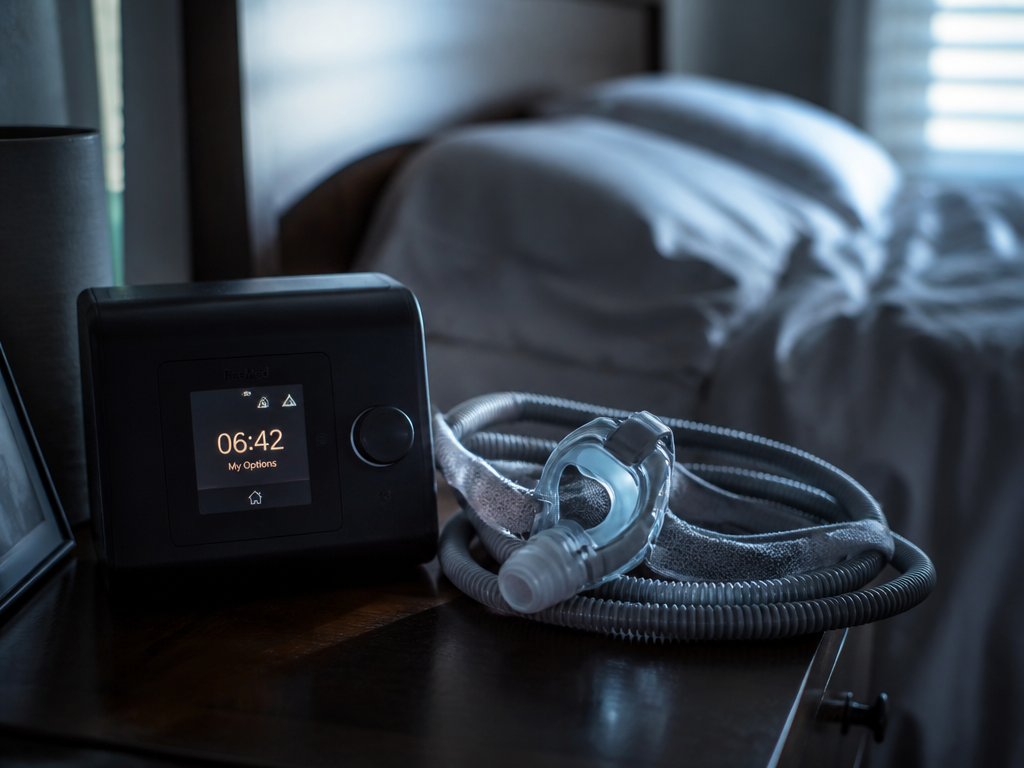
The sleep connection is where this magazine earns its keep. The overlap of COPD and obstructive sleep apnea — first named "overlap syndrome" by David Flenley in 1985 — is more than two conditions sharing a patient. Marin et al. (2010, American Journal of Respiratory and Critical Care Medicine) followed COPD patients with and without OSA and found that those with untreated overlap had higher mortality and more hospitalizations than those with COPD alone, and that treating the apnea with CPAP narrowed that gap. The sample was large and observational, so it shows association strongly and causation suggestively. That distinction matters, and most summaries blur it.
What is actually happening in the airway, in order
Walk it through the way the body does it.
First, the irritant — smoke, mostly — lands on the airway lining. The lining responds with inflammation that doesn't switch off. Goblet cells multiply and produce more mucus; that's the chronic bronchitis half, and that's your morning cough sourced directly.
Second, the small airways narrow and the walls thicken. The tiny cilia that should sweep mucus upward get damaged, so secretions pool. Air can still get in fairly well, because inhaling pulls the airways open.
Third — and this is the mechanical heart of it — exhaling becomes the problem. In emphysema the elastic walls of the air sacs break down, so the airways lose the tension that holds them open during a breath out. Air gets trapped. The lungs hyperinflate. You are breathing at the top of your range, which is exhausting, which is why exertion gets hard before rest does.
Fourth, sleep removes your defenses. Lying flat, breathing slows and shallows, especially in REM, when the muscles between your ribs go quiet and the diaphragm does most of the work. In a lung that's already trapping air, oxygen levels can sag through the night — nocturnal hypoxemia — without waking you enough to notice. You register it as unrefreshing sleep, a morning headache, a fog that coffee doesn't fully clear.
Now stack OSA on top. Apnea collapses the upper airway repeatedly; COPD has already compromised the lower airway and gas exchange. The two don't add — they multiply. Oxygen dips that either condition alone might tolerate become steeper and longer together. This is the mechanism behind Flenley's overlap and behind Marin's mortality numbers.
What's settled, what's thin
Well-established: smoking is the dominant cause of COPD; spirometry diagnoses it; airflow limitation is largely irreversible but its progression slows dramatically when you stop smoking. Plausible and supported but not airtight: that treating coexisting OSA in overlap patients improves survival — the data is observational, and a clean randomized trial is ethically hard to run. Folk wisdom: that a smoker's cough is harmless. That one has no leg to stand on.
| Sign | Easy to dismiss as | Worth a spirometry referral when |
|---|---|---|
| Morning productive cough | "Just a smoker's cough" | It's lasted 3+ months, two years running |
| Breathless on stairs | "Getting older / out of shape" | It's worse than peers your age |
| Waking unrefreshed, AM headache | "Bad sleep" | It persists despite enough hours in bed |
An honest rule of thumb for tonight: if you're a current or former smoker over 35 and you wake up groggy with a cough that's been around for years, write down two things before bed — how rested you feel in the morning, and whether your partner has mentioned snoring or pauses in your breathing. Bring that note, and the word spirometry, to your next appointment. You are not asking for reassurance. You are asking for a number.
The reason to act isn't fear. It's leverage: COPD caught early is COPD whose slope you can change, and the overlap with apnea is treatable in a way the lung damage alone is not.
I'll tell you what this logic looks like lived out, not as advice. My father coughed every morning for thirty years and called it nothing. After I started writing about sleep, I stopped letting the people I love describe being tired as a temperament — I ask, now, whether they wake up rested, and I write the answer down, because the body keeps better notes than the memory does.1
-
COPD and OSA can each be diagnosed and managed; this piece describes mechanisms and evidence, not a treatment plan for any individual. Spirometry and a sleep evaluation are conversations to have with a clinician, not a magazine. ↩