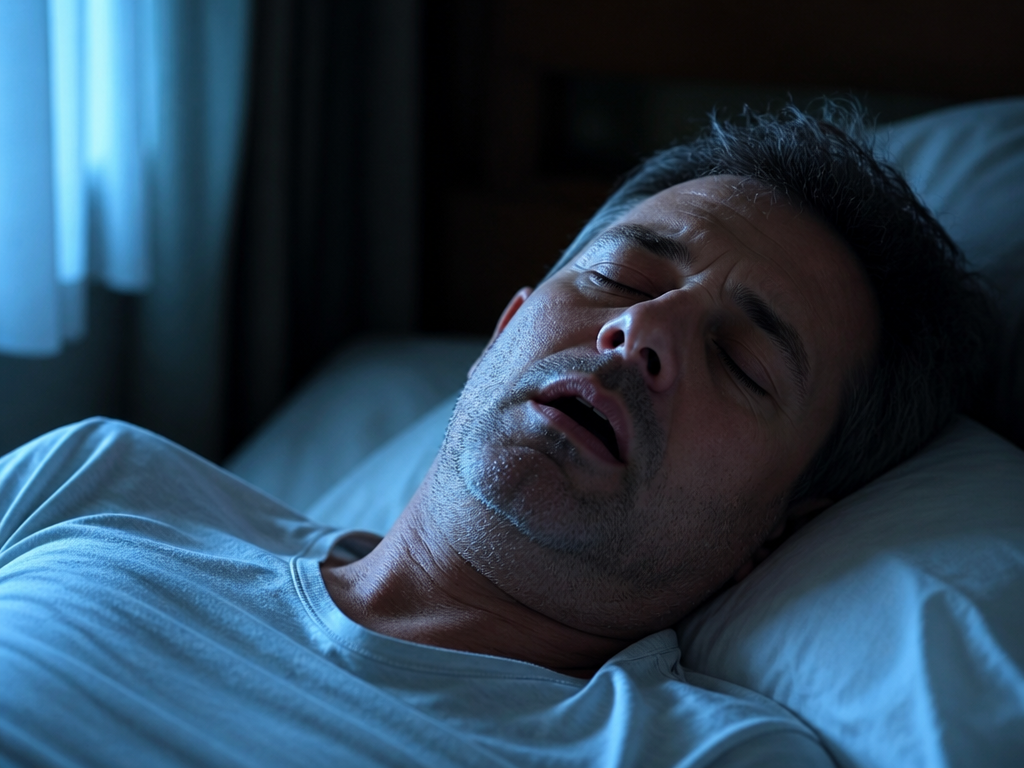
The word is Greek. A-pnoia: without breath. When a sleep physician says sleep apnea, they are naming something almost comically literal — you stop breathing, briefly, while you sleep, and then you start again, and you do this over and over without waking enough to remember it. The diagnosis is, at bottom, an act of counting. How many times per hour did the air stop? That number decides nearly everything that follows.
Most people arrive at the term sideways. A partner complains about the snoring. A doctor mentions it during a checkup. A wearable flags "breathing disturbances" with a confidence it has not earned. The word gets used a lot and explained almost never, so let's do the unglamorous thing and define it properly — because the definition is more precise, and more interesting, than the folklore.
What most people think it means
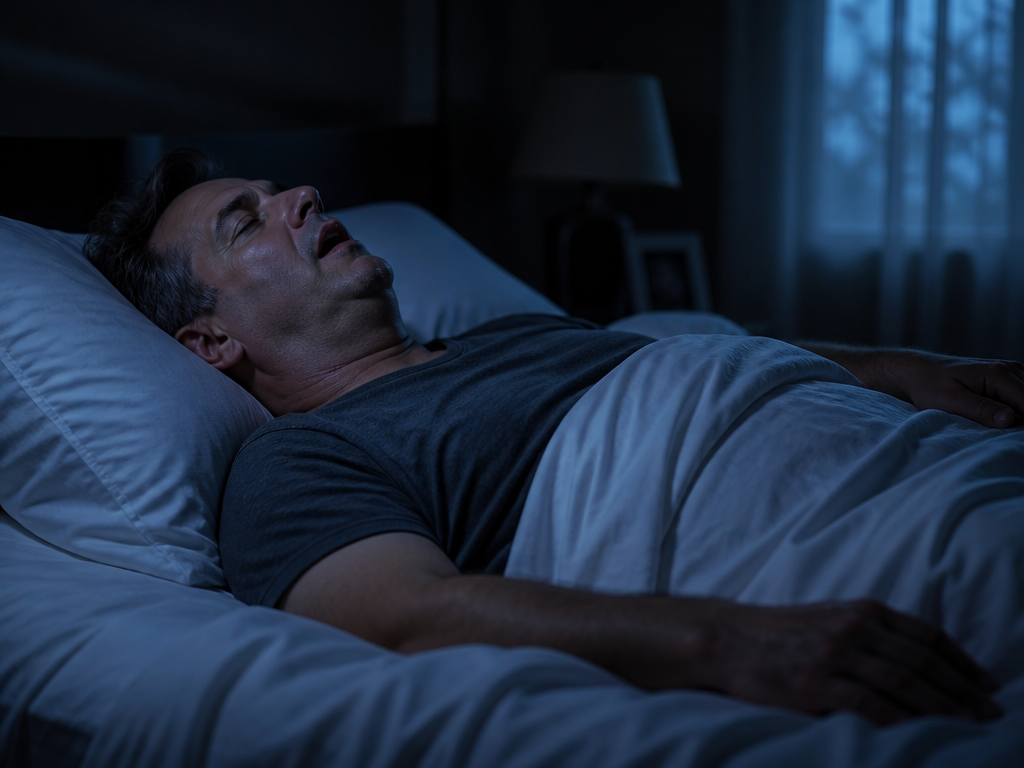
The common picture: loud snoring plus daytime exhaustion equals apnea. That's not wrong, but it's a symptom collage, not a definition. Snoring is the sound of turbulent air squeezing past a partly collapsed airway. It correlates with the disorder but doesn't define it — plenty of heroic snorers have normal breathing on a sleep study, and some people with significant apnea barely make a sound.
The other common assumption is that apnea is one thing. It isn't. It's the headline term for a small family of conditions that share a symptom — interrupted breathing in sleep — but not a cause. Treating them as identical is like treating "fever" as a diagnosis. It tells you something is happening. It doesn't tell you what.
And the fatigue everyone associates with it? Real, but secondary. The tiredness comes from a mechanism we'll get to, not from the breathing pauses directly.
What the evidence and the definitions actually say
Start with the unit of measurement, because the whole field is built on it.
An apnea is a near-total stop in airflow — by the standard scoring rules from the American Academy of Sleep Medicine, a drop of at least 90 percent for at least 10 seconds. A hypopnea is the softer cousin: a partial reduction in airflow, usually 30 percent or more for 10-plus seconds, paired with either a dip in blood oxygen or a brief arousal from sleep. A sleep study counts both, adds them up, and divides by hours asleep. That gives you the Apnea-Hypopnea Index, the AHI — events per hour. The AHI is the number that gets you the diagnosis and the severity grade.
So "sleep apnea" is really shorthand for a clinically meaningful AHI plus symptoms or consequences. Now, the subtypes — because the same AHI can come from two completely different machines breaking.
Obstructive: the plumbing fails
This is the common one, the one most people mean. Obstructive sleep apnea (OSA) is a mechanical problem, and it helps to watch it happen in order.
You fall asleep. The muscles of your throat and tongue relax, as muscles do. In a vulnerable airway — narrowed by anatomy, weight, or position — that relaxation lets the soft tissue at the back of the throat sag inward. Air still tries to move; your diaphragm is still pumping. But the passage has collapsed, so airflow drops or stops. Oxygen in the blood begins to fall. Carbon dioxide rises. Your brainstem, monitoring these gases, registers a problem and triggers a brief micro-arousal — a flicker of wakefulness, usually too short to remember. Muscle tone snaps back, the airway reopens, often with a gasp or snort, and you breathe. Then you drift down again, and the cycle repeats. In severe cases this happens dozens of times an hour, all night.
That's the source of the exhaustion. Not the pauses themselves but the constant micro-fragmentation of sleep architecture — you never get a long, uninterrupted run of deep or REM sleep. Your brain spends the night being yanked back to the surface.
Central: the signal fails
Central sleep apnea (CSA) looks similar on a sensor — airflow stops — but the cause is upstream. Here the airway is open. The problem is that the brain briefly fails to send the signal to breathe. The diaphragm doesn't move because it wasn't told to. CSA is less common, often tied to heart failure, stroke, certain medications, or high altitude, and it behaves differently enough that the treatments diverge sharply from OSA's.
Mixed: both
Mixed, or complex, apnea is exactly what it sounds like: an event that begins as a central pause and finishes as an obstructive one, or a patient who shows both patterns. The taxonomy is clean on paper and messier in real lungs.
What I'd actually pay attention to
If you're holding a sleep-study report, the AHI is the line to find first. The conventional adult thresholds:
| AHI (events/hour) | Severity |
|---|---|
| Under 5 | Normal |
| 5 to 14 | Mild |
| 15 to 29 | Moderate |
| 30 or more | Severe |
A caveat worth more than its size: these cutoffs are conventions, not laws of nature. An AHI of 14 with crushing daytime sleepiness may matter more clinically than an AHI of 16 in someone who feels fine. The number is a starting point for a conversation, not a verdict.
An honest rule of thumb for tonight: if you've been told you stop breathing in your sleep — or you wake up gasping, or a partner has watched it happen — the question that resolves it isn't a gadget or a quiz. It's an attended sleep study or a validated home test that produces an actual AHI. Everything before that number is a hypothesis.
One more distinction worth holding onto: obstructive means the airway closes, central means the brain goes quiet. Same silence, different reason, different fix.
What this didn't answer
Plenty, deliberately. This piece defined the thing; it didn't tell you what causes a vulnerable airway, who should be tested, what CPAP actually does, or whether the mouthpiece ads are worth your money. It didn't touch the growing argument that the AHI is a crude metric — that where and how long your oxygen drops may predict long-term risk better than a simple events-per-hour count.
Those are the next doors. If you have a number, the useful next read is on severity and treatment matching. If you don't yet, the next step is the test that produces one. The definition was never the hard part — but you can't ask the right questions until you know exactly what word you're holding.