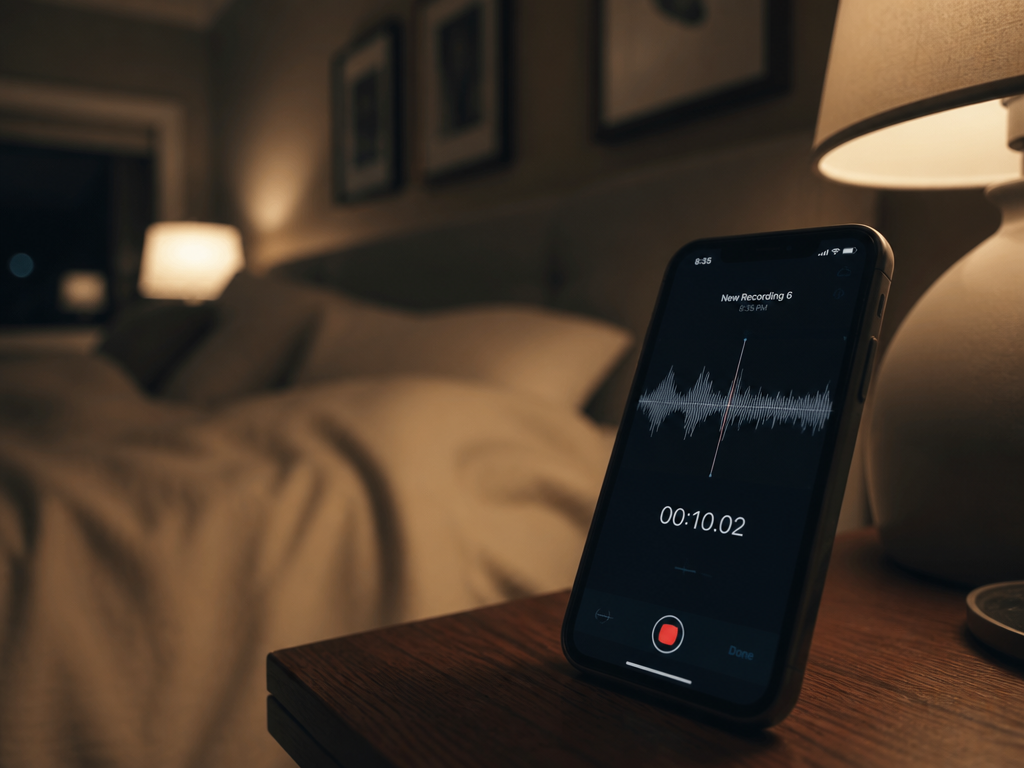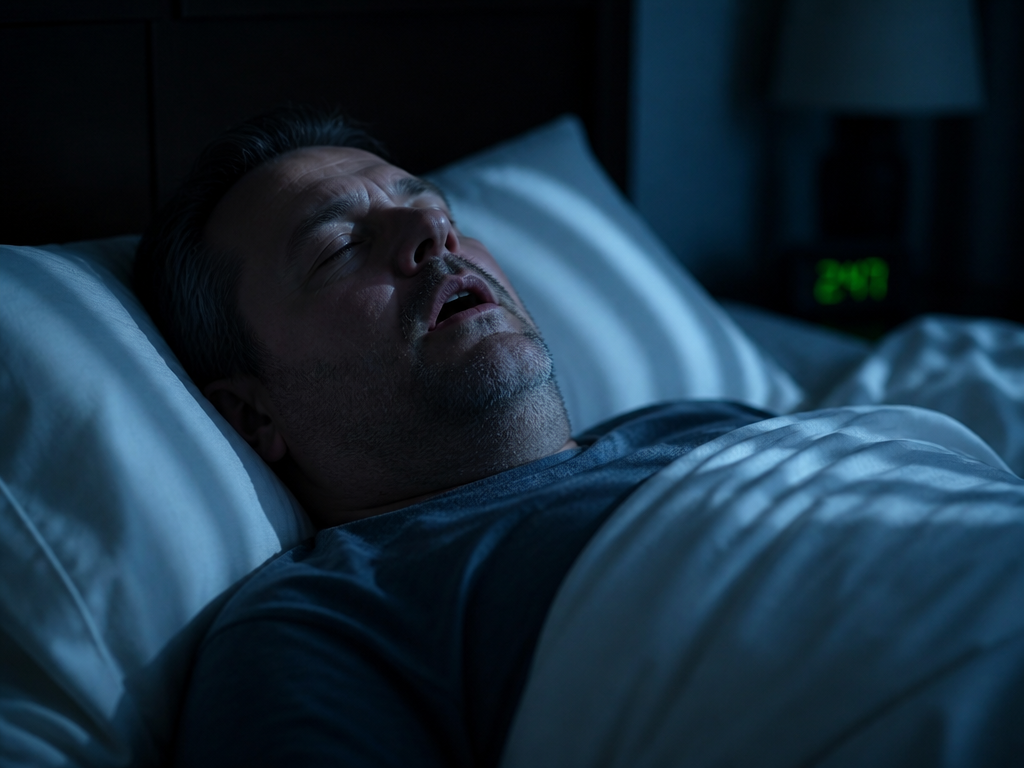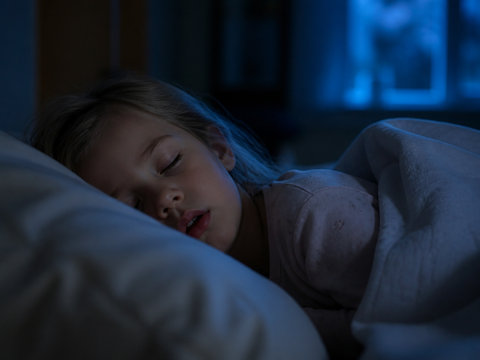
Here is the short version, stated up front so a tired parent can stop reading and go to bed: most childhood snoring is harmless, pediatric sleep apnea is real but uncommon, and the single most useful thing you can do before a doctor's appointment costs nothing — record your child breathing on your phone for two weeks. I did exactly that, and what I learned reshaped what I thought "loud sleep" meant.
The epidemiology is worth keeping in your pocket as a reference point. Roughly 10% of children snore on a regular basis; the American Academy of Sleep Medicine and the National Sleep Foundation put obstructive sleep apnea in the range of 1–4% of children. In other words, for every twenty kids snoring through a winter cold, one or two have a breathing problem worth treating. That ratio is the whole story. It is why panic is rarely the right first move, and why ignoring a real obstruction is also a mistake.
I'm not a clinician. I'm a parent who spent fourteen nights with a phone propped on a bookshelf and a free audio app running, because my four-year-old had started snoring in a way that made me stand in the hallway and listen. What follows is organized the way the air actually travels — in, through, and out — because the symptoms make more sense when you follow the breath.
First: the air goes in (the nose, and what's blocking it)
A breath starts at the nostrils, and that's where most pediatric obstruction starts too. The dominant cause of sleep-disordered breathing in young children is not weight — it's enlarged tonsils and adenoids, lymphatic tissue that peaks in size between roughly ages three and six, exactly when parents first notice snoring.
On the recordings, the inhale was the tell. A clear breath is quiet on the way in. My son's breaths had a low rasp on the inhale, the sound of air squeezing past something. During his worst night — the back half of a cold — he breathed almost entirely through his mouth, and you could hear it: a dry, open-mouth pull instead of the soft nasal sound of his good nights.
This is the part worth checking yourself in daylight. Ask the child to close their mouth and breathe through their nose for ten seconds. Persistent mouth-breathing while awake, chronic congestion unrelated to a cold, and a nasal voice all point upstream to the same crowded airway.
Next: the airway narrows, and the breath stalls
Here is the mechanism that separates a snorer from a child with apnea. During the deepest stages of sleep, muscle tone drops everywhere, including the muscles holding the throat open. In a typical child, the airway stays patent. In a child with significant obstruction, the soft tissue collapses inward on the inhale. Snoring is the vibration of that narrowed passage. Apnea is when it closes enough to stop airflow.
What I was listening for, after reading the AASM's parent materials, was not the snore itself but the pause after it. The pattern that matters goes: snore, snore, snore — silence — gasp or snort, then a return to breathing. That gasp is an arousal, the brain briefly waking the body to reopen the airway. A child can do this dozens of times an hour without ever fully waking, and remember nothing.
I caught two of these on the recordings. Both were during the cold week. Both were short — maybe five to eight seconds of silence — and both ended in a sharp inhale. During his three healthy weeks since, there have been none. That distinction, illness-linked versus persistent, turned out to be the most important thing the recording gave me.
Other things you may notice at this stage of the night:

- Sleeping with the neck hyperextended or chin tilted up — the body's instinctive attempt to straighten the airway
- Restlessness, frequent position changes, sweating
- Bedwetting that returns after a child was reliably dry
- Pauses in breathing you can see in the chest, not just hear
Last: the breath's debt comes due in the daytime
Fragmented sleep doesn't announce itself the next morning as sleepiness — not in kids. This is the counterintuitive part the NHLBI emphasizes and the part I'd have missed entirely. A sleep-deprived adult yawns. A sleep-deprived child often revs up: irritability, hyperactivity, trouble with attention. Pediatric sleep-disordered breathing has been mistaken for ADHD, and untreated, chronic cases can affect growth and learning.
I want to be honest about the limits of my fourteen nights here. I can record breathing. I cannot measure blood oxygen, sleep architecture, or the number of arousals per hour — the things a real sleep study captures. My sample is one child, one cold, and a parent who reads too much. A recording can tell you whether to ask. It cannot tell you the answer.
Snoring vs. UARS vs. obstructive sleep apnea
| Criterion | Primary snoring | UARS | Obstructive sleep apnea |
|---|---|---|---|
| Audible pauses + gasps | No | Rare | Yes, repeated |
| Daytime behavior changes | No | Sometimes | Often |
| Persists when well | May come and go | Yes | Yes |
| Needs a sleep study | Usually no | Often | Yes |
UARS — upper airway resistance syndrome — is the murky middle: the airway works harder, sleep is disrupted, but the textbook apneas may not show. It's why "no full pauses" doesn't automatically mean "nothing wrong," and why behavior matters as much as sound.
Who should make the call — and who can wait
This is the line worth screenshotting: if your child snores loudly and regularly even when perfectly healthy, and shows one or more daytime signs — behavior, attention, growth, or returned bedwetting — schedule a visit with your pediatrician. Two persistent signals, not one occasional one.
You probably don't need to worry yet if: the snoring tracks with colds and clears when they do, your child wakes rested, and there are no audible pauses. Soft, occasional, illness-linked snoring is the most ordinary sound in a child's bedroom.
You should call sooner if: you witness repeated breathing pauses, see the chest straining without air moving, or notice blue-tinged lips. Those are not watch-and-wait situations.
On treatment, the evidence is genuinely encouraging without being a guarantee. The CHAT trial — a well-run study of children with diagnosed OSA — found that removing the tonsils and adenoids improved behavior, symptoms, and quality of life compared with watchful waiting. The honest caveat the researchers themselves noted: those results came from children with mild-to-moderate disease, and shouldn't be stretched to cover the most severe cases, who need individualized care.
What to try this week
Set your phone to record audio overnight for the next three to four nights — a free voice-memo app on the dresser is enough. Don't watch it live; you'll only lose sleep. In the morning, scrub through and listen for one thing: silence that ends in a gasp. Note whether your child is currently well or fighting a cold, because that single fact changes how to read everything.
If three healthy nights come back quiet and even, you have your reassurance. If you hear repeated pauses, bring the recording — and your notes — to your pediatrician. You'll have done the cheapest, most useful part of the workup before you ever sit down.
This is one parent's experience and general information, not medical advice. A diagnosis of any sleep disorder requires evaluation by a qualified clinician.