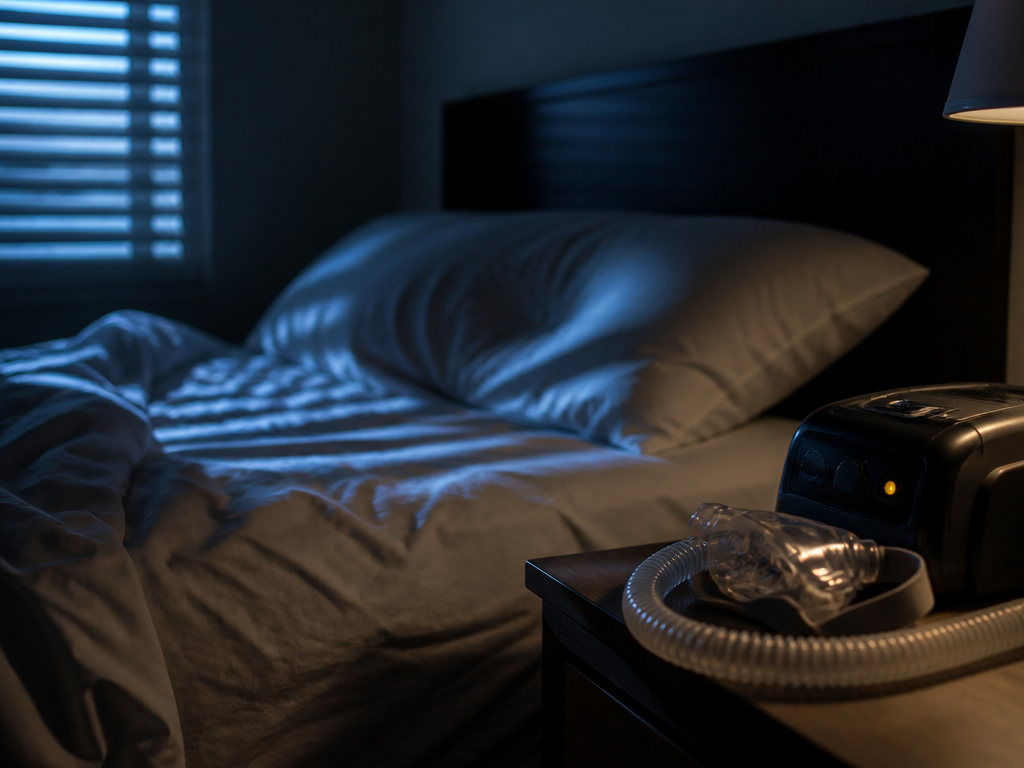
The number most Canadians meet first is four.
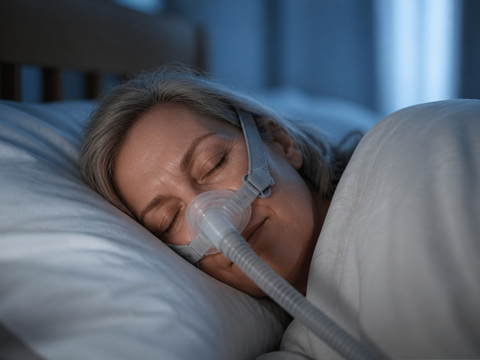
Four hours a night, on seventy percent of nights. That's the adherence threshold American insurers set decades ago, and Canadian clinics inherited it the way you inherit a relative's furniture — it was there, so it stayed. It describes billing, not breathing. But it does mark a real cliff: people who clear it in the first month tend to keep going for years, and people who don't tend to stop. Most of what decides which group you land in comes down to CPAP masks and fitting — whether a piece of silicone can hold a seal against a moving face for seven hours while you roll over, open your mouth, and dream.
The quitting data is older and blunter than you'd expect. Kribbs et al. (1993), American Review of Respiratory Disease, put covert monitors on 35 patients who believed they were only being asked about their experience. Those patients used the machine on 66% of nights and reached four hours on 46% — well below what they reported. Weaver and Grunstein's 2008 review in Proceedings of the American Thoracic Society put nonadherence somewhere between 29% and 83%, a range so wide it mostly tells you the field measures this badly. What stays consistent across surveys is the complaint list: leak, a sore bridge of the nose, dry mouth, claustrophobia. Every one of those is an interface problem, not a machine problem.
So follow the air. It enters in a specific order, and it fails in a specific order.
Follow the air
First: the blower and the hose
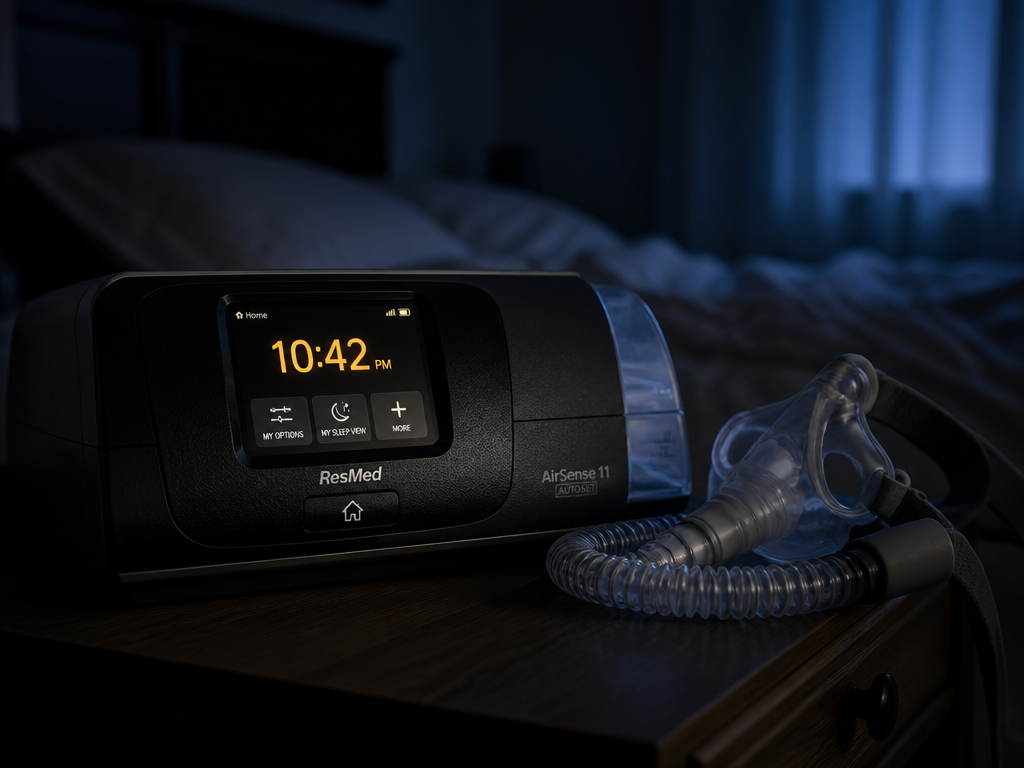
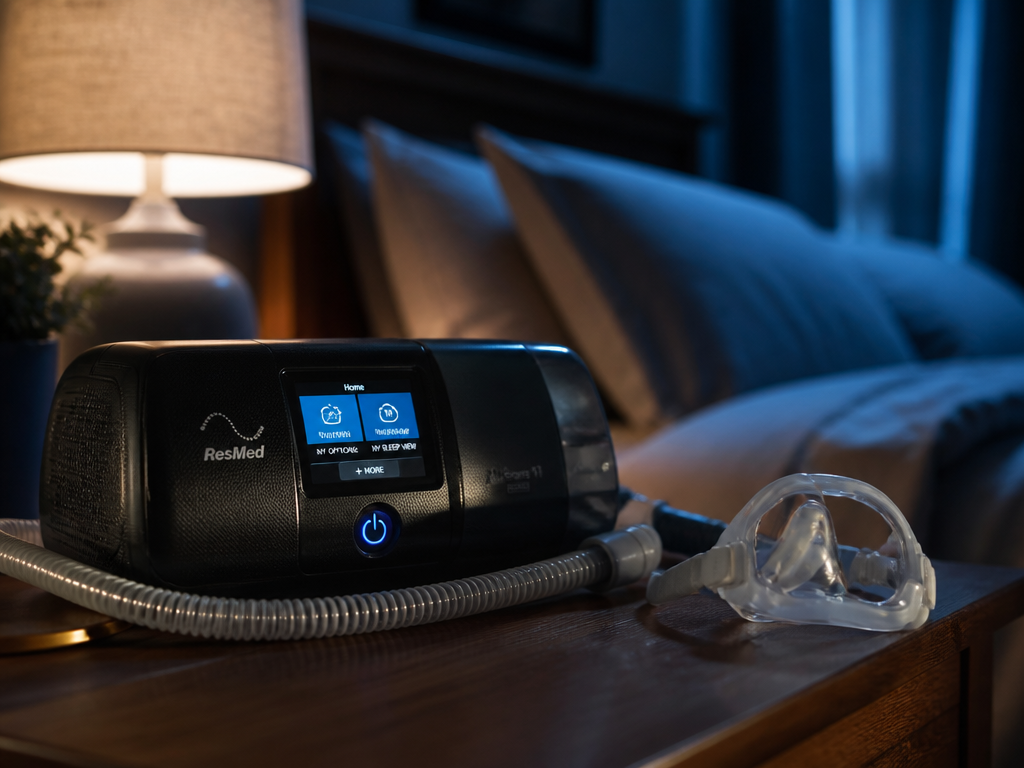
The machine pulls ordinary room air through a filter. No oxygen, no medication, nothing added but pressure — typically somewhere between 4 and 20 cm H₂O, which is roughly half a percent above the atmosphere already sitting on your chest. That tiny margin is the whole treatment. CPAP is not a ventilator; it doesn't push breaths into you. It holds a column of slightly pressurized air in your upper airway so the airway can't collapse around it. A pneumatic splint, essentially.
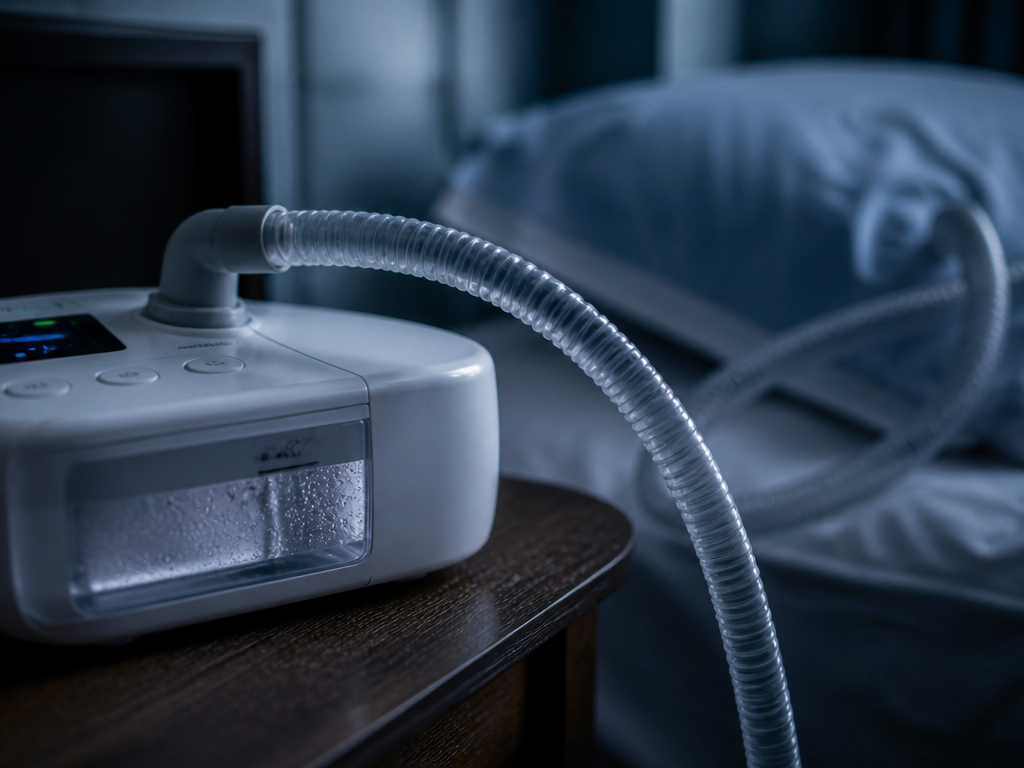
Before that air reaches you it usually crosses a humidifier and then a hose. In a Canadian bedroom in February, that hose is the cold part of the system, and warm saturated air condensing against cold plastic produces the gurgle known as rainout. People blame the mask. It's the tube. Heated tubing or a lower humidifier setting fixes it, and it's worth ruling out before you spend $200 on a new interface.
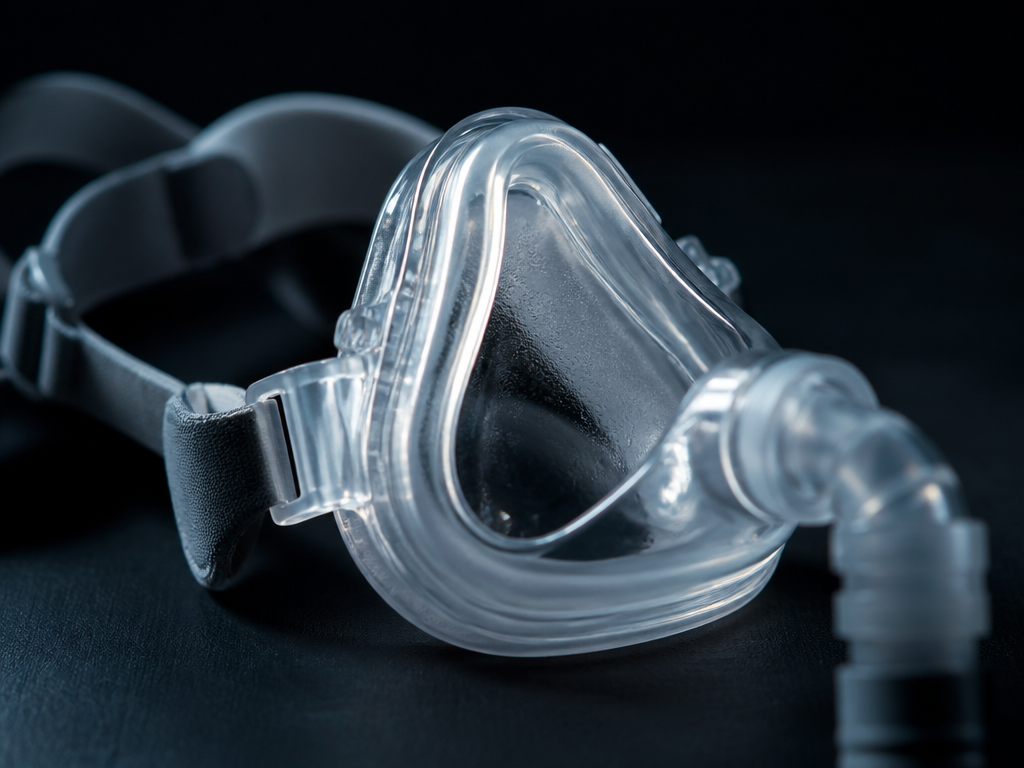
Then: the cushion
Here is the part almost everyone gets backwards. A modern silicone cushion is designed to be inflated by the pressure inside it — the thin outer membrane flares against your skin as the machine spins up. That means the seal comes from the air, not from the straps.
Haul the headgear down tight and you compress the membrane against the frame so it can't flare. The mask leaks. You tighten it further. It leaks more, and now it also leaves a groove across your nasal bridge that will still be there at lunch. The correct move on a leaking mask, most of the time, is to loosen it and let the pressure do its job.
Skin oil is the other quiet variable. Silicone loses grip against a film of sebum, which is why a cushion that sealed at 11 p.m. leaks at 2 a.m., and why washing your face before bed and rinsing the cushion daily buys you more comfort than most accessories will. Cushions themselves are consumables — most manufacturers suggest replacing them every one to three months, and a cushion that has gone slightly tacky and stiff will never seal again no matter how you adjust it.
Then: the nose
Nasal resistance is not a constant. Turbinates swell when you lie down, swell more on the side you're lying on, and cycle from one nostril to the other every few hours anyway. Add a cold, dry Prairie winter and the nose you fitted a mask to in a clinic at 2 p.m. is not the nose you're wearing at 3 a.m.
When nasal resistance rises, pressurized air takes the escape route: in through the nose, down the pharynx, out through the lips. This is mouth leak, and it's nastier than it sounds, because that flow is now unidirectional. Ordinary breathing rehumidifies the nasal mucosa on exhale; mouth leak never lets it. The mucosa dries, dry mucosa swells, swelling raises nasal resistance, and more air escapes. Bachour and Maasilta (2004), Chest, documented this pattern in nasal-CPAP users and found it tracked with the dryness and congestion patients complained of. It's a feedback loop, not a fixed trait — which matters for the question everyone asks next.
Then: the throat
The therapy actually happens behind your tongue and soft palate. The pressure holds that segment open, keeping the airway's critical closing pressure below atmospheric so it can't seal shut when your muscles let go.

The interface changes what happens here, and this is the most interesting evidence in the whole field. Ebben et al. (2014), Sleep Medicine, ran a small randomized comparison and found higher residual apnea-hypopnea indices on full face masks than nasal masks at the same prescribed pressure. Borel et al. (2013), PLoS ONE, looked at a cohort of roughly 2,300 treated patients and found oronasal masks associated with more leak and lower adherence. Rowland et al. (2018), Journal of Clinical Sleep Medicine, a randomized crossover, found nasal masks needed less pressure and controlled events better.
The proposed mechanism — developed largely by Genta and colleagues in airway-physiology work — is that breathing through the mouth, and wearing a mask that presses on the chin and jaw, displaces the tongue backward and makes the airway more collapsible. So the mask chosen to solve mouth breathing can worsen the thing pressure is there to fix. Call this well-supported in direction and thin in magnitude: the trials are small, the cohort data is observational, and plenty of people do fine on full face masks.
Last: the sleep
At 3 or 4 a.m. you are in your longest REM period, with skeletal muscle tone at its lowest, often supine, needing the most pressure — and the mask has been shifting for five hours. Leak at that moment doesn't just reduce delivered pressure; the noise and the jet of air across your eye produce arousals you won't remember. You can be perfectly compliant by the four-hour rule and still be sleeping badly.
"I mouth-breathe. Do I need a full face mask?"
Probably not as a first move. The evidence above points the other way: nasal interfaces generally deliver the pressure more efficiently and leak less, so the standard sequence is to fix the nose first — treat allergic congestion, raise humidification, try a chinstrap or soft cervical collar — and escalate to a full face mask only if that fails. Some people genuinely need one: fixed nasal obstruction, a deviated septum, high pressures that a nose alone can't tolerate. But "I sleep with my mouth open" is a symptom that often resolves once nasal resistance and mouth leak stop feeding each other.
| Interface | Where it seals | Fails when | Trade-off |
|---|---|---|---|
| Nasal pillows | Inside the nostril rims | Pressures above ~14 cm H₂O; dry nostrils | Smallest, best for glasses and side sleeping; can sting at high pressure |
| Nasal mask | Bridge to upper lip | Nose is blocked; mouth falls open | The default for most people; broadest cushion range |
| Full face | Bridge to below the lip | Facial hair, jaw movement, wide leak surface | Solves mouth leak; more leak area, may need higher pressure |
| Hybrid / under-nose | Nostrils plus mouth, no bridge contact | Lip and chin seal is fussy | Spares a sore nasal bridge; fewer cushion sizes available |
Buying it in Canada
The machine is a Class II medical device and requires a prescription; masks are generally sold without one, which is why online mask shopping is legal and easy here while machine shopping isn't. Most manufacturers publish printable sizing gauges — print at exactly 100% scale, not "fit to page," or you'll size up a full step. And treat the return window as the most important line in the listing: a vendor offering a 30-day fit exchange is selling you a different product than one offering none, whatever the price says.
Coverage is provincial and inconsistent. Ontario's Assistive Devices Program contributes toward the device at an approved amount; Alberta Aids to Daily Living, Quebec's program, and NIHB for First Nations and Inuit clients all work differently, and masks and consumables are frequently excluded even where machines aren't. Check the current program page before you assume — these amounts change, and the version your neighbour describes may be five years old.
An honest rule of thumb
Tonight, do this:
- Fit the mask lying down in your actual sleep position, with the machine running at pressure — not sitting up in front of a mirror.
- Tighten only until the leak stops, then back off slightly. If loosening helps, the cushion was over-compressed.
- If it seals at bedtime and leaks near dawn, that's a size or style mismatch, not a strap adjustment.
- In the morning, read the machine's leak rate and residual AHI, not your memory of the night.
What this doesn't answer
Whether any of it changes your long-term risk. McEvoy et al. (2016), New England Journal of Medicine, randomized 2,717 patients with sleep apnea and cardiovascular disease to CPAP or usual care and found no reduction in cardiovascular events — but mean use was 3.3 hours a night. Whether a better-fitting mask would have bought the extra hours, and whether those hours would have changed the outcome, is exactly the question the trial couldn't answer. Nor has anyone properly studied what happens when patients swap masks themselves through online retailers, which is now how a large share of Canadians actually manage this.
So look at your own numbers. Every current machine logs leak rate and residual AHI to its app or SD card, and OSCAR will read the card for free if you want more than a smiley face. Bring three nights of that data to a respiratory therapist before you buy a fourth mask.
The mask isn't the therapy. It's just the only part of the therapy that can quit.