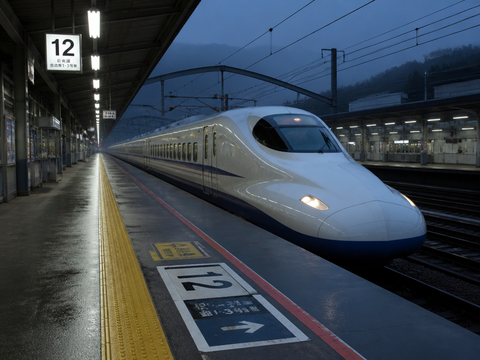
On the morning of February 26, 2003, a Hikari bullet train running toward Okayama covered roughly 26 kilometers — about eight minutes — with no one awake at the controls. The driver, 33, had fallen asleep. The automatic train control system, not the man, brought the train to a stop, overrunning the platform. Nobody was hurt. He could not clearly account for when he had lost consciousness. He was later diagnosed with severe obstructive sleep apnea.
That incident is the closest thing Japan has to a founding document on sleep apnea and traffic safety. It killed no one and produced no conviction. What it produced was a belief: that a specific, diagnosable, treatable breathing disorder was sitting quietly behind an unknown share of the country's transport accidents, and that the responsible move was to find those people and fix them.
Two decades later, that belief is statute. A driver in Japan can now be prosecuted not for what he drank, but for what his airway does when he sleeps.
The belief is probably right in outline. What deserves examination is how thin the evidence was when the outline got drawn, and how much weight it is now being asked to carry.
The eight minutes that started the policy
Before 2003, sleep apnea in Japan was a clinical curiosity — a snoring problem, filed under ear-nose-throat, occasionally under cardiology. After 2003, it was an operational hazard. The transport bureaucracy moved with unusual speed. Railway and bus operators began screening drivers, first with questionnaires and then, in many cases, with overnight oximetry or home sleep tests. The Ministry of Land, Infrastructure, Transport and Tourism issued guidance for commercial operators on identifying and managing sleep apnea syndrome — the term of art in Japanese policy documents is SAS — and screening spread through the trucking, bus, taxi, and rail sectors over the following decade.
This was, on its face, excellent public health. A real disorder was being detected in a population where the consequences of a five-second lapse are measured in bodies. Screening found people. Some of them got treated. Some slept better and, presumably, drove better.
But something else happened in the same motion, and it is the part worth slowing down for. A diagnosis became a status. Once a company knows a driver has an apnea-hypopnea index of 38, that number sits in a file. It can be subpoenaed. It can be read backward from a crash. It converts a person who was tired into a person who knew.
Where the number came from
Ask almost anyone in occupational medicine how much sleep apnea raises crash risk and you will get a number between two and seven times. It is a remarkably durable figure. It appears in ministry guidance, in insurance underwriting, in expert testimony, in the introductory paragraph of nearly every paper on the subject. Its source is thinner than its reputation.
The upper end traces largely to Findley et al. (1988), American Review of Respiratory Disease, which compared the state driving records of 29 patients with obstructive sleep apnea against 35 controls and found the apnea group had roughly seven times the accident rate. Twenty-nine people. Motor vehicle records, in Virginia, in the mid-1980s. It is a legitimate study and a reasonable early signal. It is not a foundation.
The number that gave the belief its scientific respectability arrived eleven years later. Terán-Santos, Jiménez-Gómez, and Cordero-Guevara (1999), New England Journal of Medicine, ran a case-control study in Burgos and Santander: 102 drivers who had received emergency treatment after a highway crash, compared with 152 controls, all given overnight polysomnography. Drivers with an apnea-hypopnea index of 10 or higher had an odds ratio of 6.3 for having crashed.
Read the confidence interval, though. It was 2.4 to 16.2. That is not a measurement; that is a range that spans a factor of seven, published in the most-cited journal in medicine, and thereafter quoted as though it were a constant. The point estimate went into the world. The interval mostly stayed home.
As the studies got larger, the effect got smaller — the ordinary fate of a first dramatic finding. Tregear et al. (2009), Journal of Clinical Sleep Medicine, pooled the available literature and landed on a median crash-risk ratio of about 2.43, with individual studies ranging from 1.21 to 4.89. Karimi and colleagues (2015), Sleep, linked 1,478 Swedish patients with diagnosed sleep apnea to national crash and driving-license registries and found a crash rate about 2.45 times the general driving population.
So the honest modern number is somewhere near two and a half. Not seven. The seven was a small study in 1988 that never quite stopped being cited.
Does untreated sleep apnea actually cause crashes?
Yes — the association is well-established and consistent across countries, study designs, and decades. Untreated moderate-to-severe obstructive sleep apnea roughly doubles a driver's crash risk, and treatment appears to bring it back toward baseline. What is not established is the part the law leans on hardest: that you can look at one person's diagnosis and say how dangerous that particular person is on that particular night.
Here is the evidence base, compressed:
| Study | Design | Sample | Crash risk finding |
|---|---|---|---|
| Findley et al., 1988 | Case-control, DMV records | 29 patients / 35 controls | ~7× |
| Terán-Santos et al., 1999 (NEJM) | Case-control, full PSG | 102 cases / 152 controls | OR 6.3 (CI 2.4–16.2) |
| Tregear et al., 2009 (JCSM) | Meta-analysis | Pooled | ~2.43× (range 1.21–4.89) |
| Karimi et al., 2015 (Sleep) | National registry linkage | 1,478 patients | ~2.45× |

The treatment side is where the reasoning gets slipperier. Tregear et al. (2010), Sleep, pooled studies of drivers before and after starting CPAP and reported a substantial drop in crash rates. Karimi found that patients using CPAP more than four hours a night had crash rates close to the general population.
But no one has ever randomized human beings into treated and untreated apnea and counted the wrecks. It would not clear an ethics board, and it never will. Every claim that CPAP prevents crashes rests on comparing people who use their machines with people who don't — and adherence is not random. The driver who wears a mask for four hours a night is, on average, the driver with stable housing, predictable shifts, a partner who notices, insurance that renews, and the slack in his week to attend a follow-up appointment. Those things also predict safe driving all by themselves.
This is not a reason to disbelieve that CPAP helps. Mechanistically it obviously should, and the effect sizes are large enough to survive a lot of confounding. It is a reason to notice that the causal claim the courtroom needs — this treatment would have prevented this crash — is supported by a study design that cannot, in principle, prove it.
How a diagnosis became an element of a crime
The legal machinery did not come from sleep medicine. It came from epilepsy, and from grief.
In April 2011, in Kanuma, Tochigi Prefecture, a crane truck struck a line of elementary school children walking to school. Six died. The driver had epilepsy and had concealed it to keep his license. In April 2012, in the Gion district of Kyoto, a driver with epilepsy ploughed through a crowded street; seven people were killed. The bereaved families campaigned, publicly and relentlessly, for a category of offense that existing law did not have — something between negligent driving and the drunk-driving provisions.
They got it. In November 2013 the Diet enacted the Act on Punishment of Acts Inflicting Death or Injury by Driving a Motor Vehicle, effective May 20, 2014. Article 3 created liability for driving while affected by alcohol, drugs, or a disease specified by cabinet order, in a state where normal driving might become difficult: up to 15 years' imprisonment where someone dies, up to 12 where someone is injured.
The cabinet order list is short and specific. Schizophrenia. Epilepsy. Recurrent syncope. Hypoglycemia. Bipolar disorder. And — the clause that matters here — sleep disorders presenting severe sleepiness.
A parallel revision to the Road Traffic Act took effect on June 1, 2014, requiring license applicants and renewers to answer a questionnaire about these conditions, with criminal penalties for false declaration, and permitting physicians to report patients to the prefectural public safety commission without breaching confidentiality.
Narcolepsy is the paradigm case for that sleepiness clause; it is a disorder of the sleep-wake switch, with sleep attacks that are genuinely uncontrollable. Obstructive sleep apnea is a different animal. It is a mechanical problem in the throat that produces sleepiness indirectly, through fragmentation, and it produces it in some people and not others. Whether it belongs inside a clause written with narcolepsy in mind is a question the statute does not answer and the science cannot settle cleanly.
What happens in the body, in order
It helps to walk the mechanism in the order it actually occurs, because the legal question — did he know? — depends on it.
You fall asleep. Muscle tone drops throughout the body, including in the pharyngeal dilator muscles that hold the upper airway open. In an anatomically narrow throat, the airway collapses. You continue trying to breathe against a closed pipe; the chest moves, nothing enters.
Blood oxygen falls. Carbon dioxide rises. Chemoreceptors in the carotid body register this and fire. The sympathetic nervous system surges — heart rate up, blood pressure up, catecholamines released. This surge triggers a brief cortical arousal: a few seconds of lighter sleep, enough to restore muscle tone and reopen the airway. You gasp. You go back down.
Then it happens again. In severe apnea, thirty, fifty, seventy times an hour, all night, for years.
Critically, these arousals rarely reach conscious awareness. You do not wake up. You have no memory of the event, because memory consolidation requires a duration of wakefulness these arousals do not achieve. The subjective experience of a night with 400 arousals is: I slept.
What you lose is depth. Slow-wave sleep and REM get truncated. Adenosine, the metabolic byproduct that accumulates during wakefulness and is cleared during consolidated deep sleep, doesn't fully clear. You wake with sleep pressure already partially loaded, at six in the morning, before the day has started.
By hour four of a driving shift, that pressure has compounded with circadian trough timing. The failure mode is not nodding off in slow motion. It's the microsleep: two to fifteen seconds of cortical sleep intruding into open-eyed wakefulness, during which the driver is functionally blind and afterward has no memory of the gap. At 80 km/h, a four-second microsleep is 89 meters of unpiloted vehicle.
The reason drivers in these cases so often say they don't remember the crash is not evasion. It is the most diagnostically consistent thing they could possibly say.
The caffeine layer
Every commercial driver with untreated apnea has a management strategy, and it is almost never CPAP. It is caffeine.
In Japan this is an entire retail category: canned coffee from every vending machine on every corner, energy drinks, and the 50-milliliter shot bottles sold under names that translate roughly as sleep-breaker, delivering something on the order of 120 mg in one swallow. Convenience-store coffee is 100 to 150 mg. A driver running a 13-hour delivery route may take in 500 mg across a shift without ever thinking of himself as a heavy user.

Caffeine works by competitively antagonizing adenosine at the A1 and A2A receptors. It does not remove adenosine. It occupies the parking spaces, so the accumulated signal cannot be read. The sleep debt is fully intact underneath; only the perception of it is muted. When caffeine clears — half-life roughly four to six hours in healthy adults, with genuine severalfold variation driven partly by CYP1A2 activity — the signal is read all at once.
And then the loop closes. Drake et al. (2013), Journal of Clinical Sleep Medicine, gave 12 subjects 400 mg of caffeine at 0, 3, and 6 hours before bedtime. The dose taken six hours before bed still cost more than an hour of measured sleep. A driver finishing an evening shift with a canned coffee at 8 p.m. is buying alertness now against sleep quality at 11 — on top of an airway that is already going to fragment whatever sleep he gets.
The most dangerous part is the dissociation. Van Dongen et al. (2003), Sleep, restricted 48 subjects to 4, 6, or 8 hours in bed for 14 nights. Objective performance on vigilance testing degraded steadily and near-linearly in the restricted groups. Subjective sleepiness ratings plateaued after a few days. People stopped feeling worse while continuing to get worse. Caffeine widens that gap deliberately.
Which means the sentence "I felt fine" is not exculpatory and not a lie. It is a description of a broken instrument.
What the law can see, and what it can't
Drunk driving is prosecutable because there is a number. A breathalyzer at the roadside produces a figure that maps, imperfectly but defensibly, onto impairment at the moment of the crash.
There is no roadside apnea test. There is no equivalent measurement of how impaired this person was at 6:20 this morning. What exists is a medical file, sometimes years old, containing an apnea-hypopnea index — and the AHI correlates weakly with daytime sleepiness. The relationship between AHI and Epworth Sleepiness Scale scores across studies is consistently modest. Plenty of people with an AHI of 40 report no functional sleepiness. Plenty with an AHI of 12 are barely functional. The Maintenance of Wakefulness Test measures the thing that actually matters, but it requires a sleep laboratory and it measures today, not the morning in question.
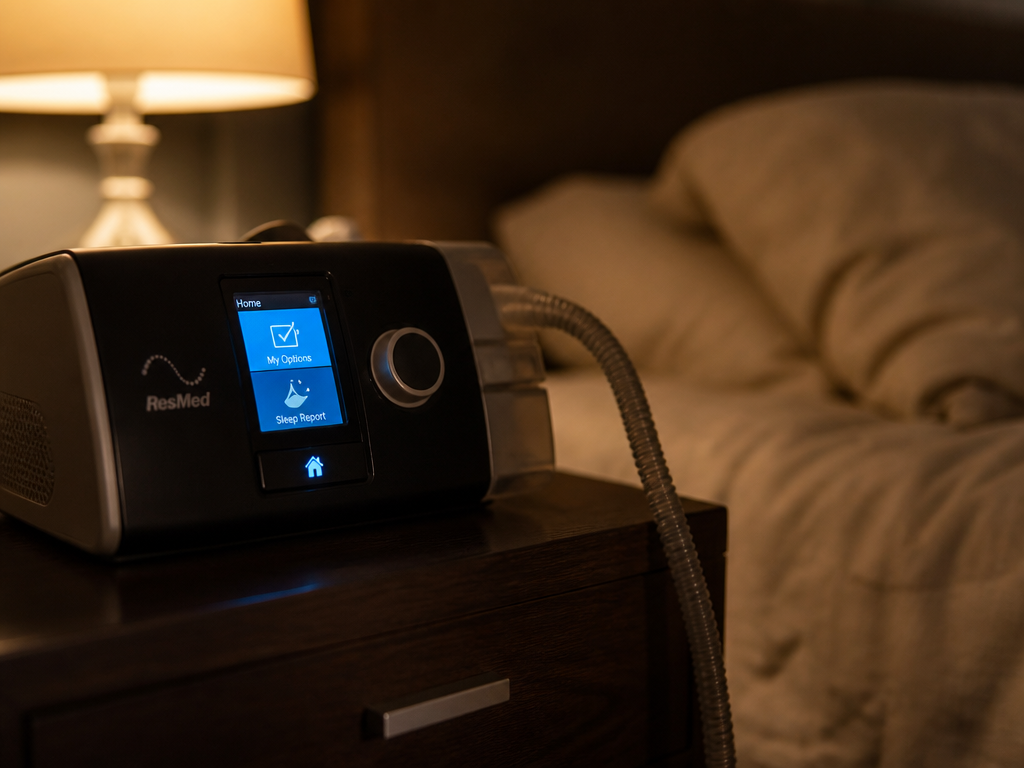
So a prosecution under the sleepiness clause has to reconstruct a state of mind from a paper trail: the diagnosis date, the prescription, the CPAP compliance data the machine uploads nightly, whether the driver kept his follow-up appointments. Which turns clinical records into evidence of intent — and quietly makes non-adherence look like recklessness.
In most cases it is economics. In Japan, CPAP is covered by national health insurance for patients meeting the AHI threshold, but it comes as a monthly rental requiring a monthly clinic visit — historically in person, before telemedicine rules loosened. At the standard 30 percent co-pay, that is a recurring monthly cost plus a recurring appointment. For a salaried employee, an inconvenience. For a piece-rate delivery driver or an owner-operator hauler, it is a half-day of lost earnings, twelve times a year, forever, to treat a condition whose symptom he has already learned to suppress for 150 yen at a vending machine.
Japan's overtime cap for truck drivers, which took full effect in April 2024, was designed to attack exactly this pressure. It also cut driver earnings, which pushed some of the same people toward second jobs and gig delivery platforms where no cap applies at all. The regulation of hours and the regulation of health are pulling in opposite directions on the same body.
An honest rule of thumb
Sort the claims by how much they can bear:
- Well-established: untreated moderate-to-severe apnea roughly doubles crash risk at population scale; the arousals are invisible to the sleeper; caffeine masks sleep pressure without reducing it.
- Plausible but thin: that treatment adherence causes the risk reduction rather than marking the kind of person whose risk was lower anyway.
- Folk wisdom: that a person can tell whether they are too sleepy to drive. Van Dongen's data says the self-report goes flat while performance keeps falling.
The rule of thumb: if you are relying on caffeine to stay awake at the wheel, you are already past the point where you can assess yourself. Treat the need for the drink as the signal, not the tiredness. The drink is the last honest thing your body will tell you.
One concrete thing to try this week, if you snore and drive: put your phone on the nightstand and run any free sleep-audio recording app for three nights. You are not diagnosing yourself — an app cannot measure an AHI and no reputable clinician will accept one. You are listening for a pattern: snoring, then silence, then a gasp. If you hear that cycle even a handful of times, take the recording to a physician and ask for a home sleep test. It costs three nights and one appointment.
Japan has decided that a person can be criminally responsible for what happens while they are asleep. Whether or not that is just, it means the cheapest thing you can do about your own airway is find out what it does when you aren't there to hear it. Note: the 2003 Shinkansen incident is often described in Japanese coverage as the moment sleep apnea entered public consciousness in Japan. It is worth remembering that it entered as a near-miss with zero casualties — the policy response was, unusually, proportionate to a harm that hadn't happened yet. That is a better record than most safety regimes can claim, and it is part of why the legal escalation since 2014 deserves scrutiny rather than reflexive approval.