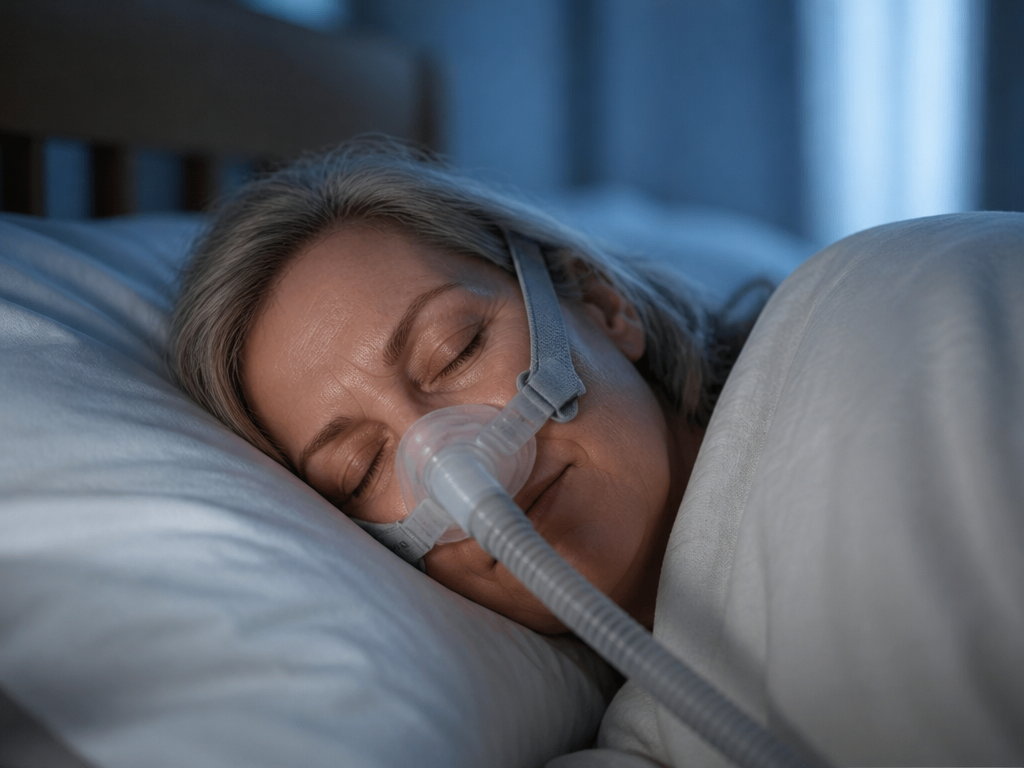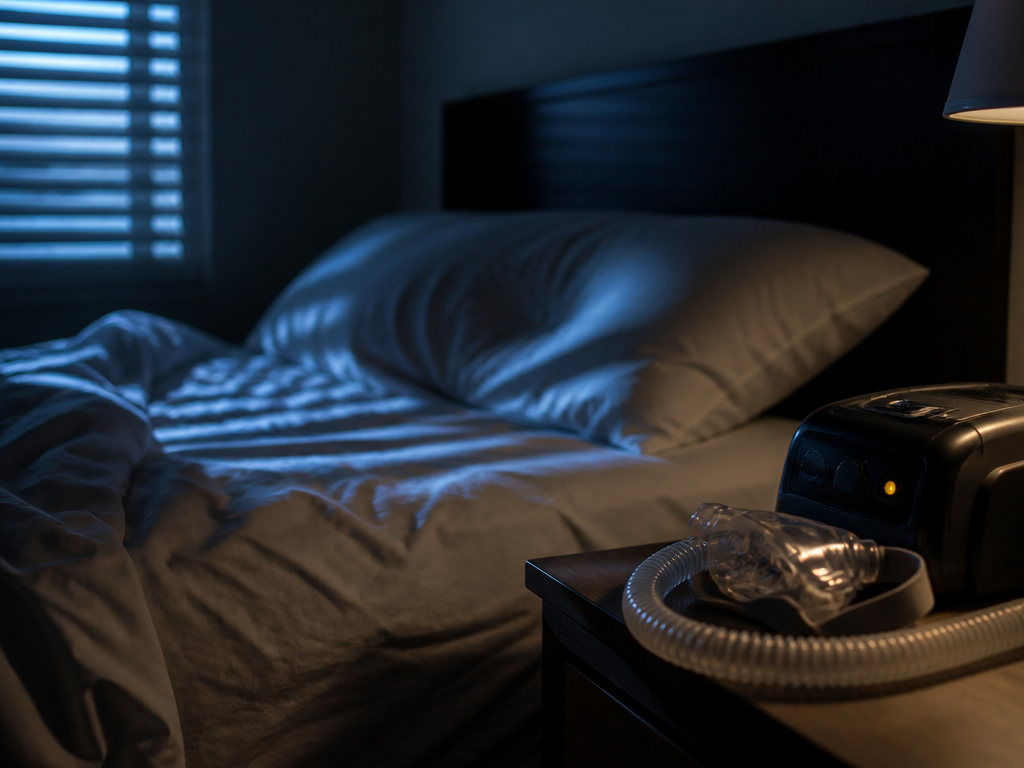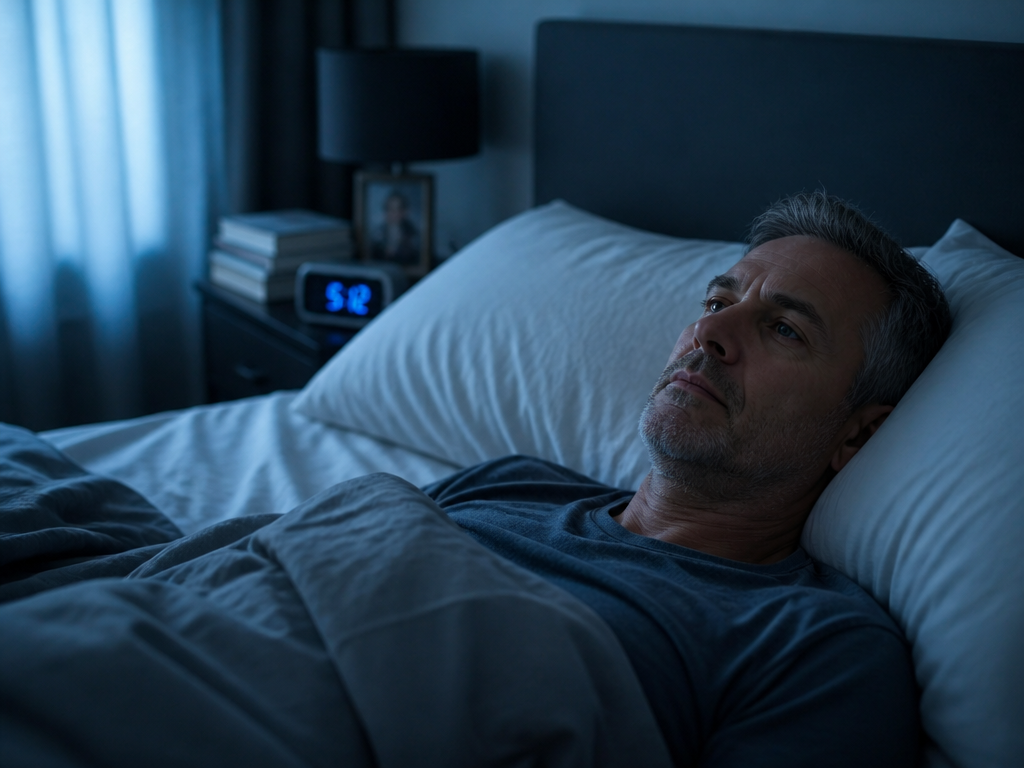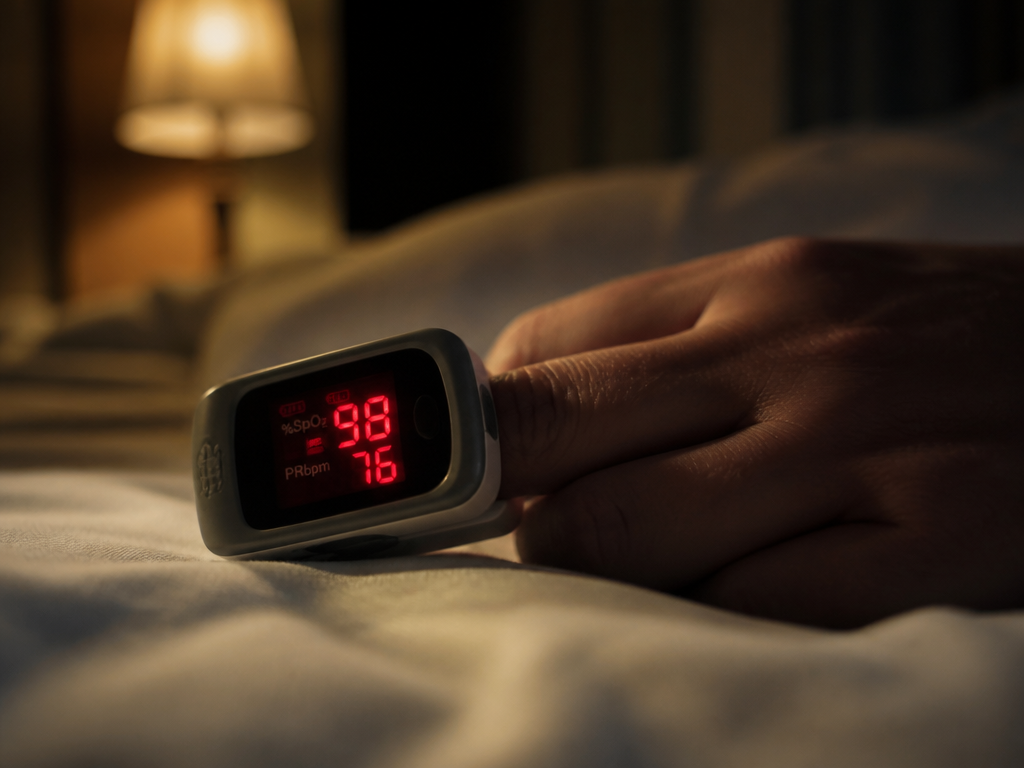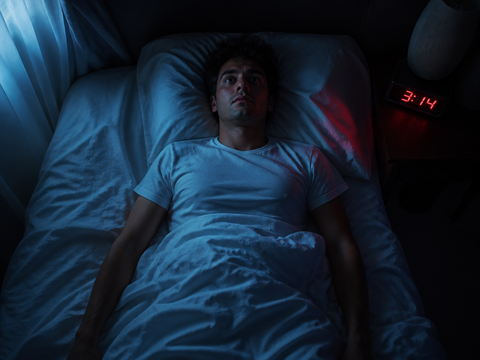
You wake at 3:14 a.m., heart going, mind already cycling through tomorrow. You blame the work email, the second coffee, the news. You lie there for forty minutes, then drift off around the time the birds start. By the metrics you'd report to a doctor, this is insomnia: trouble staying asleep, early waking, unrefreshing nights.
But the email may be innocent. For a meaningful share of people who carry an insomnia diagnosis, the thing pulling them out of sleep is sleep apnea — a breathing disorder that interrupts the night so briefly and so often that the brain registers only the surface symptom. You don't remember gasping. You remember being awake.
Can sleep apnea cause insomnia?
Yes — and not just as a coincidence. Obstructive sleep apnea can produce the core complaints of insomnia directly: frequent nighttime awakenings, difficulty returning to sleep, and the sense that rest never quite takes. When the two travel together, sleep clinicians call it COMISA, for comorbid insomnia and sleep apnea, and it's common enough to have earned its own acronym. The breathing problem isn't an alternative to your insomnia. It's often the engine underneath it.
The reason this is easy to miss is that the cause hides inside the symptom. To see it, you have to follow what actually happens in your body over the course of a single interrupted breath.
The night, in the order it happens
Start with the air. You inhale, and the air travels down through the soft tube of the upper airway — the pharynx, the space behind the tongue and soft palate. During the day, muscles hold that tube open without your noticing. As you fall asleep, muscle tone drops everywhere, including there.
In a person prone to obstruction, that relaxation is enough. The airway narrows, then collapses. The tongue and soft tissue settle backward. You're still trying to breathe — the chest still rises — but no air moves. This is the apnea: a pause, usually ten seconds or more, sometimes much longer.
Now the chemistry shifts. With no fresh air, blood oxygen falls and carbon dioxide climbs. Chemoreceptors in the carotid arteries and brainstem detect the change and treat it as an emergency, because it is one. They trigger a surge of sympathetic nervous system activity — the same fight-or-flight machinery that handles a near-miss in traffic. Heart rate and blood pressure rise.
Then comes the part you feel. To reopen the airway, the brain delivers a brief jolt of wakefulness — a microarousal. Muscle tone snaps back, the airway clears, you take a few recovery breaths, often with a gasp or snort you won't recall. The whole sequence can take fifteen seconds. In severe cases it repeats thirty, sixty, even more times an hour.
Most of these arousals are too short to reach conscious memory. But not all of them. Some tip you fully awake, and now the picture changes. You surface with your heart already racing and your stress system already switched on — primed, in other words, to lie there and ruminate. The body has done the physiological work of a panic; your mind simply supplies the content. That's the 3 a.m. ceiling stare. It feels like classic insomnia because, at the level you can perceive, it is one. The cause occurred a layer below awareness.
Over a full night, the cumulative effect is fragmentation. You may spend eight hours in bed and never assemble enough consolidated deep and REM sleep to feel rested. The complaint that reaches the doctor — I can't stay asleep, I wake unrefreshed — points away from the airway, not toward it.
What the research actually measured
The overlap is better documented than most people assume. A frequently cited review by Sweetman and colleagues (2017), Sleep Medicine Reviews, gathered prevalence estimates and reported that roughly 30 to 40 percent of people with insomnia also have obstructive sleep apnea, and that something like 30 to 50 percent of people with apnea report significant insomnia symptoms. The ranges are wide because the studies used different populations and different thresholds, which is itself worth noticing — this is an estimate, not a settled number.
What's well-established: the two conditions co-occur far more often than chance, and people with both tend to do worse than people with either alone. They report poorer sleep quality and show higher rates of depression and daytime impairment in cross-sectional data.
What's plausible but thinner: the claim that apnea actively causes the insomnia in a given patient, rather than the two simply sharing risk factors like age, obesity, and a revved-up stress axis. Mechanistically, the microarousal-to-wakefulness pathway above is sound and the cause-and-effect story is reasonable. But teasing apart direction in a single person — did the breathing wreck the sleep, or did fragile sleep make the breathing matter more — is genuinely hard, and the literature reflects that.
What's closer to folk wisdom: the idea that you'd obviously know if you had apnea because you'd be a loud snorer in an obvious body. Plenty of people with apnea snore little, weigh little, and present mainly with the insomnia complaint. Women in particular are under-screened, partly because the textbook patient was drawn as a large, snoring man.
Why it slips through
Insomnia is usually treated as a problem of the mind and habits — stress, screens, an erratic schedule. Those are real contributors, and addressing them helps many people. But when the standard fixes don't work, the next assumption is often more of the same: stricter wind-down routines, then a prescription.
That's where the overlap turns costly. Some sedative-hypnotics relax the upper-airway muscles and can deepen the very apneas driving the awakenings. The pill quiets the conscious mind while the airway keeps collapsing underneath. You sleep more soundly through arousals you were never aware of — and wake just as unrefreshed, sometimes more so. Treating the symptom can feed the cause.
An honest rule of thumb
If your insomnia has resisted good sleep hygiene and at least one reasonable treatment attempt, ask specifically whether you should be screened for a breathing disorder — don't wait for someone to offer it. The waking-up pattern matters more than the falling-asleep pattern here. Use this as a rough guide:
| Pattern | What it leans toward |
|---|---|
| Trouble falling asleep, mind racing at bedtime | More typical insomnia |
| Repeated waking through the night, often gasping or with a dry mouth | Worth screening for apnea |
| Wake unrefreshed despite 7–8 hours, daytime sleepiness | Worth screening for apnea |
| Partner reports snoring, pauses, or choking sounds | Screen for apnea |
| Morning headaches, high blood pressure, frequent nighttime urination | Screen for apnea |
None of these confirms anything. The only way to know is a sleep study — an in-lab polysomnogram or, increasingly, a validated home test that counts the breathing events your memory can't.
Tonight, if you wake at 3 a.m. with your heart already pounding before a single anxious thought has formed, notice the order. The body got there first.
What we still can't say cleanly is which one to chase. When apnea and insomnia share a bed, does opening the airway eventually quiet the wakeful mind — or does the mind, having learned to wake, keep doing it long after the breathing is fixed?