Here is a claim that should be wrong but mostly isn't: for the first month on CPAP, an internet forum full of strangers will do more to keep you in treatment than your sleep clinic will. Not because the clinic is bad. Because the clinic isn't there at 2 a.m. when the mask hisses, the air feels like a leaf blower, and you are deciding — without quite admitting it — whether you will ever put the thing on again.
Sleep apnea support groups exist to be there at 2 a.m. The rest of this piece is an attempt to earn the sentence I just wrote, because it is the kind of sentence that deserves suspicion. So let's go slowly.
Why people quit, and when
Continuous positive airway pressure works. When obstructive sleep apnea is treated, the pauses in breathing stop, oxygen levels stabilize, and the fragmented sleep that drove the daytime fog tends to lift. The problem was never whether the therapy works. The problem is whether anyone keeps doing it.
The numbers here are sobering and well-established. A frequently cited review — Weaver and Grunstein (2008), Proceedings of the American Thoracic Society — put long-term CPAP nonadherence somewhere between 29% and 83%, depending on how "adherence" is defined. That range is embarrassingly wide, which tells you the field has argued about definitions for years. The Medicare-era threshold most U.S. studies now use is four hours per night on 70% of nights. By that bar, a large fraction of patients fall short.
And the dropouts cluster early. Multiple cohort studies have found that usage patterns in the first week predict usage at a year; people who are going to abandon the machine tend to decide it, behaviorally, almost immediately. The danger window is the first few nights and the first few weeks — exactly the window when the clinical system is quietest. You get your machine, maybe a brief setup appointment, and then a follow-up scheduled for six weeks out. The therapy's most fragile period is also its least supervised one.
What the clinic can't reach in time
Walk through what actually happens, in order, on a difficult first night.
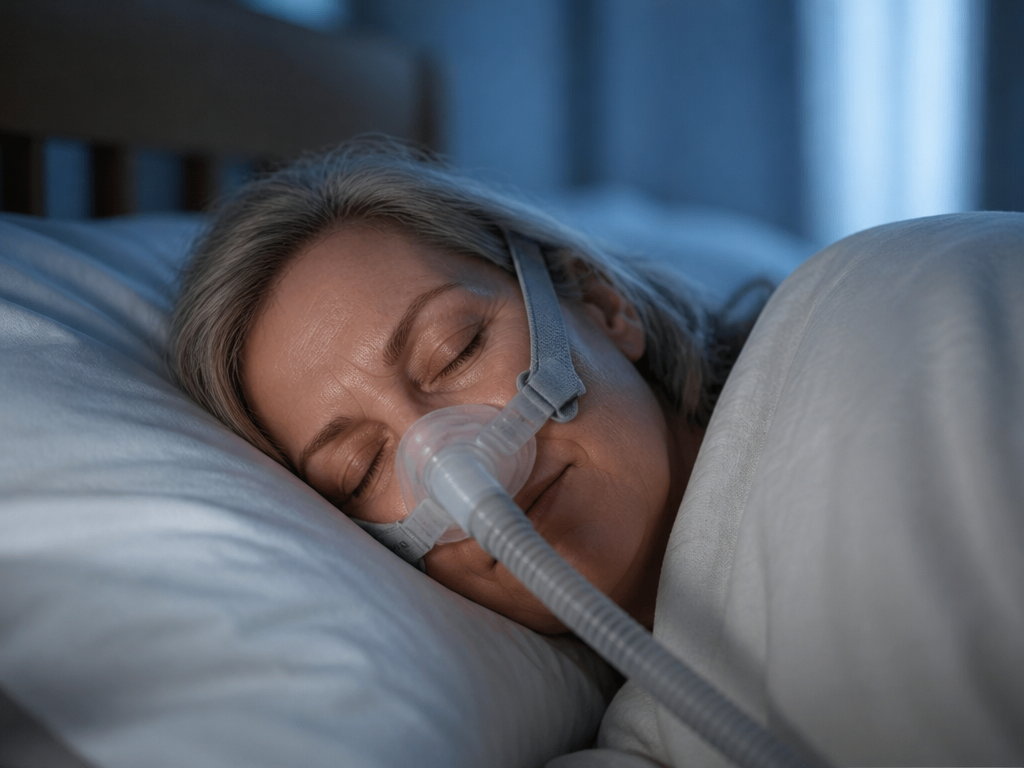
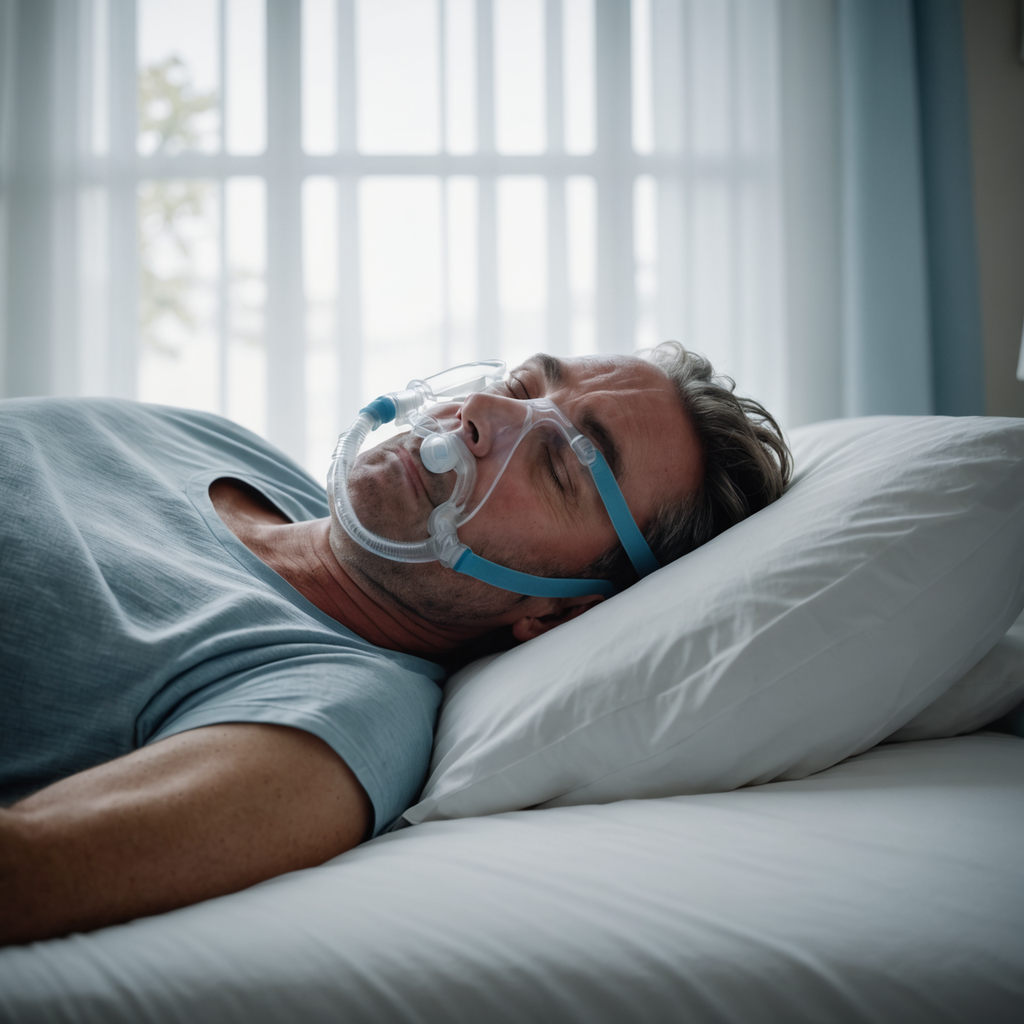
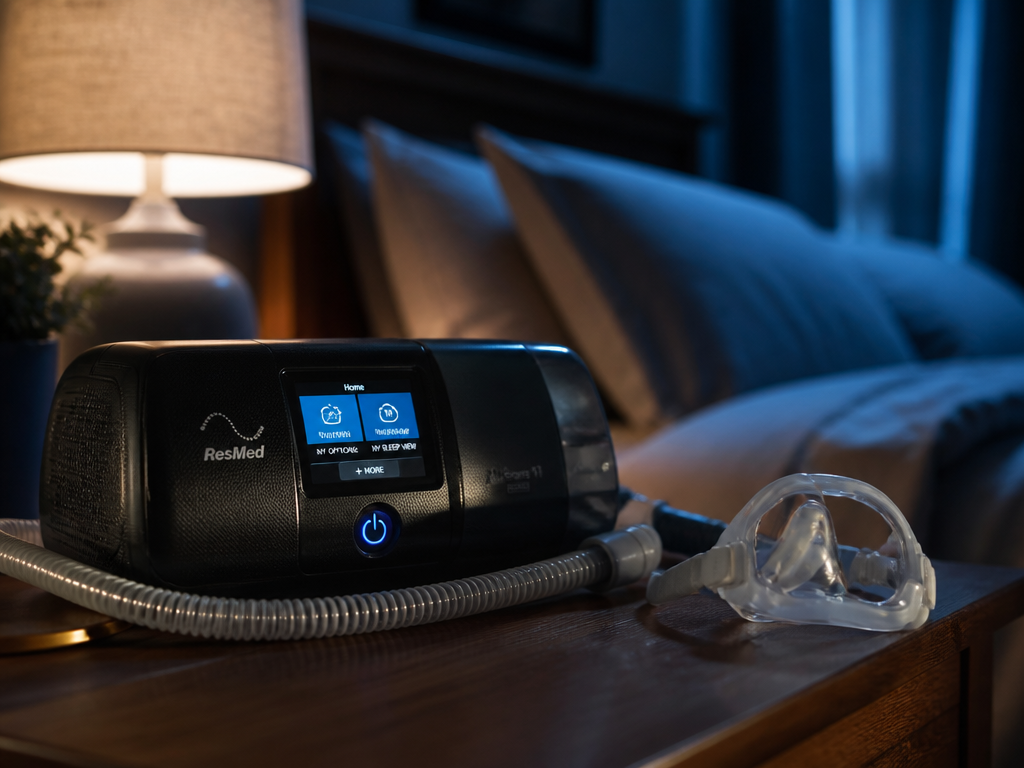
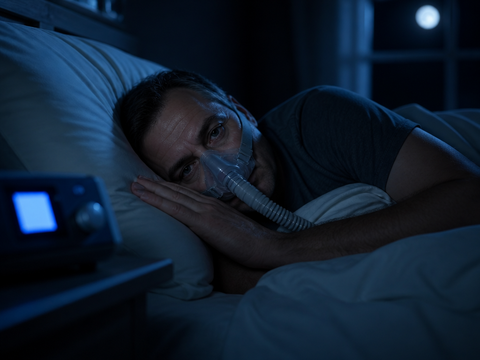
You lie down with the mask on. The pressure is set, often empirically, sometimes too high for a relaxed airway. As you start to drift off, your breathing slows and your mouth relaxes — and air begins to escape. The mask, sealed fine while you were sitting up frowning at it, breaks its seal the moment your face goes slack against the pillow. The machine senses the leak and, on many auto-adjusting devices, responds by pushing more pressure, which makes the leak worse, which wakes you. Now you're swallowing air, your stomach is bloating (this is aerophagia, and it is common, and almost nobody warns you about it), and you take the mask off at 3 a.m. telling yourself you'll try again tomorrow.
None of those failure points is medically complicated. A leak from a slack-jawed sleeper is often fixed by a chin strap, a different mask style, or a five-degree change in how you lie. Aerophagia frequently improves by lowering the minimum pressure or switching to a mode that eases exhalation. Pressure intolerance sometimes resolves with a slower ramp setting. These are tweaks. But they are tweaks you need within days, and a busy sleep practice is not built to deliver same-night troubleshooting.
A good online community is. Post "mask leaks the second I fall asleep, waking me up" on a CPAP forum and you will, within hours, get a half-dozen replies naming the chin-strap fix, the mouth-leak problem, and the auto-pressure feedback loop — often from people who fought the exact same thing. They will ask which machine you have. They will tell you how to read your own data.
The data literacy nobody hands you
Here is the quietly radical thing peer communities did to this disease: they taught patients to read their own machines.

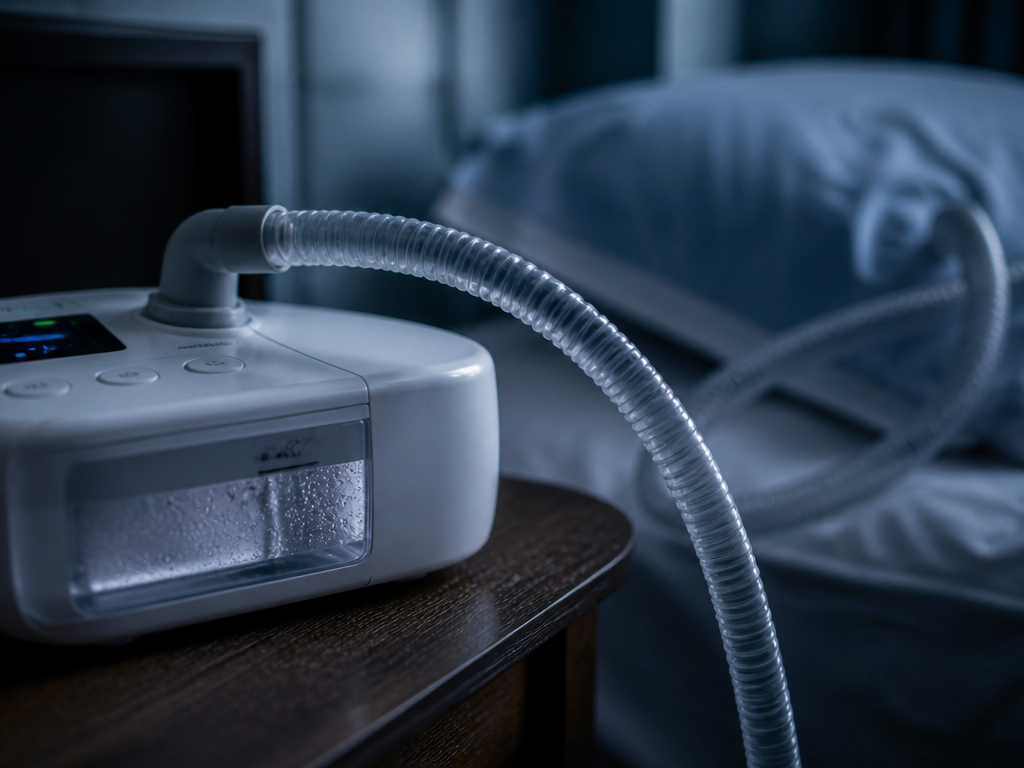
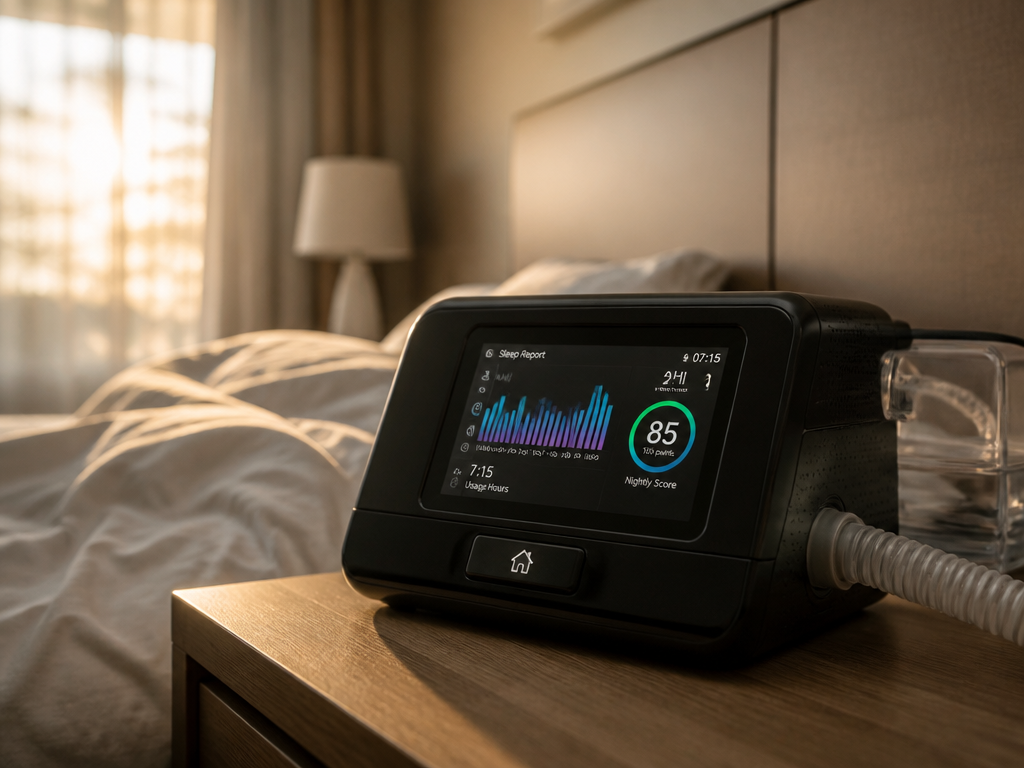
Modern CPAP devices log everything — apnea-hypopnea index by night, leak rate, pressure curves, how long you wore it. Free software like OSCAR lets you pull that data off the SD card and see it. Most clinicians never mention this exists. Forums are built around it. Members post their nightly graphs and get crowd-read interpretations: your leaks spike at 4 a.m., your AHI is fine but your flow limitation suggests your pressure floor is too low. This is not a substitute for a physician adjusting a prescription. It is something the clinical encounter rarely provides: a feedback loop fast enough to learn from.
That feedback loop is the actual mechanism of peer support in a chronic condition. Not encouragement, though encouragement helps. Information velocity. The gap between a problem appearing and a plausible fix arriving shrinks from weeks to hours.
Online versus in-person, honestly
In-person groups — many run through the American Sleep Apnea Association's old A.W.A.K.E. network or local hospital programs — have something forums can't fake: a person across the table who has worn the mask for ten years and is sitting there, rested, alive, normal. For someone reeling from a diagnosis, that physical proof matters in a way a username doesn't.
But in-person meetings happen monthly, if you're lucky, in a place you have to drive to, often during the exact hours an exhausted, untreated apnea patient least wants to leave the house. Online communities are awake when you are. They also remove a barrier people rarely name out loud: you don't have to be seen. If the idea of describing your snoring to a circle of strangers makes you want to skip the whole thing, typing it at midnight is a gentler door.
Neither is better. They fail in opposite directions. Use whichever one you'll actually use.
| Online community | In-person group | |
|---|---|---|
| Available when symptoms hit | Yes, around the clock | Monthly, scheduled |
| Data troubleshooting | Strong (graphs, OSCAR) | Limited |
| Emotional proof-of-life | Weaker | Strong |
| Barrier to entry | Very low | Higher |
Why answering helps the answerer
There's a turn that happens to people who stick around these communities. The person who arrived terrified about a leaking mask becomes, eight months later, the one answering the leaking-mask post. This isn't only generosity. Explaining your therapy to someone else forces you to understand it, and understanding your own treatment is itself associated with sticking to it. The veteran who keeps answering questions is, in part, maintaining their own adherence by rehearsing why it matters. Help is not a one-way valve here. It runs both directions, and the direction that surprises people is the one that flows back.
An honest rule of thumb
Tonight, before anything else: find your machine's model number and find the one community where people discuss that model. Read three threads. Don't post yet if you don't want to. Just learn the vocabulary — AHI, leak rate, ramp, EPR, full-face versus nasal pillow. Tomorrow, when something goes wrong, you'll have words for it, and words for it is most of the fight.
If your sleep stays bad after a genuine try, that is a clinical signal, not a personal failure. The forum is for tuning; your physician is for the prescription, the pressure titration, and the question of whether the diagnosis was even complete. Don't let a community talk you out of medicine. Let it help you get the most out of yours.
Back to that claim
So: does a forum of strangers really beat the clinic in month one? Stated that baldly, no — the clinic has the diagnosis, the prescription, the authority to change your pressure. But on the specific thing that decides whether you become one of the people still wearing the mask a year from now, the claim holds up better than it should. The clinic owns the therapy. The community owns the survivable first month. And the first month is when the disease quietly decides whether you'll let it be treated at all.