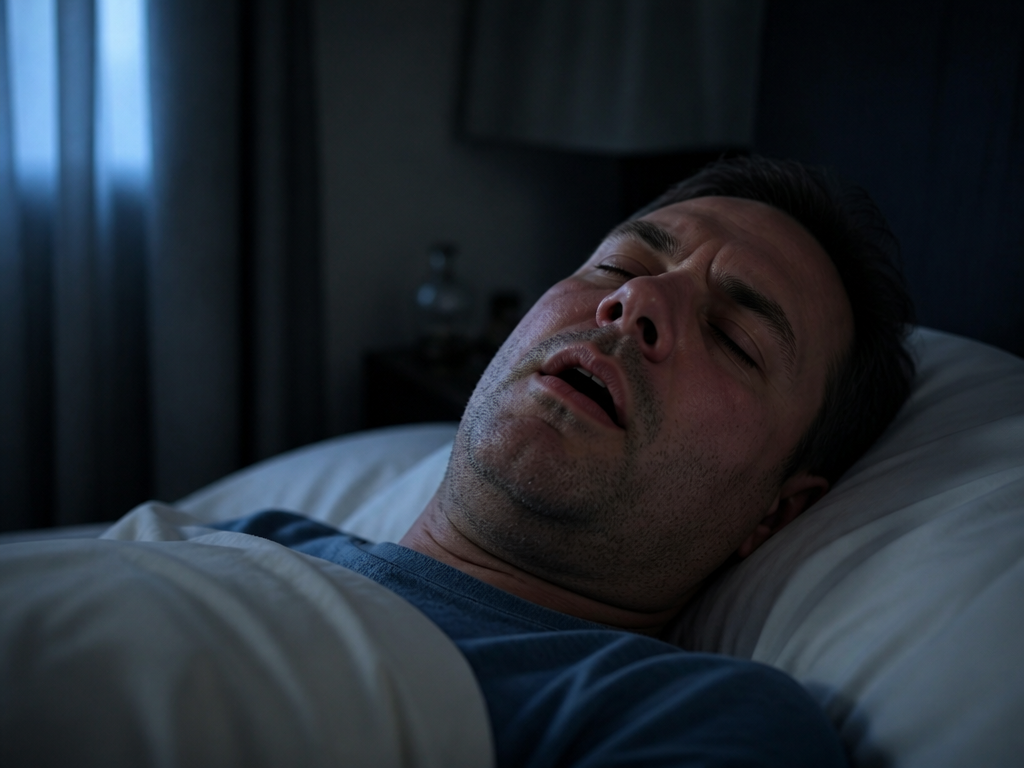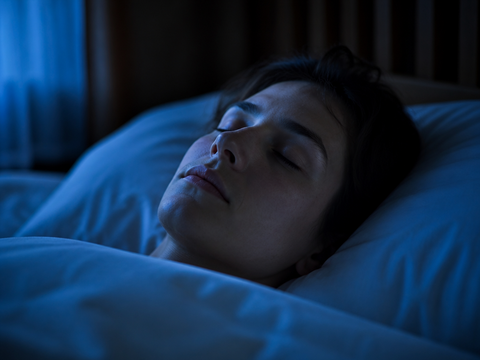
A reader wrote in with a question I'd been circling myself: their sleep study came back showing dozens of breathing pauses an hour, but the technician's notes said "minimal snoring" and their partner had never once described the gasping, sawing racket that everybody associates with sleep apnea. So what was happening? If you stop breathing at night but you aren't snoring, is the diagnosis central sleep apnea?
Here is the short answer, stated plainly so you can stop reading if it's all you came for: central sleep apnea is the brain intermittently failing to send the signal to breathe, rather than the airway collapsing against the effort to breathe. In obstructive apnea, your body is trying to inhale and can't. In a central event, for a few seconds, your body simply doesn't try. That distinction sounds academic until you realize the two conditions can require nearly opposite treatments.
But the honest version of the answer is longer, because the absence of snoring proves less than you'd hope, and several real conditions sit in the gap between "obstructive" and "central."
What the two words actually describe
The clearest way I've found to hold the difference is to watch the diaphragm.
During an obstructive event, the diaphragm and chest wall keep pumping. You're working — sometimes working hard, with mounting effort — but the soft tissue at the back of the throat has sealed the pipe. Airflow stops while respiratory effort continues. That mismatch is the signature, and it's why obstructive sleep apnea tends to come with snoring: snoring is the sound of turbulent air forcing through a narrowed space.
During a central event, effort and airflow stop together. The chest goes still. There's no struggle to hear because the drive to breathe has briefly switched off at the source — the respiratory control centers in the brainstem. No effort, no turbulence, often no sound. Which is exactly why a quiet sleeper can still be having dozens of apneas an hour.
So the reader's instinct wasn't wrong. Silence does point away from the most common obstructive picture. It just doesn't point cleanly enough to be a diagnosis on its own.
OSA vs CSA vs the messy middle
Most sleep medicine recognizes three patterns worth distinguishing here. The third one — the messy middle — is where a lot of confused patients actually live.
| Criterion | Obstructive (OSA) | Central (CSA) | Complex / mixed |
|---|---|---|---|
| Airway | Collapses | Open | Both, sequentially |
| Respiratory effort | Continues during event | Stops during event | Starts absent, then resumes against a closed airway |
| Typical sound | Snoring, gasping | Often silent | Variable |
| Common drivers | Anatomy, weight, age | Heart failure, opioids, brainstem injury, altitude | Often emerges after CPAP is started for OSA |
| First-line response | CPAP | Treat the underlying cause first | Re-evaluate; CPAP may worsen it |
The table flattens things, so a caution: most people diagnosed with sleep apnea have the obstructive kind by a wide margin. Pure central apnea is genuinely uncommon. If you're researching this before a clinic visit, the base rates favor OSA, and you should hold your suspicion loosely.
The places the answer is honestly "it depends"
Several specific situations turn the clean brain-vs-airway story murky.
Cheyne-Stokes breathing. In some people with heart failure, breathing follows a slow crescendo-decrescendo — deeper, deeper, shallower, shallower, then a pause — repeating in cycles that can run 30 to 60 seconds each. It's a form of central apnea, but it's really a symptom of a struggling circulatory system, and the cause sits in the heart, not the throat. Treat it as a throat problem and you've missed the point.
Opioid use. Long-acting opioids blunt the brainstem's response to carbon dioxide, which is the chemical alarm that normally tells you to breathe. This can produce a distinctly central, sometimes irregular pattern of apneas. Here the "treatment" conversation is largely a medication conversation.

High altitude. Sleep above roughly 2,500 meters and many otherwise healthy people develop periodic breathing for a few nights as the body recalibrates to thin air. It's central by mechanism and usually self-correcting. Worth knowing before you panic over a single bad night in the mountains.
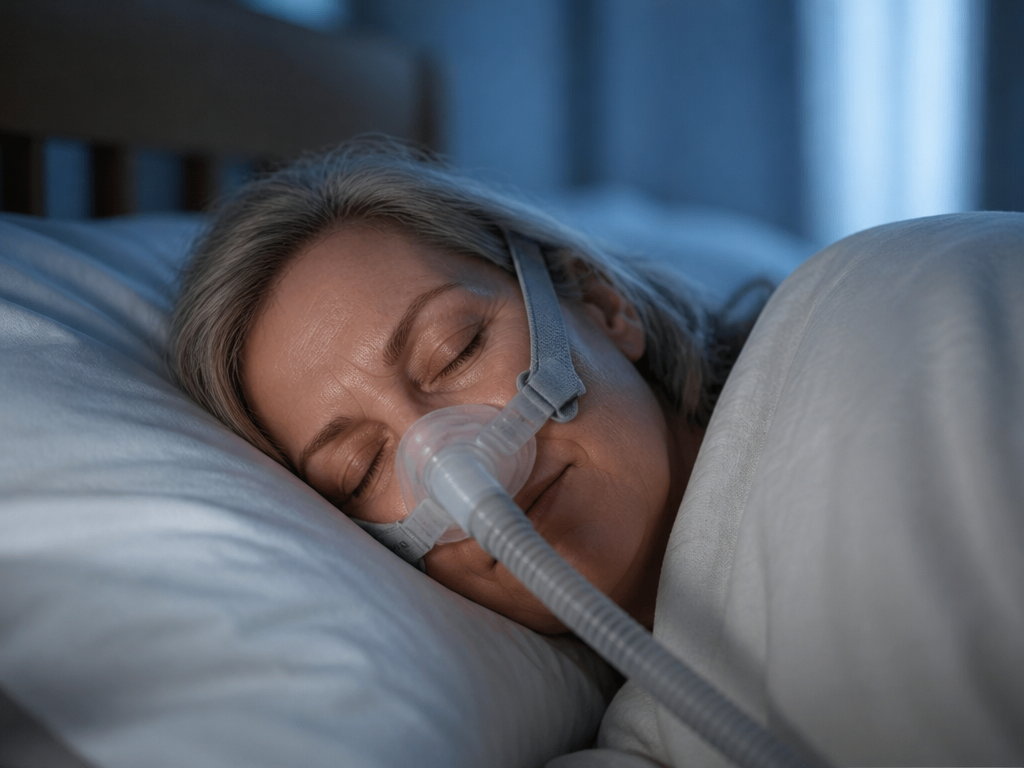
Treatment-emergent central apnea. This is the one that surprises people. A patient is diagnosed with straightforward OSA, started on CPAP, and the obstructive events resolve — but central events appear that weren't prominent before. The pressurized air can, in susceptible people, drive down carbon dioxide enough to trip the brain's "don't breathe yet" reflex. The fix it for one problem, reveal another quality is exactly why the OSA/CSA line matters clinically and isn't just taxonomy.
What the sleep study is actually measuring
A diagnostic polysomnogram doesn't just count how often you stop breathing. It records airflow at the nose and mouth, oxygen saturation, brain waves, and — crucially for this question — respiratory effort, usually with elastic bands around the chest and abdomen that detect movement.
That effort channel is the whole game. When airflow drops but the bands keep moving, the software and the scoring technician call it obstructive. When airflow drops and the bands go still, they call it central. The apnea-hypopnea index (AHI) you'll see on your report — events per hour — gets sorted into obstructive and central columns precisely because the two demand different responses.
This is also why I'm wary of consumer wearables and home rings that report an "apnea" number. Most can't distinguish effort from no effort. They can flag that something interrupted your breathing or dropped your oxygen; they generally cannot tell you whether your airway closed or your brain paused. For the specific question this article is about, that's the difference between a useful signal and a number that just makes you anxious.
The reason any of this matters beyond curiosity: CPAP — the standard, effective, deserved first-line therapy for obstructive apnea — does not reliably fix central apnea, and in the treatment-emergent case can provoke it. Pure or predominant central patterns sometimes call for treating the heart, revisiting medications, or adaptive servo-ventilation, which is a different and more responsive machine. Get the category wrong and you can spend months optimizing the wrong device.
Who should actually suspect this — and who shouldn't
Lean toward asking about central apnea if: you have diagnosed heart failure or atrial fibrillation; you take long-acting opioids; your partner reports long silent pauses rather than snoring and gasping; you have a history of stroke or brainstem injury; or your obstructive events cleared on CPAP but you still feel unrested and your follow-up data shows new event types.
You probably have garden-variety obstructive apnea if: you snore loudly, your partner has watched you gasp awake, you're carrying extra weight around the neck, you wake with a dry mouth and a headache, and you fall asleep in meetings. None of that rules out central events entirely — mixed pictures exist — but the obstructive story is by far the likeliest, and chasing a rarer diagnosis first tends to delay the help you actually need.
The single line worth screenshotting: silence at night is a reason to ask the question, not an answer to it. Only the effort channel on a real sleep study can sort obstructive from central, and even then the cause matters more than the label.
What this looks like, lived out
I don't have central sleep apnea, as far as any study has shown. But the logic of this piece changed one small habit. My partner used to mention, occasionally, that I'd "gone quiet" for a stretch in the night — and I'd dismissed it, because I'd absorbed the cultural script that apnea is loud. Now, on the rare nights it comes up, I write the time down on the pad by the bed, the way you'd note an odd noise in a car engine. Not because two data points mean anything, but because I've stopped treating quiet as reassuring by default. It's the cheapest instrument I own, and the only one in the house that can hear the absence of a sound.