In 1997, a number got loose into the literature and never really left. Terry Young and colleagues, writing in Sleep, estimated that something like 80 to 90 percent of adults with moderate-to-severe obstructive sleep apnea had never been diagnosed. The frustrating part of a sleep apnea diagnosis, in other words, was not that it was hard to treat — it was that most people who had the condition didn't know, and the doctors they saw weren't looking. That figure is now almost three decades old. It still gets cited. It's worth asking what it actually measured before you let it scare you.
What that 80 percent actually measured
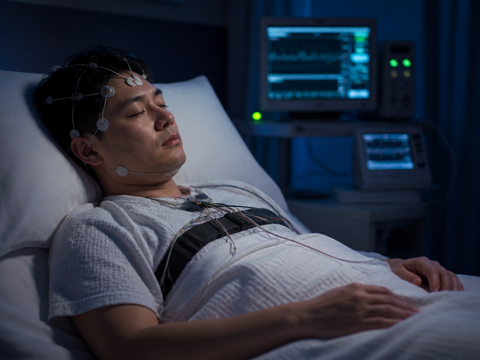
The number comes out of the Wisconsin Sleep Cohort, a long-running study that recruited state employees and put them through overnight polysomnography — the full lab sleep study, with electrodes tracking brain waves, airflow, blood oxygen, and chest movement. The researchers counted apneas (breathing stops) and hypopneas (shallow breathing) per hour of sleep, a measure called the apnea-hypopnea index, or AHI. An AHI of 15 or more put a subject in the moderate-to-severe range.
Then they checked: of the people whose sleep studies showed clear, significant apnea, how many had it written down anywhere in their medical records? Very few. The "80 percent undiagnosed" claim is really a comparison between what the lab found and what the clinic knew. It is not a claim about how dangerous apnea is, or how many people are walking around in distress. It's a claim about a detection gap.
That distinction matters, and we'll come back to it.
What kind of doctor diagnoses sleep apnea?
The short answer: your primary care physician usually starts the process, but the formal diagnosis comes from a sleep medicine physician who interprets a sleep study. No single specialty owns sleep apnea. It sits at an intersection — pulmonology, neurology, ENT, and dentistry all touch it — which is exactly why it slips through the cracks so easily, and why the people who treat it well tend to work as a group rather than a solo act.
A board-certified sleep medicine physician can come from several backgrounds. Many trained first as pulmonologists or neurologists, then added a sleep fellowship. What unites them is the certification, not the origin specialty. They are the ones who read the AHI off your study and decide what it means.
What the study is actually catching
It helps to know what's happening in your airway while you sleep, in the order it happens, because the sleep study is built to detect each step.
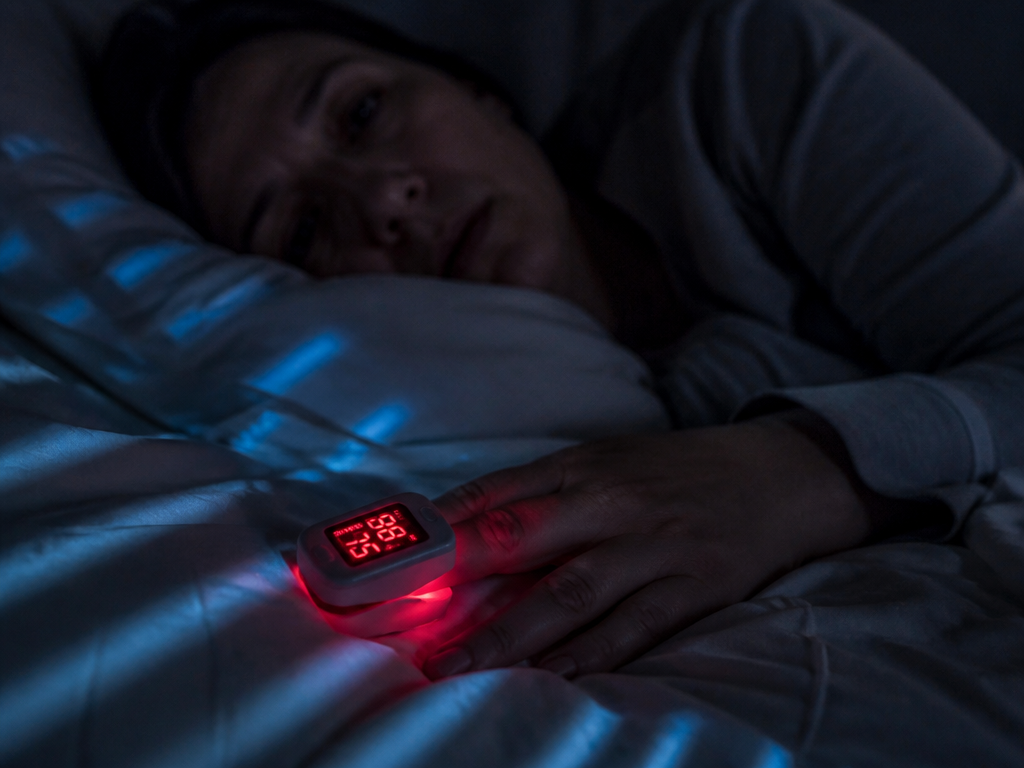
You drift into deeper sleep, and the muscles of your throat relax — including the ones holding your upper airway open. In some people, that airway narrows or collapses entirely. Air stops moving, even though your chest and diaphragm keep trying to pull it in. That's the apnea. Within seconds to a minute, the oxygen in your blood begins to fall; the pulse oximeter on your finger registers the desaturation. Your brain, sensing the rising carbon dioxide, fires a brief arousal — often too short for you to remember — and the airway muscles snap back to attention. You gasp, the airway reopens, oxygen recovers. Then you fall back asleep and the cycle restarts, sometimes thirty or sixty times an hour.
The sleep study captures all of it: the dropout in airflow, the dip in oxygen, the arousal spike on the EEG. The AHI is just a count of how often that loop runs per hour. This is why diagnosis isn't a guess. The machinery of the disorder is measurable, and the number is the measurement.

The handoff, in sequence
Most people arrive at a sleep apnea diagnosis through a relay, not a single appointment.
It usually begins with your primary care physician, often because a partner reported the snoring and gasping, or because you mentioned daytime exhaustion that coffee stopped fixing years ago. The PCP screens — sometimes with a short questionnaire like STOP-Bang, which weighs snoring, tiredness, observed apneas, blood pressure, BMI, age, neck size, and sex. A high score doesn't diagnose anything. It justifies the referral.
From there you reach a sleep medicine physician, who orders the test. That might be an in-lab polysomnogram or, increasingly, a home sleep apnea test — a smaller kit you wear in your own bed. Home tests are good at confirming clear moderate-to-severe cases and less reliable for milder or more complicated ones, which is a real limitation worth asking about, not a formality.
Diagnosis isn't the end of the relay. If treatment points toward an oral appliance, a dentist with sleep training fits it. If the obstruction is anatomical — large tonsils, a deviated septum, nasal blockage — an ENT (otolaryngologist) enters. A dietitian may join if weight is a driver, since even modest weight loss can lower AHI. The CPAP, if you use one, comes with respiratory therapists and equipment specialists who handle the unglamorous, decisive work of getting the mask to fit. You are not handed off and forgotten; you are passed between people who, ideally, talk to each other.
What the 80 percent doesn't measure
Here's where the famous number gets oversold. The Wisconsin estimate told us that lab findings outran clinical records. It did not tell us how many of those undiagnosed people were suffering, or would benefit from treatment, or even had symptoms at all. Plenty of people meet an AHI threshold and feel fine. Plenty of mild cases never progress.
The number also predates the modern detection landscape — home testing, consumer wearables flagging low overnight oxygen, far more aggressive primary-care screening. The detection gap in 2024 is almost certainly smaller than it was in 1997, though by how much is genuinely unsettled. And a detection gap is not the same as a treatment gap: getting diagnosed and actually tolerating therapy long-term are two different problems, and the second is harder.
So treat 80 percent as a historical alarm bell, not a current diagnosis of the population. It told us to look. It did not tell us what we'd find.
An honest rule of thumb
If a partner has watched you stop breathing, or you wake unrefreshed no matter how long you sleep, ask your primary care doctor for a sleep apnea screening this week — and ask specifically whether you need an in-lab study or whether a home test will do. That single question routes you correctly.
| Who | What they do |
|---|---|
| Primary care physician | Screens, refers, manages overall health |
| Sleep medicine physician | Orders and interprets the study; makes the diagnosis |
| ENT (otolaryngologist) | Treats anatomical obstruction |
| Sleep-trained dentist | Fits oral appliances |
| Respiratory therapist | Sets up and troubleshoots CPAP |
The 80 percent was never really about how sick people are. It was about how many were never seen — and being seen is the one part of this you can start tonight.