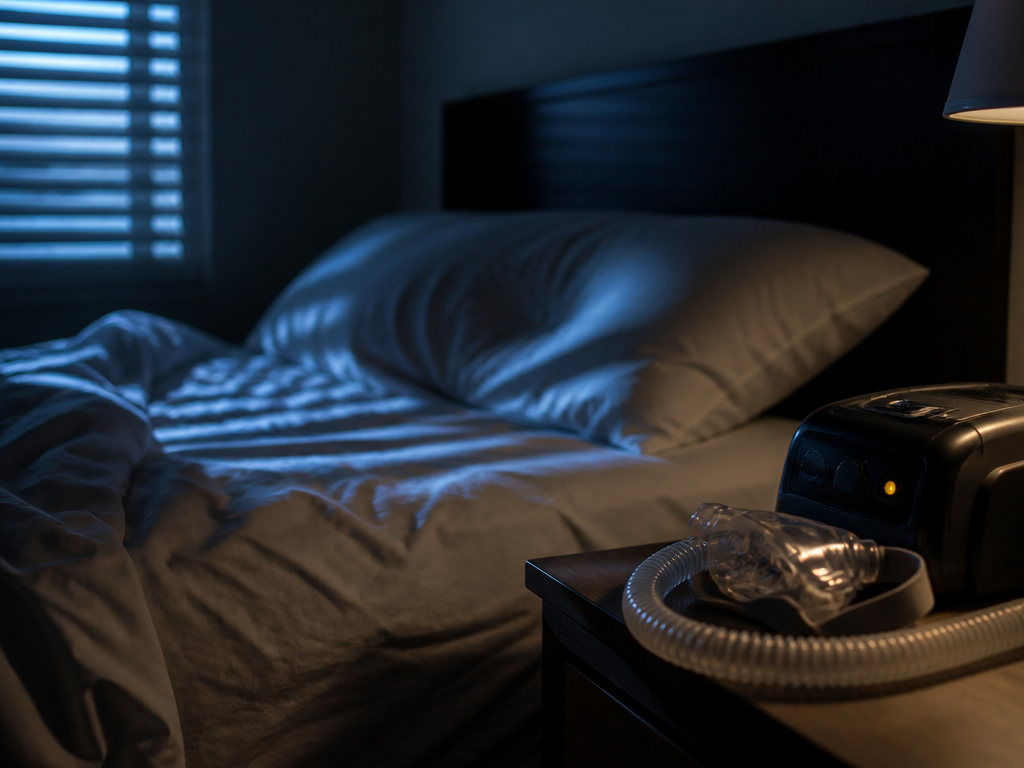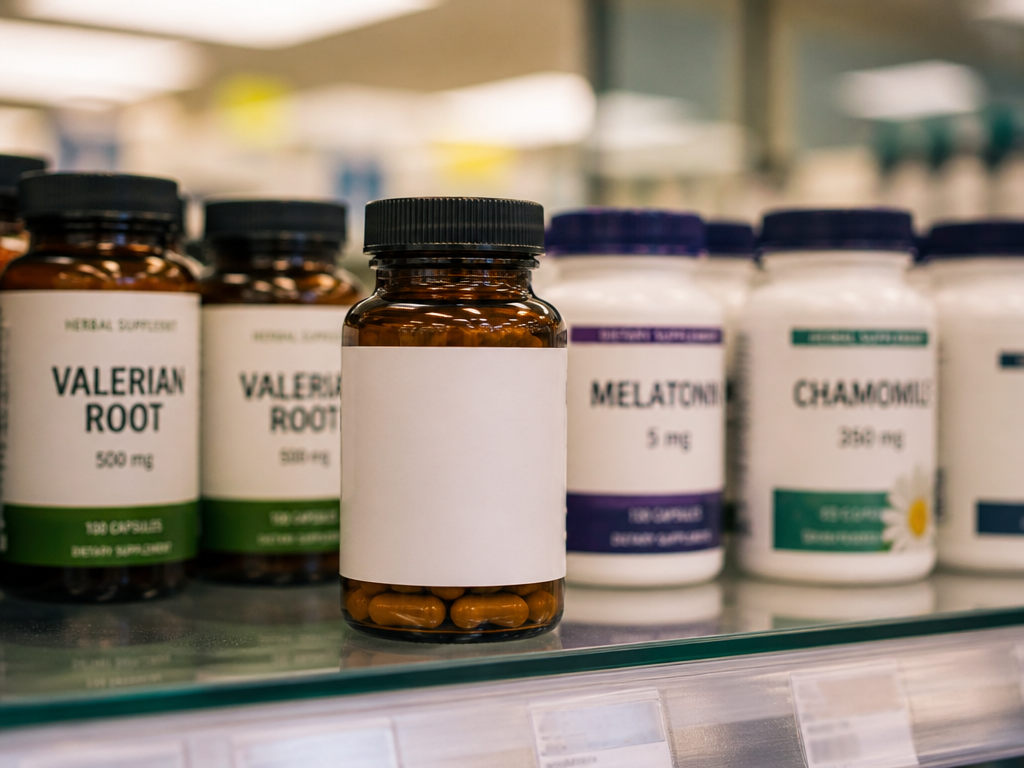
There is a bottle on a lot of nightstands. Melatonin, maybe, or a magnesium blend with a calming name and a label that says "supports healthy sleep." If you have sleep apnea — or you've just been handed the diagnosis and are reading everything you can find — that bottle can feel like a reasonable first move. Gentle. Over-the-counter. Vetted, somehow, by someone.
That last part is the assumption worth examining. Because the most common belief about these products — that the Food and Drug Administration checks them before they reach the shelf the way it checks prescription drugs — is not true. The gap between what people think the FDA does and what it actually does is wide, and for anyone managing a serious sleep disorder, the gap is worth understanding before you swallow anything.
Are sleep supplements FDA-approved?
No. Dietary supplements, including the melatonin and magnesium products marketed for sleep, are not approved by the FDA before they go on sale. Under U.S. law the manufacturer — not the agency — is responsible for ensuring a supplement is safe and that its label claims are truthful. The FDA can act only after a product is on the market, and usually only after something goes wrong. This is the single most important fact to carry into the supplement aisle, and it is almost never printed on the box.
How we started believing the bottle was vetted
The belief has a source, and the source is a law most people have never heard of.
In 1994, Congress passed the Dietary Supplement Health and Education Act — DSHEA. It is the statute that still governs this entire category. DSHEA did something specific: it defined supplements as a kind of food rather than a kind of drug. That single classification choice set the rules. Drugs must be proven safe and effective before approval. Foods are presumed safe unless shown otherwise. By filing supplements under "food," DSHEA placed the burden of proof on the regulator after the fact, not on the manufacturer beforehand.
The political backstory matters. Through the 1970s and 1980s, the FDA had tried repeatedly to treat high-dose vitamins and supplements more like drugs. Senator William Proxmire pushed back as early as 1976 with an amendment limiting the agency's authority over vitamin potency. By the early 1990s, a proposed FDA crackdown triggered a flood of public lobbying — the campaign that produced, among other things, the Mel Gibson advertisement warning that the government wanted to take your vitamins away. DSHEA was the result. It was a deregulatory law sold as consumer freedom, and it passed almost unanimously.
So the modern supplement market is not lightly regulated by accident. It was designed that way, deliberately, in a specific year, by a specific law. The belief that "it's on the shelf, so someone approved it" is a folk memory of how drugs work, mapped onto a category the law explicitly carved out of that system.
What the FDA actually does, step by step
It helps to walk through the sequence as it really happens.
First, a company decides to sell a sleep supplement. It does not submit efficacy trials to the FDA, and it does not wait for permission. For ingredients already on the market before 1994, it doesn't even have to notify the agency.
Second, the product ships. The label may carry a structure/function claim — "supports restful sleep," "promotes relaxation" — which is permitted as long as it carries the small-print disclaimer that the statement has not been evaluated by the FDA and that the product is not intended to diagnose, treat, cure, or prevent any disease. Read that disclaimer literally. It is the manufacturer telling you, in legally required language, that no agency has confirmed the central promise on the front of the bottle.

Third — and only here does the FDA enter — if reports of harm accumulate, or if the labeling crosses into disease claims, the agency can investigate, issue warning letters, or pursue a recall. The 2007 Good Manufacturing Practice rules require that what's in the bottle matches the label, but the FDA inspects only a fraction of facilities, and enforcement is reactive. The chain of events starts with you taking the product, not with anyone testing it.
Why this matters more if you have sleep apnea
Obstructive sleep apnea is not a sleep-quality inconvenience. It is repeated airway collapse during sleep, each episode dropping blood oxygen and triggering a surge of sympathetic nervous system activity — the same fight-or-flight signaling that raises heart rate and constricts vessels. Over years, that nightly pattern is linked to sustained hypertension, and untreated it compounds cardiovascular risk. The effective treatment is mechanical: continuous positive airway pressure, or CPAP, which holds the airway open and stops the oxygen drops at their source.
A sleep supplement does none of that. Melatonin may shorten the time it takes to fall asleep, but it does not keep an airway open. The real danger isn't the pill itself — it's substitution. A product that makes you feel like you're handling the problem can delay the diagnosis or the CPAP titration that actually addresses it. And because the category is regulated as food, there's a second issue: some sleep blends contain ingredients with cardiovascular effects, and the doses are not independently verified. A 2017 analysis by Erland and Saxena in the Journal of Clinical Sleep Medicine tested 31 commercial melatonin products and found actual content ranging from about 83 percent below to 478 percent above the labeled dose. For someone whose nights already strain the cardiovascular system, "you don't know what dose you're taking" is not a small footnote.
What the research actually measured
Here the honesty has to cut both ways. Melatonin's effect on sleep onset is real but modest — meta-analyses generally find people fall asleep roughly seven to twelve minutes faster, which is meaningful for some and trivial for others. The evidence that magnesium improves sleep in people who aren't deficient is plausible but thin; most cited trials are small and short. And crucially, none of this was ever evidence about apnea. The supplements marketed alongside sleep disorders were studied, when they were studied at all, in healthy adults with ordinary insomnia. The leap from "may help you fall asleep" to "appropriate for a breathing disorder" is one the data never made.
An honest rule of thumb
Treat the disclaimer on the back of the bottle as the most accurate sentence on the package, and act accordingly.
Tonight, that means: if you've been diagnosed with apnea, or you snore loudly and wake unrefreshed, don't let a supplement stand in for an evaluation. If you do take one, tell your physician the exact product, because dose and cardiovascular interactions are real and unverified.
| If you assume... | The reality is... |
|---|---|
| The FDA approved it | No pre-market approval exists for supplements |
| The label dose is accurate | Independent testing finds wide variance |
| It treats the disorder | It was studied for ordinary sleep onset, not apnea |
| It's a safe stopgap | The risk is the delay it creates |
The myth: a sleep supplement on a store shelf has been checked and cleared, so it's a safe first step for a breathing problem at night. The more accurate version: the law lets it reach that shelf untested, the dose may not match the label, and for sleep apnea the only thing it reliably treats is your sense that you've done something.