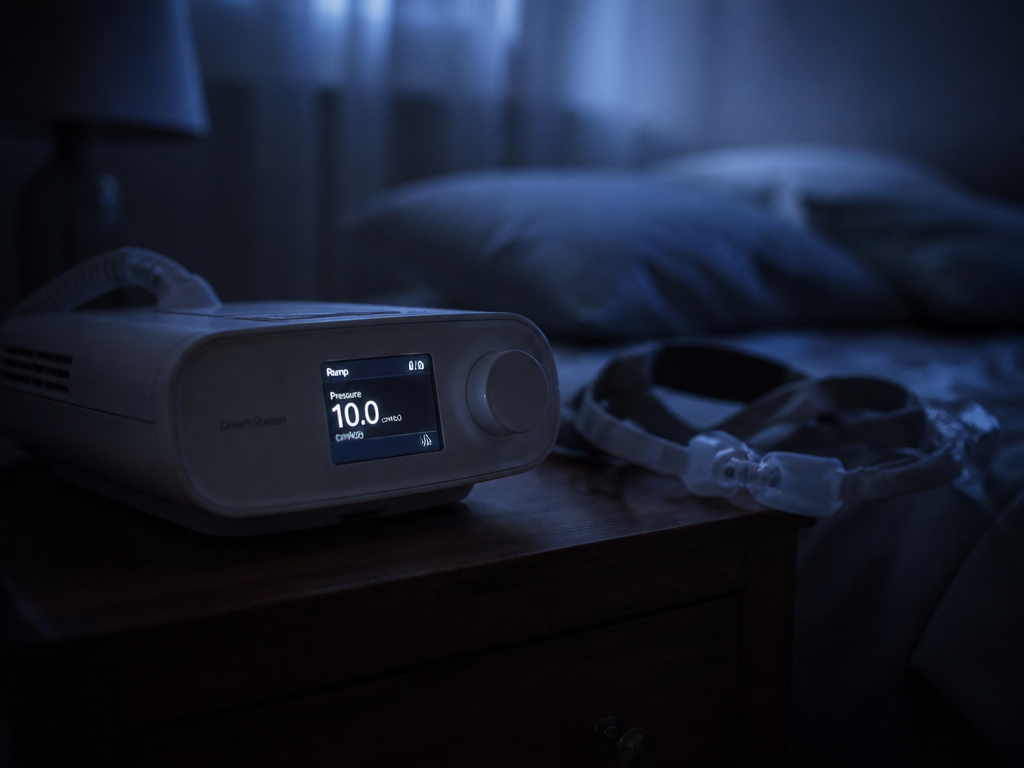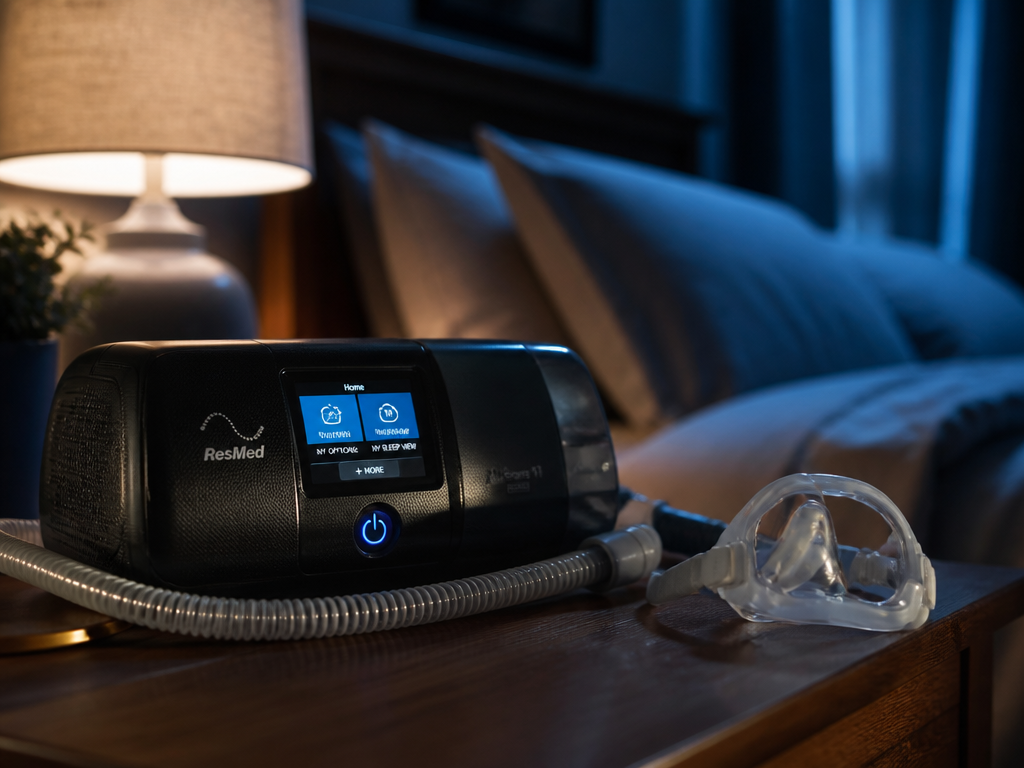
You have heard, probably from a forum or a well-meaning friend, that the real test of CPAP is how you feel in the morning. If you still wake up foggy after a week on the machine, the logic goes, the therapy isn't working and you might as well stop.
It is one of the more persistent myths in sleep apnea treatment, and it is wrong in an instructive way. The morning feeling is real data. It is just a terrible single instrument — noisy, lagging, and easily drowned out by a late dinner, a glass of wine, or a two-year-old who woke up at 4 a.m. If you own a ResMed machine with myAir access, you already have a better set of instruments. The trouble is that nobody explains what they actually measure.
Why "I still feel tired" is a bad first witness
Subjective sleepiness recovers slowly and unevenly. In the APPLES trial (Kushida et al., 2012, Sleep, just over 1,000 participants), CPAP improved objective measures and some neurocognitive scores, but the relationship between how much therapy people got and how much better they felt was loose — better adherence helped, but feeling did not track adherence in a tidy line. People expecting a switch-flip by day three are measuring against the wrong timeline.
There's also a confound nobody warns you about: a freshly treated apnea patient often sleeps more deeply, which can mean more vivid dreams, more awareness of the mask, and a few rough nights before things settle. Feeling worse on night four is not evidence of failure. It is, sometimes, evidence the machine is doing something.
So judge the therapy the way your clinician does. With numbers.
What the four myAir numbers actually measure
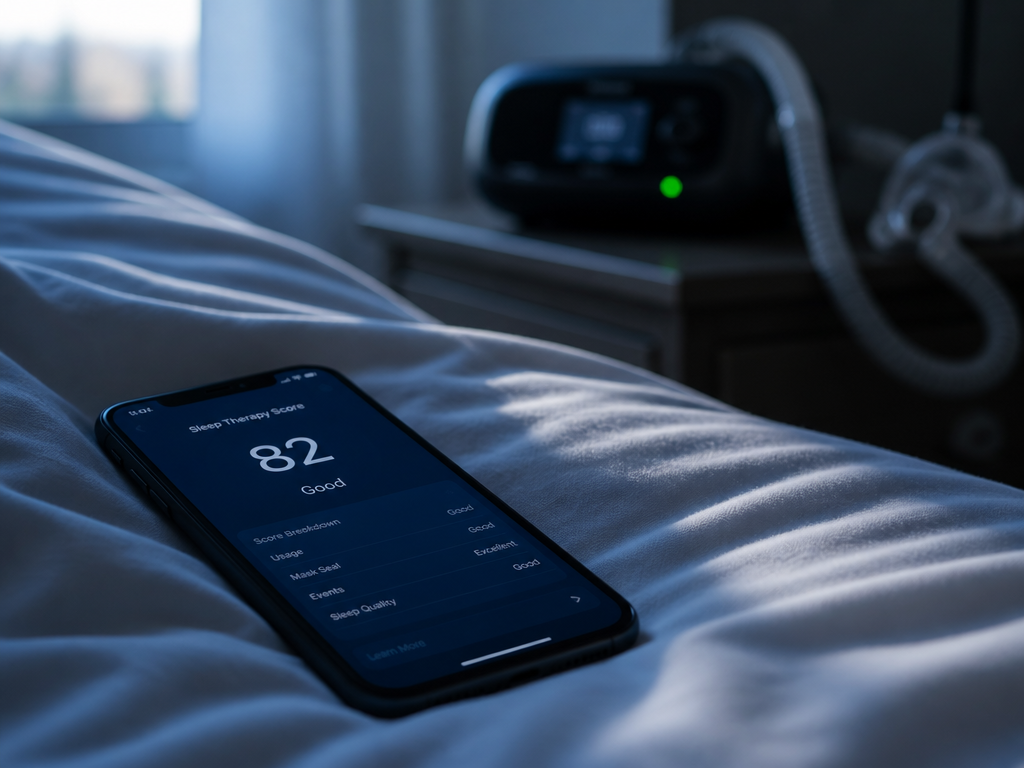
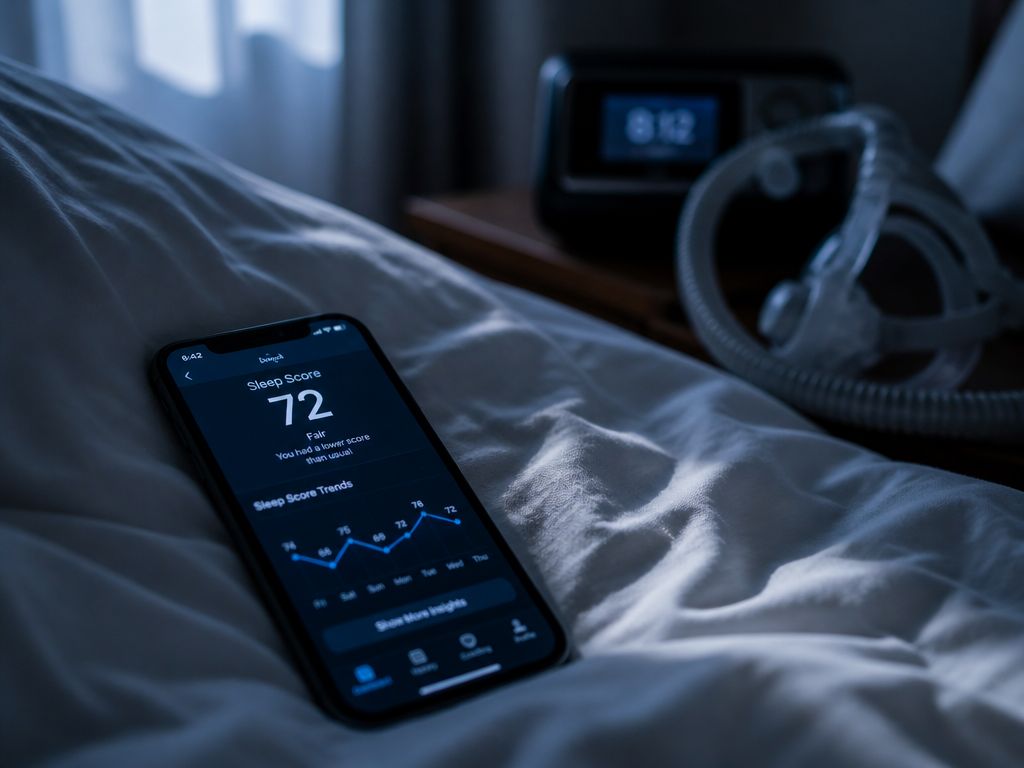
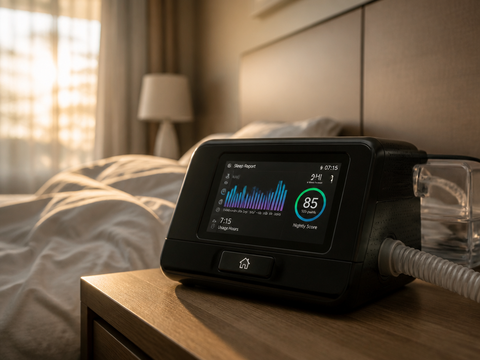
Each morning, myAir scores your night out of 100 and breaks the score into four parts: usage hours, mask seal, events per hour, and mask on/off events. Here's what each one is honestly telling you.
Usage hours is the simplest and the one insurers care about most. In the United States, Medicare's adherence rule is well-established and blunt: at least 4 hours per night on 70% of nights during a 30-day window in the first 90 days. That threshold is administrative, not biological — there is nothing magic about hour four. Longer is better, and the dose-response runs deep into the night. Weaver et al. (2007, Sleep) found that daytime function and sleepiness kept improving as nightly use climbed past 6 and 7 hours. So treat "4 hours" as the floor a bureaucrat drew, not the goal.
Events per hour is the number that answers the question you actually care about: is the apnea being controlled? This is your residual AHI — the apneas and hypopneas the machine still detects while you're on therapy. The clinical target for treated AHI is under 5 events per hour, the same cutoff that defines the absence of apnea. If your diagnostic study put you at 38 and myAir now shows 2.1, that is the core promise of the device, kept and logged. This metric is the strongest single signal of whether the pressure is doing its job.1
Mask seal (myAir frames it as how well the mask fit) is a leak measurement. A large, sustained leak doesn't just wake you — it can let pressure escape so the machine can't hold your airway open, which quietly raises the events number. Seal is the metric most under your control, and the one most worth chasing on a bad-score morning.
Mask on/off events counts how many times the mask came off or was removed. A high count usually means discomfort, claustrophobia, or a leak you fixed at 3 a.m. by ripping the thing off. It is a behavior signal, not a disease signal.
What CPAP is doing while you read this, in order
The metrics make more sense if you know the mechanism they're tracking. Obstructive apnea is, at bottom, a plumbing problem.

When you fall asleep, the muscles that hold your throat open relax. In an apnea-prone airway, the soft tissue at the back of the throat collapses inward. You try to breathe; nothing moves. Oxygen falls, carbon dioxide rises, and after some seconds your brain triggers a brief micro-arousal — a stress pulse that yanks you toward wakefulness just long enough to stiffen the airway and gasp. You rarely remember it. It can happen thirty, fifty, eighty times an hour, and each one fragments sleep and spikes your sympathetic nervous system.
CPAP — continuous positive airway pressure — interrupts that loop at the first step. The machine delivers a steady column of pressurized air through the mask, acting as a pneumatic splint that holds the collapsible airway open from the inside. The tissue can't fall in, so the breath doesn't stop, so the micro-arousal never fires. No arousal, no sympathetic spike, no fragmentation. The events-per-hour number is, quite literally, a count of how often that splint failed overnight. A low number means the loop stayed broken all night, even on the nights you don't feel transformed yet.
The data is a shared instrument, not a verdict
This is where the numbers earn their keep. A residual AHI creeping up over two weeks, or a seal score that craters every Tuesday, is not something to interpret alone at your kitchen table. It is the opening line of a useful conversation. Your clinician or DME provider sees a more detailed version of the same data through AirView, and a specific complaint — "events jumped to 9 after my pressure was changed" or "seal collapses whenever I sleep on my left side" — is worth far more than "I think it might not be working." The app turns a vague dread into an editable problem.
What the numbers honestly can't tell you
Be clear about the limits. myAir's event detection is good but not equivalent to an in-lab study; the algorithm estimates events from flow and pressure signals, and it can't score brain activity or leg movements. A perfect score does not rule out other reasons you're tired — insomnia, restless legs, depression, an under-titrated pressure, or simply not enough total sleep. The well-established claim is narrow and strong: if your residual AHI is consistently low and your usage is high, your obstructive apnea is being controlled. The thinner, oversold claim is that good numbers guarantee you'll feel rested. They make it likely. They don't promise it.
| Metric | What it really measures | A reasonable target | What a bad reading suggests |
|---|---|---|---|
| Usage hours | Dose of therapy | 6+ hrs (4 is the insurance floor) | Comfort, habit, or mask problem |
| Events/hour | Residual AHI — disease control | Under 5 | Pressure or leak issue — flag it |
| Mask seal | Air leak around the mask | High / "good fit" most nights | Fit, headgear, or mask size |
| Mask on/off | Times mask was removed | Low and stable | Discomfort or claustrophobia |
An honest rule of thumb
Stop grading your therapy by how you feel on any single morning. Grade it by the seven-day trend of two numbers: events per hour (is it under 5?) and usage (is it climbing?). Feeling follows function, but it follows it slowly.
This week, try one thing: open myAir every morning for seven days and write the events-per-hour number on a sticky note — nothing else, just that one digit. At the end of the week you'll have a row of numbers that tell you, with no morning fog in the way, whether the machine is doing what it was built to do. Bring that row to your next appointment.
You don't have to trust how you feel. You can check.
-
Diagnostic AHI and residual (on-therapy) AHI are different animals. The first is measured during a sleep study to confirm apnea; the second is what your machine estimates each night. Comparing the two is the cleanest before-and-after you'll get. ↩