If you've told a doctor that your lower back aches and you also sleep badly, you've probably heard some version of the same advice: fix the sleep, and the back will follow. It's not bad advice. It's just usually offered for the wrong reason — as if a good night's sleep were a kind of overnight repair shop for the spine. The truer story is stranger and more useful. Sleep apnea and chronic back pain do tend to show up in the same people, but the link runs less through your vertebrae than through your nervous system's volume knob for pain.
So it's worth pulling the two apart, then seeing how they actually connect.
Does sleep apnea cause back pain?
Not directly, as far as anyone can show. There's no plausible mechanism by which a collapsing airway tugs on a lumbar disc. What the evidence supports is gentler and more interesting: poor, fragmented sleep — the hallmark of untreated apnea — makes existing pain feel worse, and pain in turn makes sleep harder to come by. The relationship is bidirectional. Each condition is a hand pushing on the other, which is exactly why they're so often found together and so hard to untangle one at a time.
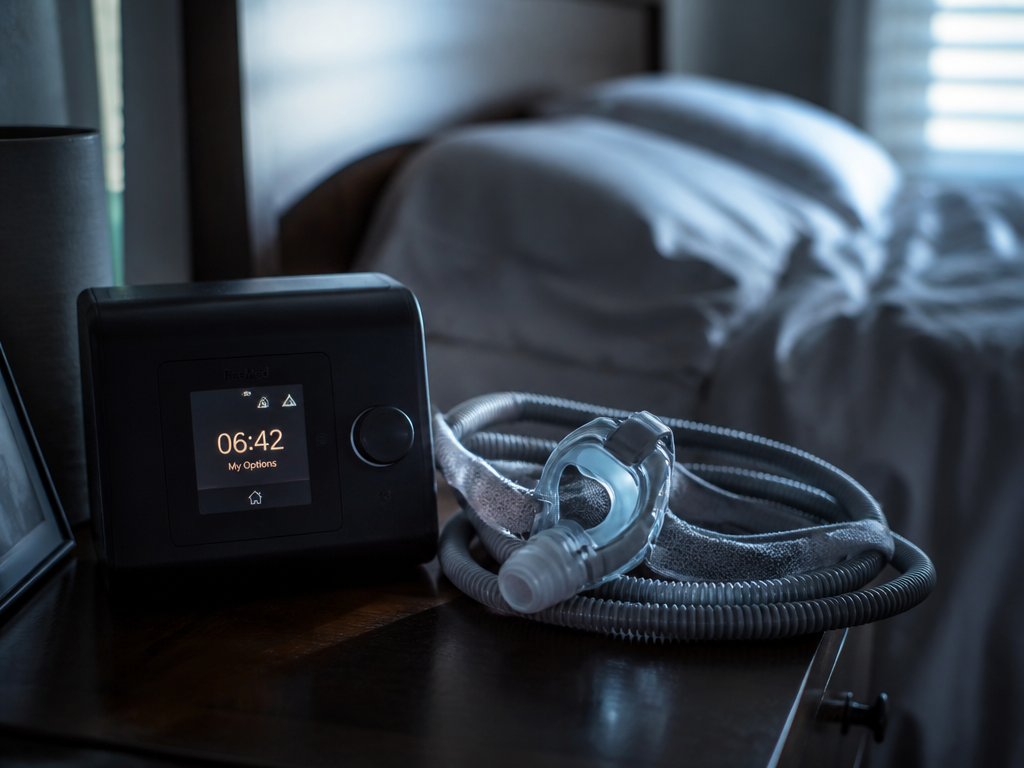
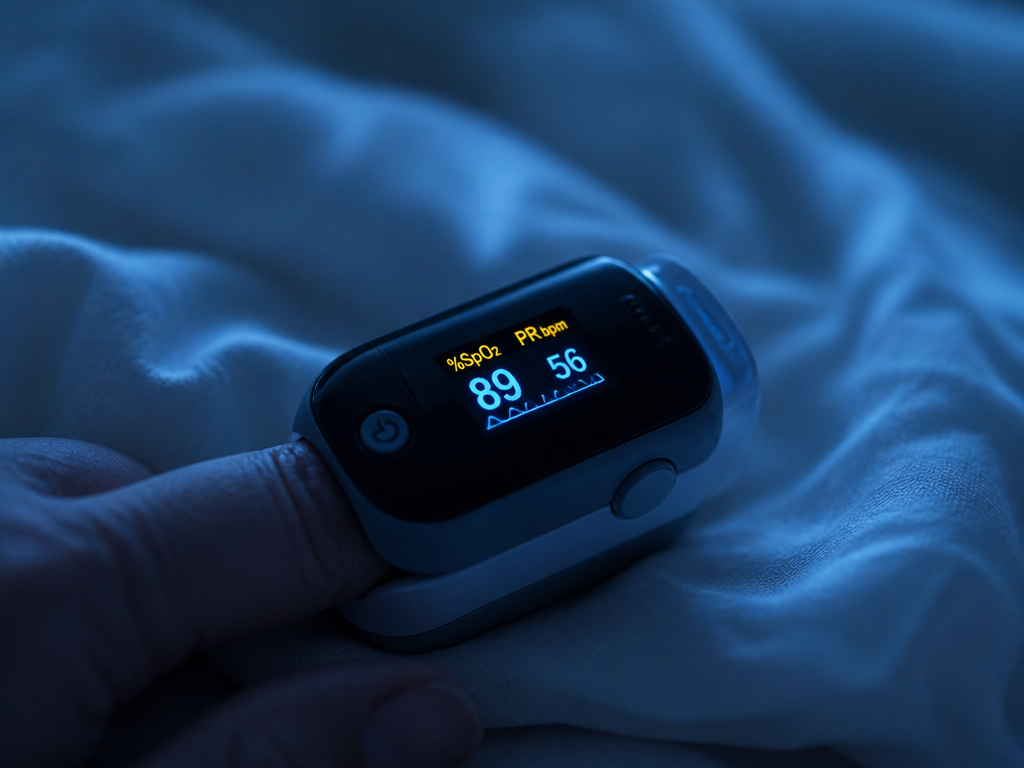
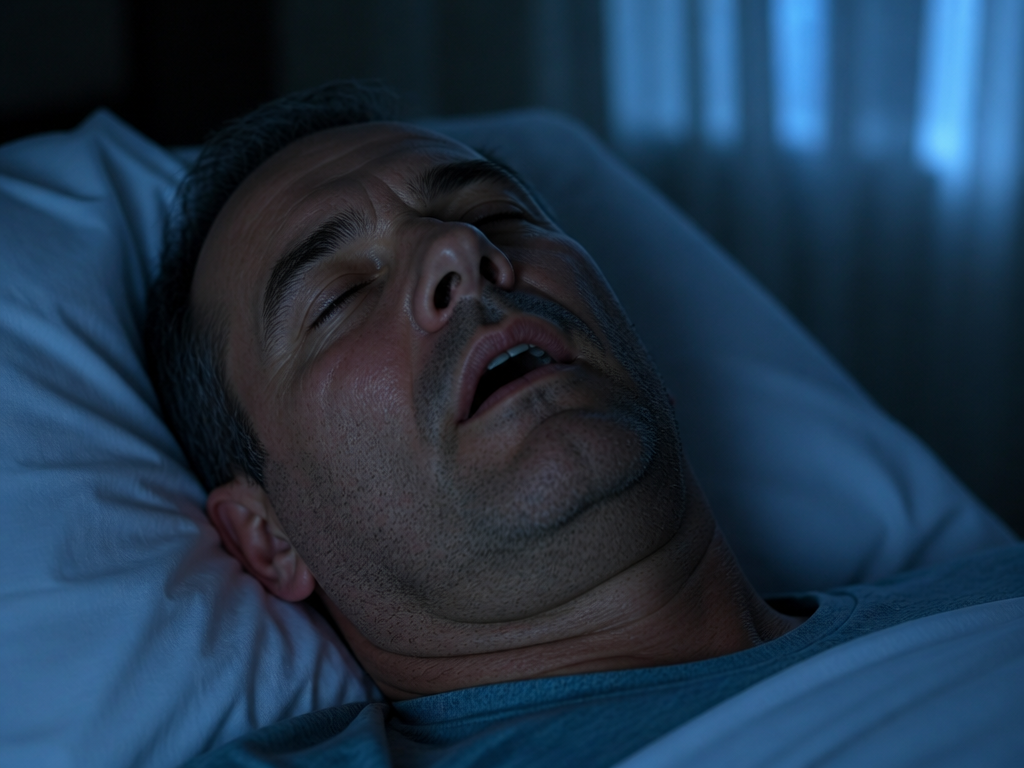
Obstructive sleep apnea, to be clear about terms, is the repeated partial or complete collapse of the upper airway during sleep. Each collapse drops your blood oxygen and yanks you toward wakefulness — often hundreds of times a night, mostly without your knowing. You can sleep eight hours and still have been functionally interrupted every few minutes.
What a bad night actually does to pain
Here's the chain of events, roughly in the order it happens in the body.
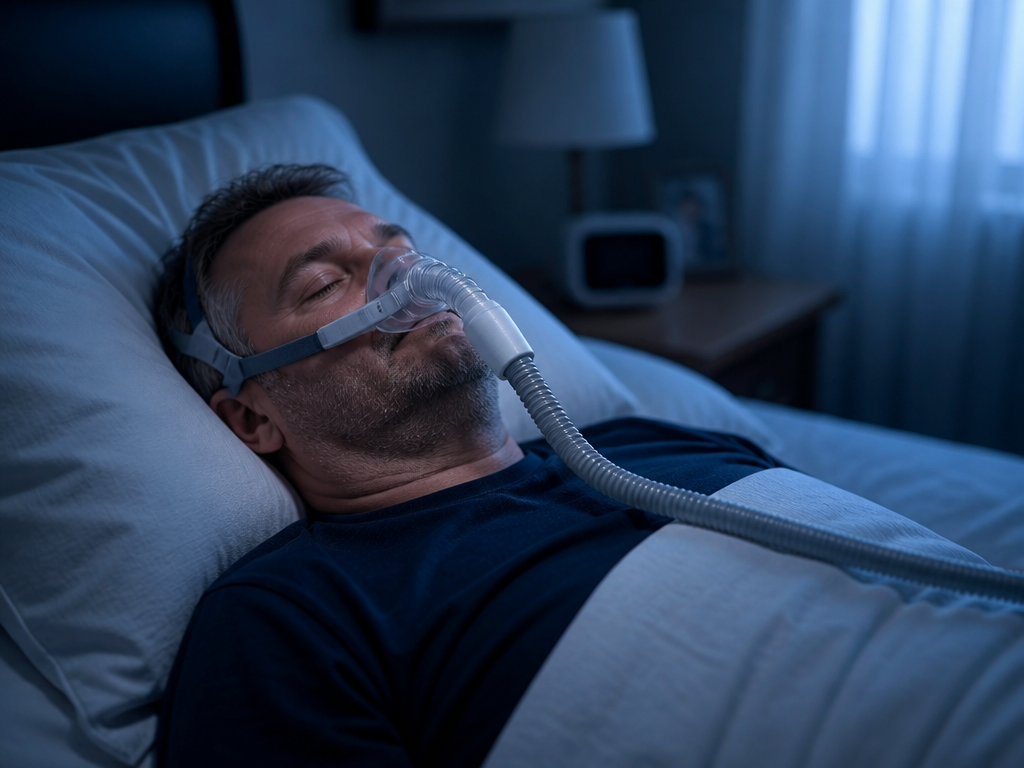
You drift down toward deep sleep. Your throat muscles relax, and in apnea, that relaxation lets the airway narrow or close. Oxygen falls. Your brain, sensing the problem, fires a brief arousal to reopen the airway — you may gasp, shift, or simply surface from deep sleep into a lighter stage without waking. The airway reopens. You sink back down. Then it happens again.
The casualty in all this is slow-wave sleep, the deepest stage, and REM — the stages your brain reaches only when it's allowed long, uninterrupted runs. Apnea chops the night into fragments too short to get there. And it turns out those deep stages are when your body does some of its anti-inflammatory and pain-regulating housekeeping.
Strip them away and you wake up hyperalgesic. The word looks clinical, but it just means your pain system has turned its gain up: stimuli that would normally register as mild read as sharp, and genuinely painful things hurt more. Your back didn't get worse overnight. Your brain's threshold for calling something "pain" dropped.
What the research actually measured
The strongest evidence here isn't about apnea specifically — it's about sleep loss and pain sensitivity, studied directly. The widely cited work is Haack et al. (2020) in Neuropsychopharmacology, a review summarizing experiments in which healthy people had their sleep restricted or fragmented in the lab and then had their pain thresholds tested. The consistent finding: shorten or fracture sleep, and pain sensitivity climbs, partly through disrupted opioid and dopamine signaling and partly through low-grade inflammation. A frequently referenced experimental piece, Smith et al. (2007) in the journal Sleep, found that forced awakenings through the night — sleep fragmentation, not just short sleep — impaired the body's own pain-dampening systems more than simply cutting sleep short did. That matters, because fragmentation is precisely what apnea delivers.

On apnea and back pain together, the data is thinner than the confidence with which the connection is usually stated. Epidemiological studies — for instance work pooled in reviews of chronic pain and sleep-disordered breathing — find that people with chronic pain report sleep apnea symptoms at higher rates than the general population, and vice versa. But these are associations. They can't tell you which came first, and obesity, age, and inactivity sit in the background nudging both numbers up.
The question patients most want answered — if I treat the apnea, will my back stop hurting? — has the weakest evidence of all. A few small studies and case series suggest that CPAP, the standard apnea treatment, modestly improves pain and pain-related quality of life in people who have both conditions. Khalid et al. (2011) in the Journal of Clinical Sleep Medicine reported that effective CPAP use was associated with reduced headache and pain complaints. But sample sizes are small, the effects are modest, and "associated with" is doing a lot of work. Call it plausible but unproven.
Where the simple advice breaks down
So "fix your sleep and your back will follow" is roughly right — sleep loss genuinely amplifies pain, and apnea is a sleep-loss machine. But the slogan oversells two things.
First, treating apnea doesn't reliably erase pain. If you have a herniated disc or arthritic facet joints, CPAP will not heal them. At best it lowers the volume on pain you'd still have at a quieter setting. Some people get meaningful relief; some get a better night and a back that aches just the same.
Second, the advice ignores the return arrow. Chronic back pain disrupts sleep on its own — it's hard to stay in slow-wave sleep when your spine protests every time you roll over. So treating the pain can improve sleep, and treating the sleep can improve pain, but neither is a master switch. People who chase only one side sometimes wonder why they're not better. The honest answer is that they're standing in a loop and pushing on only one wall of it.1
An honest rule of thumb
If you have both, treat both, and don't expect either fix to do the other's job. Practically, tonight:
| If you... | The reasonable move |
|---|---|
| Snore loudly, gasp, or feel unrefreshed despite enough hours | Ask about a sleep study — untreated apnea undermines any pain plan |
| Have diagnosed apnea and chronic pain | Use your CPAP consistently and keep your pain treatment; judge them separately |
| Sleep poorly because pain wakes you | Treat the pain as a sleep problem too, not only an orthopedic one |
The directive version: pick the condition with the clearest treatment and the most disruption to your nights, fix that one properly, and reassess the other in a few weeks rather than assuming it will resolve on its own.
The opening advice said sleep would repair your back. It won't. But fragmented sleep makes your back hurt more than it has to — and that, unlike the disc itself, is something you can often turn back down.
-
Weight sits in the middle of that loop too. Excess weight worsens both apnea and mechanical back load, which is why a single lifestyle change can appear to "treat" both at once and muddy any clean attribution of cause. ↩