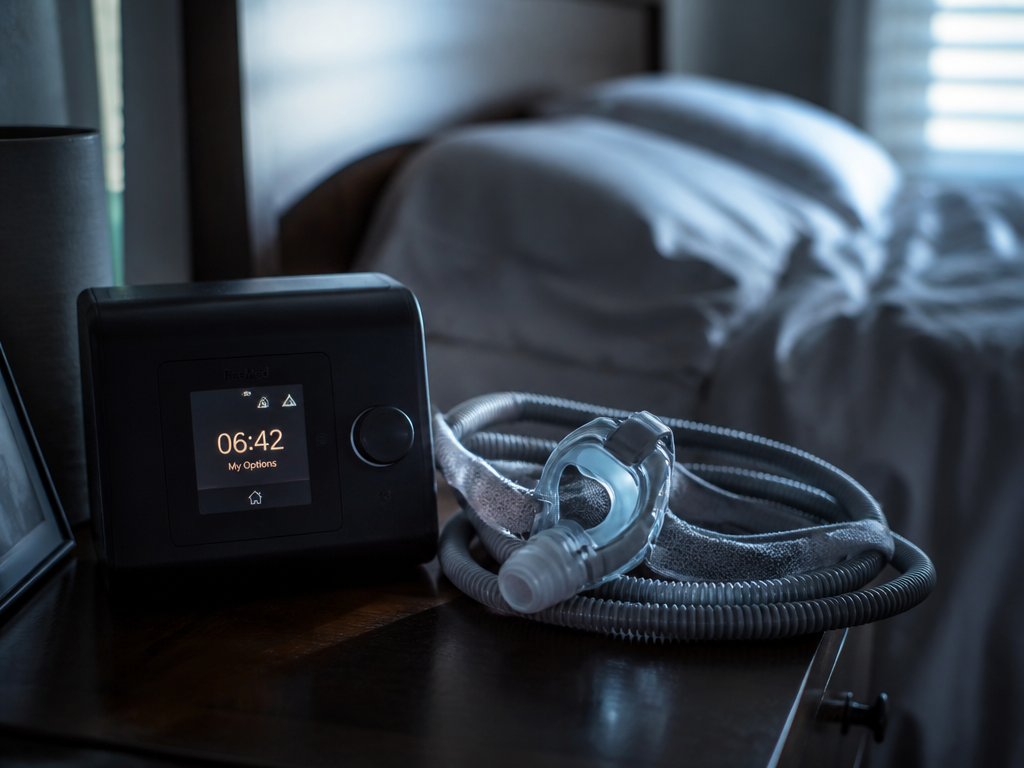
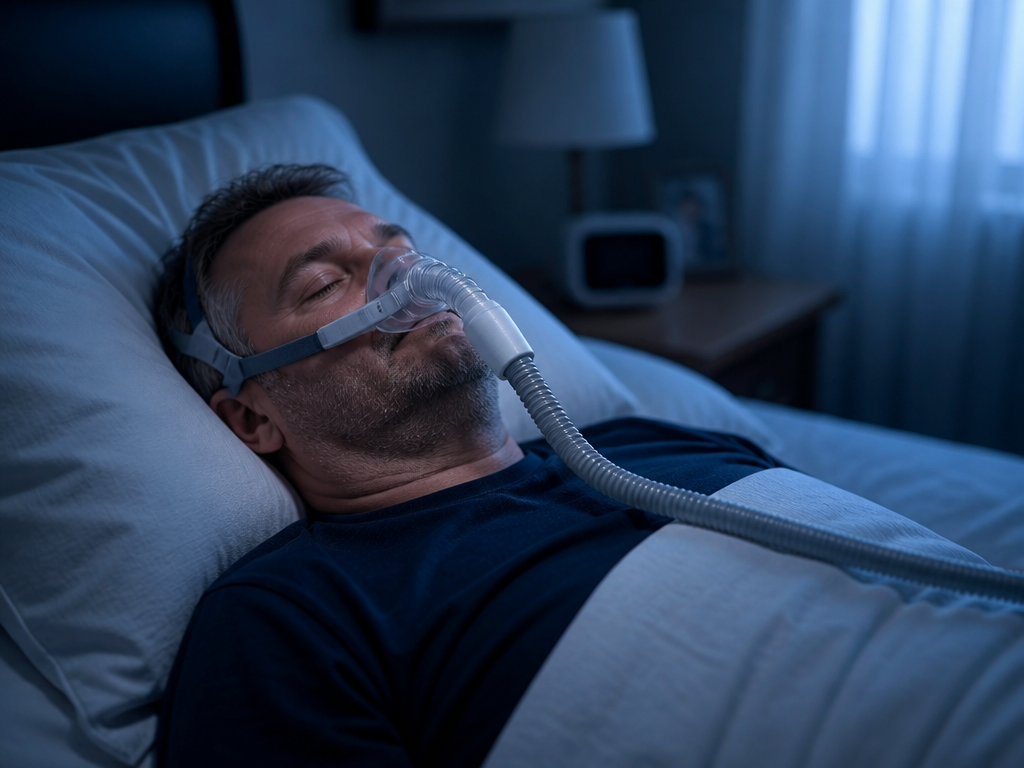
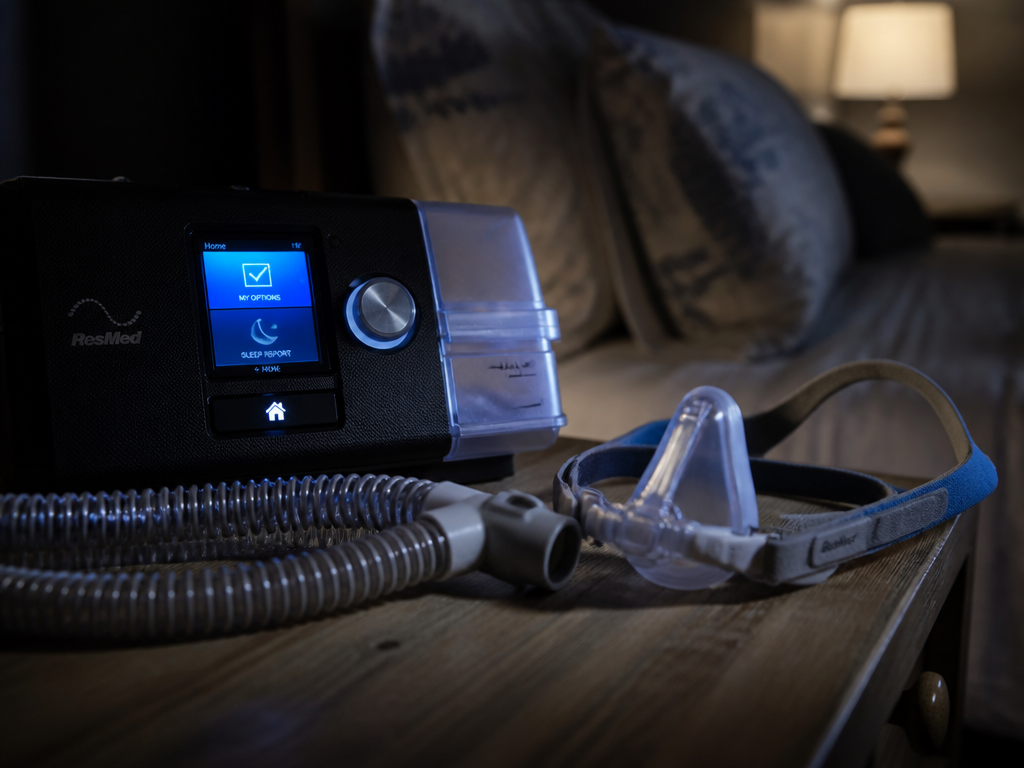
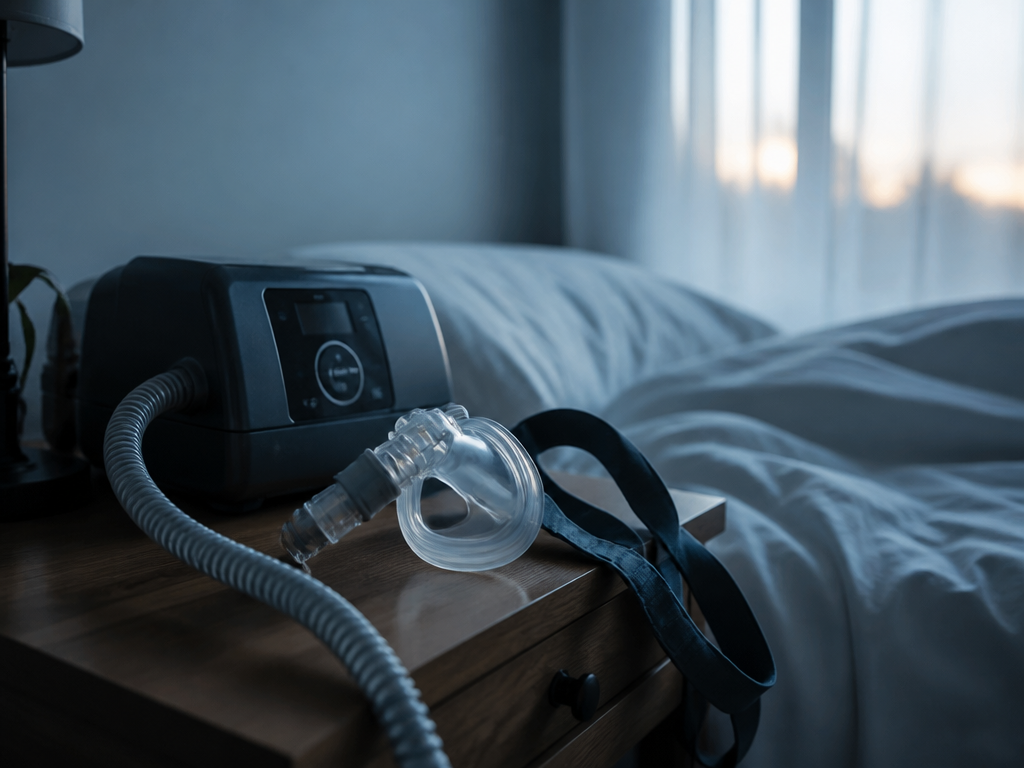
There is a specific object in a lot of bedrooms: a CPAP machine, boxed or shoved under the bed, used for nine nights and then abandoned. If you own one, you have probably asked yourself the question this article is about. Is there a sleep apnea treatment that actually works for you — one you'll keep using — if the gold-standard machine is the thing you can't tolerate?
The short, unsatisfying answer is yes, with conditions. The longer answer is more interesting, because it turns on a distinction sleep medicine doesn't talk about enough: the difference between a treatment that works in a lab and a treatment that works in your life.
The number that gets quoted, and the number that matters
Continuous positive airway pressure is the most effective treatment for obstructive sleep apnea, and it isn't close. A CPAP machine pushes a column of pressurized air down your throat and splints the airway open mechanically. For a person who wears it all night, every night, it can drop the apnea-hypopnea index — the count of breathing pauses and shallow breaths per hour — from severe (30+) into the normal range (under 5). That's a near-total fix of the airway problem.
So why are we having this conversation at all?
Because of the second number. Adherence to CPAP is famously poor. The commonly cited threshold for "adherent" is itself modest: four hours a night, on at least 70 percent of nights. Studies tracking real-world use have repeatedly found that somewhere between a third and a half of patients fall short of even that bar within the first year. A frequently referenced analysis is Weaver and Grunstein (2008) in Proceedings of the American Thoracic Society, which laid out how much of CPAP's measured benefit evaporates once you account for the nights the mask comes off at 2 a.m.
This is the gap that makes alternatives worth taking seriously. A device that controls 75 percent of your apnea but gets worn 100 percent of the night can, in practice, beat a device that controls 95 percent but lives in a closet. Efficacy is what the machine can do. Effectiveness is what it does for you. The two are not the same, and the gap between them is where most of this decision actually lives.
Do mouth guards work for sleep apnea?
Yes — for the right person, with real but partial results. A mandibular advancement device, the most studied oral appliance, holds your lower jaw a few millimeters forward through the night. For mild-to-moderate OSA it can lower the apnea-hypopnea index substantially, often by 50 percent or more, and bring many patients into a controlled range. It works best for people who are not severely obese, whose apnea is positional or jaw-related, and who simply cannot stick with a mask. It is not a reliable fix for severe OSA, and it is not equivalent to CPAP on the metric of airway control. It is, for a meaningful slice of patients, the treatment they'll actually use.
The evidence here is decent. A useful reference point is a 2013 randomized trial by Phillips and colleagues in the American Journal of Respiratory and Critical Care Medicine, which compared CPAP against a mandibular advancement device head-to-head. CPAP reduced the AHI more — that result held. But the oral appliance was used for more hours per night, and on the health outcomes the researchers tracked, including daytime sleepiness and blood pressure, the two treatments came out roughly even. The machine won on the airway. The mouthpiece tied on the things the patient feels.
What's happening in your throat, step by step
To understand why a jaw device does anything at all, follow the collapse in order.
You fall asleep. The muscles of your upper airway — the ones holding your throat open while you're awake — relax along with everything else. In a person with OSA, the airway behind the tongue is already crowded: by soft tissue, by a recessed jaw, by fat in the neck, by the tongue's own bulk. As the muscles slacken, that crowded space narrows. On inhalation, the negative pressure you generate pulls the walls of the throat inward, and the airway collapses. Airflow stops. Oxygen drops. Your brain, sensing the suffocation, jolts you toward wakefulness just enough to fire the airway muscles back up. You gasp, the airway reopens, and the cycle resets — sometimes dozens of times an hour, mostly without your conscious knowledge.
A mandibular advancement device interrupts this near the front of the chain. By holding the lower jaw forward, it drags the base of the tongue forward with it and tensions the soft tissue of the airway walls. The crowded space gets slightly larger and slightly more resistant to collapse. It is not splinting the airway open with pressure the way CPAP does; it is changing the anatomy so the collapse is less likely to start.
The two oral devices, and what they ask of you
There are essentially two designs. The mandibular advancement device, described above, is the workhorse, and it's the one with the research behind it. The other is the tongue-retaining device, which uses a small suction bulb to hold the tongue itself forward. Tongue-retaining devices are useful for people who can't move the jaw forward — say, after certain dental work — but they're less comfortable and far less studied, which is a polite way of saying we know less than the confidence with which they're sometimes sold.
Neither is free of cost to wear. Morning jaw soreness, tooth movement over months and years, excess salivation or dry mouth, and bite changes are all documented with long-term mandibular device use. This is the strongest argument against the drugstore boil-and-bite versions: a custom appliance fitted by a dentist trained in dental sleep medicine can be titrated, advancing the jaw in small increments to find the point where breathing improves without wrecking your bite. The off-the-shelf version skips all of that, and tends to underperform in exactly the ways you'd predict.
Where the answer becomes "it depends"
Severity is the first fork. The 2015 clinical practice guideline from the American Academy of Sleep Medicine and the American Academy of Dental Sleep Medicine recommends oral appliances for adults who can't tolerate CPAP or prefer an alternative — and it's written most confidently for mild-to-moderate disease. If your AHI is in the 40s, an oral appliance alone is unlikely to be enough.
Anatomy is the second. Positional sleep apnea — apnea that's much worse on your back — sometimes responds well to the cheapest intervention there is: a device or shirt that keeps you off your back. Weight is the third, and the least comfortable to say out loud: substantial weight loss can lower AHI more than any appliance, and changes nothing about whether you'll wear a mouthpiece tonight.
And there's a newer option worth naming: hypoglossal nerve stimulation, an implanted device that fires the nerve controlling the tongue with each breath. The STAR trial (Strollo et al., 2014, New England Journal of Medicine) reported meaningful AHI reductions in selected moderate-to-severe patients. It is surgical, it is expensive, and it is reserved for specific candidates — not a first move, but no longer science fiction.
An honest rule of thumb
If you have mild-to-moderate OSA and you've genuinely tried and failed CPAP, ask for a referral to a dentist trained in dental sleep medicine — not a drugstore mouthpiece — and insist on a follow-up sleep study while wearing the appliance, so you're measuring the airway and not just guessing. A device that lowers your AHI on paper but that you don't repeat-test is a hope, not a treatment.
The partner test is the crude home version: if the room goes quiet and stays quiet, you're on to something. If the gasping persists, the device isn't doing its job, no matter how well it fits.
The question we can't quite close
Here is what's still unsettled, and worth sitting with. We have good data that CPAP and oral appliances both lower the apnea index and both reduce daytime sleepiness. We have far thinner data on the outcome that actually matters over decades — whether either device, used imperfectly the way humans use things, meaningfully lowers your long-term risk of heart attack, stroke, and early death. The trials that would answer that are long, expensive, and complicated by the fact that the people who quit treatment are exactly the people we'd most want to follow.
So the real question isn't only which device works. It's which device works on you, for years, on the nights you're tired and don't feel like bothering — and we have almost no idle data on that last part at all.