The most interesting number in a ResMed quarterly earnings release is not revenue growth. It is the gross margin — and the counterintuitive claim is this: ResMed has spent the last two years raising effective prices in a product category that every model of the market says should be commoditized by now. Not by much. Not loudly. But it has done it, and the payers have absorbed it.
That should not work. Let me spend the rest of this earning the right to have said it.
Why sleep devices are supposed to have no pricing power
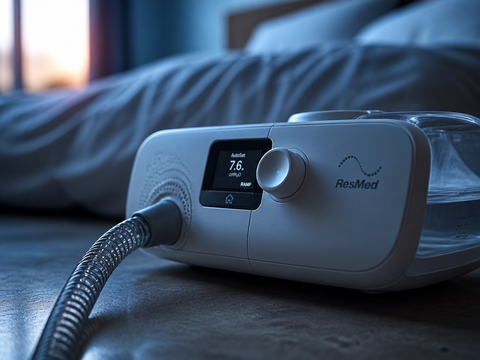
A CPAP machine is a blower, a pressure sensor, a control board, and a humidifier. The core patents on positive airway pressure expired long ago. In the United States, the largest single buyer of these devices is Medicare, and Medicare has spent two decades doing exactly what a monopsonist does: competitive bidding programs, capped rental periods, fee schedules that ratchet down and rarely up. Durable medical equipment is the textbook case of a category where the manufacturer is a price-taker.
Then add the structural point. The device is sold to a distributor — a home medical equipment provider — not to the patient. That distributor is itself squeezed between a fixed reimbursement rate and its own cost of goods. Every dollar the manufacturer takes comes directly out of the distributor's margin. The buyer is sophisticated, concentrated, consolidating, and has every incentive to fight.
Under those conditions the expected outcome is flat-to-declining average selling prices and margin that only improves through manufacturing productivity. That is the model. It is a good model. It is also, for the last several years, wrong about this company.
What actually moved the margin
Here is the mechanism, in the order it happens on the income statement.
It starts upstream, in the bill of materials. Through 2021 and 2022, ResMed was paying broker-market prices for semiconductors — buying chips on the spot market at multiples of contract price because the alternative was not shipping devices at all. That cost, plus air freight substituted for ocean freight, landed directly in cost of goods sold. Gross margin compressed into the mid-to-high 50s, several hundred basis points below where the company had historically operated.
Then those costs unwound. Component pricing normalized. Freight went back into containers. Neither of those is a pricing decision; both are reversions. A careful analyst discounts them entirely — they restore a baseline, they do not create one.
What happened next is the part worth attention. As the cost relief arrived, ResMed did not give it back. The list prices set during the shortage period largely held. Management has described the pricing component of margin improvement in deliberately modest language — "modest" is the standard word, and it is doing real work in that sentence — but modest and permanent is a different animal from modest and temporary. A 100-basis-point structural price improvement on a multi-billion-dollar revenue base compounds into the terminal value in a way that a freight reversion never does.
The third lever is mix, and it is the largest.
The annuity nobody prices correctly
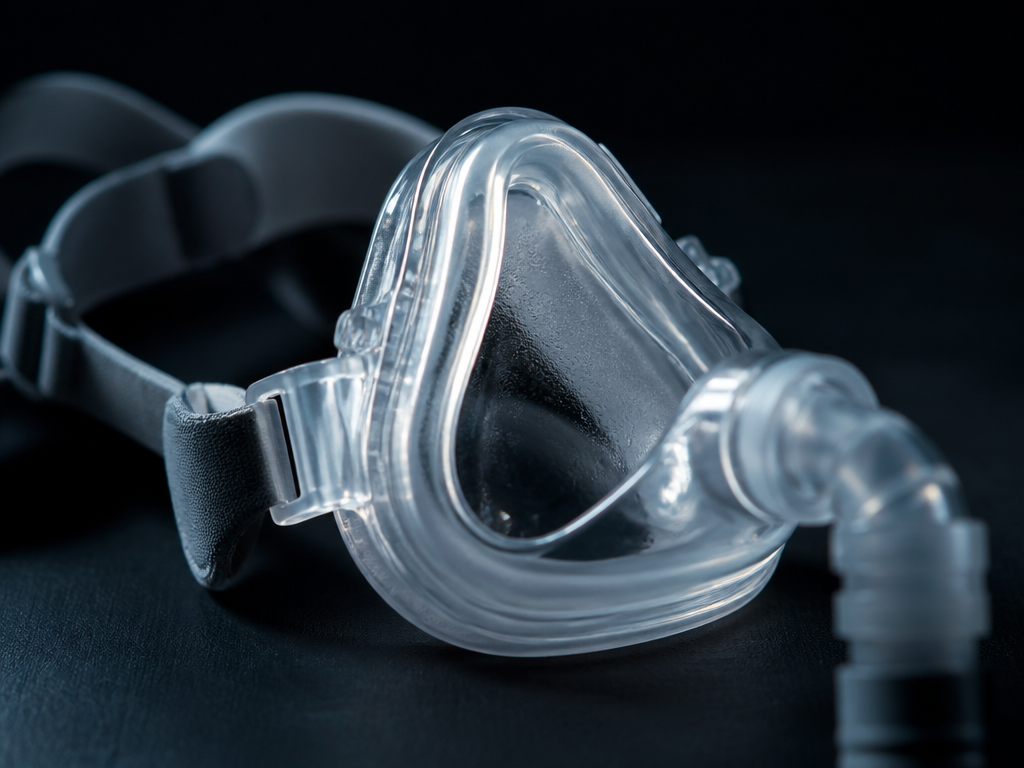
A sleep-apnea patient buys one device. That patient then buys masks, cushions, tubing, and filters more or less forever, on a resupply cadence that Medicare and most commercial payers explicitly schedule — cushions on a roughly biweekly-to-monthly replacement allowance, full masks every few months, tubing quarterly.
Masks carry meaningfully higher gross margin than flow generators. So every device placed is not just a sale; it is the enrollment of a patient into a decade-long stream of higher-margin consumables. When device growth outpaces mask growth in a given quarter, mix works against margin. When the installed base matures and resupply compounds, mix works for it.
This is where the pricing power actually lives. A distributor negotiating hard on a device is negotiating against a competitor's device. A distributor negotiating on cushions is negotiating against a specific mask frame already strapped to a patient's face — a patient who titrated on it, who sleeps through the night on it, and who will call to complain if the shape changes. Switching cost in this category is measured in patient tolerance, not in dollars. That is a moat, and it is one the DME channel cannot easily attack.
The software layer reinforces it. Remote monitoring platforms are what let a provider prove the 90-day adherence thresholds that payers require before they will pay for the device at all. Once a provider's compliance workflow runs on one manufacturer's data pipe, the cost of moving is organizational, not just commercial.
Didn't the Philips recall explain all of this?
Partly. Not as much as the reflex answer assumes, and the distinction matters for anyone modeling the out-years.

Philips Respironics recalled millions of sleep and respiratory devices starting in June 2021 over degrading polyester-based polyurethane sound-abatement foam, and subsequently agreed to stop selling new sleep and respiratory devices in the United States under a consent decree. That removed the number-two player from the largest market in the world.
The naive read: ResMed got a windfall of volume and used the shortage to raise price. The volume part is straightforwardly true. The price part is where the reasoning gets sloppy. A pure scarcity rent decays — when the constrained competitor returns, price returns with it. Structural pricing power does not decay, because it rests on switching costs and mix rather than on the other party's absence.
The test is empirical and it is running right now. Philips has been returning to the U.S. market. Watch whether ResMed's gross margin holds through that return. If margin gives back 200 basis points as competitive supply normalizes, the last few years were scarcity rent and the model was right all along. If it holds within a point, the pricing was structural. I lean toward structural, and I want to be honest that this is a lean and not a conclusion. The data will not be clean for another several quarters.
The GLP-1 question, sorted honestly
This comes up on every call, so it deserves categories rather than enthusiasm.
Well-established: Tirzepatide reduces apnea-hypopnea index in patients with obesity and moderate-to-severe OSA. The SURMOUNT-OSA trials, published in the New England Journal of Medicine in 2024 with roughly 469 randomized participants across two trials, showed large AHI reductions versus placebo, and the FDA approved the indication.
Plausible but thin: The claim that GLP-1 prescriptions expand the diagnosed sleep-apnea funnel — that patients entering the weight-management system get screened, diagnosed, and treated at higher rates. ResMed has presented analyses of large de-identified claims datasets showing PAP patients on GLP-1s having higher therapy persistence. Those are observational, and the confound is enormous: someone motivated enough to stay on a weekly injection is a different kind of patient than someone who is not. Selection effects are not a footnote here; they may be most of the effect.
Folk wisdom: That GLP-1s will collapse the CPAP market. Roughly 80% of moderate-to-severe OSA remains undiagnosed globally. Even generous drug penetration against a funnel that leaky leaves the addressable population growing, not shrinking.
For pricing specifically, the honest answer is that GLP-1s are close to neutral in the near term and unresolved in the long term. Anyone modeling them as a five-year ASP variable is modeling a guess.
Where the pricing power ends
It is not unlimited, and the constraints are identifiable.
DME consolidation cuts both ways — fewer, larger distributors mean better logistics but harder negotiations. Competitive bidding for CPAP has been suspended rather than abolished; its reinstatement would be a direct, mechanical hit to realized price. Tariffs on medical device inputs and cross-border manufacturing raise landed cost without any offsetting ability to raise reimbursement. And the moment a competitor's mask achieves genuine cushion interchangeability at scale, the resupply moat gets thinner.
An honest rule of thumb for the next release
Read the next quarter in this order, and stop after three numbers.
First, gross margin, year over year, in basis points. Second, the mask-and-accessories growth rate minus the device growth rate — the spread tells you whether mix is a tailwind or a drag. Third, whatever management says about "price" — count the adjective, because "modest" repeated for eight consecutive quarters is not modest.
| What to check | Bullish reading | Bearish reading |
|---|---|---|
| Gross margin YoY | Expanding while Philips supply returns | Contracting as competition normalizes |
| Mask growth vs. device growth | Masks growing faster — resupply compounding | Devices leading — margin mix worsening |
| Language on pricing | Price named as a distinct margin driver | Margin credited only to productivity |
| U.S. reimbursement policy | Competitive bidding stays suspended | Bidding reinstated for PAP |
Revenue growth is the number that gets the headline. It is also the number most contaminated by currency, acquisitions, and one-time channel effects. Margin is harder to dress up.
One caution against my own thesis: gross margin is also a manufacturing story, and ResMed has run a genuinely good manufacturing improvement program. Disentangling productivity from price using public disclosure alone is not fully possible. The company reports the composition qualitatively, not quantitatively. Treat any precise split you see in a sell-side model as an estimate wearing a decimal point.
In a commoditized market, the company that owns the consumable owns the price. Footnote on adjusted figures: when the company excludes a one-time charge — a litigation provision, a restructuring, a regulatory suspension of a product line — the exclusion is usually legitimate for understanding run-rate economics and usually illegitimate for understanding management quality. Both readings are correct. Keep them in separate columns.