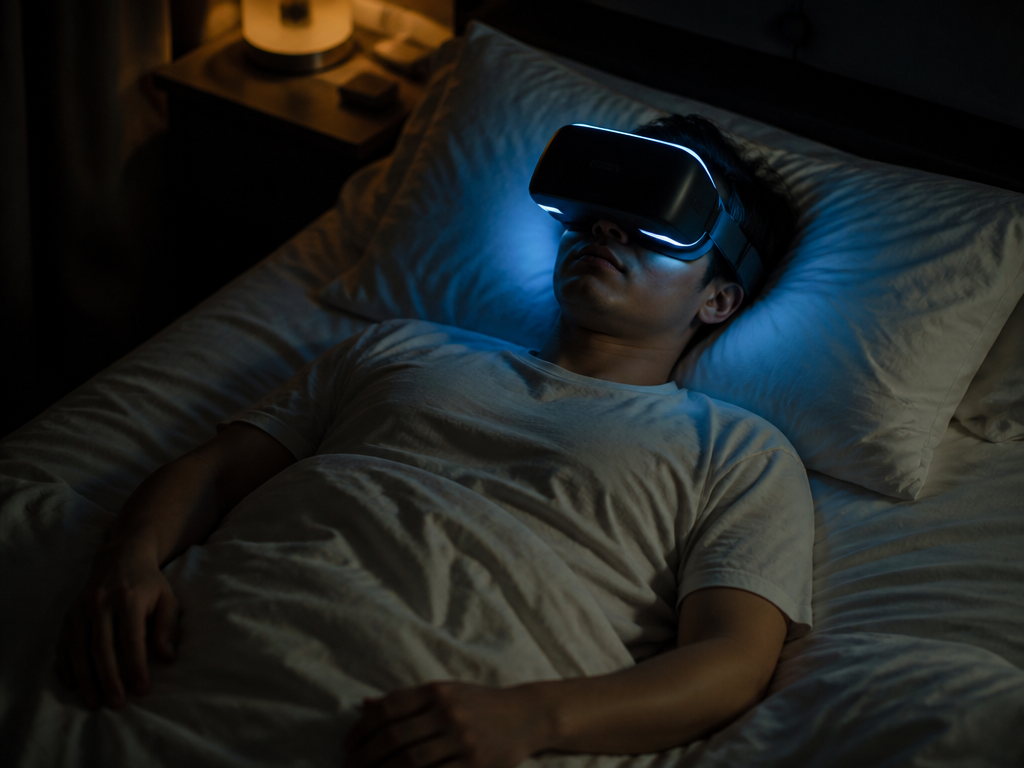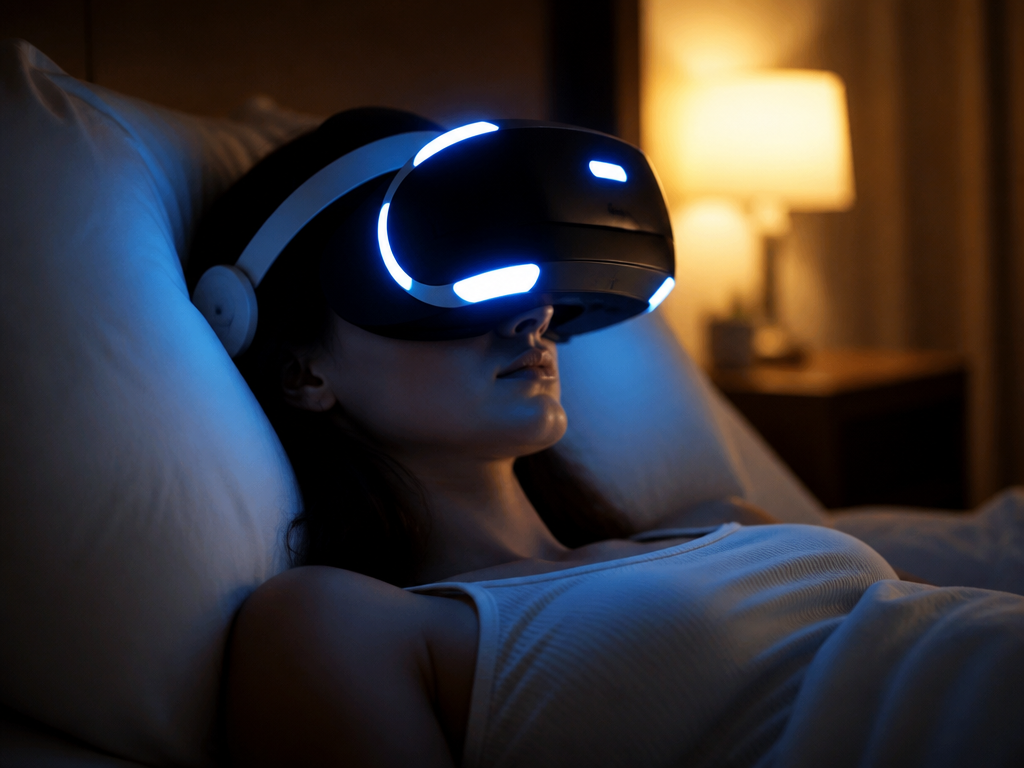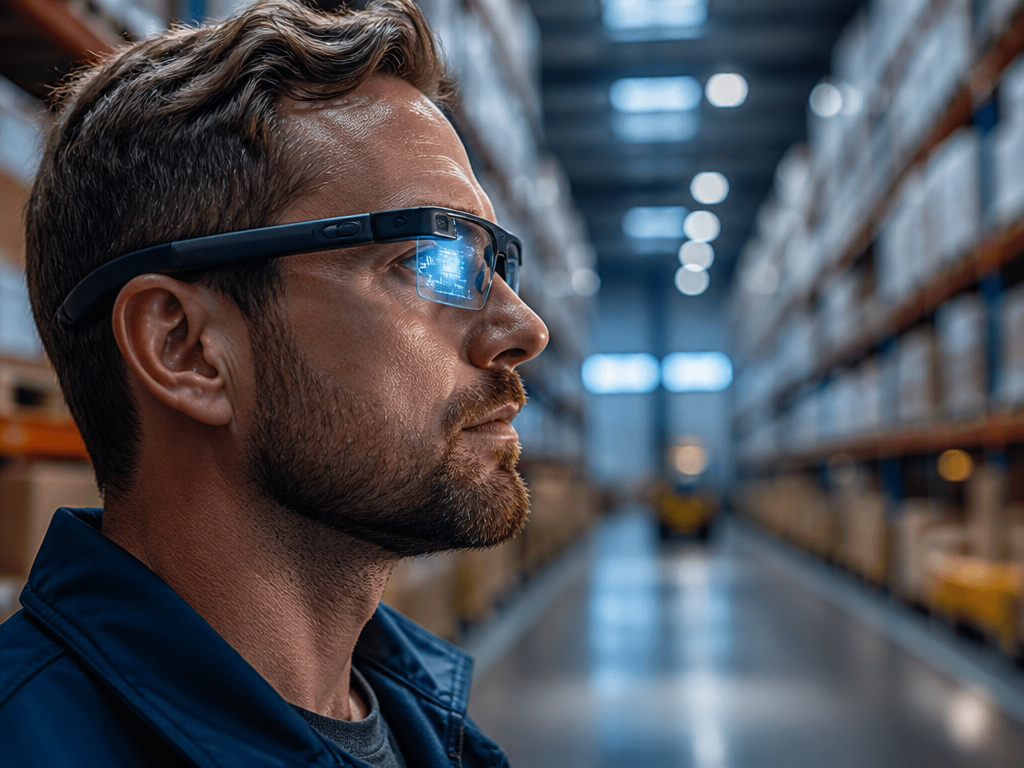
There is a headset on a nightstand in a sleep clinic in Boston, and a clinician will tell you, without much hedging, that it is a medical device. It is the same headset a teenager three miles away is using to swat virtual blocks to a dubstep track. The hardware is identical. The claim is not.
That gap — between the consumer object and the clinical promise — is where mixed reality (MR) currently lives. MR is the class of technology that places digital objects into your real, physical surroundings in a way that lets the two interact: a virtual chess piece you can walk around, an anatomical model anchored to an actual surgical field. It sits between augmented reality and full virtual immersion, and over the past three years it has quietly migrated from gaming demos into pitches for pain management, surgical planning, and, increasingly, sleep. The migration is real. The evidence underneath it is younger than the confidence with which it is sold.
What mixed reality actually means
Start with the spectrum, because the terms get used interchangeably and shouldn't be.
Augmented reality (AR) layers information onto your view of the world but does not let that information respond to the room — a heads-up navigation arrow, a phone filter that adds cartoon ears. The digital content floats; it does not know where your coffee table is.
Virtual reality (VR) replaces your surroundings entirely. You see only the rendered world. Your actual bedroom disappears.
Mixed reality is the middle case, and the demanding one. A digital object is not just overlaid — it is registered to the physical space. It occludes correctly when you walk behind it. It sits on your real desk and stays there when you turn your head. The headset must build a live model of your room to do this, which is a harder engineering problem than either AR or VR alone.
Extended reality (XR) is the umbrella term for all of it. When a press release says "XR," it is usually declining to specify which one it means.
The whole family runs on head-mounted displays (HMDs) — and here is the part worth holding onto: the device that does MR is frequently the same device that does VR. A Meta Quest 3 or an Apple Vision Pro switches between full immersion and room-aware passthrough depending on the software, not the hardware. That single fact is why the taxonomy keeps collapsing in casual use, and why a sleep researcher and a gamer can own the same box.
How we came to call it a medical device
The word "mixed" in this sense has a fairly precise birthday. In 1994, Paul Milgram and Fumio Kishino published a paper in IEICE Transactions on Information Systems proposing a continuum running from the wholly real to the wholly virtual, with everything in between counting as "mixed." It was an academic taxonomy, meant to organize a research field. It made no medical claims and named no products, because there were none worth naming.
For two decades the term stayed in labs. The hardware was expensive, tethered, and nauseating. Then the consumer headset arrived — Oculus in 2016, capable passthrough by the early 2020s — and the cost of getting a head-tracked digital scene in front of a human's eyes dropped by orders of magnitude. That is the moment that matters for medicine. Clinical research does not run on what is possible; it runs on what is cheap enough to put in front of a hundred patients.
So the pitch followed the price. If you can place a controllable, immersive, room-aware experience in front of a patient for the cost of a phone, you can run trials in distraction-based pain relief, exposure therapy for phobias, vestibular rehabilitation, and — the newest frontier — relaxation and sleep-onset protocols. The belief that MR is a therapeutic tool did not emerge from a body of outcomes. It emerged from a fall in hardware cost meeting an old academic word that happened to sound clinical.
What happens inside the headset, step by step
Walk through the actual sequence, because the mechanism is more honest than the marketing.
First, outward-facing cameras capture the room and feed a stream to the headset's processor. Second, simultaneous localization and mapping — SLAM — builds a rough geometric model of the space and tracks where your head is within it, dozens of times per second. Third, the software decides where a digital object belongs in that model and renders it from your exact viewpoint, including how nearby real surfaces should hide parts of it. Fourth, the combined image reaches your eyes through the display, ideally with under 20 milliseconds of delay, because more than that and your inner ear notices the lag before your conscious mind does — which is the proximate cause of headset nausea.
For a sleep or relaxation application, the medically interesting step is none of these. It is the fifth: the deliberate narrowing of sensory input. A room-aware calming scene can hold your visual attention while dimming the actual bedroom, theoretically reducing the cognitive arousal that keeps people awake. Theoretically is the operative word.
What the research has actually measured
Here is where the categories matter. MR's strongest clinical evidence is not in sleep at all. It is in acute procedural pain. A frequently cited example is the line of burn-wound work using VR distraction (Hoffman and colleagues, beginning in the early 2000s), where immersive scenes measurably reduced reported pain during wound care in small samples — useful, replicated, but VR, not MR, and not sleep.
For sleep specifically, the honest summary is that the field is in its infancy. Most published work uses VR relaxation environments rather than true room-registered MR, runs on a few dozen subjects, and measures self-reported relaxation or sleep-onset latency over a night or two rather than long-term sleep architecture. A reasonable reader should file the sleep claims under plausible but thin: the mechanism — pre-sleep arousal reduction through controlled sensory input — is grounded, but the outcome data specific to MR headsets is sparse and short.
There is also a tension the marketing rarely mentions: the same bright, head-mounted display you would use to relax emits light into the eyes at the exact hour you are trying to wind the circadian system down. The display's effect on melatonin onset has not been cleanly separated from the relaxation effect of the content. That is an open confound, not a solved one.
| Term | What it does | Sleep-relevant evidence |
|---|---|---|
| AR | Overlays static info on the world | Minimal, mostly conceptual |
| VR | Fully replaces surroundings | Strongest (relaxation, pain), still small samples |
| MR | Room-registered, interactive digital objects | Earliest stage; little sleep-specific data |
An honest rule of thumb
If you are considering one of these devices tonight as a sleep aid: treat it as an experiment on yourself, not a treatment. Use it for the wind-down hour, not in bed, and stop at least 30 to 60 minutes before you intend to sleep — both to clear the display light from your eyes and to avoid the very arousal you are trying to reduce. If it relaxes you, that is a real result for you. It is not yet a population-level claim, and no headset has FDA clearance as a sleep therapeutic at the time of writing.
The question that isn't settled
The deepest uncertainty is not about hardware. It is about the brain you are putting it on. A calming MR scene works by capturing attention — and attention capture is the opposite of what a drowsy mind is supposed to be doing as it lets go of the world. Does an immersive environment ease someone into sleep, or does it hold them just engaged enough to keep them out of it? We do not yet know, in any rigorous, replicated way, whether the technology that excels at grabbing your attention can be trusted to release it.