The first number I wrote down was 41 millimeters. That was the width of the bridge of my nose, measured at 11 p.m. on my second night of CPAP therapy, with a paper sizing gauge the supplier had folded into the box. The gauge said 41mm put me at the top of "Small." I trusted it. I woke at 4 a.m. to the sound of pressurized air escaping into my left eye, which is a specific and unpleasant way to learn that a paper template measured in a bathroom mirror is not the same thing as a seal that holds through a full sleep cycle.
That 41 was honest. It was also nearly useless on its own, and the next three weeks were spent figuring out why.
The verdict, before the details
For most people starting nasal-mask therapy, the printed sizing gauge gets you to the right size category about 70% of the time — and the seal failures are almost never about the number you measure standing up, but about what your face does after you fall asleep. The fix is rarely a different size. It's usually a different type of nasal interface, or refitting at therapy pressure rather than at rest.
What a nasal cushion is actually sealing against
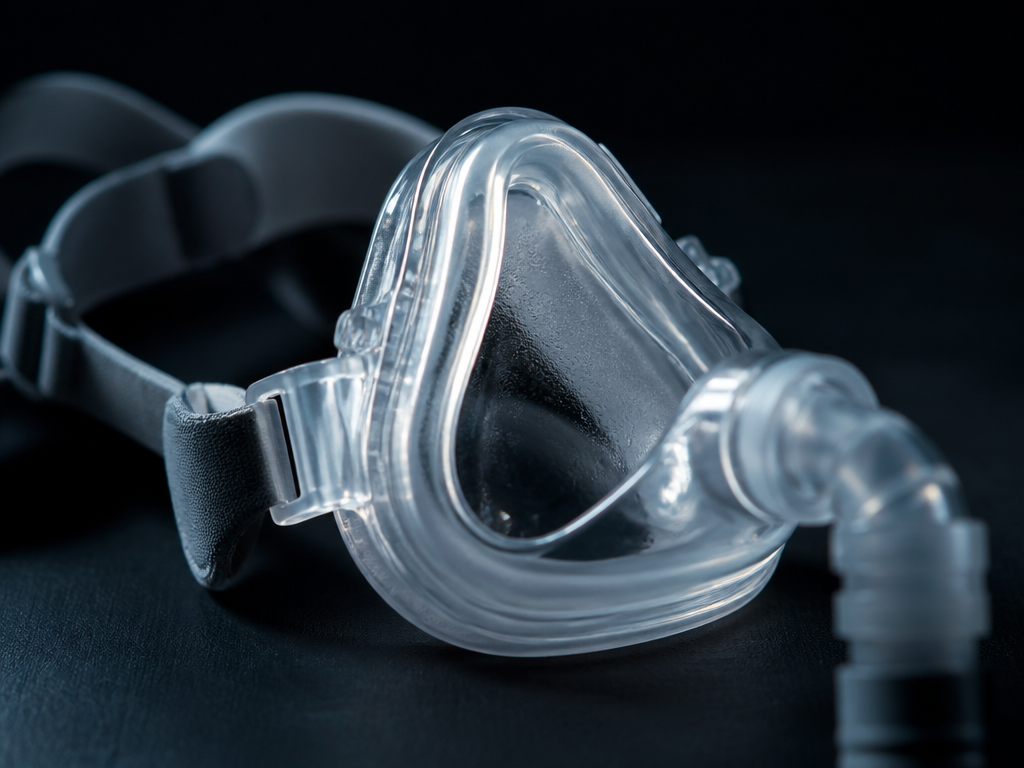
A nasal mask covers the nose from the bridge down to the top of the upper lip. The cushion — the soft silicone or gel ring that touches you — has to seal against three surfaces at once: the slope of the nasal bridge, the flat of the cheeks on either side, and the soft tissue under the nose. None of those three are rigid. The bridge is the only one with bone behind it, which is why bridge width is what the gauge measures and why it's the least informative of the three.
Sizing gauges treat the nose as a static object. It isn't. The cheek tissue you seal against at 11 p.m., jaw set and muscles engaged, relaxes considerably once you're in stage 2 and beyond. My 41mm bridge didn't change overnight. The surrounding gasket of skin and muscle did, and the cushion that fit a tense face stopped fitting a slack one.
Three interfaces, three weeks
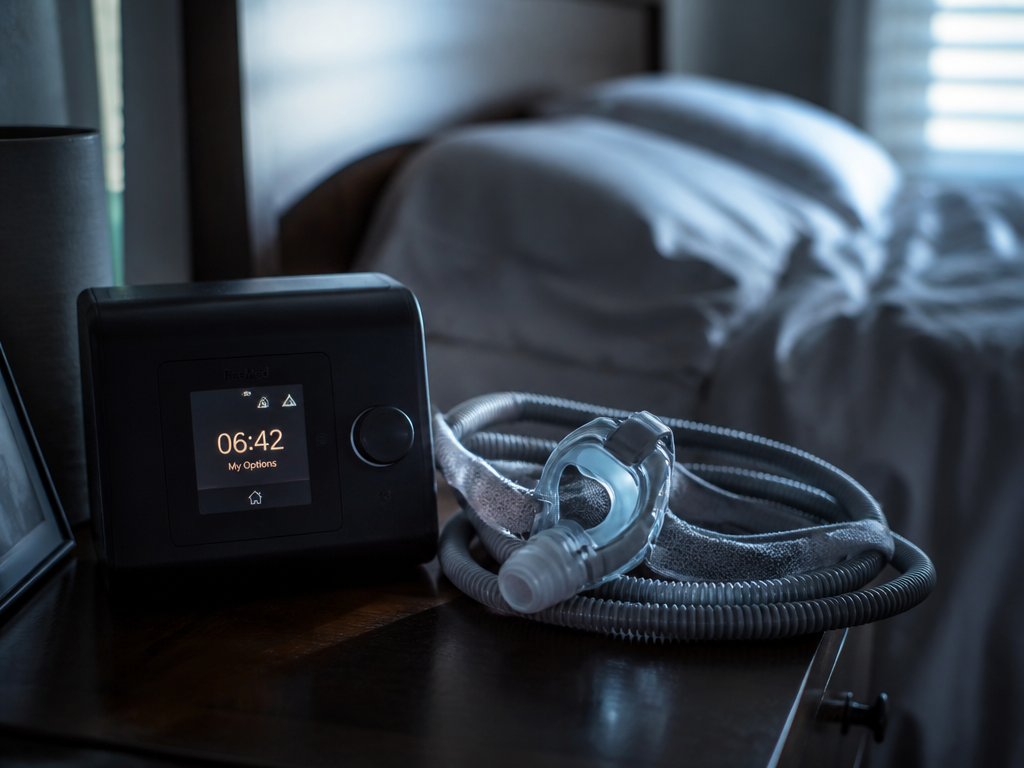
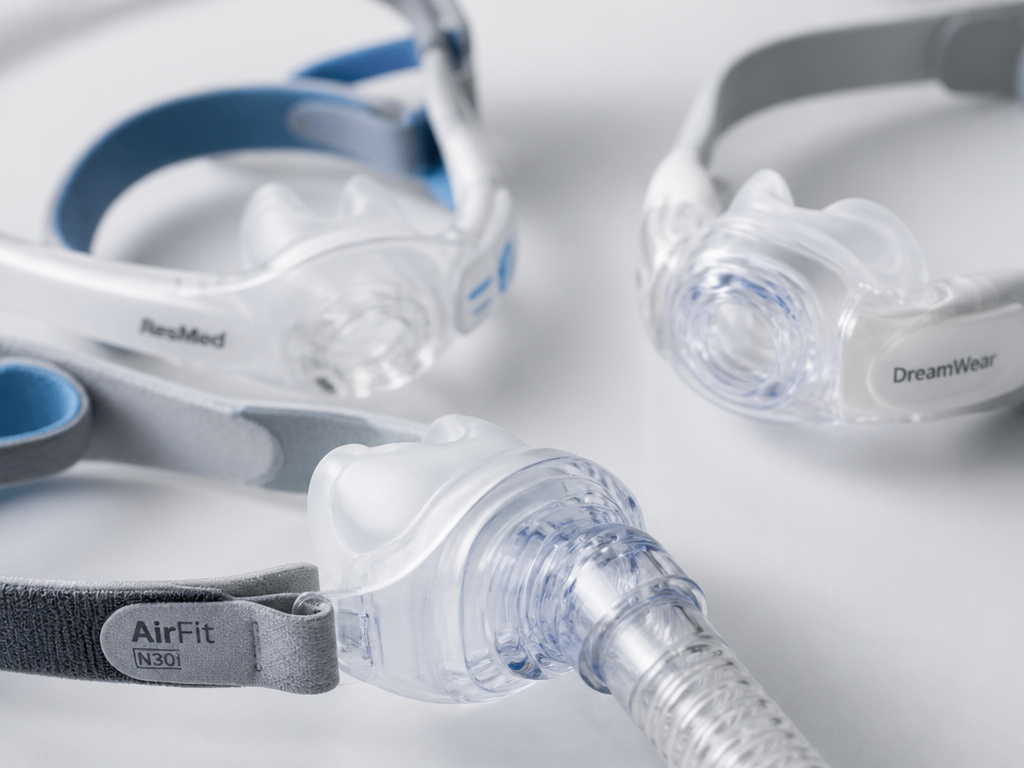
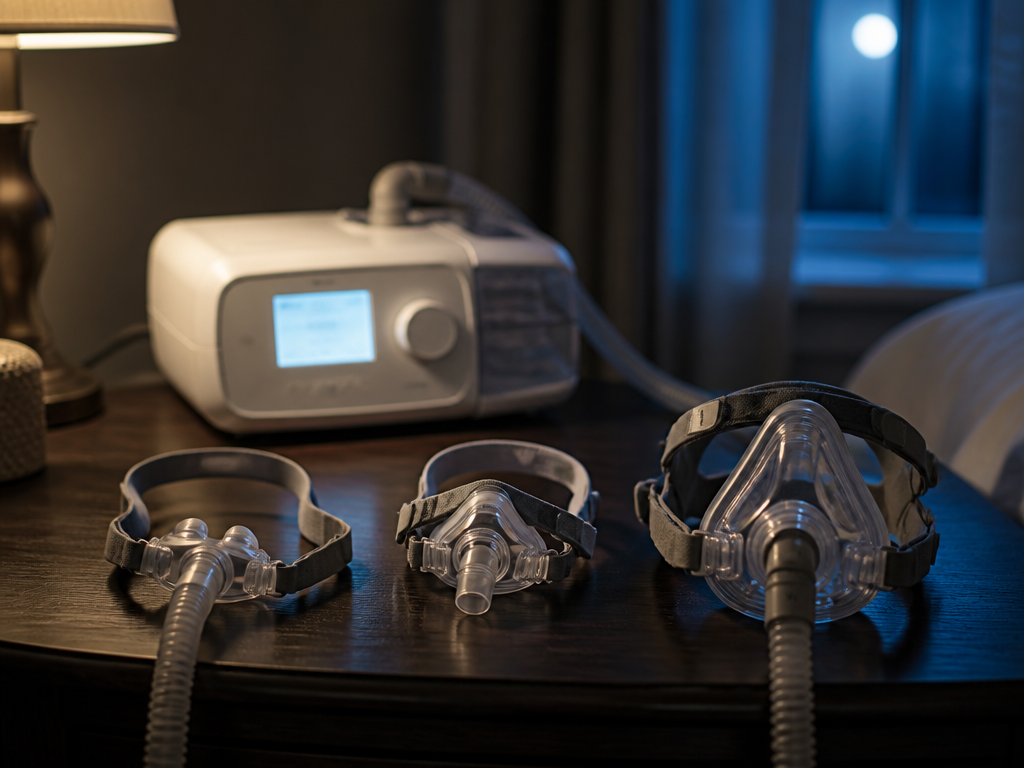
I cycled through the three common ways to deliver air to the nose, keeping pressure (a fixed 9 cm H₂O), pillow, and bedroom constant. I tracked leak rate off the machine's own data and onset latency by hand on a notepad.
| Interface | How it sits | Median leak (L/min) | What failed |
|---|---|---|---|
| Nasal pillows (cradle) | Two soft plugs at the nostril openings | 4 | Nostril soreness by night 4; fine on leaks |
| Nasal cushion mask | Ring sealing over the whole nose | 19 | Bridge-top leak into the eye when I rolled |
| Nasal cradle (under-nose) | Cushion under the nostrils, no bridge contact | 7 | Slight whistle at higher inhale |
The standard nasal cushion — the one the gauge sized me for — was the worst performer for my face, and it had nothing to do with the 41mm being wrong. The leak came from the bridge contact point shifting every time I turned onto my side. The two designs that avoided the bridge entirely, the pillows and the under-nose cradle, both held under 8 L/min, which is well inside the range my clinician considers a non-issue.
If you take one thing from the table: a high leak number is a fitting problem to diagnose, not a verdict on whether CPAP will work for you.
The variables not printed on the gauge
Three things mattered more than millimeters, and no sizing card mentions them.
- Jaw drop. If your mouth falls open in sleep, a nasal-only mask vents air out through the mouth and the machine reads it as a leak. A chin strap fixed half my "mask" leaks that were actually mouth leaks. Worth ruling out before you blame the cushion.
- REM facial slack. The same face is a different shape across the night. I refit the cradle at pressure, machine running, lying down — not standing at the sink — and the seal improved more from that single change than from any size swap.
- Pressure. At 9 cm H₂O a marginal seal holds. People on higher fixed pressures, or on auto-titrating machines that ramp into the teens, push harder against every weak point. A cushion that's "fine" on a sizing app at rest can blow out at therapeutic pressure. Always test-fit with the air on.
None of this replaces your equipment provider or your sleep physician — they have your titration data and I have a notepad. But you are allowed to notice that the first mask you're handed isn't sealing, and to ask for a different style, not just a different size.
Who nasal sizing works cleanly for — and who it fights
Nasal interfaces, well-sized, suit you if: you breathe through your nose reliably, you sleep on your back or shift positions gently, and your prescribed pressure is moderate. They're lower-profile than full-face masks, leave more of your field of view clear if you read in bed, and tend to feel less claustrophobic — the most common reason people abandon therapy in the first month.
Reconsider nasal-only if: you're a confirmed mouth-breather and a chin strap doesn't solve it, you have nasal congestion or a deviated septum that blocks airflow, or you're an active side-and-stomach sleeper who drags the mask across the pillow all night. A full-face mask isn't a failure; it's a different tool. The goal is the hours of sealed sleep, not the smallest possible mask.
I can't tell you which size you are — I measured exactly one nose, mine, and a sample of one is a sample of one. What I can tell you is which question to ask, and it isn't "what size."
The clear winner, for my 41mm face
The under-nose nasal cradle won. It never touched my bridge, so rolling over couldn't break the seal at the point that had been flooding my eye. Soreness was lower than the pillows, leaks were nearly as low, and it survived a full night of position changes. If your gauge says small-to-medium and your leaks live at the top of your nose, try the design that doesn't go there.
So: 41 millimeters. The number was right the whole time. It just wasn't the number that decided whether the therapy worked. The night I stopped measuring my nose and started measuring my leak rate — air on, lying down, asleep where it counts — was the night CPAP stopped being a thing I fought and became a thing I slept through.