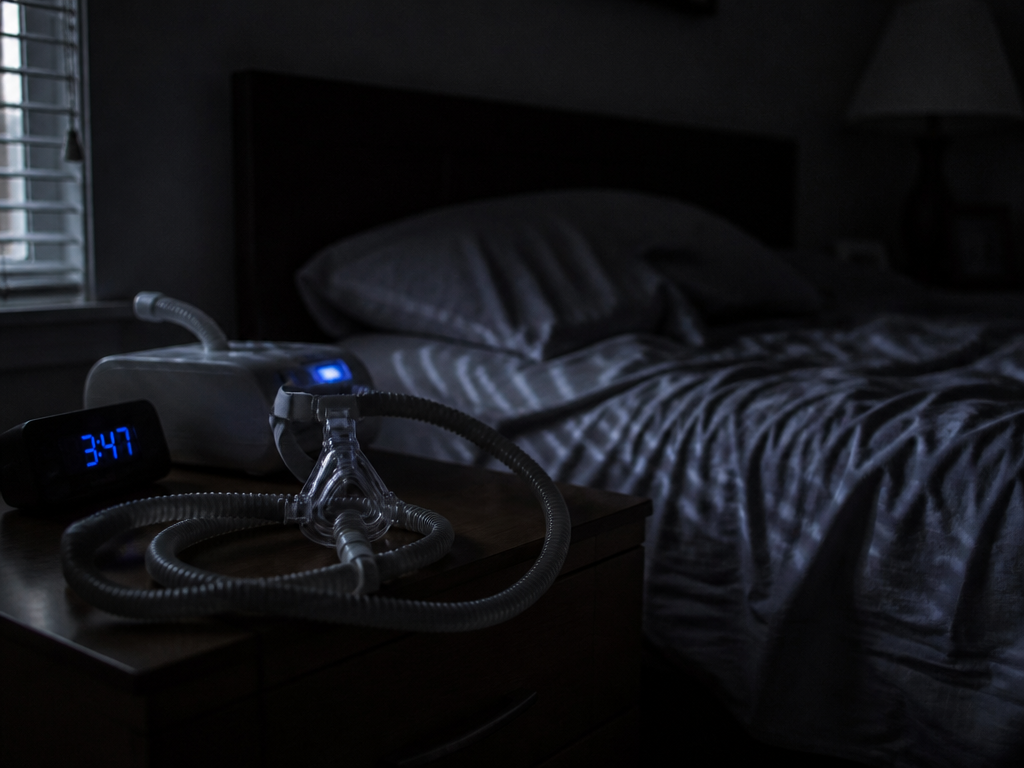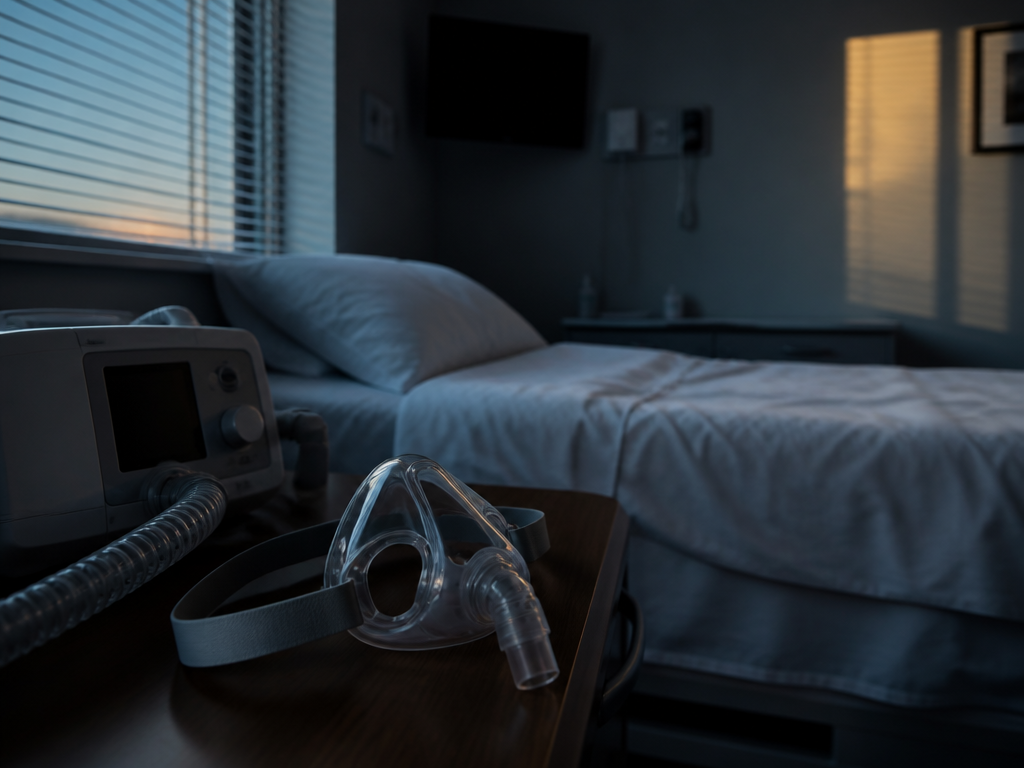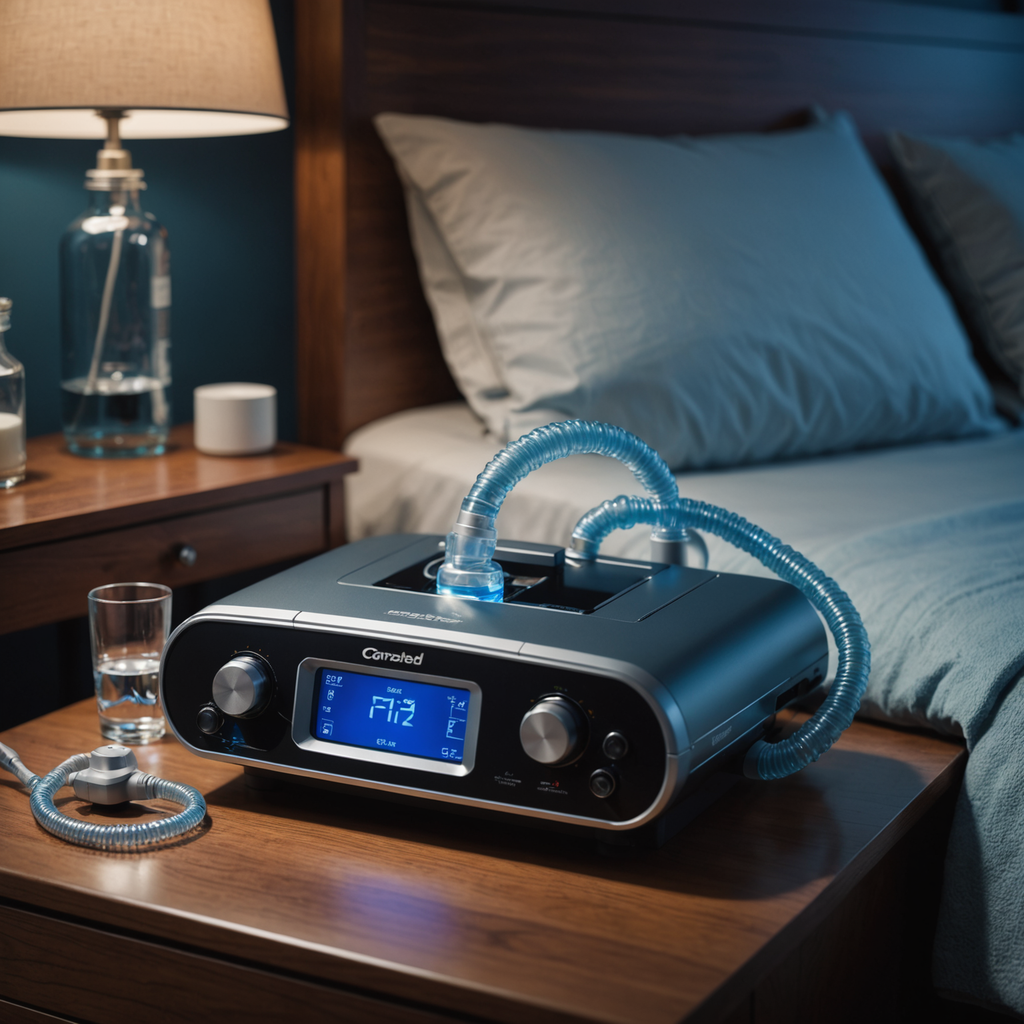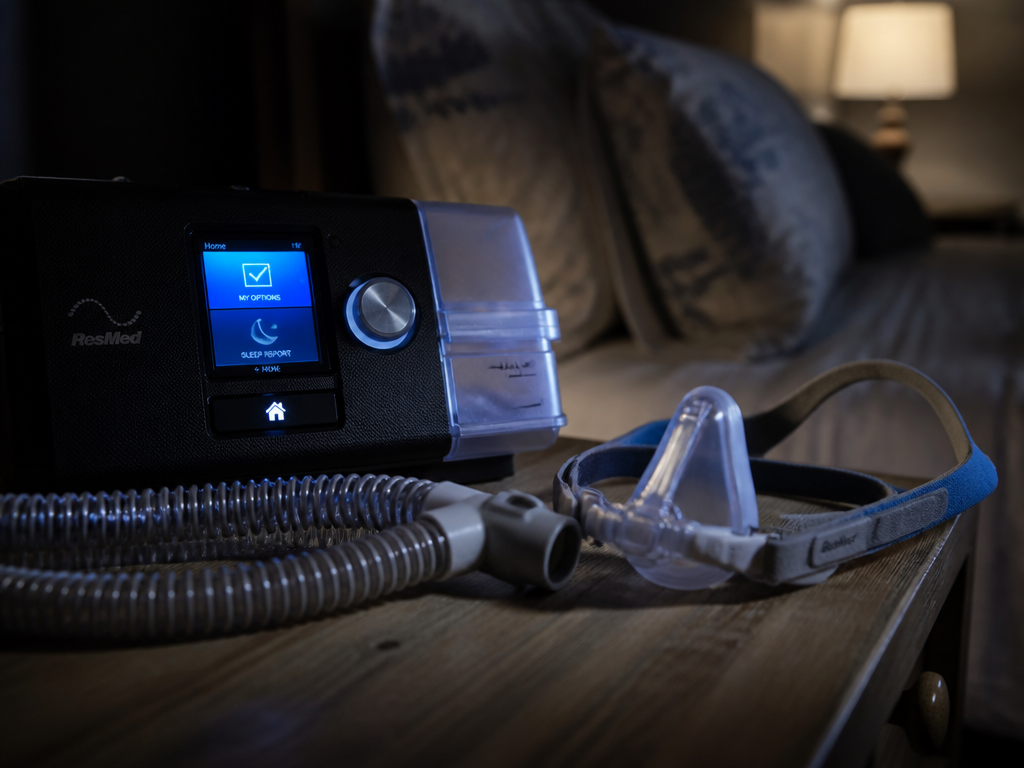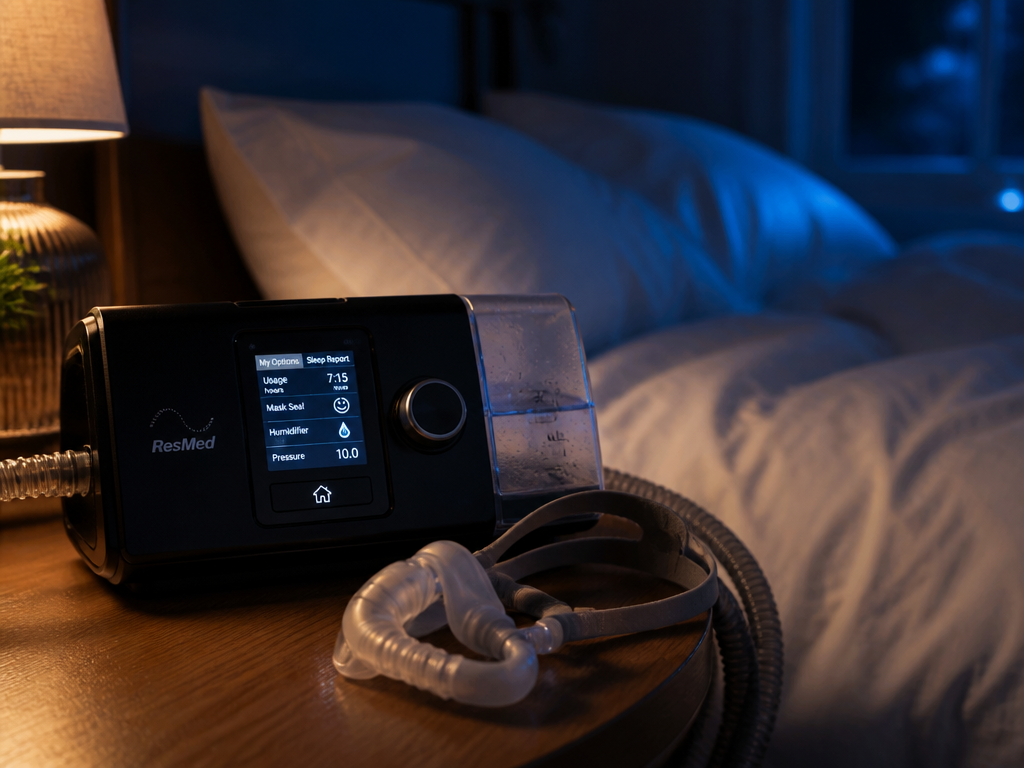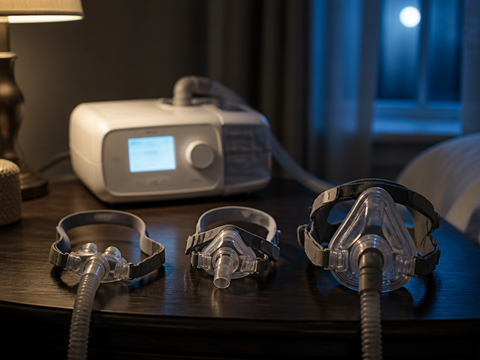
For three months I slept under a sleep-tracking app and a prescription, swapping one piece of equipment every few weeks: the mask. CPAP therapy gets blamed for being uncomfortable, but the machine on the nightstand is rarely the problem. The pressurized air is the same no matter what. What changes — whether you keep wearing it at 3 a.m. or fling it across the room — is the thing strapped to your face. So I ran the same pressure through three of them and kept records.
A quick disclosure on scale: this is one face, one machine, one bedroom. My results are not a clinical trial. But the numbers below are real numbers off my own device, and the discomfort is real discomfort.
How I tested
Same hardware throughout: an AirSense 10 AutoSet, fixed at the pressure my titration study landed on (9 cmH₂O), humidifier at level 4, heated tube at 27°C. I wore each mask for two weeks, then a one-week washout back to my baseline mask so a bad night didn't bleed into the next contender.
Each morning I logged three things straight off the machine's data card: AHI (apnea-hypopnea events per hour — under 5 is the goal), leak rate (how much air escaped the seal, in liters/minute), and usage hours. Then I added the subjective stuff a data card can't see: dry mouth on a 1–5 scale, whether I woke up to reseat the mask, and whether I could read in bed with it on.
The three:
- Nasal pillows — small silicone plugs that seal at the nostrils (ResMed AirFit P10)
- Nasal mask — a cushion over the bridge and base of the nose (AirFit N20)
- Full-face mask — covers nose and mouth (AirFit F20)
The contenders, by criteria
Seal and leak under movement
This is where the spread was widest. I'm a side sleeper who turns three or four times a night, and the pillow style hated it. Every time my face pressed the pillow, one nostril plug shifted and the leak number jumped. My median leak on the P10 was 18 L/min, with spikes the machine flagged as "high leak" on nine of fourteen nights.
The nasal mask sat more stably against the cheekbones — median leak 9 L/min, two flagged nights. The full-face was the most forgiving of movement because the frame is bigger and braces against more of the face: median leak 7 L/min, one flagged night.
Dry mouth
Here the order flips, and the mechanism matters. If you breathe through your mouth at night — and a lot of apnea patients do, because a collapsing airway pushes you to it — air pressurized through your nose can blow straight out your open mouth. The humidified air leaves; the dryness arrives.
Both nasal options left me at a 4 out of 5 for dry mouth most mornings, cottonmouth bad enough to wake me. A chin strap helped a little, not enough. The full-face mask, which pressurizes the mouth too, dropped me to a 1. That single variable reorganized the whole comparison.
Claustrophobia and the small stuff
The trade-off is real: the more face a mask covers, the more there is to notice. The pillows are nearly invisible to wear — I could read, I could wear glasses, I forgot they were on. The nasal mask sits just below the eyeline; glasses were awkward but possible. The full-face felt like a lot the first three nights — I was aware of the plastic shell every time I opened my eyes — and then, around night four, I stopped noticing. Adaptation is a real and underrated factor. Don't judge a mask on night one.
The grid
| Criteria | Nasal pillows | Nasal mask | Full-face |
|---|---|---|---|
| Median leak (L/min) | 18 | 9 | 7 |
| Avg AHI | 4.1 | 2.8 | 1.9 |
| Dry mouth (1–5) | 4 | 4 | 1 |
| Glasses / reading | Easy | Awkward | No |
| Felt invisible? | Yes | Mostly | After ~4 nights |
The AHI line is the one that ended the argument for me. With the leak-prone pillows, enough air was escaping that the pressure wasn't fully splinting my airway open — my AHI crept back toward the threshold I'm being treated to stay under. The full-face held the pressure, and the number that actually measures whether the therapy is working settled at 1.9.
Who each one is for
Nasal pillows are for the patient who breathes cleanly through their nose, sleeps fairly still, hates having their face covered, and wants to read or wear glasses in bed. When they fit, they are the most livable option by a wide margin. They were not for me.
The nasal mask is the sensible middle. If you're a nose-breather who moves around, it holds a seal better than pillows without the bulk of a full-face. If you're new and unsure, this is the low-regret starting point.
The full-face mask is for mouth-breathers, for anyone whose dry mouth is wrecking their sleep, and for people whose nasal options leak the moment they roll over. The cost is bulk and a few nights of adjustment. If your AHI won't come down and your morning mouth feels like paper, this is the conversation to have with your equipment provider.
One thing I couldn't test: nasal congestion that comes and goes. My nose was clear all three months. If yours fluctuates with allergies or colds, a full-face gives you a mouth to fall back on — an advantage that wouldn't show up in my logs.
The honest takeaway is that the "best" mask is the one matched to how your own airway behaves at night, not the one with the best reviews. But for me, the data was not subtle.
For a mouth-breather, the right mask isn't the one you forget you're wearing — it's the one that lets you sleep through the night.