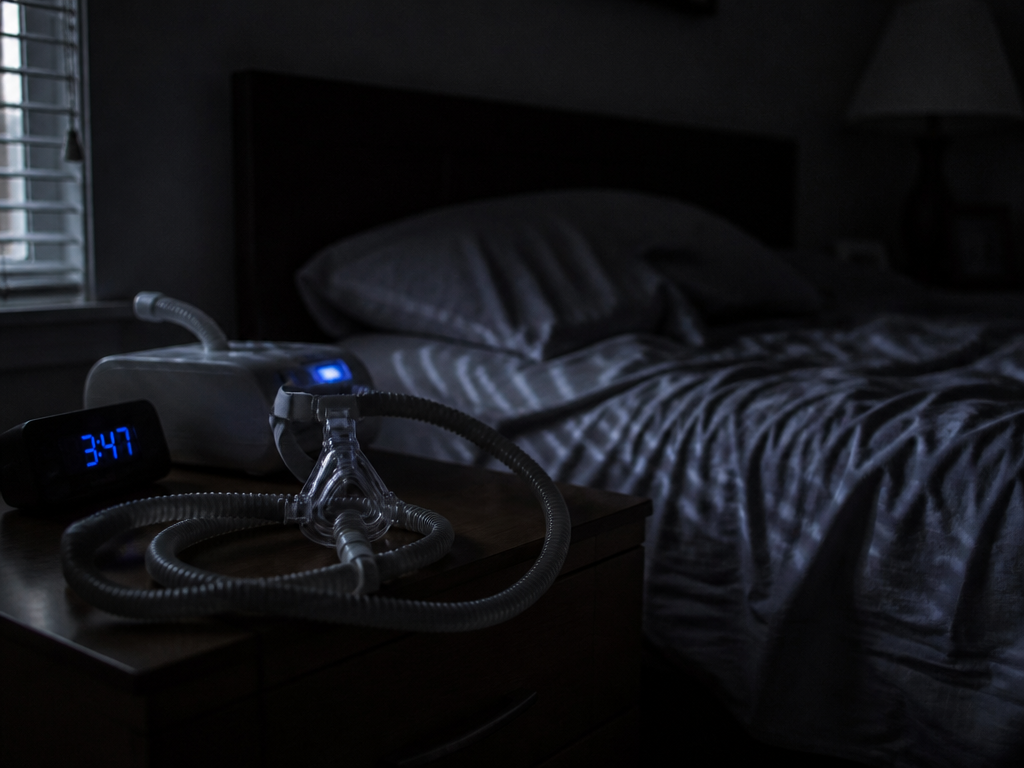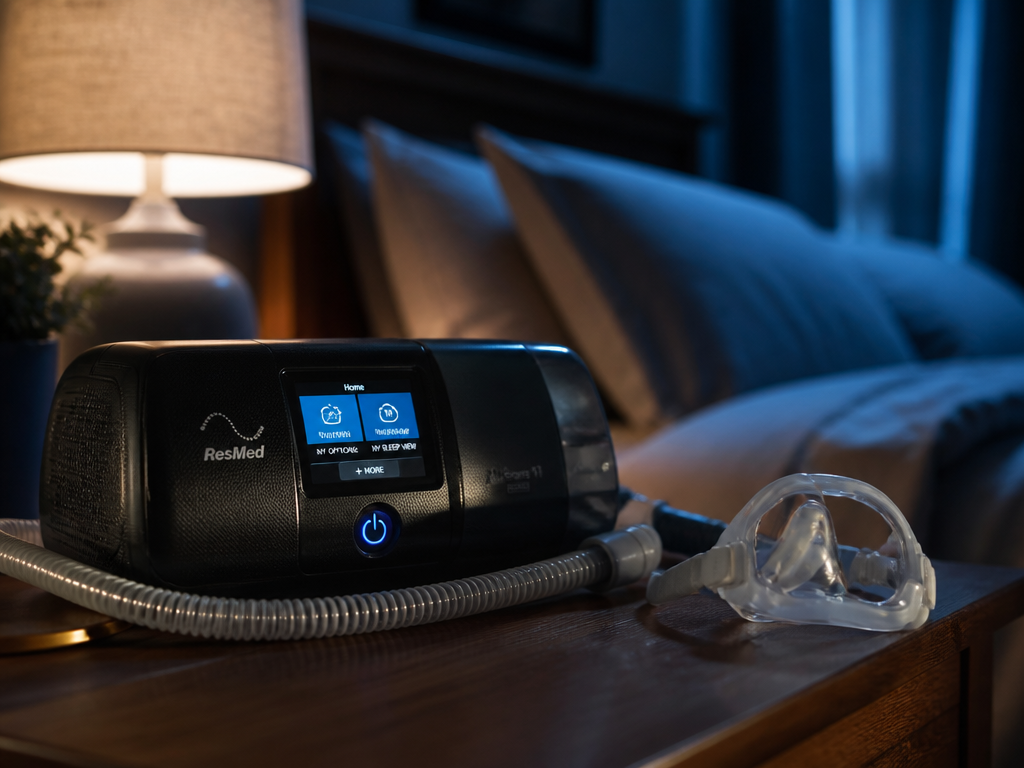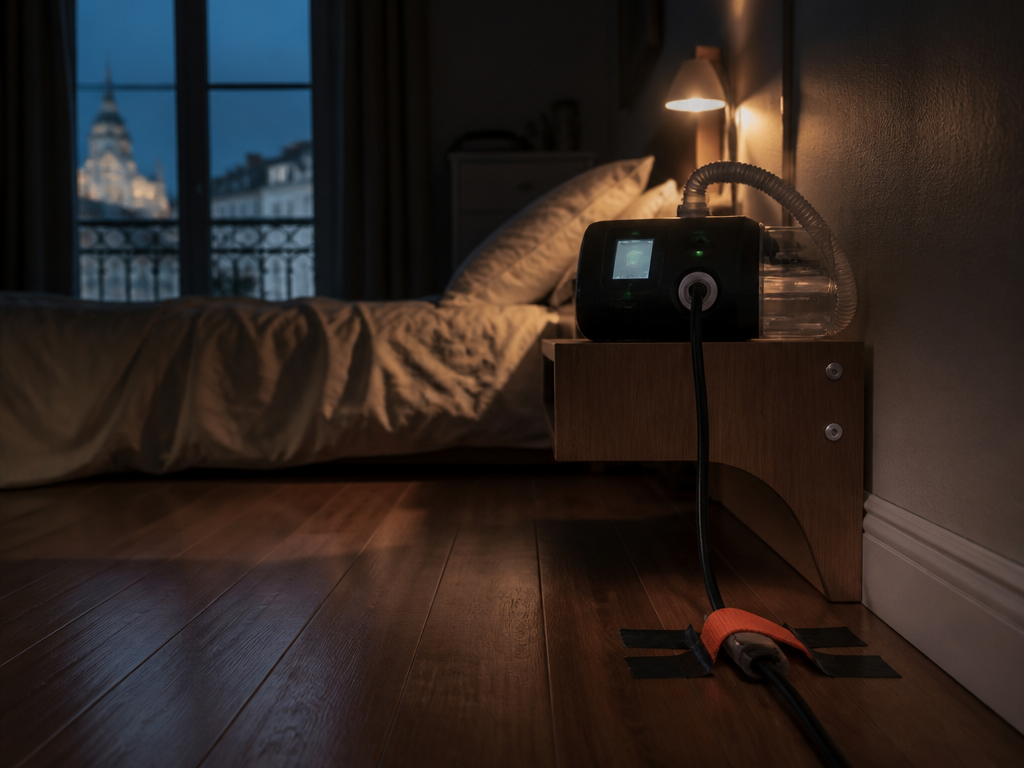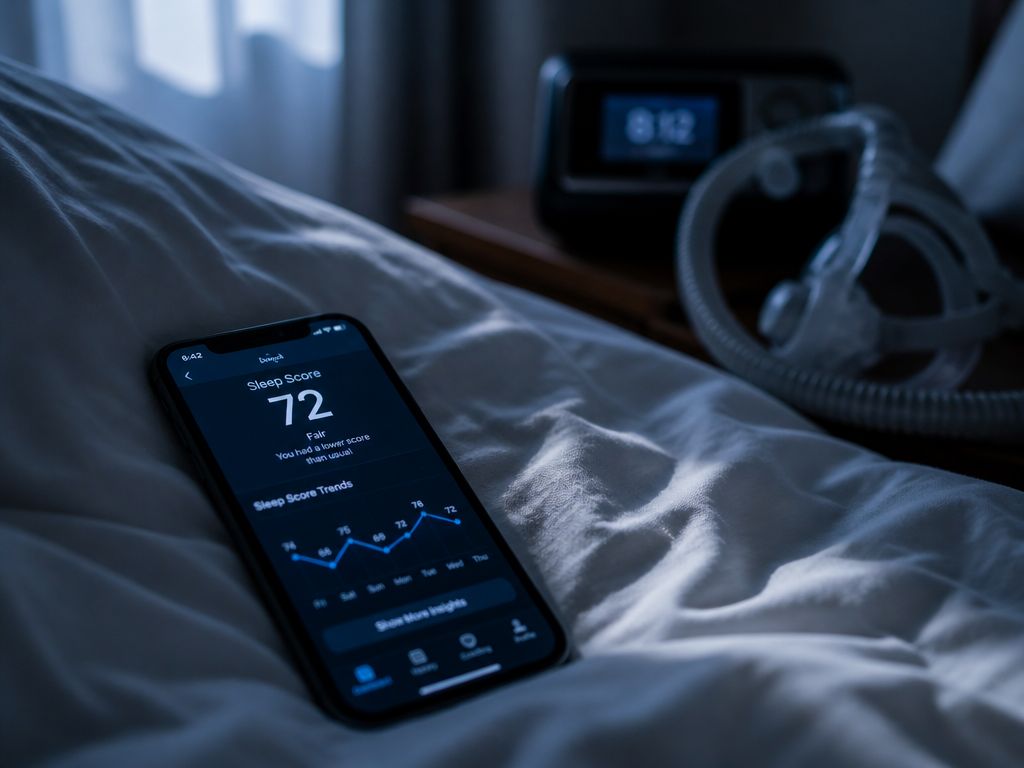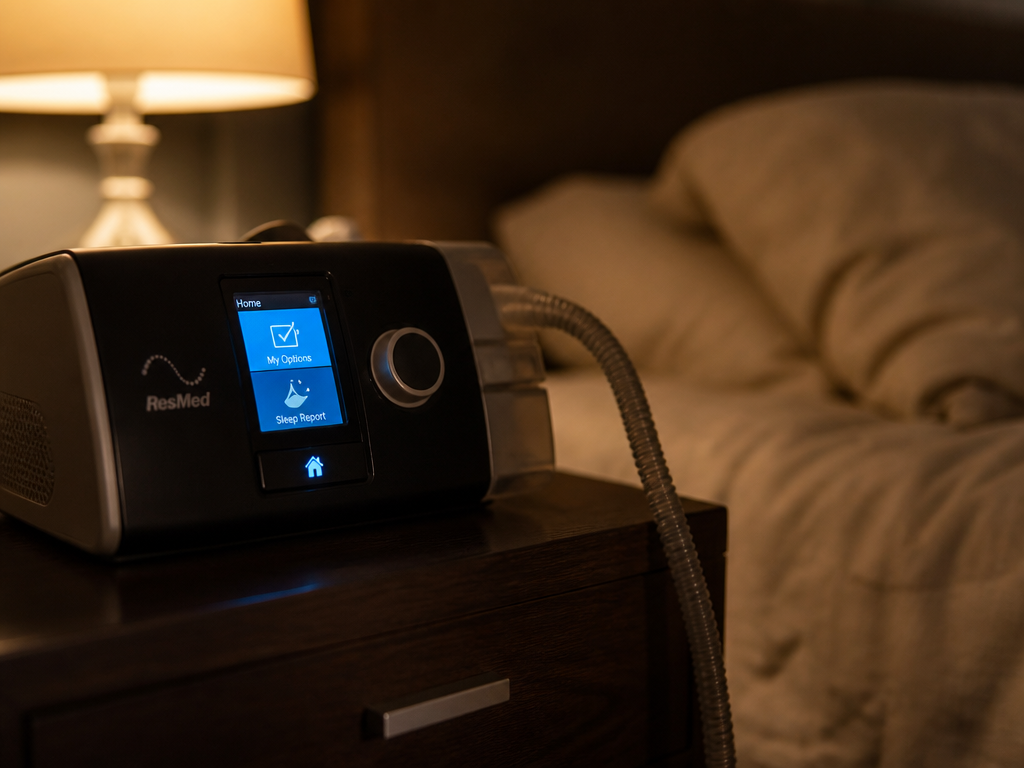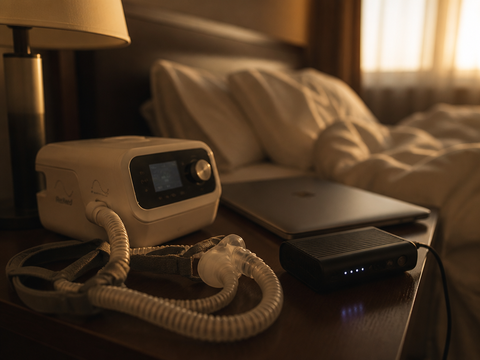
Over nine weeks I slept in eleven beds across three continents, and the number I came home with was 27 — the count of nights I ran full CPAP therapy away from home without a single skipped session. The verdict, in one sentence: a good CPAP travel bag is the easiest problem to solve, and the one most travelers obsess over while ignoring the one that actually fails — power.
So this is a review of CPAP travel bags, yes, but it's mostly a report on what 27 logged nights taught me about the gap between the gear people buy and the gear they need.
What 27 actually measured
I carried a standard ResMed AirSense 11 with a heated humidifier, a nasal pillow mask, and a third-party 27,000mAh battery rated for the device. Every morning I exported the data. Twenty-seven nights, my AHI stayed between 1.1 and 3.4 — within the same range I see at home (my baseline averages 1.8). Three nights I lost the export to a dead phone, but the machine's onboard memory kept the readings, so the therapy itself never lapsed.
That's the headline figure, and it's a real one. It means the machine ran, the seal held, and the pressure delivered. It does not mean the trip was effortless. The number measures therapy continuity. It is silent on comfort, on how I slept, and on three near-misses that had nothing to do with the bag.
The bag question, answered honestly
Most people researching CPAP travel bags want permission to buy one. Here's the permission: yes, carry a dedicated case, and put it in your carry-on, not checked luggage. Under TSA and most international equivalents, CPAP machines count as medical devices and don't count against your carry-on limit. I declared mine at security all 22 times I passed through a checkpoint and was waved through every time but two, where the device got a swab test that added ninety seconds.
I tested two cases over the trip: the soft zip case that shipped with the machine, and a hard EVA-shell travel case I bought for the second leg.
| Criteria | Soft OEM case | Hard EVA case |
|---|---|---|
| Weight added | ~340g | ~610g |
| Crush protection | Minimal | Survived being sat on |
| Packs flat when empty | Yes | No |
| Fit with battery + hose | Tight | Roomy |
| Price | Included | ~£42 |
The soft case is fine if your machine rides on your lap or in a backpack's padded sleeve. The hard case earned its weight exactly once — a gate-check scramble in Istanbul where my bag was tossed onto a cart — but that once is the whole point of a case. If you check the bag or travel rough, buy the hard shell. If you're a careful carry-on traveler, the included case is genuinely enough. Don't let a comparison chart talk you into £42 you won't use.
What no bag solved: the humidifier chamber. Water sloshes, and I learned by night four to empty it bone-dry before transit. One bag does not fix physics.
The part that actually broke: power
Here is where the trip nearly cost me a night, and where the marketing rarely lingers.

My machine's power supply is auto-sensing, 100–240V, 50/60Hz. That means it handles voltage anywhere I went — I needed only a plug-shape adapter, not a voltage converter. Check the label on your own brick before you assume this. Older units and some travel-specific minis are not auto-sensing, and plugging a 120V-only device into a 230V outlet will fry it. This is the single most expensive mistake available to a CPAP traveler, and it's invisible until it happens.
The real failure was the battery. On an overnight train through the Alps there was no outlet at my berth. The 27,000mAh battery is rated for roughly one night without humidification, and that rating held — but only because I switched the humidifier off and ran the heated tube cold. With humidification on, the same battery gave me about four hours in a separate test before it tapped out. Heat is the enemy of battery life. If you plan to run warm, humid therapy off-grid, you need to either disable the humidifier or carry far more capacity than the spec sheet implies at face value.
A blunt note for air travel: most airlines permit CPAP use in-flight but require a battery, not the seat power, and they cap watt-hours. My 27,000mAh pack works out to roughly 100Wh — right at the common 100Wh threshold that needs no special approval. Above that and you're filing paperwork. I never actually ran the machine on a plane; on a seven-hour daytime flight I just didn't sleep. So I can't review in-flight performance. I can only report that the battery cleared the watt-hour rule.
What the number doesn't measure
Twenty-seven clean nights is reassuring, and it would be dishonest to oversell it.
- Altitude. Two nights were above 2,000m. My machine has automatic altitude adjustment up to 2,591m and the AHI stayed normal, but I have no data on how a non-adjusting machine would have fared, and I felt slightly more wrung-out those mornings regardless.
- Humidity loss. When I ran the tube cold to save battery, my throat was raw by morning. The therapy worked; the comfort didn't. The AHI number can't see a dry throat.
- Sample size. This is one person, one machine, one set of sinuses. My seal is reliable and my pressure needs are moderate. A higher-pressure user, or someone with a full-face mask, will hit different walls — particularly on battery, where higher pressure draws more power.
- Cleaning. I rinsed the mask in hotel sinks and let it air-dry. I have no measurement of whether that was hygienic enough. It's a gap, and I'm naming it.
Who this is for, and who it isn't
This is for you if: you run a modern auto-sensing machine, your pressure needs are low-to-moderate, and you're willing to run the humidifier cold when off-grid. The bag-and-battery setup I describe will carry you through international travel with very little drama.
This isn't for you if: you depend on heated humidification for comfort, run high pressures, or use a machine that isn't auto-sensing voltage. You can still travel — people do it constantly — but your power math is different and heavier, and you should price a second battery before you price a prettier case.
If I had to hand one line to a first-time CPAP traveler, it's this: spend your worry budget on the power supply label and the battery's real-world humidified runtime, not on the bag.
The myth and the more accurate version
The myth: a good CPAP travel bag is what makes traveling with sleep apnea therapy possible. The more accurate version: the bag protects your machine, but it's your power plan — voltage compatibility and honest battery runtime — that determines whether you actually sleep.