Pull the water chamber off a humidifier that's been sitting since this morning and tip it toward the light. If it's been a few days, you may see it: a faint slick on the plastic, slightly cloudy, slightly slippery. That film has a name. It's biofilm — a community of bacteria that have settled, multiplied, and wrapped themselves in a protective matrix. It is the single most persuasive argument anyone has ever made for CPAP maintenance, and it is also, as it turns out, not quite the argument most people think it is.
Here is the question worth asking before you scrub anything: of the three things a CPAP user is told to keep clean — the machine and its tubing, the mask that touches your face, and the room you sleep in — which one actually changes how well you sleep and how healthy you stay? They get lumped together under "sleep hygiene" as if they were one chore. They are not. They fail in different ways, on different timelines, with different consequences. This piece compares them directly, on the same criteria, and lets a verdict emerge.
How often do you really need to clean a CPAP?
The honest answer: wash the mask cushion and the parts that touch your skin daily or near-daily with mild soap and water, wash the humidifier chamber and tubing weekly, and replace the soft components on a schedule rather than waiting for them to look dirty. That's it. The daily deep-clean of the entire system that some sources imply is not supported by strong evidence — but the parts that contact warm, moist air and human skin genuinely do benefit from regular attention.
Where did the more aggressive advice come from? Mostly from manufacturer instructions for use, which are written conservatively and for liability, and from the entirely reasonable observation that you are breathing through this thing for seven hours a night. The instinct is sound. The calibration is often off. ResMed and Philips Respironics both publish cleaning cadences in their manuals, and those cadences are a fine starting point.1 What they aren't is a verdict on which cleaning task matters most for your sleep.
What lives in the equipment, and what the warm air does to it
Follow the air through the system in the order it travels, because that order explains where the trouble accumulates.
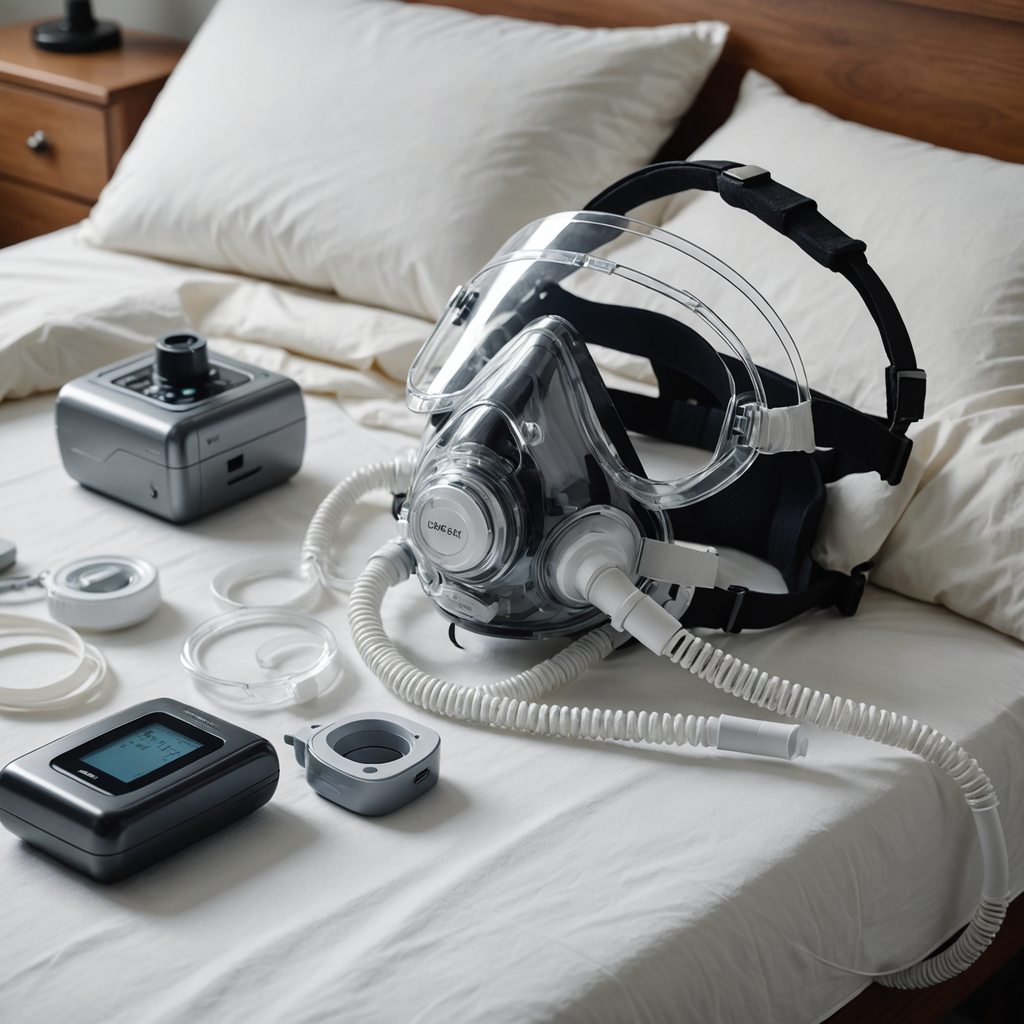
Room air enters the device and gets pushed through a fine particle filter. From there it passes over the heated humidifier chamber, where it picks up water vapor — this is the part that keeps your nasal passages from drying out under positive pressure. The now-warm, now-humid air travels down the tubing toward your face. Somewhere along that tube, the air is warmer than the room, so water condenses on the inner wall. That condensation is the problem. Standing water plus body temperature plus the organic material that drifts in from your skin and breath is, biologically speaking, an invitation.
What accepts the invitation is mostly ordinary: skin bacteria, environmental molds, the occasional gram-negative organism. They form biofilm on the chamber walls and tubing interior. Biofilm matters because it's stubborn — the matrix shields the bacteria from drying out and from casual rinsing, which is why a quick water flush doesn't fully reset a neglected chamber.
The temptation, naturally, is to nuke it. This is where a real warning belongs. Ozone and ultraviolet "CPAP sanitizers" became popular precisely because they promise to kill what you can't scrub. In 2020 the U.S. Food and Drug Administration issued a safety communication stating that these devices were not legally marketed for that use and that ozone, in particular, could damage CPAP components and leave residual gas at levels that may be unsafe to breathe. Soap and water remained the recommended method. That recommendation hasn't been overturned. The expensive machine that sterilizes your machine is solving a problem you can mostly solve with a sink.
And the infection question itself? Thinner than the confidence with which it's discussed. There are case reports linking contaminated equipment to respiratory infection, and the biological plausibility is real. But large prospective studies showing that routine, careful home cleaning prevents pneumonia in CPAP users are not something I can point you to — because they don't really exist at the scale that would settle it. The 2020 AASM guidance and most pulmonology practice treat cleaning as sensible hygiene, not as proven infection prophylaxis. That distinction is worth holding onto. It tells you the equipment-germ story is well-grounded as a reason to rinse and badly grounded as a reason to panic.
Three things people clean, judged on the same criteria
Set the three tasks side by side and rate each on the things that actually matter: how much it affects infection risk, how much it affects whether your therapy works and whether you keep using it, how much it touches the allergen load you breathe, and how much effort it costs. Same yardstick for all three.
| Task | Infection risk | Therapy comfort & adherence | Allergen load | Effort |
|---|---|---|---|---|
| Mask & cushion | Moderate | High | Low–moderate | Low (daily wipe) |
| Humidifier chamber & tubing | Moderate | Moderate | Low | Moderate (weekly) |
| Bedroom environment | Low | High (indirect) | High | High (seasonal + weekly) |
The pattern that jumps out is that the task most people obsess over — sterilizing the machine — scores moderately on everything and high on nothing. The two tasks that quietly drive whether your therapy actually works are the cushion and the room. Let's take them in turn, because each one fails in a way you can feel.
The mask cushion: the part that fails without looking dirty
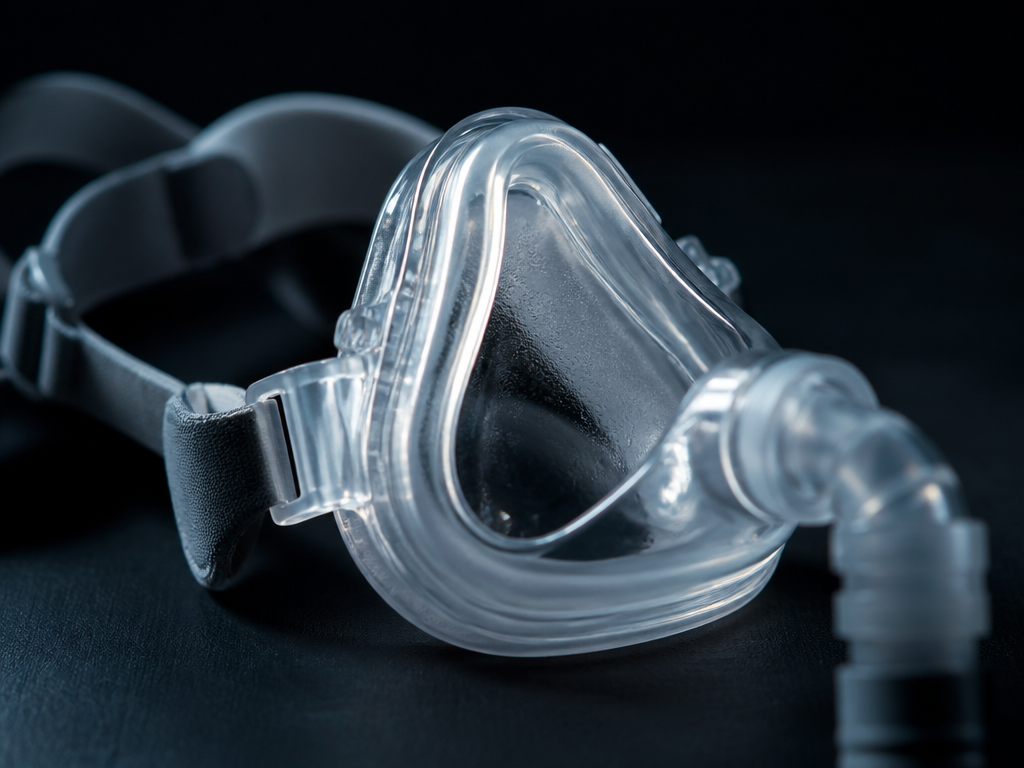
A CPAP mask seals against your face with a thin lip of silicone or gel. That seal is doing precise mechanical work. The blower delivers a set pressure — say 10 centimeters of water — and the entire therapeutic logic depends on that pressure reaching your airway and holding it open. A clean, intact cushion seals. A degraded one leaks.
Here's the mechanism, in the order it unfolds. Your skin produces sebum — oils — all night. Those oils sit against the silicone. Over weeks they break down the cushion's surface, and the material stiffens and loses its springy conformity to your face. The seal that was airtight in week one develops a hairline gap by week eight. Air whistles out. Some machines compensate by ramping pressure to hit the target, which can wake you; others simply deliver less effective pressure, and your apneas creep back without any dramatic signal that something changed. You just feel worse and don't know why.
This is why cushion care is less about killing germs and more about preserving a mechanical surface. Wipe it daily — face oils, not bacteria, are the enemy here — and replace it on the manufacturer's cadence, which for most cushions is every two to four weeks, with the full mask frame every few months and the headgear when the elastic goes slack. A leaking mask is the most common reason people quietly abandon therapy, and the 2007 work by Kribbs and the broader adherence literature have shown for years that comfort and fit predict whether someone keeps using CPAP at all.2 You cannot scrub your way to adherence. You can replace your way to it.
So on our criteria, the cushion wins on the thing that matters most: it directly determines whether the therapy you're committed to actually does its job tonight. Low effort, high payoff. If you do one thing well, do this one.
The humidifier and tubing: real, but rarely the bottleneck
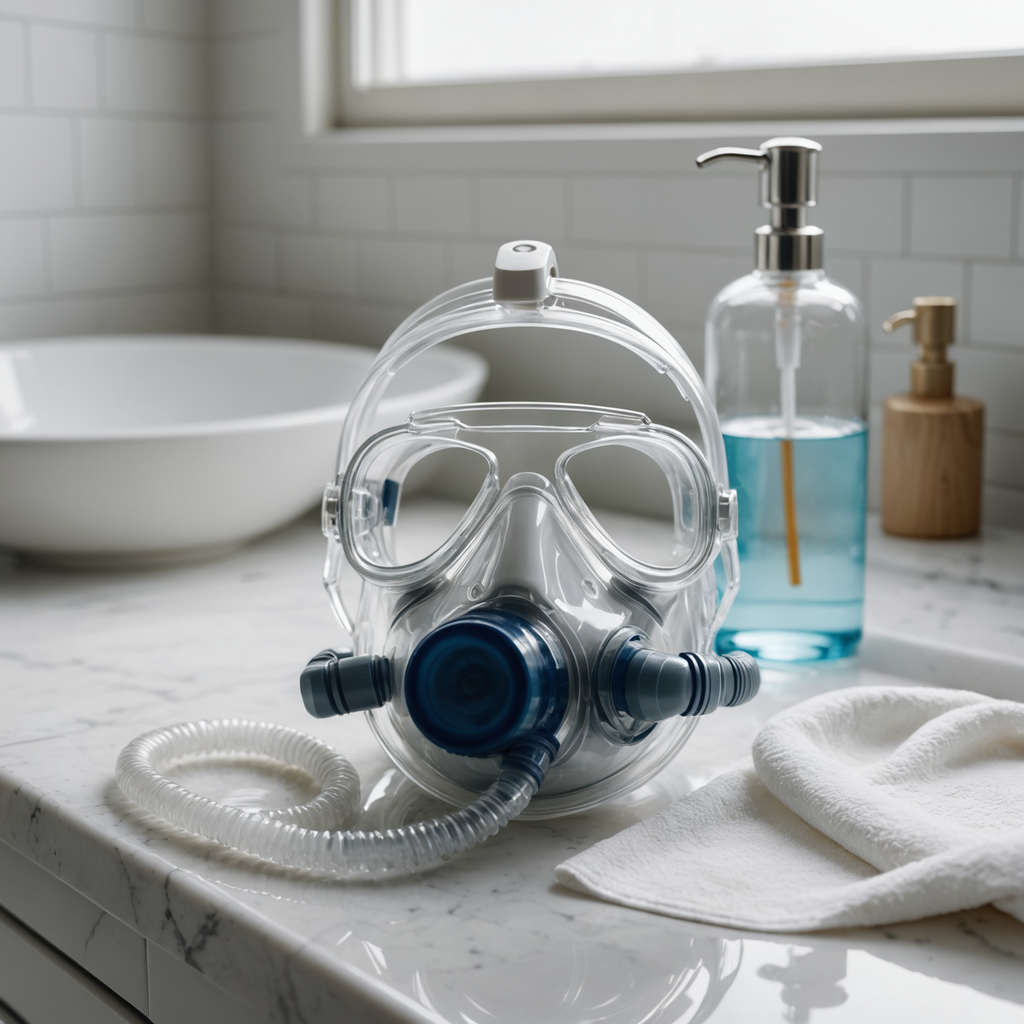
The chamber and tube are where the biofilm story is most legitimate, so they deserve genuine weekly attention — warm soapy water, a full rinse, air-dry out of direct sunlight. Distilled water in the chamber slows mineral scaling and gives the bacteria less to feed on than tap water does.
But notice what the chamber doesn't do. It doesn't determine your pressure delivery the way the cushion does. It doesn't shape the allergen load the way your bedroom does. A clean tube is good practice and a hedge against the plausible-but-unproven infection risk. It is rarely the reason someone's therapy is failing. Weekly is enough. Daily is overkill for most people, and the daily-sterilization industry is selling you a solution scaled to a fear, not to the data.
The bedroom: the variable nobody puts on a schedule
Now the task that scores highest on allergen load and, indirectly, on whether your therapy works — and the one almost no one treats as part of CPAP care at all.
Walk the chain. House dust mites live in mattresses, pillows, and bedding, feeding on shed skin and thriving in humidity above roughly 50 percent. Their waste proteins are potent allergens. If you're sensitized, exposure drives allergic rhinitis — the congestion, the swelling of the nasal lining, the runny nose. Now layer CPAP on top. Most masks are nasal or nasal-pillow designs that depend on you breathing through your nose. A congested nose forces mouth breathing. Mouth breathing under a nasal mask dries you out, breaks the seal, and dumps pressurized air past your lips — which wakes you, and which sends some users back to the closet to retire the machine entirely. The allergen in your mattress can sabotage a perfectly maintained device.
The evidence here is a mix. That allergic rhinitis worsens sleep quality and daytime function is well-established; the literature on rhinitis and sleep is large and consistent. That nasal congestion complicates CPAP and pushes people toward mouth breathing and leak is clinically well-recognized. That scrubbing your bedroom of dust mites measurably improves CPAP outcomes is the plausible-but-thin link in the chain — allergen-avoidance trials for asthma and rhinitis have produced mixed results, and the specific question of bedroom allergen control improving apnea therapy hasn't been cleanly answered. So I'll mark it honestly: the upstream biology is solid, the downstream proof is incomplete, and the intervention is low-risk enough to be worth doing anyway.
What bedroom control actually means is unglamorous. Wash bedding weekly in hot water — above about 130°F kills mites. Use allergen-barrier encasements on the mattress and pillows. Keep bedroom humidity in the 30–50 percent range, which works against both mites and the mold that can colonize damp equipment. Vacuum with a HEPA filter. None of this is exotic. All of it is the part of "sleep hygiene" that gets skipped because it doesn't come with a manufacturer's manual telling you when.
An honest rule of thumb
If you forget everything else, anchor your routine to three timescales. Here is what to do, on what cadence, in plain order of priority.
Tonight, and every night: Wipe the mask cushion with a damp cloth or unscented soap and water, and let it dry. This protects the seal that makes your therapy work. Fill the humidifier with distilled water if you can.
Once a week: Wash the chamber and tubing in warm soapy water, rinse thoroughly, and air-dry away from sunlight. Wash your bedding in hot water and check that the bedroom isn't damp.
On a calendar, not a vibe: Replace the cushion every two to four weeks, the filter as the manual specifies (disposable ones roughly monthly), the tubing and mask frame every few months, and the headgear when it stops holding tension. Put it in your phone. Equipment that fails slowly never announces itself.
That's the whole regimen. Notice what's missing: no ozone machine, no daily disassembly, no anxiety. Keeping up with CPAP maintenance is a matter of rhythm, not intensity — small, boring consistency beats occasional heroics every time.
A note for the partner or caregiver running the household, because you often are the one who notices the leak whistle at 3 a.m. and the one who changes the sheets: the bedroom half of this is genuinely yours to own, and it's the half the clinic never schedules. Humidity, bedding, dust. You're not nagging about hygiene. You're maintaining the room that decides whether the machine's work survives till morning.
The verdict that emerges
Line the three back up. The humidifier and tubing earn their weekly wash and not much more. The mask cushion is the quiet hero — replace it on time and it protects the pressure that protects your airway. And the bedroom, the task no manual hands you, controls the allergen load that can quietly unravel everything else. The germy-machine story that drives most cleaning anxiety scores moderate across the board and high on nothing. The boring tasks win.
So here is the myth, restated as you've probably heard it: keeping CPAP therapy healthy means obsessively sterilizing the machine so it doesn't make you sick.
And here is the more accurate version: keeping CPAP therapy healthy means replacing the cushion before it leaks and managing the room before it congests you — because the machine was never the part most likely to fail.
-
Manufacturer instructions for use are the standard reference here. They tend to recommend daily cleaning of the mask and weekly cleaning of tubing and the humidifier tub, with replacement intervals that vary by component. Worth reading once, then keeping in a drawer. ↩
-
The adherence literature consistently finds that the first weeks of therapy are decisive and that physical comfort — mask fit, leak, pressure tolerance — is a leading predictor of long-term use. A pristine but ill-fitting mask helps no one. ↩