The advice arrives every time someone posts a screenshot of a discounted fitness band: wait. Don't buy it. The Samsung Galaxy Fit 4 just cleared an FCC filing, a Fitbit Air successor is presumably somewhere in the pipeline, and in six weeks the thing you almost bought will be last year's thing at the same price. Hold your money. Somebody in the replies will link the leak.
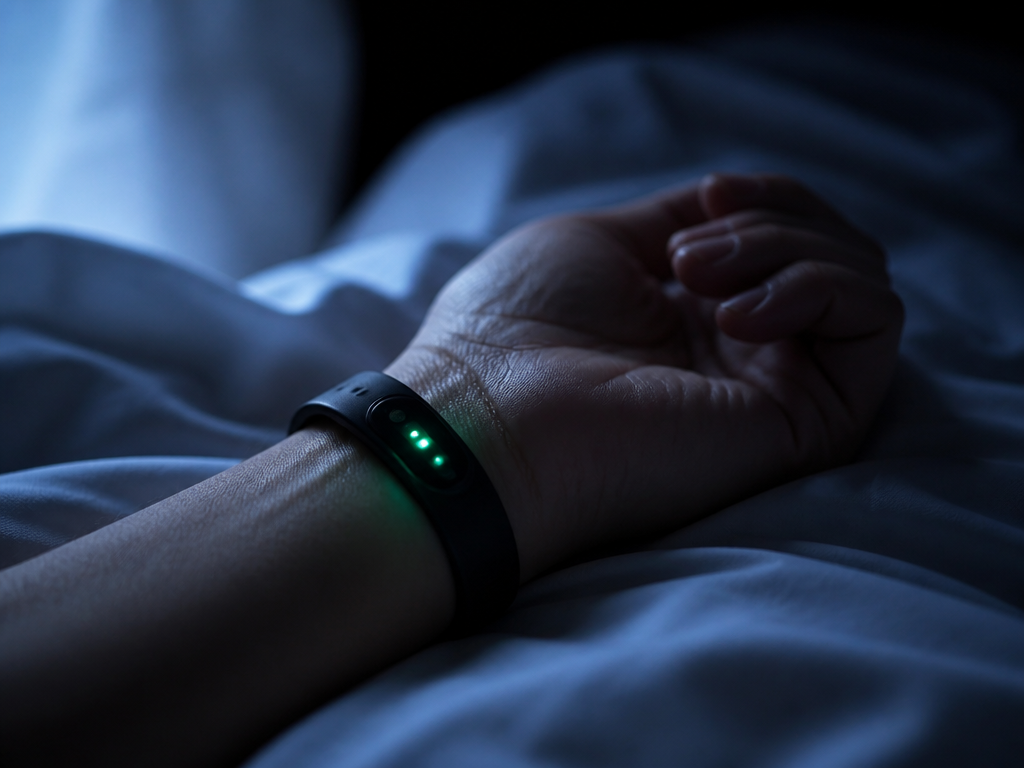
I followed that advice for a while, then stopped following it, and spent twelve weeks wearing a Fitbit Air on my left wrist while the rumor cycle churned. This is a report on both — the band, and the rule about when to buy the band.
The verdict: the wait-for-the-leak rule is sound when you're buying a screen, and close to worthless when you're buying a sleep tracker. Displays, chassis, and price tiers change meaningfully between generations. The sensor stack and the sleep-staging algorithm mostly don't, and those are the parts I actually cared about at 11:40 at night.
What I was actually testing
Twelve weeks, one Fitbit Air, worn every night and most days. Alongside it I kept a paper log: lights-out time, the time of my last caffeinated drink and roughly what it was, and a subjective guess at when I fell asleep, written the next morning. I know a next-morning guess is a bad instrument. That's part of the point — I wanted to see whether a $130 wrist tracker was better than a bad instrument, and by how much.
My caffeine intake over the period was deliberately boring: two cups of drip in the morning, between 380 and 420mg total on a weekday if I'm honest about the second cup's size, and then a hard stop that I moved around on purpose. Six weeks with a 2pm cutoff. Six weeks with no cutoff at all, which in practice meant a 4:30pm espresso most days and a late one twice a week.
The rumor-tracking was less rigorous. I read the leaks as they came, mostly out of the same low-grade curiosity that makes you check flight prices for a trip you've already booked.
What the leak actually contains
Here is the honest inventory of what a regulatory filing tells you, and I want to be precise because the coverage around it — including coverage I read enthusiastically at the time — was not.
An FCC filing is a radio document. It confirms a device exists, that it has a model number, and that it emits at certain frequencies. It sometimes carries a battery capacity, because the test lab has to disclose what it powered the thing with. It occasionally leaks a charging arrangement. That's the genuine payload.
What it does not contain: display technology, screen size, sensor package, sleep-staging capability, price, or ship date. Every one of those, in the Fit 4 coverage I read, was inferred from the predecessor and stated in a sentence that a fast reader would take as fact.
So the useful summary of the current situation is short. A Samsung wearable with a Fit-series model number went through certification. It has a battery in the vicinity of the Fit 3's. It appears to have a screen, which is the one real differentiator against the screenless Fitbit Air. Everything past that is the same shape of guess I could have made without the filing.
I want to be clear that this isn't a complaint about the outlets that ran it. The document is thin; the story is that it's thin. What bothers me is what readers do with thin documents, which is treat them as a reason to wait.
Where the advice is roughly right
I don't want to overcorrect. There are three cases where waiting on a leak genuinely pays, and I hit two of them.
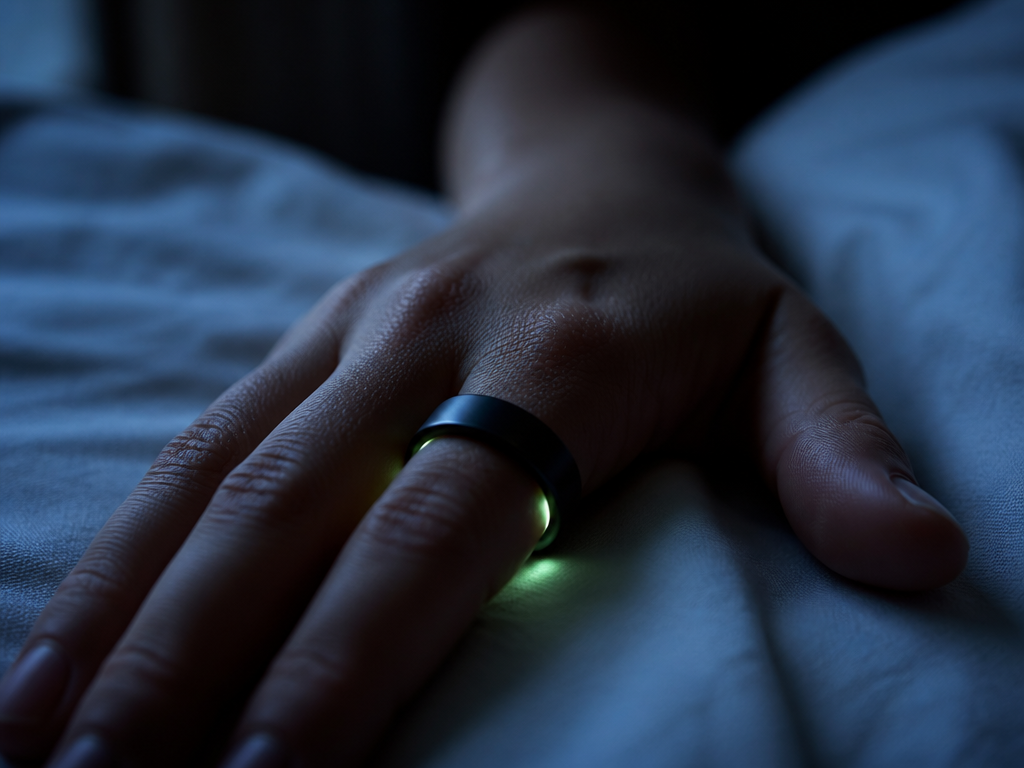
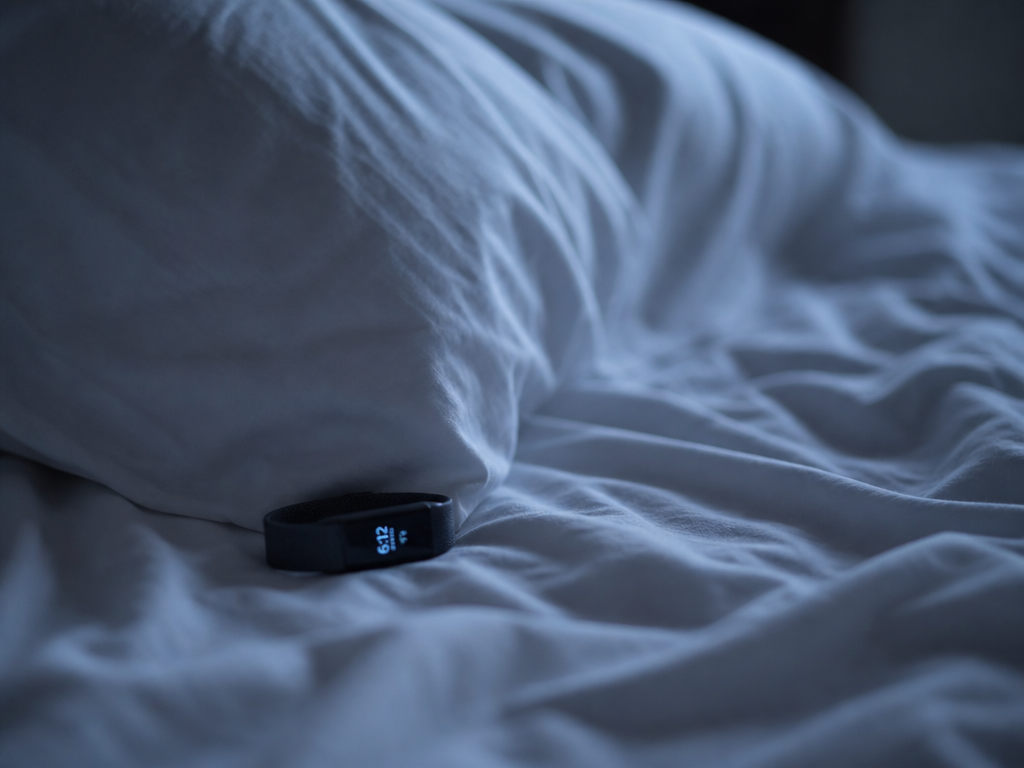
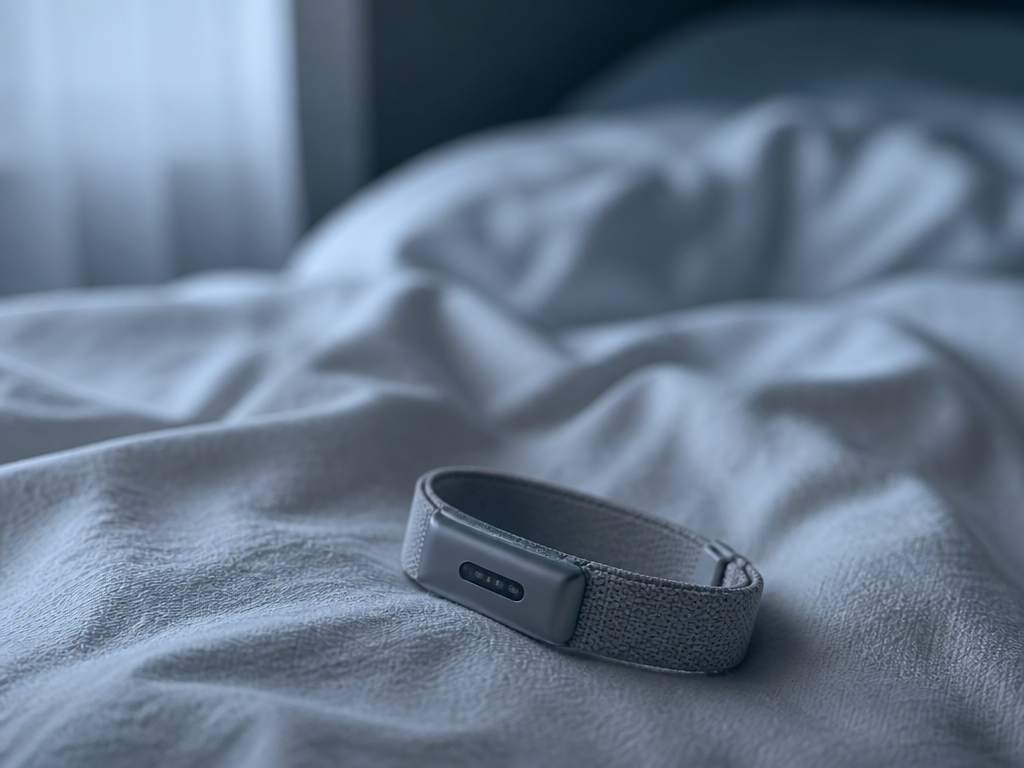
The screen divide is real and it is not a spec-sheet detail. The Fitbit Air has no display. You get haptics and an LED, and everything else lives in the phone app. If a new competitor in the same price band adds a screen, that is a category change, not an increment. Waiting to see whether the cheap band you're eyeing has a display is a legitimate reason to wait.

Price floors move on announcement, not on release. The Air's street price dropped roughly $20 in the two weeks after the first substantive Samsung leak, well before anything shipped. Waiting cost me nothing and saved somebody $20. That's small, but it's real, and it's the most reliably true part of the advice.
Chassis and comfort change generation to generation. This matters more for a sleep tracker than for a step counter, because you wear it for eight hours against a pillow. The Air's band is the part I'd most want redesigned, and a redesign is exactly the kind of thing a new generation delivers.
So: if you're buying a wearable for the interface, the fit, or the price, the rule holds up.
Where it breaks down
Here's the failure mode. The thing people are waiting for is almost never the thing that changed.
Ask someone why they're holding off on a budget tracker and they'll usually say something about accuracy — better sleep tracking, better heart rate, better everything. Then the new model arrives with a brighter screen, a slightly better battery, and the same optical sensor family running an algorithm that is, at best, revised.
Sleep staging on wrist wearables is inferred from movement and heart rate variability. That inference has hard limits, and those limits are not a manufacturing problem you solve with a new SKU. A band cannot see your brain. It sees your wrist being still and your pulse doing something, and it guesses. Generational updates tune the guess. They don't replace the instrument.
Which means the person waiting six weeks for meaningfully better sleep data is waiting for something that isn't on the truck.
The comparison, with the unknowns left in
| Fitbit Air | Galaxy Fit 3 | Fit 4 (leaked) | |
|---|---|---|---|
| Display | None — LED + haptics | Color AMOLED | Screen indicated; size/tech unknown |
| Battery, claimed | ~10 days | ~13 days | Filing suggests similar to Fit 3 |
| Sleep staging | Yes, app-side | Yes | Unknown — assume carryover |
| Street price | ~$130, drifting down | ~$60–80 | Unknown |
| Sensor stack | Optical HR + accel | Optical HR + accel | Unknown |
Three of five rows on the leaked column are unknowns, and the two that aren't are soft. That table is the strongest argument I can make for why the leak shouldn't change your purchase decision. If a device is 60% question marks, it isn't a competitor yet. It's a rumor with a model number.
My numbers
The part I can actually defend.
Across 84 nights, the Air reported a mean sleep-onset latency of 14 minutes. My paper log's morning-after estimate averaged 26 minutes. That gap is the single most useful thing I learned in three months.
It is not obviously the tracker being wrong. Subjective onset estimates are famously inflated — people who are asleep frequently believe they were awake. But the direction of the gap was consistent, and it was widest on the nights I'd most want an accurate reading: the late-caffeine nights.
On the no-cutoff block, with espresso landing around 4:30pm, my logged onset estimate rose to a mean of 34 minutes, up from 19 on the 2pm-cutoff block. The Air's reported onset over the same split moved from 12 minutes to 16. So my own sense of the effect was a 15-minute swing; the band called it four.
The band did catch the direction. It just flattened the magnitude to something close to noise. If I'd been relying on the Air alone, I'd have concluded that a late espresso costs me almost nothing and kept drinking it, which — based on how those nights actually felt — would have been the wrong call.
Where the Air was genuinely good: total sleep time. On the eleven nights I had an independent check (a partner awake at a known time, or a wake-up I could timestamp), the Air's total was within about 10 minutes nine times. That's a legitimately useful number and it's the one I'd keep the device for.
Where it was bad: brief wakes. The Air missed most of the 2am wake-ups I remembered clearly enough to log. Its wake count ran 1–2 on nights my log said 3–4.

Battery, since specs are the genre here: I got 8 to 9 days of real use against a claimed 10, with sleep tracking on every night and notifications enabled. Not a scandal. Not the number on the box.
What I couldn't test
A lot, and it matters.
I have no polysomnography. My reference standard was a person writing on a notepad in the morning, which is a worse instrument than the thing I was auditing in at least one respect. When the Air and my log disagreed about onset, I genuinely do not know which was closer to the truth. I know they disagreed, and I know the disagreement got larger under caffeine, and that's the extent of the claim.
One wrist. One person. One caffeine metabolism, which for all I know is unusual — I've never been genotyped for it and the whole slow-metabolizer discourse deserves more skepticism than it gets.
And I have not worn the leaked Samsung, because it does not exist in any form I can put on. I've worn the Fit 3, briefly, borrowed. That's the anchor I'm reasoning from, and it's a weak one.
Eighty-four nights is enough to see a direction. It is not enough to publish a number with a confidence interval, and I'm not going to pretend otherwise by putting a decimal point on anything.
Who this is for, and who it isn't
Buy the Fitbit Air now if: you want total sleep time and a nightly nudge, you don't want a screen on your wrist at 3am, and you'll treat the staging data as a rough narrative rather than a measurement. At its current street price it's a reasonable purchase and the leak shouldn't stop you.
Wait if: a display is the deciding feature. That's the one axis where the rumored competition is plausibly better and where a wrong choice is expensive to undo. Also wait if you're near a major retail event, because the $20 drift is real.
Don't buy either if: you want to know whether caffeine at 4pm is wrecking your sleep. Neither device is going to answer that at the resolution you want. A notepad and eight weeks of discipline outperformed my tracker on the one question I bought it to answer, which is an uncomfortable thing to write in a review of the tracker.
Skip the category entirely if: you're a poor sleeper who anxiously checks metrics. Every person I know who's done that has ended up worse, and a band that under-reports onset by twelve minutes will either falsely reassure you or send you looking for a better band. Both are bad outcomes.
The honest version of the rule
The rule as stated — wait, something better is coming — is a rule about hardware written by people who mostly care about hardware. Here's the version I'd defend after three months:
Wait for a leak when the thing you want is a thing that visibly changes between generations. Buy now when the thing you want is a measurement, because measurements don't improve on a product cycle.
Screens change. Batteries change a little. Straps change. Prices change on announcement, before anything ships. Sleep staging accuracy changes on a research timeline measured in years, not on a launch calendar, and no filing is going to tell you it did.
That's less satisfying than "wait." It's also the only version that survived contact with my own data.
Try this week
Wear whatever you already own to bed, and for seven nights write down two things on paper before you look at the app: the time you turned the lights off, and your honest guess at when you fell asleep. Then check what the band says.
If the two agree within about ten minutes, trust your device on onset and stop reading leaks about sensor upgrades you don't need. If they don't — and I'd bet a modest amount they won't — you've learned that your tracker's onset number is a story rather than a stopwatch, which is worth more than any spec sheet a certification lab is going to hand you this quarter.
Seven nights. A notepad. It costs nothing and it tells you more about your own sleep than the next three months of rumors will.