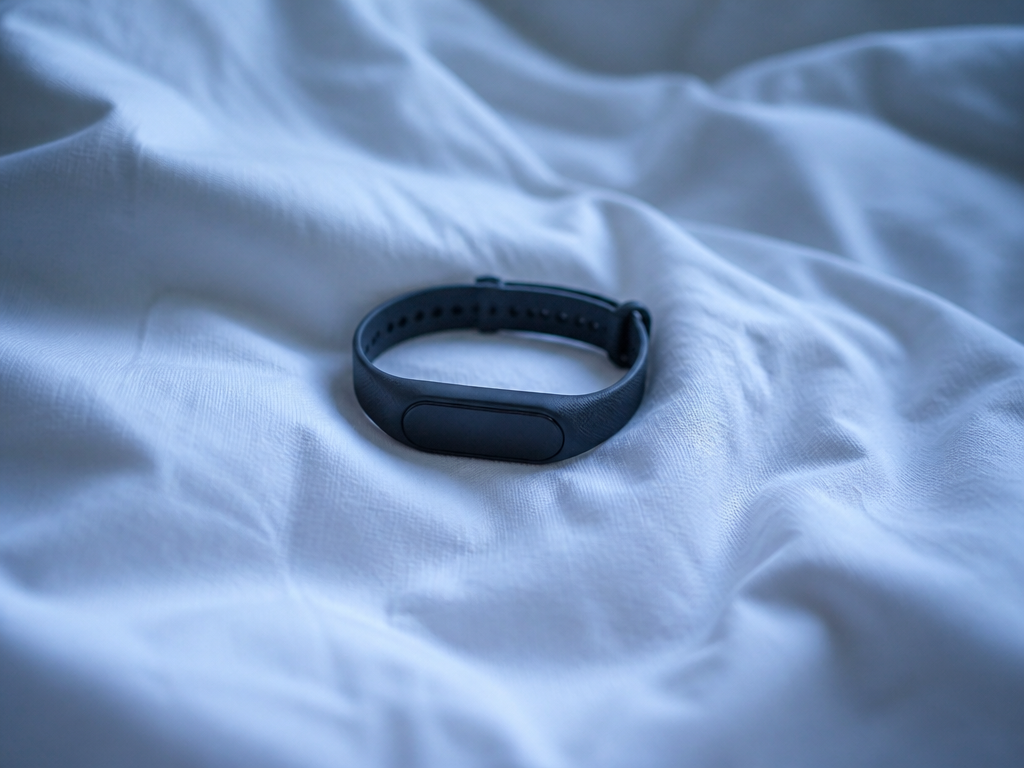
The advice arrives on schedule every time a fitness company announces a paid tier, and it is easy to repeat: never buy a wearable whose useful features sit behind a subscription. Own the hardware. Don't rent access to your own body. I have given that advice in this magazine. Then Garmin shipped the Cirqa — a small screenless band for people who want tracking without a watch on their wrist — the internet objected to what was going to be gated, and Garmin adjusted. Which left me with a device I could actually use to test the rule instead of restating it.
I wore the Garmin Cirqa for forty-one nights against a tracker I already trusted, and used the pair to run a caffeine-cutoff experiment I'd been putting off for two years. The verdict, before the detail: the rule is roughly right about what gets gated and almost entirely wrong about why that should change your purchase. The subscription didn't take away a single number I needed. It took away the paragraph telling me what the numbers meant, and that paragraph was worse than my spreadsheet.
The rule, stated fairly
The advice deserves its strongest form before I start poking at it. It rests on three claims.
First, that gating follows value. Companies don't paywall the boring stuff; they paywall the feature that made you open the app. If the sleep score is behind the fee, that's because the sleep score is the product and the sensor is the delivery mechanism.
Second, that you lose your history. Stop paying and the trend views close, the year-over-year comparisons vanish, and three years of nights become a folder you can't browse. This is the fear that does the most work, and it is not paranoid — it has happened to people.
Third, that subscriptions ratchet. What's free at launch is $4.99 in year two and bundled into a $12.99 tier in year four, and the hardware you already bought quietly becomes a worse device while sitting on your wrist. Nobody has to break a promise for this to happen. The device just stops keeping up with the app.
All three are true often enough to be worth taking seriously. My complaint isn't that they're wrong. It's that they get applied at the wrong altitude.
What I actually ran
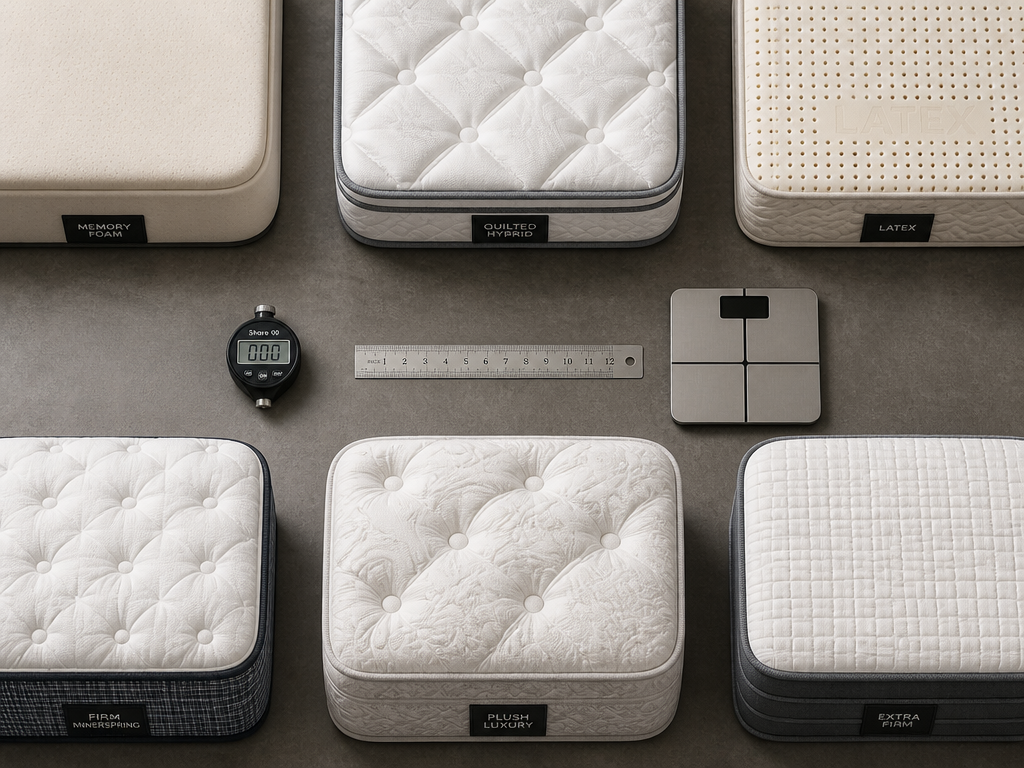
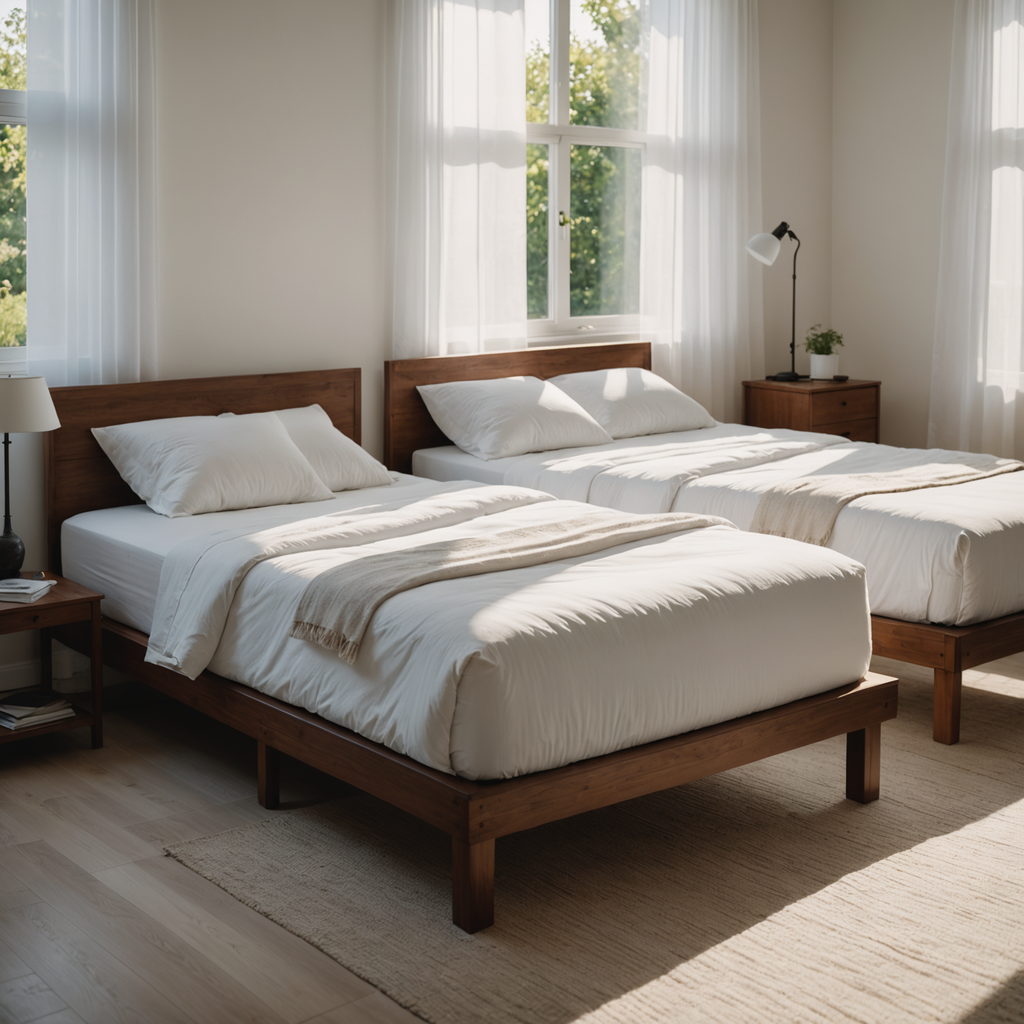
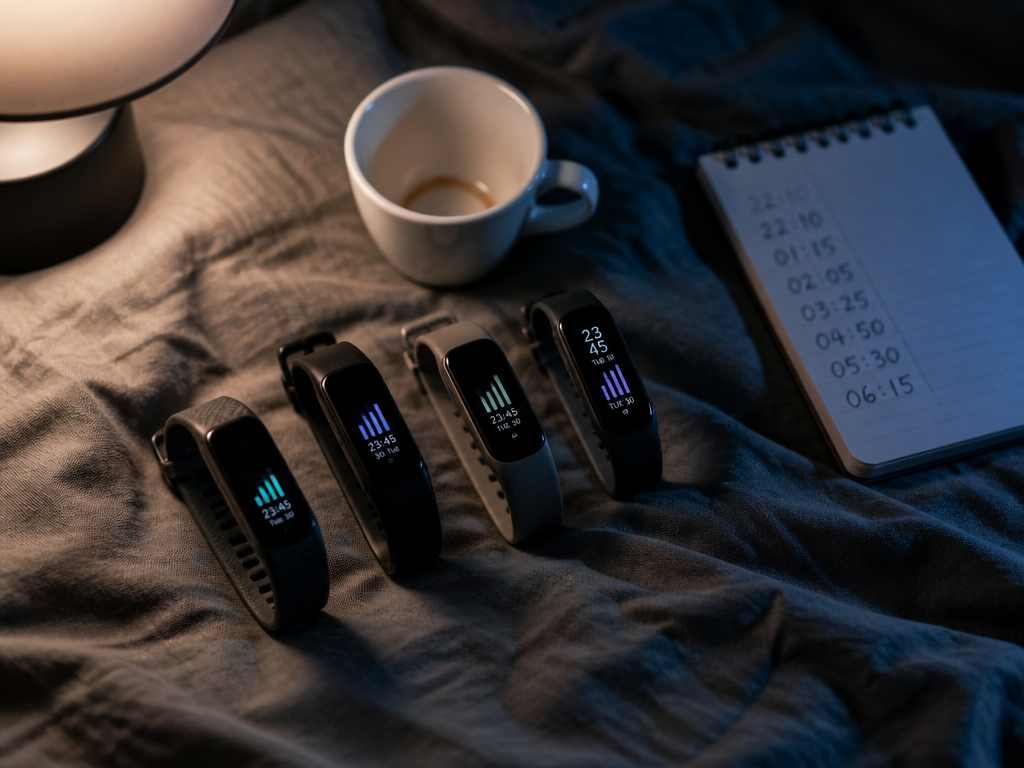
Forty-one nights, split into two blocks with a five-night washout between them, all in the same room, same mattress, same partner, same cat.
Block A (20 nights usable): last caffeine at 12:00. Morning intake held at roughly 180 mg — two cups of a medium-roast Guatemalan pulled through a Kalita, weighed at 21 g per cup, which puts me somewhere in the 160–200 mg range depending on how much I care that morning.
Block B (21 nights usable): identical morning, plus one 95 mg cup at 16:00. That's the shot of espresso most people don't count.
Bedtime held inside a 30-minute window (22:45–23:15). Alcohol excluded entirely — I dropped three nights where that failed. I discarded four more nights: two where the band lost contact, one travel night, one where I fell asleep on the sofa first and the whole measurement became fiction.
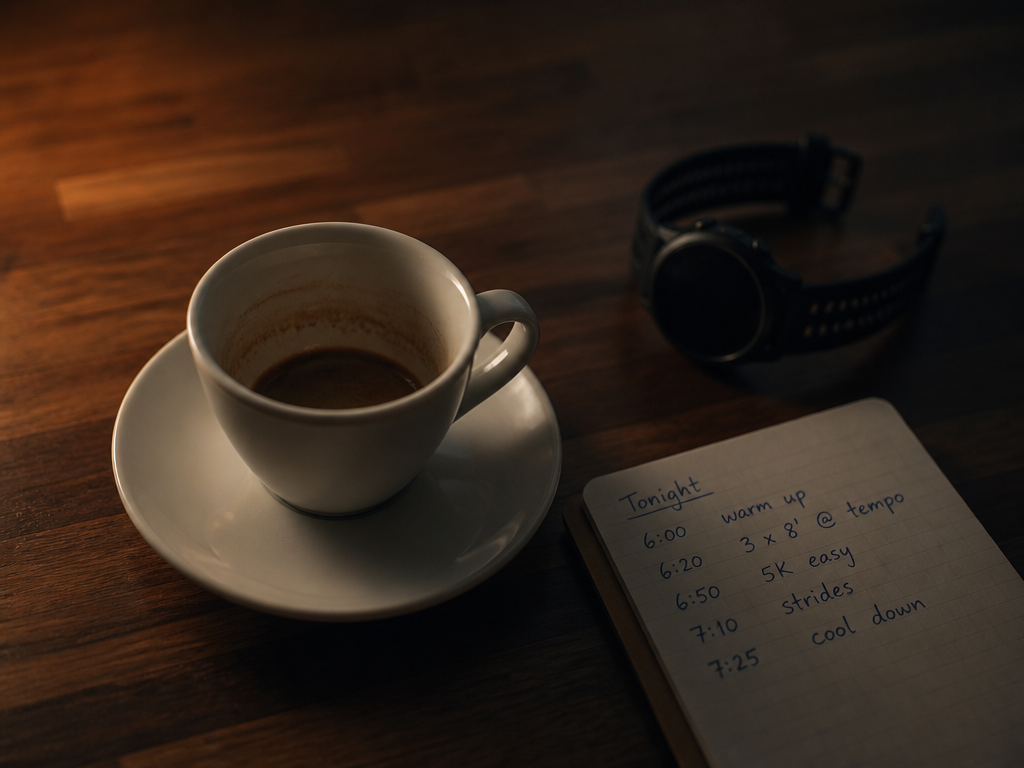
Onset latency was defined as the gap between a timestamped button press on my phone at lights-out and the first minute the device scored as sleep. I logged the press manually in a notes file so I wasn't relying on either device's own bedtime detection, which is the single largest source of garbage in consumer sleep data.
What I couldn't do: any of it properly. No polysomnography, so I have no ground truth for sleep stages and I'm not going to pretend otherwise. No blinding — I knew which block I was in, and expectation moves subjective sleep quality more than most people admit. One participant, forty-one nights, one summer's worth of ambient temperature. This is an experiment in the sense that a home cook's third attempt at a recipe is an experiment.
Where the advice holds up
The gating pattern is exactly what the skeptics say it is, and the Cirqa is not an exception.
What sits on the paid side of the line across this category is remarkably consistent: trend depth, derived scores, and coaching. Not the sensor. Not the nightly readout. The layer where a number becomes a recommendation. Garmin's paid tier follows the same shape as everyone else's — the daily numbers are yours, the interpretation is a service.
The history point is also fair. When a trend view lives on a server and the server checks your billing status, you don't own that view — you own the underlying rows and a promise. That's a meaningfully weaker thing to own, and anyone who's watched a cloud service sunset knows it.

And the free tier does function as a trailer. That's not an accusation, it's product design. You are meant to look at your unexplained numbers, feel mild anxiety, and resolve that anxiety with a card. It works on most people. It worked on me for eight days before I cancelled and got more done.
So yes: the mechanism the advice describes exists, and it's aimed at exactly the reader most likely to be reading a piece like this — the person who bought the band because they wanted to know something specific.
Where it breaks down
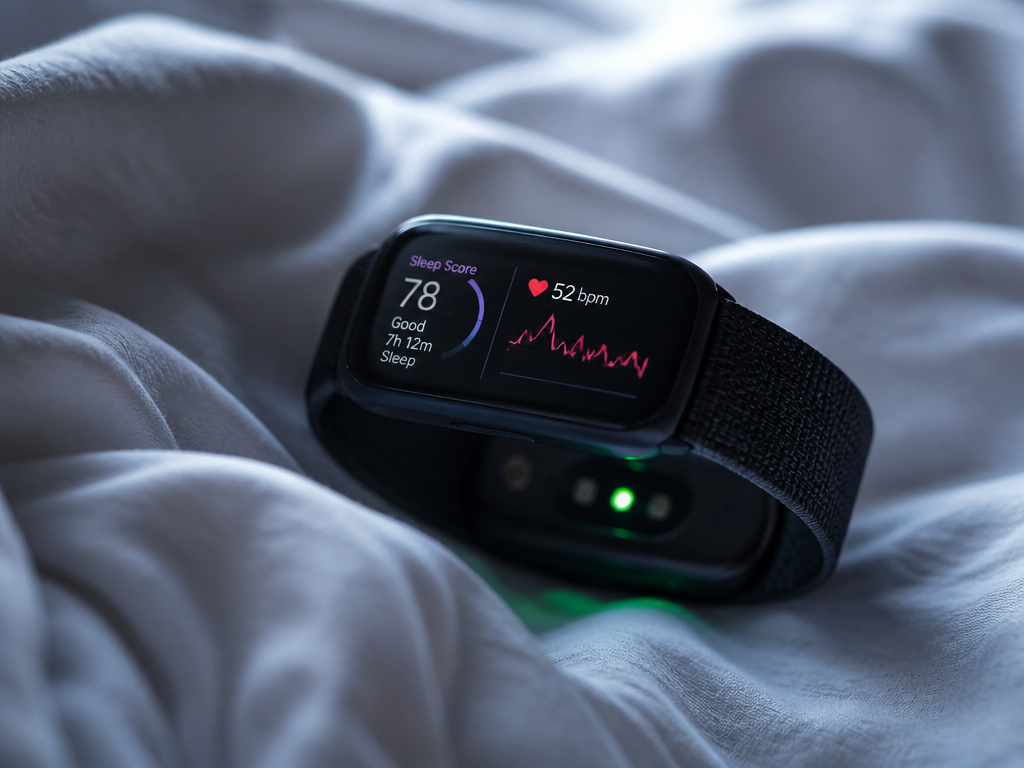
Here is what I needed for the experiment: per-night sleep onset latency, wake-after-sleep-onset, total sleep time, nightly resting heart rate, and a nightly HRV value. Every one of those was available without paying, and every one was exportable.
That's the whole crack in the rule. The subscription was not sitting between me and my data. It was sitting between me and an opinion about my data — a score, a readiness verdict, a suggestion to wind down earlier. For the eight days I paid, the interpretation layer told me things like "your recovery is lower than usual." It was correct and useless. It could not tell me the thing I actually wanted to know, which is whether a 16:00 espresso costs me measurable sleep, because no coaching layer in this category runs a within-subject comparison across two blocks of your own nights. That is not what they're for.
The second crack: buying outright doesn't escape the dependency, it just hides it. A device you "own" still syncs to a cloud, still needs firmware, still has a phone app that will eventually stop being maintained for your OS version. The distinction between renting and owning a connected sensor is thinner than the advice implies. What varies isn't ownership — it's whether you can get the raw rows out.
Which reframes the question. The right thing to check before buying was never "is anything subscription-gated." It was "can I export the measurements, on demand, in a format I can read in five years."
The comparison
Five approaches, scored on the only criteria that turned out to matter. Prices are what I saw at time of writing and move around by region.
| Device | Free tier gives you | The fee buys | If you stop paying | Annual cost |
|---|---|---|---|---|
| Garmin Cirqa + Connect+ | Nightly sleep stages, onset, HR, HRV, full export | Trend depth, derived scores, coaching | Daily numbers stay; derived views close | ~$70/yr, optional |
| Whoop | Nothing — hardware is the subscription | The entire device and its data | Device stops being a device | ~$199–359/yr, mandatory |
| Fitbit | Basic nightly summary | Sleep profile, longer history, insights | Detail thins noticeably | ~$120/yr, semi-optional |
| Oura | Nothing meaningful | Scores, tags, trends, all analysis | Ring becomes an expensive ring | ~$70/yr, mandatory |
| Paper log + phone alarm | Subjective onset estimate, bedtime, wake time | — | — | $0 |
The row that should unsettle people isn't the Garmin one. It's the two rows where the fee is not optional, because that's where the subscription is buying you measurement, not interpretation — and that's a genuinely different transaction.
And the paper row is not a joke. My handwritten estimate of how long I lay awake correlated with the band's onset figure well enough that I'd trust it for direction, though not for magnitude. On the four nights I estimated I'd taken "about 45 minutes," the band scored 28, 31, 38, and 52. I am, like everyone, a bad instrument that runs long.
What the numbers said
Median sleep onset latency: 12.5 minutes on the noon-cutoff block, 19 minutes on the 16:00 block. Interquartile ranges of 8–17 and 13–29 respectively, so the distributions overlap substantially. Wake-after-sleep-onset: median 21 minutes versus 34. Total sleep time barely moved — 7h12 versus 7h04 — which is the finding I'd have missed if I'd only looked at the headline metric.
The cross-device check is the part I put the most weight on. The second tracker disagreed with the Cirqa on absolute onset by a median of six minutes, occasionally by eleven. But it moved in the same direction on 34 of 41 nights, and its block medians differed by a similar gap (14 versus 21.5 minutes). Two devices with different sensors and different scoring algorithms landing on the same shape is worth more than either device's precision claim.

Here's the part the affiliate version of this piece would leave out: a seven-minute median difference is inside the error bars of consumer wrist actigraphy. These devices are validated against lab sleep in aggregate, they systematically overestimate total sleep time, and they are weakest at exactly the thing I was measuring — the boundary between quiet wakefulness and light sleep. My result is directionally consistent with the well-known finding that caffeine six hours before bed measurably disturbs sleep. It is not independent confirmation of it. It is one person's noisy data pointing the same way, which is the most an experiment like this can honestly claim.
What I'd defend: the 16:00 espresso costs me something. What I wouldn't: that it costs me precisely seven minutes.
Who this is for, and who it isn't
Buy it if you want raw nightly numbers and intend to do something with them yourself. If your instinct on reading the table above was "I'd export that to a spreadsheet," the free tier is genuinely sufficient and the band is a good sensor in a form factor that disappears. Also buy it if you specifically want nothing on your wrist that lights up — the screenless design is the actual selling point here, and it's underrated by people who've never lain awake next to a glowing watch face.
Buy it if you're already inside Garmin's ecosystem and your data has somewhere to land. The export path is real, and that's rarer than it should be.
Skip it if you want the device to tell you what to do. You will pay the fee, and the fee is fine, but then you're in the same relationship as every Whoop and Oura owner and you should compare those on coaching quality rather than on data ownership.
Skip it if you need clinically meaningful sleep staging. Nothing in this comparison delivers that, including the expensive ones.
Skip it if you churn. If you're the kind of person who cancels everything in January, don't build a measurement habit on top of a service you'll drop in month four.
If you're running your own experiment, the free tier is the entire product — the subscription sells you a second opinion you didn't ask for.
A more honest version of the rule
The advice I'd actually give now, having spent six weeks trying to break the old one:
Don't ask whether a wearable has gated features. Every wearable has gated features, and the answer tells you nothing. Ask which layer is gated — measurement, storage, or interpretation — and treat them completely differently.
Rent interpretation freely. It's a service, it's worth what it's worth to you, and you can leave. Rent storage warily, and only if export is unconditional and works while you're unsubscribed. Never rent measurement. A device that stops sensing when the card declines isn't a device you bought; it's a terminal.
Then do the thing almost nobody does before buying: find the export button, press it, and open the file. If what comes out is a CSV with one row per night, the subscription question mostly stops mattering. If what comes out is a PDF of pretty charts, you never owned anything regardless of what you paid.
The part I can't settle
What's still bothering me isn't the business model. It's whether the measurement can carry the weight I put on it.
Consumer wrist devices are validated against lab sleep at the population level, where they do reasonably well on total sleep time and poorly on wake after sleep onset. But my entire experiment rests on something different: whether a single device can resolve a within-person difference of a few minutes, night to night, in the same body, with the same wrist, under the same conditions. Population-level agreement doesn't establish that. The two trackers agreeing with each other doesn't establish it either — two instruments can share a bias.
And underneath that, a bigger unknown. Caffeine's best-understood effect on sleep isn't on how fast you fall asleep. It's on adenosine signalling and slow-wave pressure — the depth and restorative quality of the sleep you do get. That's the thing I'd most want to measure and the thing wrist actigraphy is furthest from measuring. Every device in that table infers deep sleep from movement and heart rate variability; none of them observes it.
So the question I'm left holding, and can't answer with forty-one nights and a band: if the afternoon cup barely moves your onset latency but flattens your slow-wave sleep, would any of these devices show you a difference at all — or would they just show you a normal night?