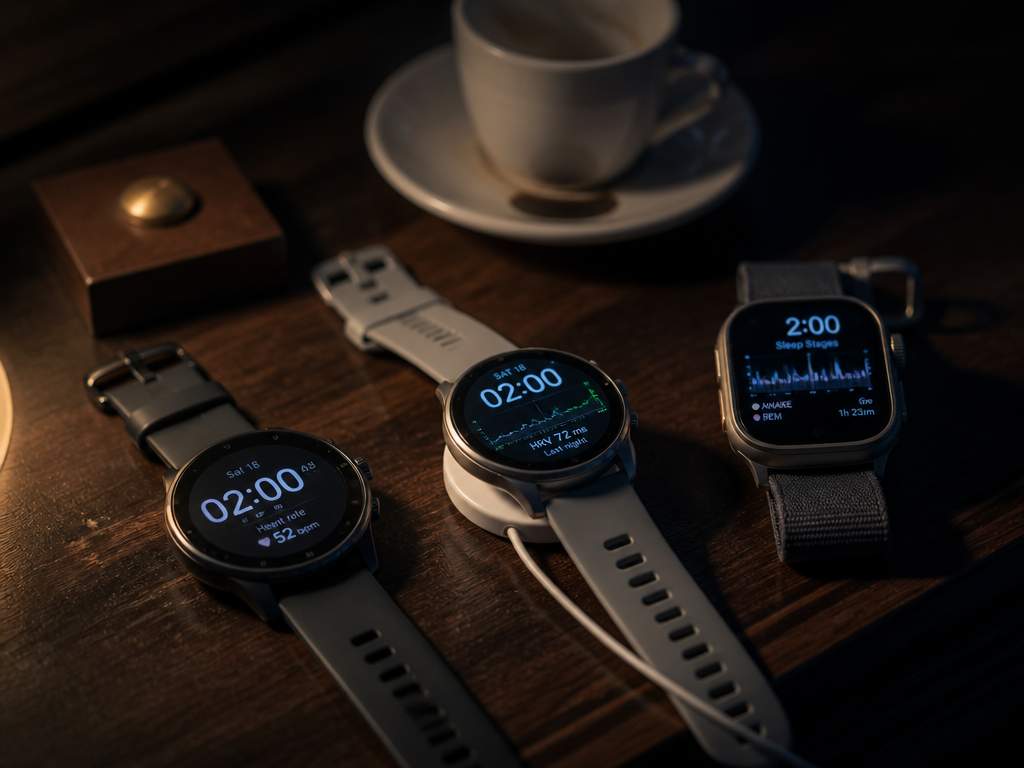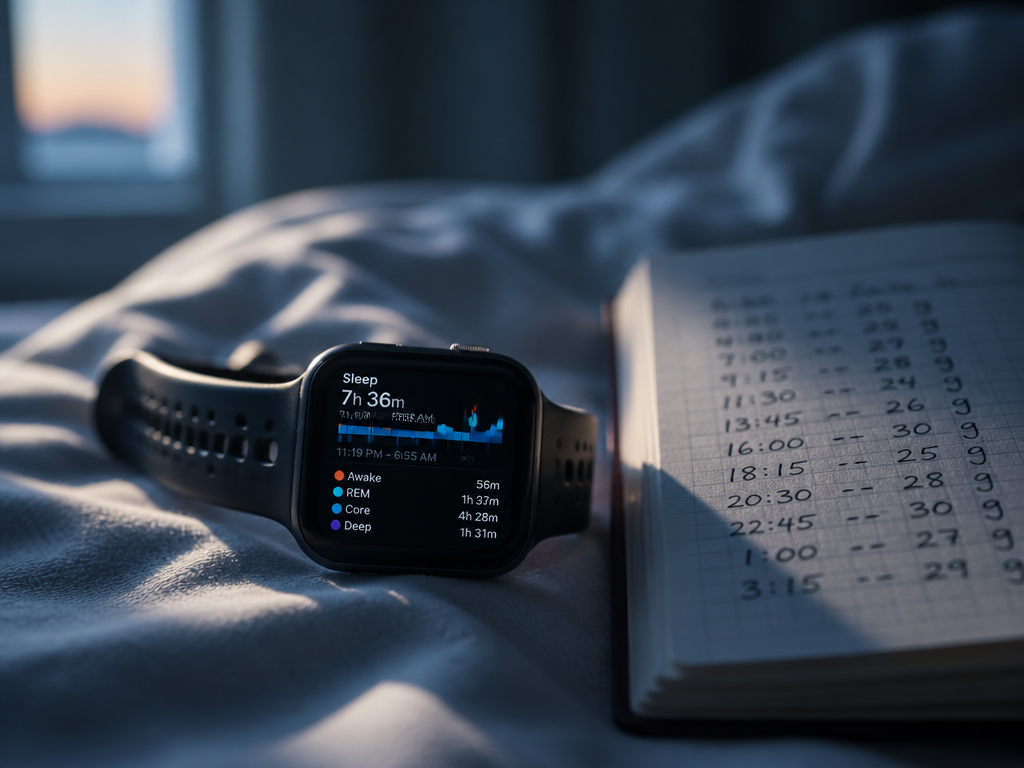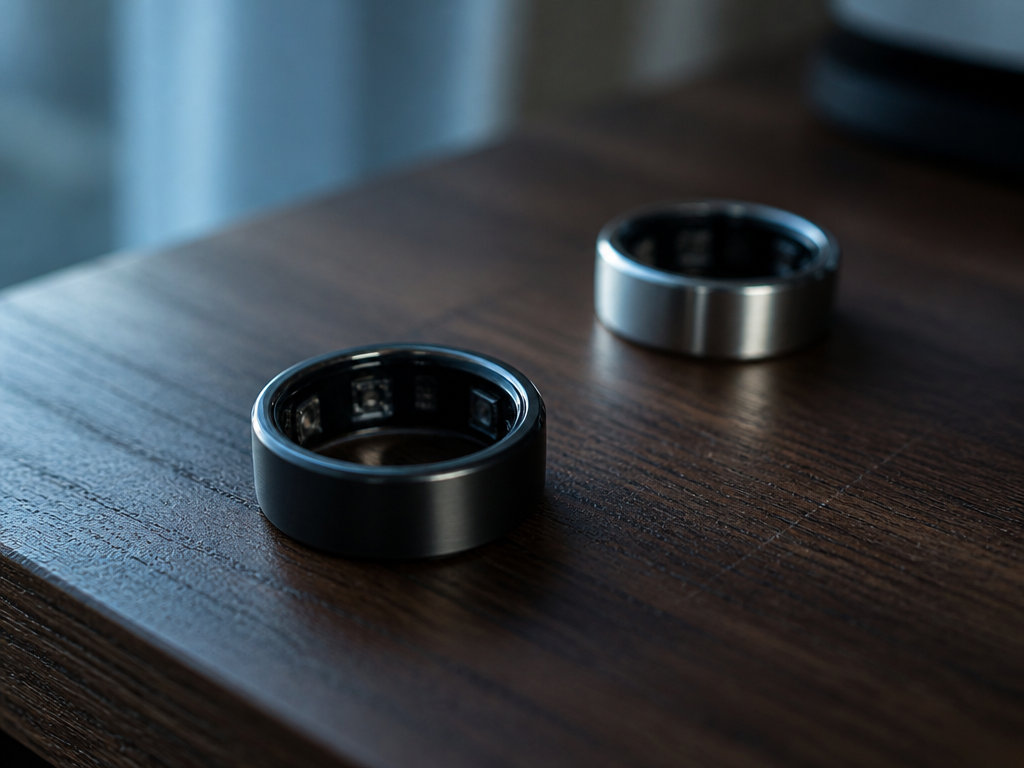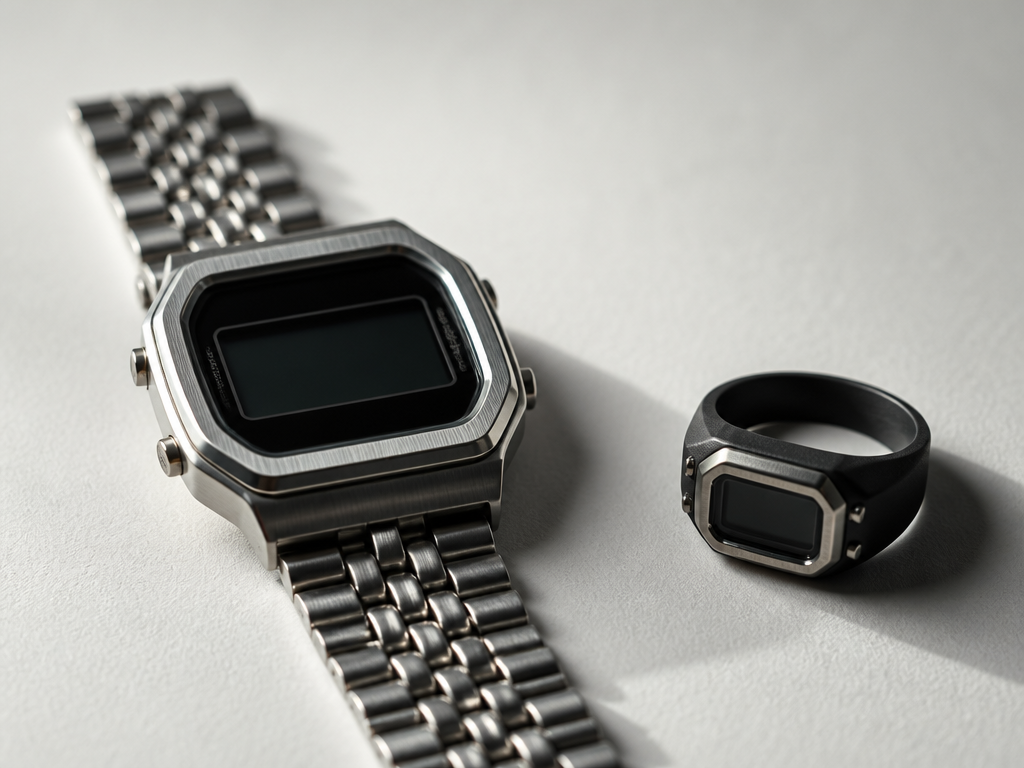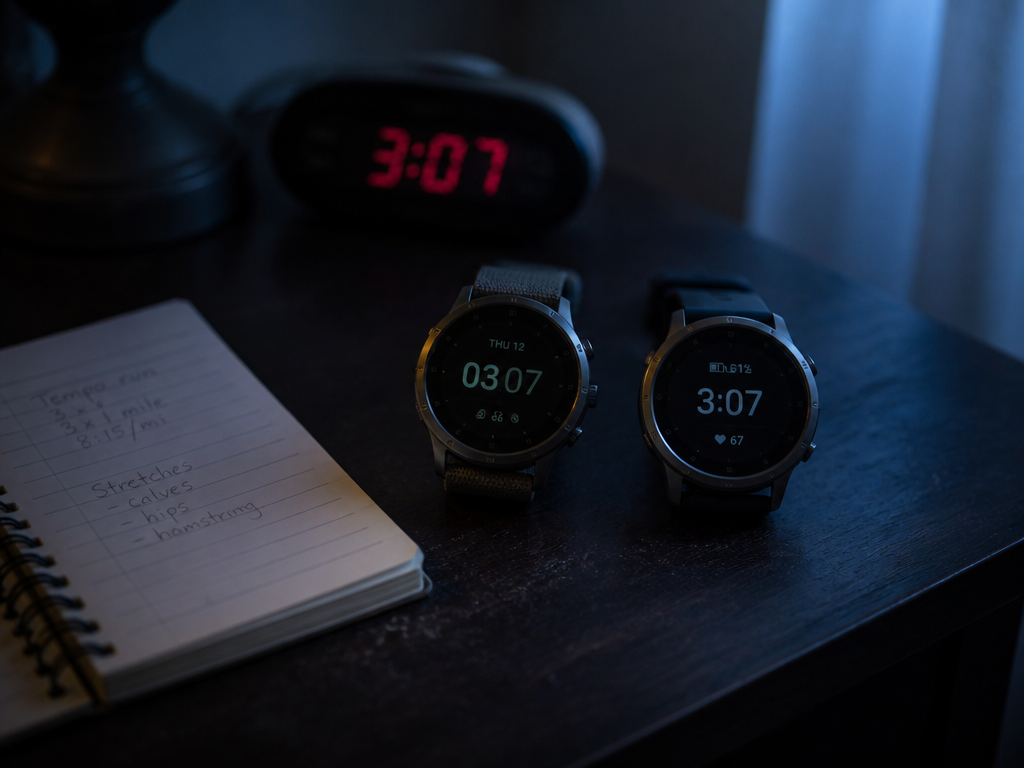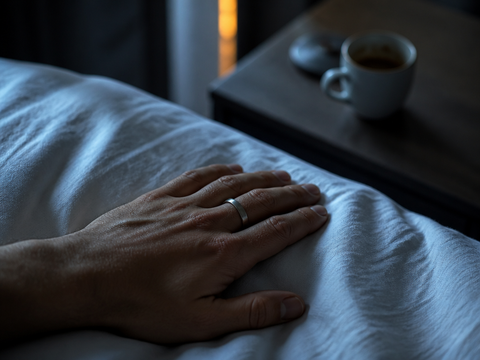
Somewhere in a certification database sits a Garmin device that is not a watch. That is most of what anyone actually knows. The rumor mill has decided it's a ring, and the timing is plausible enough that I've caught myself reading filing numbers like tea leaves. Smart rings went from curiosity to category in about four years — Oura is on its fourth generation, Samsung and Ultrahuman both ship credible hardware — and Garmin spent 2025 circling the same territory from an odd direction, with the Index Sleep Monitor, an upper-arm band whose entire reason to exist is that nobody wants a 51-millimeter watch pressed into their wrist at two in the morning.
I know that because I wear one. The Fenix is the best object I own and the worst thing I've ever tried to sleep on. So yes, I'm the target customer for a Garmin ring, and yes, I'd probably buy it.
But the wish-list framing — battery, no subscription, better sleep staging — skips the more interesting question. Narrow it to something physical. You drink a cortado at 3:40 in the afternoon. Which parts of that decision can a sensor on your finger actually detect, and in what order do they arrive?
Follow it through the body in sequence. The answer is less flattering to the hardware than the marketing suggests, and more interesting.
It starts in the gut, and nothing on your hand is watching
Caffeine is absorbed nearly completely — bioavailability close to 100 percent — mostly across the small intestine, with plasma concentrations peaking somewhere between 30 and 120 minutes depending on dose form, stomach contents, and luck. Then the liver takes over. CYP1A2 handles roughly 95 percent of the metabolism, and this is where people stop being interchangeable.
The half-life figure everyone quotes is five hours. The useful figure is the range: roughly 1.5 to 9.5 hours in healthy adults, which means the same 3:40 p.m. espresso can be functionally gone by ten or still be at half strength at midnight, depending on whose liver it landed in.1 Rétey and colleagues (2007), in Clinical Pharmacology & Therapeutics, pushed this further and found that a variant in ADORA2A — the gene for the adenosine A2A receptor itself — tracked with how strongly caffeine distorted the sleep EEG. The sample was small. Hold the effect size loosely; hold the direction more firmly.
None of this reaches a ring. No consumer wearable measures plasma caffeine, and none is close. When Oura or Garmin lets you "log a coffee," you are typing a timestamp into a text field and a model is inferring the rest. That's not a sensor reading. It's a diary entry with a chart attached.
Next the brain, which no ring can reach
Adenosine builds across the waking day as a byproduct of cellular energy use, binding A1 and A2A receptors and producing what sleep researchers call homeostatic pressure — the deepening pull toward sleep that gets heavier the longer you've been awake. Caffeine is a competitive antagonist at both receptor types. It doesn't clear the adenosine. It occupies the parking space. The pressure keeps accumulating behind a blocked door, which is why the crash when caffeine clears feels like a bill arriving.
The canonical measurement here is Drake et al. (2013), Journal of Clinical Sleep Medicine: 12 subjects given 400 mg of caffeine at 0, 3, and 6 hours before bedtime, with polysomnography. The dose taken six hours before bed — mid-afternoon, in real terms — cut objectively measured sleep by more than an hour. The part worth underlining is that the subjects largely didn't notice. Their own sense of how they'd slept did not track what the electrodes recorded.
Caffeine also suppresses slow-wave activity specifically. Landolt and colleagues (1995), in Neuropsychopharmacology, gave healthy young men caffeine and watched low-frequency delta power in the sleep EEG fall. That is the most reliable, best-replicated fingerprint caffeine leaves on a night of sleep — and it lives in cortical electrical activity, several centimeters of skull away from anything a finger can sense.
Then the periphery, which is where the finger gets interesting
Adenosine is a vasodilator in peripheral tissue. Block its receptors and vascular tone shifts. Layer on caffeine's modest bump in circulating catecholamines and a systolic increase in the range of 3 to 4 mmHg in people who aren't habituated, and you get a body running with slightly more sympathetic edge for several hours — heart rate a few beats higher, peripheral vessels a little tighter.
Why the finger, specifically
Digital arteries are densely wrapped in alpha-adrenergic vasoconstrictor fibers. They are, anatomically, one of the loudest sympathetic broadcast points on the body — which is why sleep labs use finger-based peripheral arterial tonometry to detect arousals and apneic events at all. A ring's photoplethysmography sensor is sitting on genuinely better real estate than a wrist strap. This is the strongest technical argument for the form factor, and it's the one that never makes it into the press release, which prefers to talk about comfort.
Skin temperature belongs to this stage too. Kräuchi et al. (1999), in Nature, reported that the distal-proximal skin temperature gradient — hands and feet warming relative to the trunk — was the single best predictor of how quickly subjects fell asleep. Small sample, elegant design, widely replicated in spirit. Peripheral vasoconstriction is exactly what should delay that warming. That caffeine interferes with the gradient is plausible and mechanistically tidy; the direct evidence is thinner than the confidence with which fitness apps present their temperature graphs.
Can a smart ring tell whether caffeine ruined your sleep?
Not directly, and not on a single night. What it can see is the shadow: a longer gap before sleep onset, a resting heart rate that stays elevated further into the night before bottoming out, a lower overnight heart-rate variability, a warm-up curve that arrives late. Those are real physiological consequences of the drug. They are also not the damage. The damage is happening in slow-wave activity, and slow-wave sleep is the thing consumer devices measure worst.
Chinoy et al. (2021), in SLEEP, ran seven consumer sleep-tracking devices against polysomnography in 34 healthy adults. Most performed respectably at the two-state problem — asleep versus awake — and considerably worse at four-stage classification, with several showing systematic bias in deep-sleep estimates. So when your ring reports 22 fewer minutes of deep sleep after an evening drink, the direction is probably right and the number is not a measurement in the way a bathroom scale gives you a measurement. It's an inference with an error bar the app declined to draw.
HRV is murkier still. The published work on acute caffeine and heart-rate variability points in genuinely different directions depending on dose, timing, habituation, and which HRV index you pick. Anyone telling you caffeine reliably tanks your overnight HRV is ahead of the evidence.
| What the app reports | What the sensor sees | Caffeine signal in it |
|---|---|---|
| Sleep onset latency | Motion stopping, PPG pulse pattern change | Strong, well established |
| Overnight resting heart rate | Direct pulse from digital arteries | Strong, well established |
| Skin temperature curve | Thermistor at the finger | Plausible, mechanism solid, direct data thin |
| Overnight HRV | Beat-to-beat interval variation | Contested — literature disagrees |
| Deep sleep minutes | Inferred from motion + pulse features | This is where caffeine hits hardest and the sensor is weakest |
What would make Garmin's version worth wearing
The hardware ask is easy and everyone's already written it: a week of battery, a titanium shell that survives a barbell, sizing that doesn't require a mail-order kit. Fine. The ask that would actually distinguish Garmin is epistemic. Show the confidence, not just the score. A ring that said "deep sleep down 20 minutes, but that's inside this device's night-to-night noise" would be the first wearable to treat its user as capable of handling a range.
Then there's the money. Garmin launched Connect+ in March 2025 at $6.99 a month, and the response from a customer base that had spent a decade paying premium hardware prices precisely to avoid subscriptions was not warm. Oura charges $5.99 a month and has always charged it, which at least has the virtue of consistency. If a Garmin ring ships with its sleep physiology behind that gate, the company will have spent its single genuine advantage — hardware you buy once — to chase a business model its buyers came to it to escape.
The third thing is the one I'd actually pay for: don't make it a replacement. Two sensor sites disagree in useful ways. An armband and a ring on the same night, reconciled honestly, would tell you more than either alone.
An honest rule of thumb
Don't judge caffeine by tonight's sleep score. Run it as a two-week experiment instead: keep your last caffeinated drink at least eight hours before your target bedtime for fourteen days, then compare the median of your sleep-onset times and overnight resting heart rate against the fourteen days before it. Single nights are noise. Two-week medians are where a consumer sensor starts telling the truth. And if the medians don't move, believe them — you may be one of the fast metabolizers, and there's no prize for cutting off caffeine at noon out of superstition.
Which leaves the question none of this hardware can settle. Drake's subjects were dosed for a few nights. Nearly every controlled study of caffeine and sleep architecture is short. Chronic use upregulates adenosine receptors — that much is established — but nobody has run the twenty-year experiment to find out whether a daily coffee drinker's slow-wave sleep eventually returns to baseline, or whether the baseline itself quietly moved and the only thing that recovered was the ability to notice.
-
Oral contraceptives roughly double caffeine's half-life; by the third trimester of pregnancy it can stretch past 15 hours. Smoking cuts it nearly in half by inducing CYP1A2, which is one reason people who quit smoking often find their usual coffee suddenly unbearable. ↩