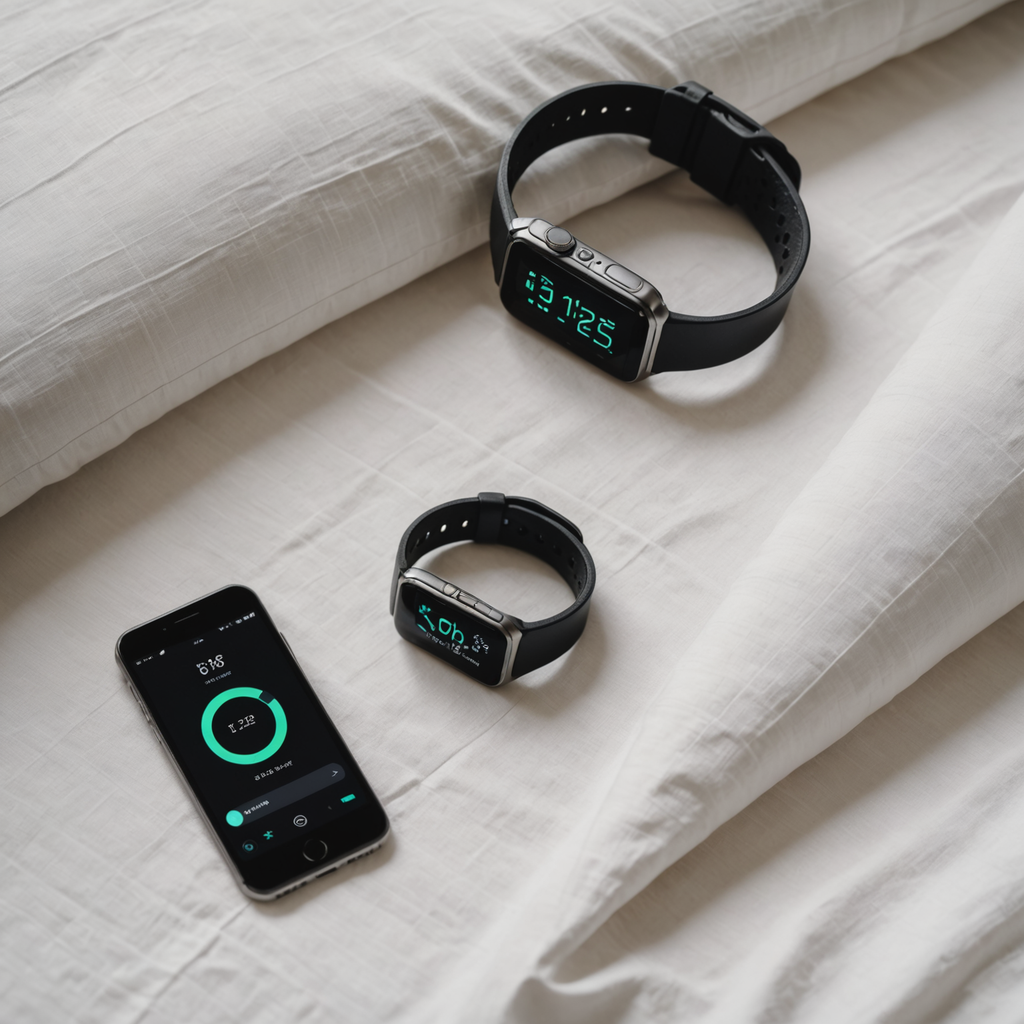
The claim you have heard, probably from someone holding their phone at brunch: buy one of the good smart rings, drink your coffee too late, and the app will hand you the bill in the morning. A score. A colored arc. An arrow pointing down. Coffee at four, ruined night, itemized receipt at seven.
I bought a RingConn Gen 3 this spring and wore it for forty usable nights on my left index finger, with an Oura Ring 4 on my right, while running a deliberately dull caffeine protocol. I wanted to know whether that receipt actually exists.
The verdict: the Gen 3 is the best-value ring I've worn — nine days of real battery, no subscription, light enough that I stopped noticing it by night three — and it did register my afternoon coffee, just not in the place the app invites you to look.
The myth worth testing
The belief is more specific than "wearables measure sleep," which is why it's worth attacking. People think the sleep score is a caffeine detector. Drink the 4pm cup, get an 82 instead of a 91, and the number is treated as evidence of a causal chain: caffeine → worse architecture → lower score.
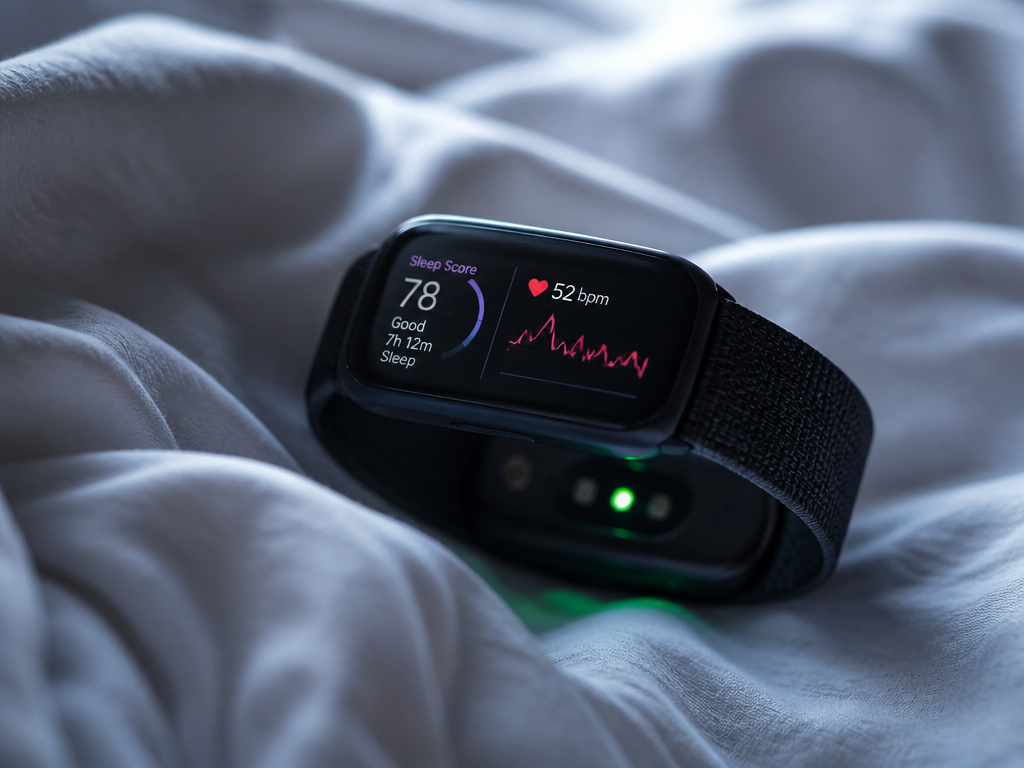
It's a reasonable thing to believe. The apps encourage it. RingConn's summary screen puts the score at the top in large type and the heart-rate curve two scrolls down, which tells you what the designers think you came for. Oura does the same thing with a friendlier font.
And caffeine genuinely does damage sleep. That part isn't in dispute. The question is whether a $299 ring on your finger can see the specific damage caffeine does, or whether it sees something adjacent and reports it under a heading that sounds more authoritative than it is.
The protocol
Six weeks. Forty-four nights attempted, forty usable — I threw out two travel nights, one night with wine, and one night the Gen 3 died at 1am because I'd forgotten to dock it (my fault, not the ring's).
Alternating blocks, not strict alternating nights, because I wanted a few consecutive caffeine nights to see whether anything accumulated. Twenty caffeine nights: same coffee, same 16 g dose, same brewer, same 250 ml, always at 16:00. Call it 160–180 mg. I didn't assay it and I'm not going to pretend otherwise. Twenty control nights: nothing after 11:00.
Bedtime held within a 25-minute window. Room at 18°C. Same mattress, same partner, same dog who wants out at 5:40 regardless of my research interests.
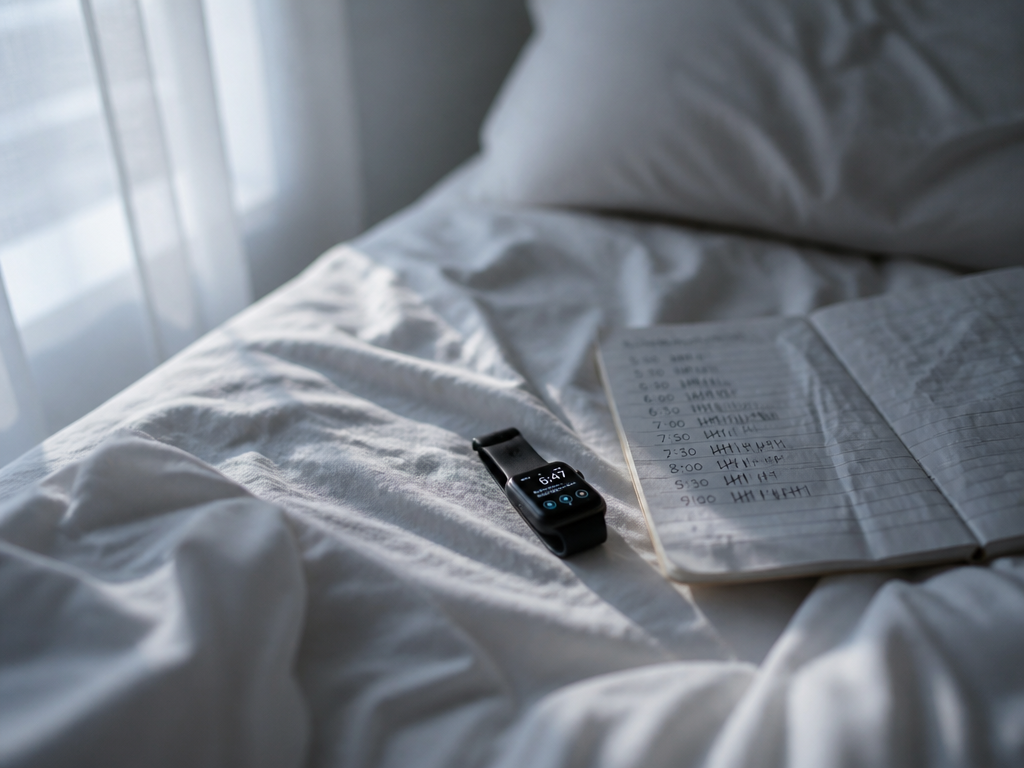
The one thing I added that most people don't: a manual onset log. Lights out, I pressed a button on a phone lying face-down on the nightstand. In the morning, before checking either app, I wrote down the last clock time I remembered seeing. Crude, subjective, and — as it turned out — the most informative number I collected.
What forty nights actually showed
| Measure | No caffeine (20 nights) | 160 mg at 16:00 (20 nights) | Difference |
|---|---|---|---|
| RingConn sleep score | 84 | 81 | −3 |
| Ring-reported sleep onset | 14 min | 17 min | +3 min |
| My own logged onset | 12 min | 29 min | +17 min |
| Overnight resting heart rate | 52.4 bpm | 55.1 bpm | +2.7 bpm |
| Overnight HRV (rMSSD) | 61 ms | 52 ms | −9 ms |
| Time to lowest heart rate of night | 2 h 10 m | 3 h 55 m | +1 h 45 m |
Read that table twice. The headline number — the score — moved by three points, which is inside the range it wanders on any given Tuesday. If I'd only looked at the score, I'd have concluded that an afternoon coffee costs me approximately nothing.
The heart data says something else entirely. Resting heart rate up nearly three beats. HRV down fifteen percent. And the number I keep coming back to: on control nights my heart rate bottomed out about two hours after lights out, and on caffeine nights it took nearly four. My physiology was still climbing down a staircase at 2am that it had normally finished descending by midnight.
The ring saw all of that. It just didn't say so on the front page.
The onset gap is the other story. The Gen 3 thought caffeine cost me three extra minutes to fall asleep. My notebook says seventeen. That's not a rounding error — that's the device and I disagreeing about what was happening in my own bed.
Why the score didn't move
Here's the mechanism, and once you understand it the whole thing stops being mysterious.

The Gen 3 has three sensors that matter: a photoplethysmography array pressed against the palmar side of your finger, where it reads pulse waveform through the arteries; a three-axis accelerometer; and a skin temperature thermistor. That's it. There is no electrode anywhere near your scalp. Every stage the app draws — light, deep, REM — is a model's inference from heart rate, heart rate variability, movement, and a respiration signal extracted from the shape of your pulse.
So when the app tells you that you got 64 minutes of deep sleep, it is not reporting a measurement. It is reporting a guess, generated by a classifier that was trained to approximate what a sleep lab would have said, using inputs a sleep lab would consider circumstantial.
The sleep/wake distinction has a specific and well-known failure mode. Motion-based classifiers are excellent at spotting sleep and poor at spotting quiet wakefulness, because the two look nearly identical from the wrist or finger — a still body, a slow pulse, no movement. The tuning is deliberate: false "awake" readings annoy users more than false "asleep" readings, so the models lean toward sleep. Which means that if you are the kind of person who lies perfectly still while your brain refuses to shut up, a smart ring will score you as a champion sleeper.
I am exactly that kind of person. The sleep score is, among other things, a measure of how good you are at lying still while frustrated.
Now the caffeine side. Caffeine is an adenosine receptor antagonist with a half-life somewhere around five hours in most adults, longer if you're on certain medications or pregnant, shorter if you're a fast metabolizer. My 16:00 cup left roughly half its dose circulating at 21:00 and a quarter of it still there at 02:00. It doesn't abolish sleep. It blunts sleep pressure and keeps sympathetic tone elevated — which lands precisely on the two things the ring measures directly and honestly, heart rate and its variability, and only glances off the thing the ring is guessing at.
That's the whole explanation. The ring's most reliable outputs moved a lot. The ring's least reliable output moved a little. The app leads with the least reliable output.
RingConn Gen 3 vs Oura Ring 4
Both rings, same forty nights, index fingers of opposite hands. Worth flagging: my right hand is dominant and moves more, which very likely inflated the Oura's movement-derived numbers slightly. I couldn't design around that without a third ring and a fourth finger.
| Criterion | RingConn Gen 3 | Oura Ring 4 |
|---|---|---|
| Price as I paid it | $299, no subscription | $349 plus $5.99/month |
| Measured battery, SpO2 on | 9 d 4 h (avg of 3 full cycles) | 5 d 8 h (avg of 3 full cycles) |
| Weight, size 10, my kitchen scale | 2.9 g | 3.4 g |
| Overnight resting HR, 40-night median | 52.9 bpm | 53.4 bpm |
| Median deep sleep, identical nights | 1 h 04 m | 1 h 31 m |
| Data export | CSV, free | CSV, behind the subscription |
The fourth row is the reassuring one. On raw cardiovascular data these two devices agree with each other closely enough that I'd treat either as trustworthy for trends — within 1.5 bpm on 34 of 40 nights.
The fifth row is the one that should make you skeptical of both. Same nights, same body, same sleep, and a 27-minute median disagreement on deep sleep. They cannot both be right. They are probably both wrong in different directions, and the fact that each app presents its number with a tidy little bar chart and no error bars is the most misleading thing either of them does.
Where Oura still wins: the app. It's better organized, the trend views are more legible, and the tag system for logging behavior is genuinely useful if you're the sort of person running protocols on yourself. RingConn's app has improved but still reads like a spec sheet that learned to draw. Oura's illness-onset detection also flagged a cold about eighteen hours before I felt it; the Gen 3 showed the same elevated temperature and resting heart rate but said nothing about them.
If you want one line: the RingConn Gen 3 wins on battery, price, and getting out of your way. Oura wins on the app, and charges you monthly for it.
The battery is the actual product
Nine days and change, with continuous SpO2 running. Turn that off and I got past twelve on the one cycle I tested it. That's not a spec-sheet number, it's what three full discharges averaged out to on my finger.

This matters more than it sounds. A sleep tracker that needs charging every five days will eventually be charging on a night you wanted data, and the nights you lose are not random — they're the disrupted, travel-adjacent, interesting ones. Over forty nights the Gen 3 cost me one night of data and the Oura cost me four.
The charging case does the rest of the work. It's a small oblong thing that holds enough charge to refill the ring around a dozen times, which meant that for six weeks I charged the case exactly once and never thought about power again. Rivals should copy this immediately.
The one with the elvish engraving
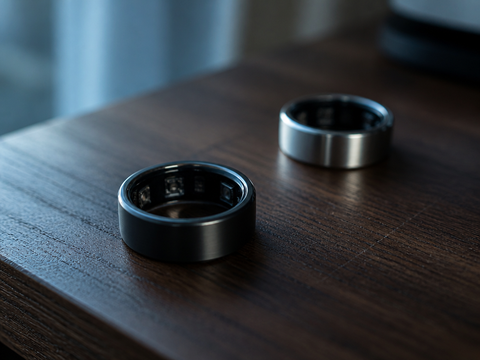
RingConn has an officially licensed Lord of the Rings edition, done with Warner Bros. I did not buy it. I tested the plain black titanium version, and I'd note that a ring which silently logs your movements and reveals hidden text under the right conditions is a slightly bold thing to license, given the source material's position on that exact product category.
What I can say from the standard model: the finish is fine. Matte titanium, no visible scratching after six weeks including a house move and a bike chain incident, resin interior that hasn't discolored. The Gen 3's chassis is close enough to the previous generation that I was mildly disappointed — I'd hoped for a slimmer profile, and it's the same comfortable-but-chunky band.
The licensed edition's promised "rewards" for owners remain, as far as I can tell, undescribed in any concrete way. I'm not going to characterize something I haven't seen. If they turn out to be good, someone should tell me.
What I couldn't test
The apnea feature. The Gen 3 markets continuous overnight SpO2 sampling and an apnea-risk readout, and it reported nothing abnormal on all forty nights. I don't have apnea. A device that correctly declined to flag a person without the condition has demonstrated that it isn't wildly trigger-happy, which is worth something, and has demonstrated nothing whatsoever about whether it catches the condition in people who have it. Without a home sleep test running alongside it, I can't say more. I'd also gently note that "first ring to do X" claims in this category tend to survive only because of a qualifier buried in the sentence — Samsung already holds FDA authorization for apnea detection on the Galaxy Watch, and RingConn's own previous generation shipped an apnea feature.
Blinding. This is the real weakness and I want it stated plainly rather than buried: I knew which nights were caffeine nights. The measure that moved most dramatically — my logged onset — is the one measure my expectations could have contaminated. Partial defense: the timing of my overnight heart rate nadir moved by nearly two hours, and that's not a number I could have biased even if I'd wanted to. But if you want to discount the seventeen-minute onset gap by half, I won't argue.
Sample size of one, one dose, one time of day, one metabolism. I don't know what 80 mg at 14:00 does. I don't know what any of this does to you.
Who this is for, and who it isn't
Buy it if you want an unobtrusive, subscription-free tracker for cardiovascular trends — resting heart rate, HRV, temperature — and you'd rather charge something once a week than once every four days. Buy it if you already suspect your habits affect your sleep and you want a consistent instrument to watch the trend line, not an oracle. Buy it if you've been eyeing an Oura and resenting the monthly fee, because on the measurements that are actually measurements, they agree.
Skip it if you want a night-by-night verdict on individual decisions. No finger-worn device is going to reliably tell you that Tuesday's coffee cost you 22 minutes of deep sleep, and the confidence with which the app implies otherwise is the least honest thing about it. Skip it if you're chasing a diagnosis — if you suspect apnea, the ring is at best a nudge toward a real sleep study, and treating it as a substitute is how people spend two years not getting treated. Skip it if the app experience matters more to you than the hardware, because Oura's is better and it's not close.
And if you're buying it as a Lord of the Rings artifact, buy it for that. It's a nice object. Just don't expect it to know things.
Six weeks in, here's what I'm left with. The Gen 3 is a good ring — the best-value one I've worn — and it answered my question, only not through the feature built to answer it. The score told me I slept fine. The heart rate curve told me the truth.
It measured what the coffee did to my heart. It never once noticed what it did to my evening.