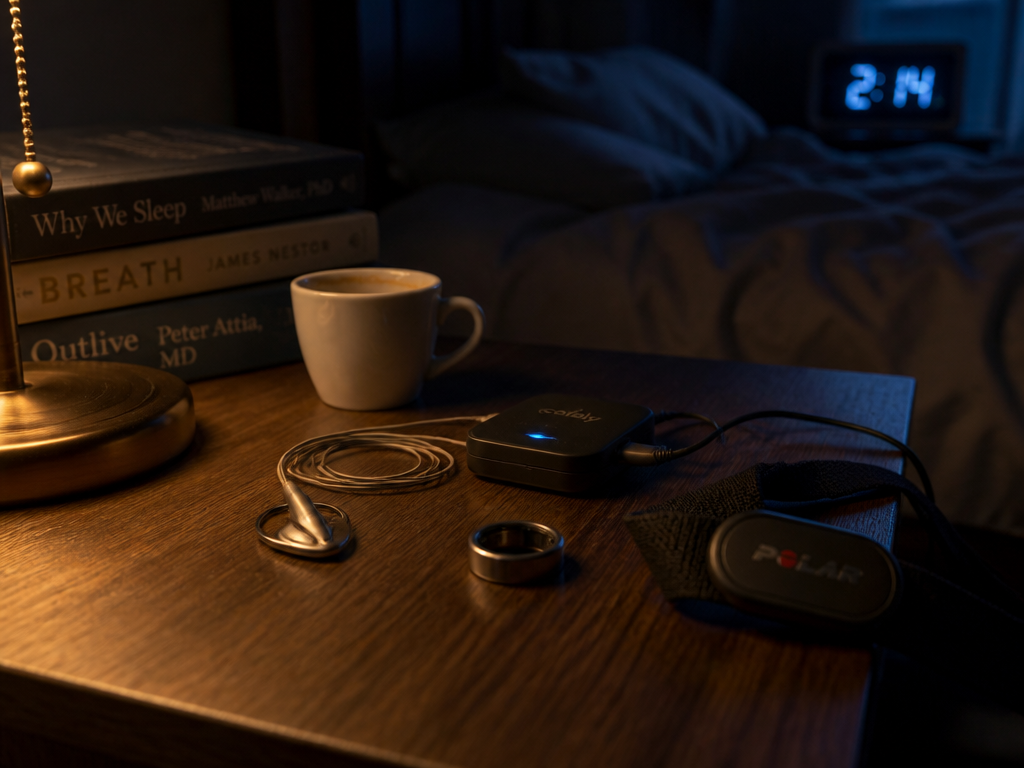
The standard advice about vagus nerve stimulation is that you shouldn't pay for it. Breathe out twice as long as you breathe in. Hum. Splash cold water on your face. Same nerve, same parasympathetic nervous system, zero dollars — and anyone selling you a $299 ear clip is selling a placebo with a charging cable. I have heard this from a physiotherapist, from two friends who have never met, and from roughly the entire internet.
I spent fourteen weeks testing it. The advice is about 70 percent right, in a way that matters less than the missing 30 percent.
The verdict in one sentence: slow breathing matched or beat the $299 device on every measurement I could take, and I would still hand the device to a certain kind of person, because it was the only method I kept doing once the experiment ended.
What I ran
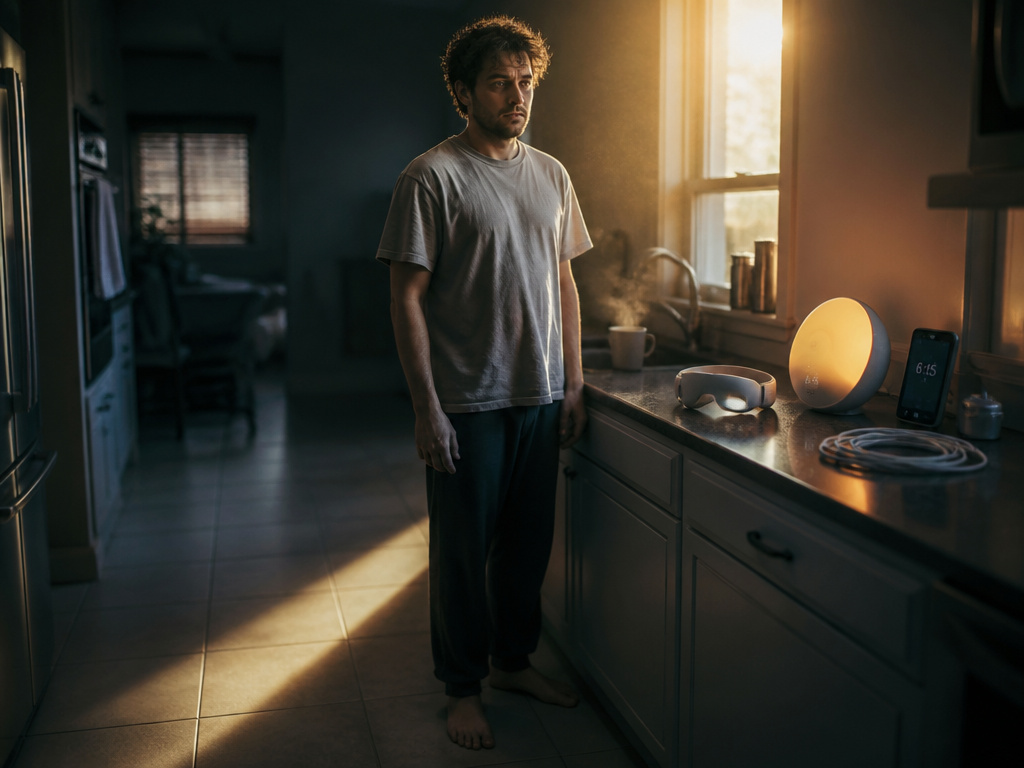
I'm 41, I have two kids under nine, a 6:15 a.m. alarm I did not choose, and a dependable wake-up somewhere around 3.
Two weeks of baseline, then four one-week arms in an order I set by shuffling index cards. Every session began at 9:40 p.m., ran ten minutes, used the same rain recording, the same chair, a 64°F bedroom, and a phone left downstairs. Lights out at 10:15 regardless.
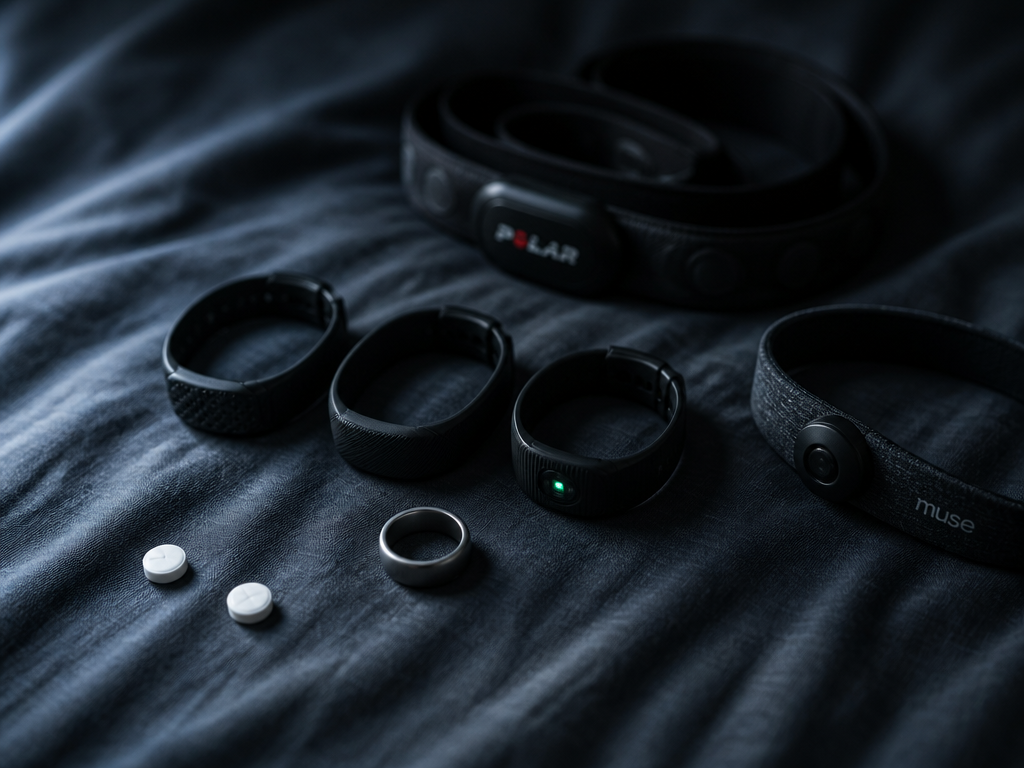
I logged sleep onset latency from a wrist tracker and cross-checked it against a paper log — they disagreed by a median of six minutes, which tells you what these numbers are worth. RMSSD came from a chest strap worn during the ten minutes. Overnight wake-ups between 2 and 4:30 a.m. I tallied by hand in the morning.
The arms:
- The device. A transcutaneous ear-clip unit, $299, on the left cymba conchae, intensity 4 of 8.
- 4–8 breathing. In for four seconds, out for eight. Ten minutes.
- Humming. Five minutes of a low sustained hum, five minutes sitting.
- Cold water. Thirty seconds face-down in a bowl of 50°F water, then nine minutes sitting.
The numbers
| Method | Cost | Median onset | Median RMSSD | Wake-ups, 2–4:30 a.m. (of 7) |
|---|---|---|---|---|
| Baseline (14 nights) | — | 34 min | 28 ms | 4–5 |
| Ear-clip stimulator | $299 | 19 min | 41 ms | 2 |
| 4–8 breathing | $0 | 21 min | 44 ms | 2 |
| Humming | $0 | 29 min | 35 ms | 3 |
| Cold water on the face | $0 | 31 min | 33 ms | 4 |
Two minutes separate the device from the breathing. That is noise. On HRV, the free method won outright, and it won on the measure that most directly reflects vagal traffic to the heart.
Cold water produced the sharpest acute effect of anything I tried — my heart rate dropped about 11 bpm inside those thirty seconds — and the worst night. At 9:52 I was calm, cold, and completely awake. The diving reflex is real; it is a reset tool, not a wind-down tool, and putting it at bedtime was my error, not the method's.
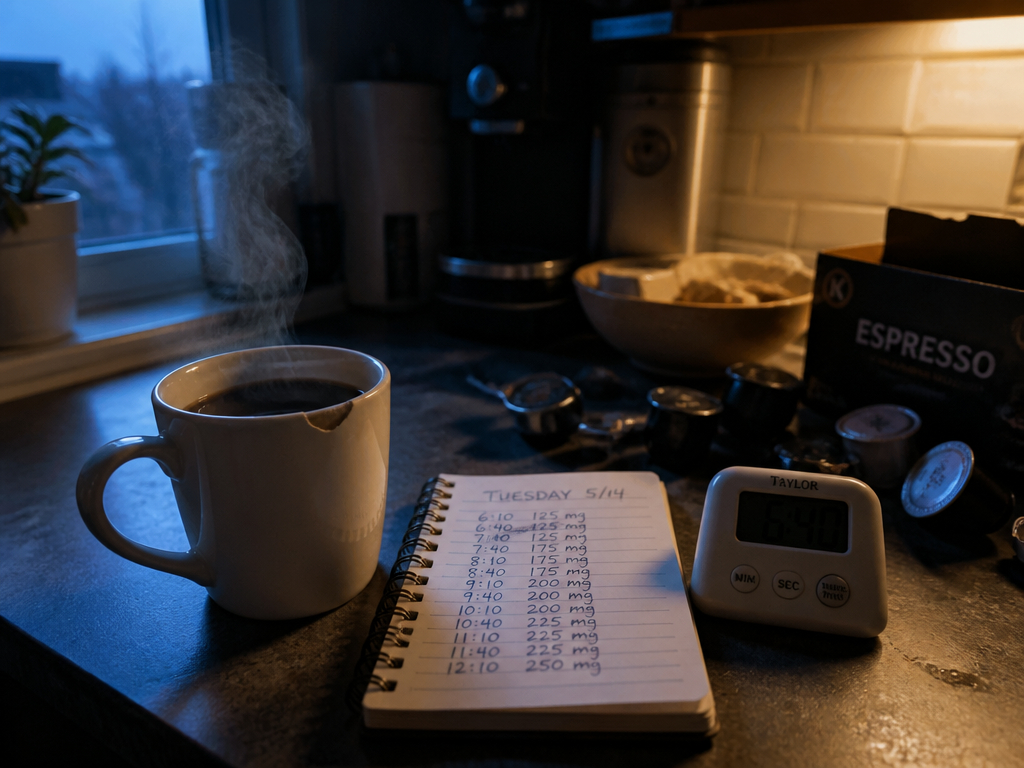
The humming week collided with a deadline, and I drank a double shot at 3:50 p.m. four days running — roughly 150 mg each. Those four nights: 38, 41, 44, 29 minutes to sleep. The other three: 19, 21, 24. Strip the caffeine and humming is indistinguishable from breathing. Which means the humming row above is mostly a caffeine row, and the largest single effect in fourteen weeks of data came from a confound rather than an intervention. Nothing I did at 9:40 p.m. outran an espresso at 3:50 p.m. Not the breathing, and not the current.
Where the free advice is right
Lengthen the exhale past the inhale and you are leaning on respiratory sinus arrhythmia and the baroreflex. That is the RMSSD column showing up. The $299 did not buy access to a mechanism I couldn't reach with my own diaphragm — if it had, the breathing arm would have looked like baseline. Instead it was the best arm in the study.
And the published human work on ear-clip devices, as far as I can read it, is small, short, and weighted toward HRV endpoints rather than sleep outcomes. Nobody has shown me a trial that justifies $299 on results alone. On the science, the skeptics are correct.

Where it breaks down
Three places.
It assumes a nervous system you can talk down. Night four of the breathing arm, ten minutes in a quiet room with nothing to do but breathe, I got an itemized inventory of everything I was behind on instead of a wind-down. Two of seven breathing nights went that way. The device asked nothing of my attention, and that — not the current — was the difference.
Adherence. In the eight weeks after the protocol ended, with no schedule and nobody watching, I used the device on 38 of 56 nights. I did the breathing on 11. Same person, same bedroom, same data in front of me, and the method that won on physiology lost better than three to one on nights actually performed.
It frames money as the barrier. For plenty of people money genuinely is the barrier. But what I was short of at 9:40 p.m. was never $299. It was the willingness to sit down and do a small deliberate thing after a day that had already asked too much. A gadget converts that willingness into an object you can pick up. That is not physiology, and it is also not nothing.
What I couldn't test
There was no sham arm. The device buzzes, so I always knew when it was on, and I had paid for it — the two most reliable placebo ingredients available. A sham unit would have cost another $299. The honest read is that some meaningful share of that 19-minute figure is expectancy, and I can't tell you how much.
Beyond that: one subject, unblinded, seven nights per arm, latency from a tracker that disagreed with my own notebook by six minutes. Treat any two arms within five minutes of each other as tied. The only differences I'd defend are that all four methods beat baseline, and that cold water at bedtime was a mistake.
Who this is for, and who it isn't
Buy it if you have already run the free version, know it works, and still don't do it. Buy it if deliberate breathing reliably makes you more anxious rather than less — that's a real response, not a discipline failure, and a method that works while you do nothing is a sensible workaround. Buy it if what you need at 9:40 p.m. is an object rather than an intention.
Skip it if you haven't run the free version for two straight weeks with a log. Skip it if your actual problem is a late espresso, a phone on the nightstand, or a 6:15 alarm attached to five hours in bed — none of those are vagal tone problems and no amount of current touches them. And skip it if $299 is real money to you and you're buying on the strength of the research, because the research does not carry that weight.
If you can reliably do ten minutes of slow breathing four nights a week, the $299 buys you almost nothing. If you can't — and I couldn't — it buys you the four nights.
A more honest version of the rule
Here is what the advice should say. You don't need to spend anything to reach your parasympathetic nervous system, and cost is almost certainly not the reason you aren't reaching it. Run the free version first: 4–8 breathing, ten minutes, same time nightly, two weeks, written down. If it works and you keep doing it, you're done — the market has nothing to sell you. If you can't make yourself do it, the useful question isn't which stimulator to buy. It's why the ten minutes doesn't happen, and whether an object would make it happen.
So, the $299. Measured against what it delivered — two minutes of onset latency and slightly worse HRV than free breathing — it's a bad buy, and the people telling you so are right about the physiology. Measured against what it did, which was get me to wind down on 38 nights out of 56 instead of 11, it's 82 cents a night across a year, and about $7 a night if I abandon it in six weeks the way I abandoned the last three things I bought for this problem. That's the question the price tag is really asking. Not whether the vagus nerve responds. It does, to a long exhale, for free. Whether you'll show up.